An open-source tool fakes VHS and NTSC artifacts — broadcast veterans say analog actually looked gorgeous
ntsc-rs models real NTSC transmission and VHS encoding, not overlay filters, in real time. The thread's reversal: the 'VHS look' is degradation, not the medium's ceiling — and proper emulation still skips PAL, Hanover bars and subcarrier phase failures.
What it actually does
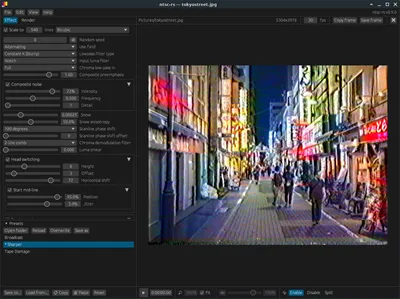
ntsc-rs is a free, open-source video effect (v0.9.4) that emulates analog TV/NTSC and VHS artifacts using algorithms that model the actual NTSC transmission and VHS encoding chain — building on prior work like the composite-video-simulator and ntscQT — rather than slapping a grain overlay on top. It's written in Rust with multithreading and SIMD for real-time processing above native NTSC resolution, and ships as a standalone app, a web tool, and plugins for After Effects, Premiere and OpenFX hosts (DaVinci Resolve, HitFilm, Vegas).
A practitioner field-tested it in the thread:
"Just installed the OpenFX plugin and tested in DaVinci. It runs snappy and looks awesome with tons of control … It really starts getting interesting when you automate the params. Appreciate that this is rooted in actual emulation." — a filmmaker who tested the plugin
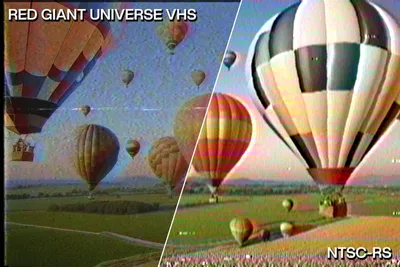
The reversal: analog wasn't lo-fi — VHS was
The most interesting pushback came from people who worked in broadcast when this was just "TV":
"full bandwidth 6 Mhz analog composite or component video could look wonderful. If you ever have the chance to see a 2-inch quad VTR playing a master tape on a broadcast quality monitor … I suspect you'll be shocked." — a veteran of broadcast video production
The "VHS aesthetic" we emulate for nostalgia is degradation — generational tape loss, cheap consumer decks — not the medium's actual ceiling.
And accurate emulation is brutally hard
"You're not getting the full experience of analogue telly artifacts until you emulate colour subcarrier phase shift and colour burst detection failure … And of course PAL and Hanover bars." — a longtime technical writer listing the missing artifacts
Another commenter who once tried to fully reverse-engineer NTSC emulation testified to the rabbit hole:
"I went down a rabbit hole that involved losing motivation several lessons in to a signal processing class … I did at least pull quite a lot of it apart here … I also ported it to JavaScript" — a developer who reverse-engineered NTSC emulation
Why it lands anyway
ntsc-rs is the rare nostalgia tool built by someone who respects the signal it's faking. The thread's correction — that analog could be beautiful and the "retro" look is really tape degradation — doesn't diminish it; it explains why doing this right (real subcarrier behavior, eventually PAL and Hanover bars) is so much harder than dropping scanlines on a clip. The artifacts are the easy part. The physics is the project.
Get breakdowns like this every day
The top Hacker News stories, unpacked — by email, Telegram, or RSS.
A thief cut a live 100,000-watt FM line for scrap — engineers in the thread marvel he survived
In daylight, someone disabled the surveillance at a Kentucky radio site, cut the pressurized transmission line feeding a 100kW tower, dragged it home and scrapped the copper. Repair: up to $100,000. Scrap value: maybe a few thousand. The station is limping at 10 watts.