Ken Shirriff powered up a 1948 IBM calculator module and it still works
The IBM 604 weighed 1,310 pounds, rented for $550 a month in 1948, and held 1,250 vacuum tubes inside a chassis the size of a double refrigerator. Ken Shirriff found one of its pluggable thyratron modules, wired a light bulb across its output pins, and fired the trigger — the bulb lit.
Each module married a tube to its resistors and capacitors on a wafer, nine-pin socket, swappable by a field engineer without touching neighbors — the design that made commercial electronic computing viable.
The MD7A thyratron holds xenon at 0.05 Torr: 100V to the plate, 8V to trigger, current latches until power drops. Shirriff's bulb lit in 2026 exactly as the 1948 spec said.
John Nagle traces the IBM 600 line from the mechanical 601 of 1931 to the transistorized 1401 of 1959: this commercial branch, not ENIAC, is what built the industry.
Powering up a 78-year-old IBM calculator module
Ken Shirriff's righto.com article documents what happens when you bench-test an IBM 604 thyratron module — a pluggable electronics unit from 1948 — with modern lab equipment. The answer: it still works. The thread drew Ken Shirriff himself to answer vacuum tube questions, and John Nagle (Animats, 163k karma) to deliver an extended history of IBM's commercial computing lineage that most computing histories omit.
What the IBM 604 was, and why IBM built it modular
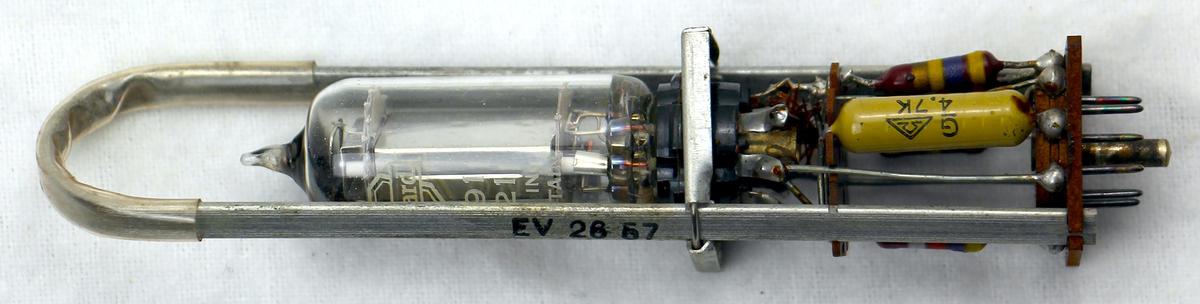
The IBM 604 Electronic Calculating Punch, introduced in 1948, occupied a transitional position. It was more powerful than electromechanical punch card equipment but not a full computer — no loops, no stored program. It processed punch cards at 100 cards per minute, executing up to 60 operations per second including multiplication and division, all directed by a plugboard rather than software. At 1,310 pounds for the calculator unit (plus 670 pounds for the attached card punch) and 5.5 kW of power draw, it rented for $550 per month. IBM produced over 5,600 units.
The engineering decision that made the 604 commercially viable was modularity. IBM patented a design that packaged a single vacuum tube with its supporting resistors and capacitors on insulating wafers, terminated in a nine-pin connector, with an insulated handle for insertion and removal. A technician could swap a failed module without touching neighboring circuits. IBM's business model required that its Customer Engineers — deployed to client sites, dressed in white shirts and ties — service machines without specialist expertise and without unacceptable downtime. The module design was the answer.
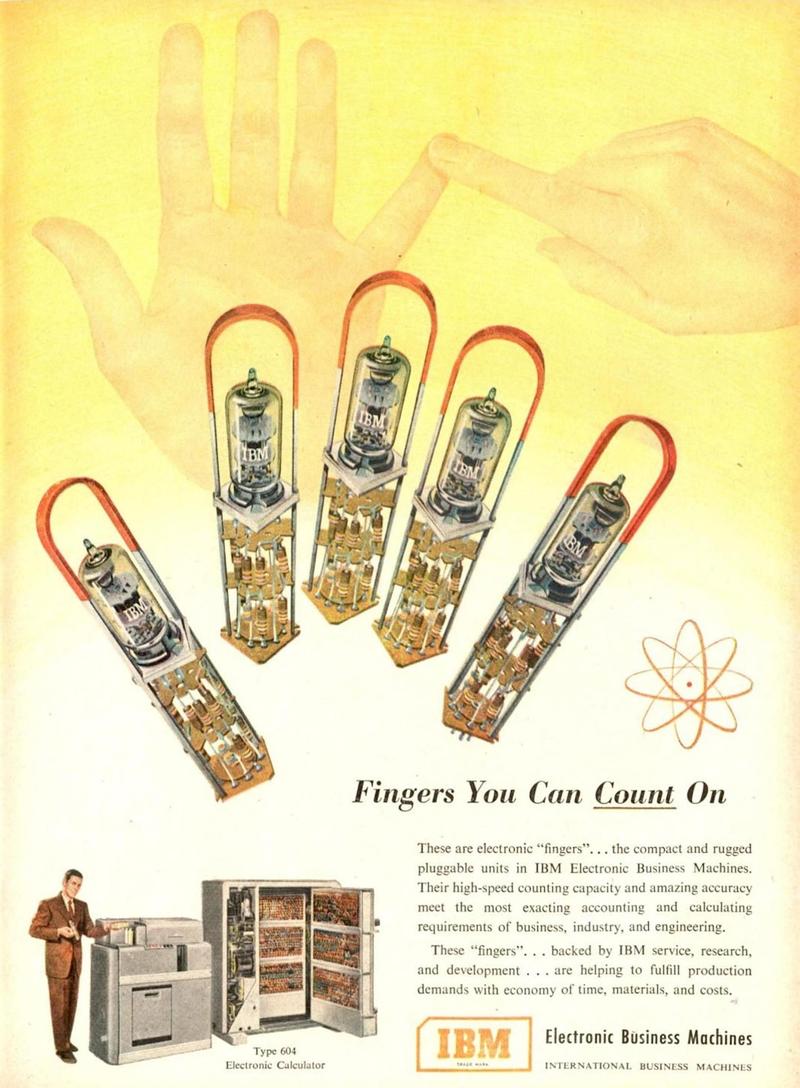
The thyratron: a tube that cannot be turned off
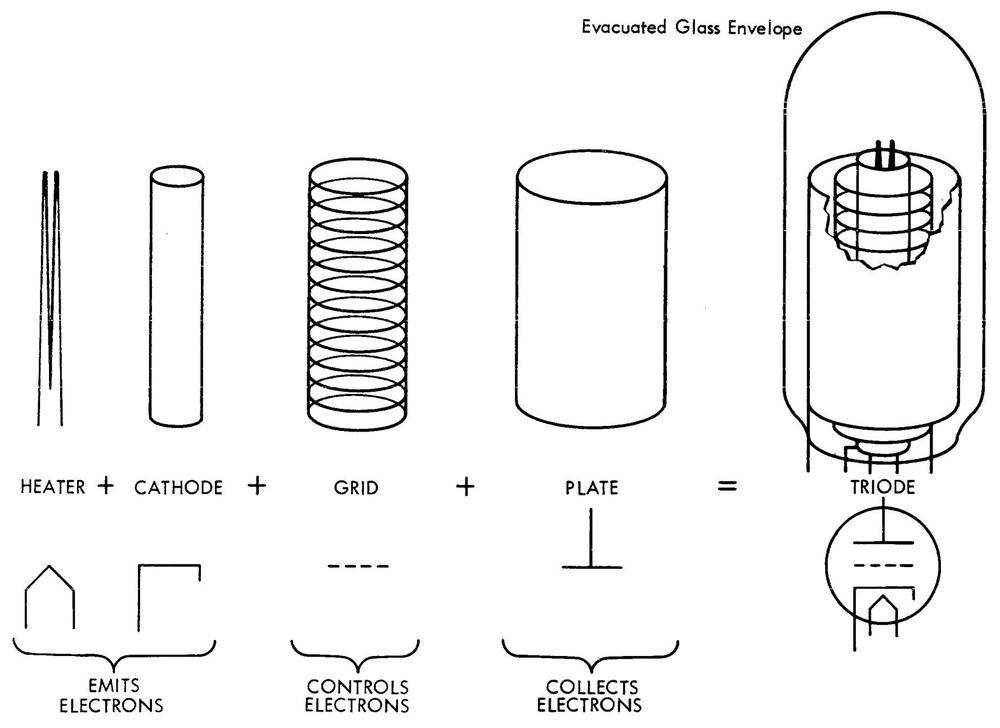
The module Shirriff tested — designated MD7A — contains a Type 2D21 thyratron, a vacuum tube variant that behaves fundamentally differently from a standard triode. Standard triodes work like transistors: a small negative grid voltage repels electrons from cathode to plate, blocking current. The grid remains in control throughout.
A thyratron contains xenon gas at roughly 0.05 Torr pressure. When the control grid fires a trigger signal, the gas ionizes and current flows from cathode to plate. At that point the grid loses authority entirely — as Shirriff writes, "the grid cannot stop the flow of current." The tube stays conducting until the plate voltage is removed, at which point the xenon deionizes in microseconds. The device is functionally equivalent to a silicon-controlled rectifier (SCR): a latching switch, not a proportional amplifier.
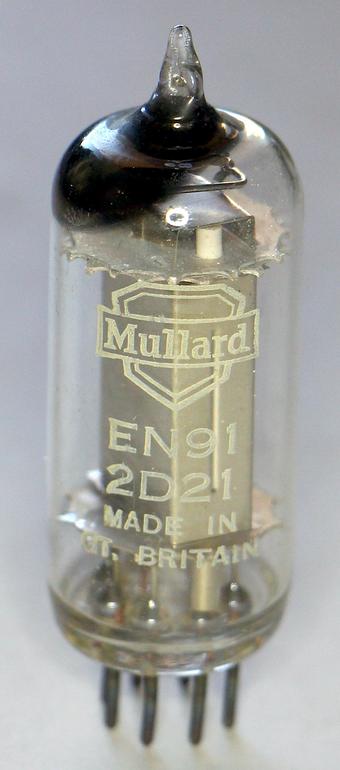
Shirriff's experimental setup applied approximately 100 volts to the plate and roughly 8 volts to trigger ionization. A light bulb connected between the output pin and ground lit when the thyratron fired and stayed lit until power was removed — exactly the latching behavior the 1948 documentation specifies. The nine-pin module connector pins map to the seven-pin tube plus additional circuitry; Shirriff traces the full pin configuration in the article.
The thread extends the history IBM prefers not to tell
Ken Shirriff appears in the thread to field questions directly:
"Author here for your vacuum tube questions..." — Ken Shirriff
The more expansive contribution comes from John Nagle, who writes the history that most computing textbooks skip:
"IBM had been working on electronic arithmetic prior to WWII, and the IBM 603 Electronic Multiplier (1946) was IBM's first deployed product with large numbers of tubes. It was built to find out if tube machines could be successfully deployed in a business environment and used commercially without constant tending by skilled technicians. That was the commercial limitation - the ENIAC and UNIVAC sized machines required large numbers of on-site techs to keep the hardware going. The 603 didn't… This side of computing gets less attention in histories, which tend to focus on the military machines. But this was the side that shipped in volume and made real money." — John Nagle, systems engineer
Nagle traces the full line: the mechanical IBM 601 (1931), through the 602, 602A, 603, 604, and finally the IBM 650 (1953) — drum memory, all-electronic computation, the machine Knuth dedicated his first book to. The thread's own reversal: the 604 is not a footnote to ENIAC; it is a direct ancestor of the computer industry's commercial branch.
A third voice in the thread turns out to be a collector:
"I still have well over a dozen of those IBM modules together with their paperwork and circuit diagrams (somewhere in my miles of files). They've been getting in the way and I've been meaning to chuck them away on many an occasion but something inside me has stopped me doing so because of their possible historical value. Shirriff's blog has reinforced my thinking, they'll just have to clutter up my place for a little longer methinks." — an HN user who has held onto the hardware for decades
What 1948 modularity solved — and what it still teaches
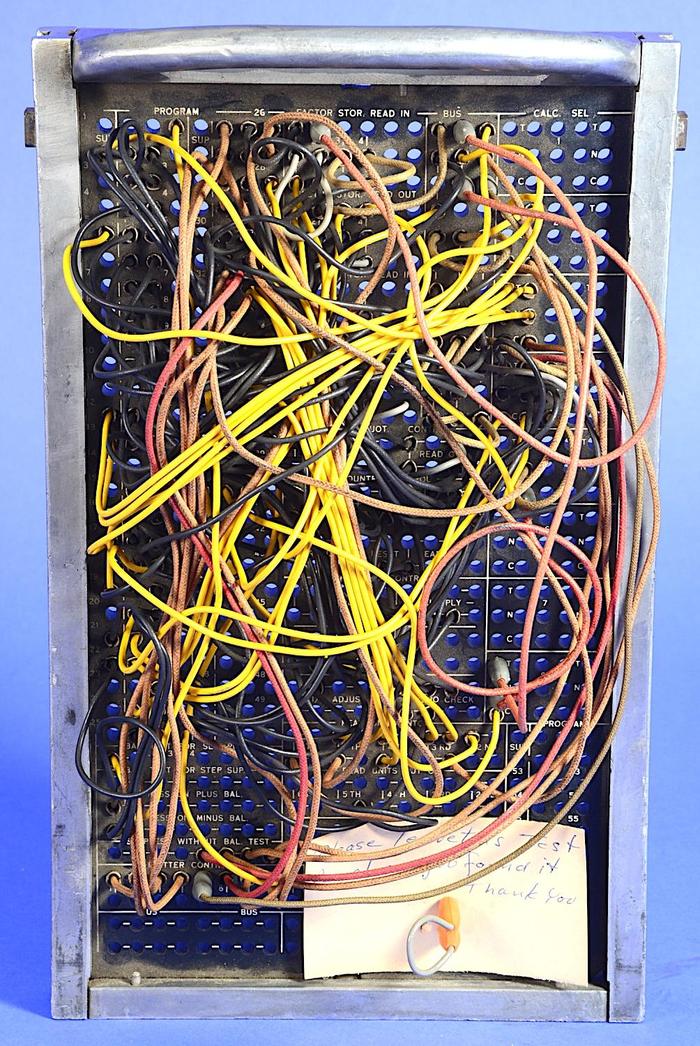
The IBM 604 sold on the same argument that every reliable computing system since has had to make: the technology must keep working when the expert is not in the room. ENIAC required a staff of engineers for continuous maintenance; the 604 did not. IBM's solution — standardized, swappable modules with defined interfaces — was not a convenience feature. It was the precondition for commercial deployment at scale.
Shirriff's test result is one data point, but a pointed one: a module manufactured in 1948, powered with bench equipment in 2026, behaving exactly as specified. The xenon deionized in microseconds, just as the manual said it would. Seventy-eight years of storage did not corrupt the physics.
Get breakdowns like this every day
The top Hacker News stories, unpacked — by email, Telegram, or RSS.
Texas data centers flunk ERCOT voltage tests, threatening grid stability
ERCOT, the Texas grid operator, has flagged that multiple data centers and cryptocurrency mining sites are failing mandatory voltage-response tests, meaning they can't shed load smoothly when the grid needs relief. The failure mode isn't just regulatory — a poorly behaved large load dropping suddenly can trigger the kind of frequency cascade that takes days to restart.