MLS is worth less than PSG alone — and that explains US soccer
Nate Silver's 2026 World Cup preview tries to quantify why the U.S. men's team underperforms its size, wealth, and athletic depth. The HN thread, with 224 comments on a 76-point post, ran hotter than the article — and landed on better answers.
Silver's sharpest number: all of MLS is worth €1.4 billion — roughly equal to PSG alone. The U.S. hasn't beaten a top-10 PELE opponent since 2015.
The thread was blunt: elite American athletes follow money and culture into football, basketball, baseball. If LeBron James grew up in England, he'd be the greatest goalkeeper in history.
Title IX forced universities to fund women's soccer, built a pipeline Europe lacked, and the USWNT became world-dominant. As European investment grew, U.S. dominance faded — proof the pipeline theory holds.
A World Cup Host That Can't Beat Anyone Ranked in the Top Ten
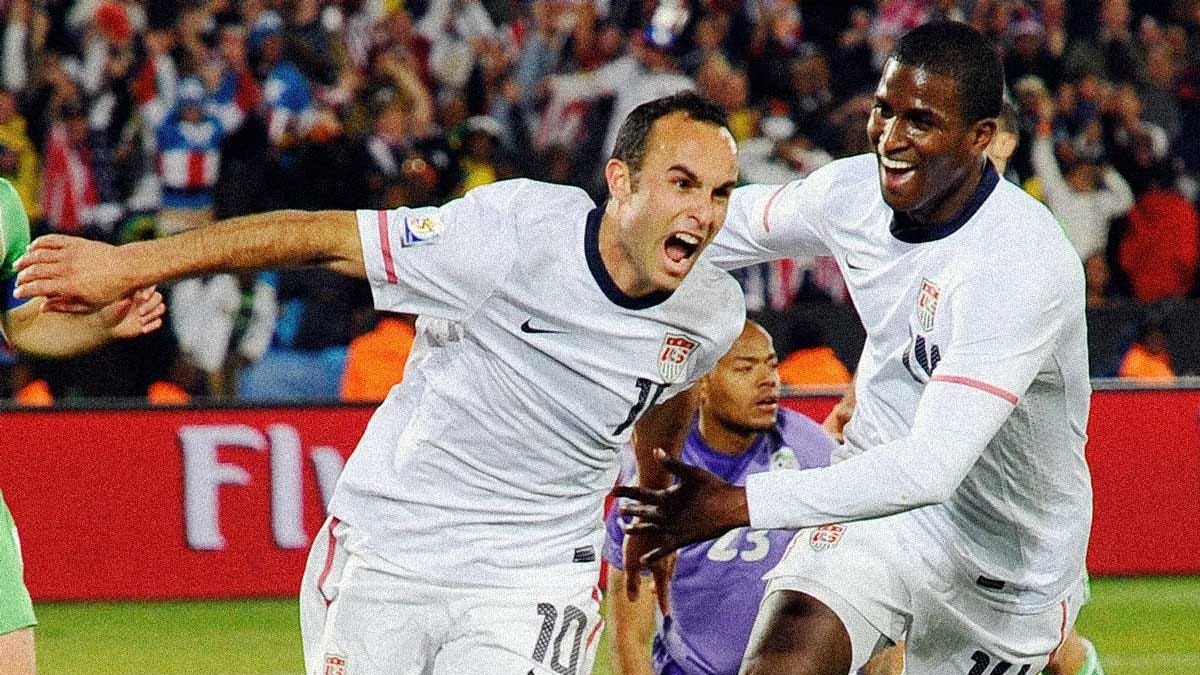
Nate Silver's Substack analysis of U.S. men's soccer arrived ahead of the 2026 World Cup with 76 points and sparked 224 comments — nearly three comments per point, an unusually high ratio that signals a thread worth reading independently of the article.
Silver's Diagnosis
Silver grounds the question in data that he acknowledges is damning. The U.S. PELE rating peaked in 1930, then collapsed after a decade-long gap in international play left the team going winless across six post-WWII matches, losing 36-2 on aggregate. Between 1930 and 1994, the U.S. won exactly one World Cup match.
The structural problems Silver identifies: American football, baseball, and basketball dominated the development decades when soccer's global infrastructure was being built. The MLS, meant to anchor a domestic pipeline, has a combined player market value of €1.4 billion — approximately equal to PSG alone. Google searches for MLS register at one-fifth of NHL traffic. The 2026 World Cup roster splits 17 players across European clubs with no two sharing a team, 8 in MLS, and 1 in Liga MX. The U.S. hasn't beaten a top-10 PELE opponent since a 2015 friendly against the Netherlands.
Silver's optimistic note: home-field advantage is substantial. Of 23 previous World Cup hosts, 6 won outright and 7 reached the semifinals. Prediction markets give the U.S. a 10 percent chance of reaching the semis — low, but meaningfully higher than at a neutral site.
What the Thread Found That Silver Missed
The most structurally precise answer came from a commenter who laid out the pay-to-play architecture point by point: in Europe, academies scout and train talented children for free before age 10; in the U.S., youth soccer is a consumption product that requires ongoing payment, so the best players from lower-income families often exit early. College soccer, which absorbs the survivors, is not a pipeline into European clubs — those clubs select at 10, not 22. "In Europe, the kids have already been selected at age 10, and the good ones generally don't go to university." — a software engineer and HN commenter who analyzed the pipeline in detail
The athleticism reversal was the thread's sharpest: the U.S. is not short of talent — it redirects it. "The U.S. isn't better at soccer because our best potential soccer players are playing defensive back or point guard. It's that simple." — a commenter identifying the talent-allocation problem. A quant who works in HFT strategy consulting noted that a "nation of hardcore soccer fanatics" operates by different mechanics entirely — referencing the Pablo Escobar-funded Colombian national team, including Andrés Escobar, who was murdered days after scoring an own goal in the 1994 World Cup: "Five-sigma players are extremely rare… but now suppose you could bump up the quality of your soccer players until the average among them was raised just one standard deviation above the global mean. Now you only need a population of 1 million to generate the same number of five-sigma players." — an Amsterdam-based investor analyzing talent distribution statistics
The women's team provided the cleanest natural experiment. Title IX forced universities to fund women's athletics, creating a subsidized domestic league and a coherent college-to-pro pipeline before professional women's leagues existed elsewhere. The U.S. women became the best team in the world. As the rest of the world has begun investing seriously in women's football, U.S. dominance has declined — which a cloud infrastructure engineer summarized cleanly: "When Title IX went into effect America put a huge amount of money into women's soccer and the US Women's team has been one of the best in the world ever since." — a cloud infrastructure engineer drawing the Title IX parallel
One commenter flagged a factual error in Silver's piece: the article claims no two USMNT players share a club team, but Sergiño Dest and Ricardo Pepi both played for PSV Eindhoven, and Joe Scally and Giovanni Reyna both played for Borussia Mönchengladbach. — a reader who spot-checked the roster claim
The Structural Answer the Article Approached but Didn't Land
The thread converged on a position Silver gestured toward without stating directly: the U.S. doesn't underperform relative to its population, it performs exactly as well as its incentive structure predicts. Pay-to-play youth soccer filters out lower-income athletes before they can develop. Elite athletes route to sports with clearer, better-funded domestic pipelines. The college system that would subsidize development runs four years behind European academy timelines. The women's team, built on a different incentive structure, won four World Cups. The men's team, built on the current one, has not won one match against a top-ten opponent in a decade.
Get breakdowns like this every day
The top Hacker News stories, unpacked — by email, Telegram, or RSS.
Bepirovirsen cures 19% of chronic hepatitis B patients in phase 3 trials
Two phase 3 trials enrolling more than 1,800 patients have shown that bepirovirsen, a GSK antisense oligonucleotide, achieves a functional cure in roughly one in five people with chronic hepatitis B — the first drug to do so without requiring lifelong daily treatment.