One developer's $100 Claude subscription consumed $450 in API tokens
A blogger who spent four months building a 40,000-line C++ application with Claude Code ran the numbers: his $100/month subscription covered tokens that would cost $450 at API rates. At the weekly usage ceiling, the subsidy factor hits roughly 12x — meaning Anthropic may be collecting $100 while spending $1,200.
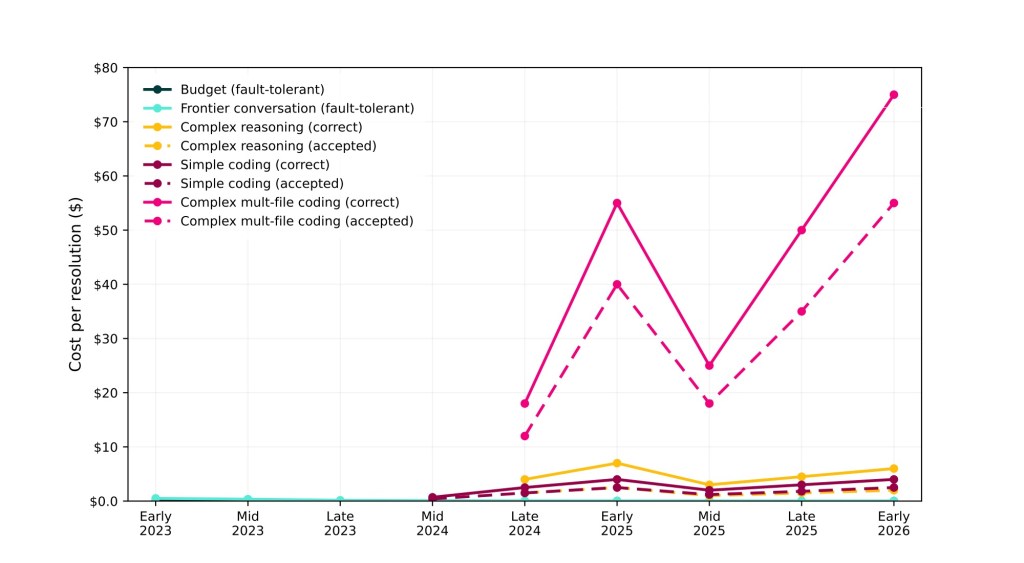
The culprit: extended thinking generates 30,000–50,000 invisible "thinking tokens" per turn on high-effort tasks, billed at output rates — turning a $4 simple query into a $55–$75 multi-file coding session.
The thread's sharpest rebuttal: enterprise AWS pricing for Opus 4.7 in China runs $0.257/million input and $1.286/million output — far below list API rates, suggesting the subsidy math collapses if actual inference costs are that low.
Both sides agree the Anthropic S-1 IPO filing will be the first source of real numbers.
The $100 Subscription That May Cost Anthropic $1,000

The blog post was filed under "IT Strategy & Architecture" by gctwnl, who is also the submitter in the thread. The methodology is one person's four-month project: building a 40,000-line C++ application using Claude Code on medium-to-high effort settings, tracking token consumption against published API pricing, and extrapolating to a general claim about the subscription model's economics.
The Numbers and How They Were Built
The author's personal experiment: a $100 Claude Max subscription combined with $180 in additional spending covered approximately $450 worth of API tokens — a 2.5x subsidy factor on his actual usage. At the weekly usage ceiling, the model reaches roughly 12x.
The per-task cost estimates that drive the analysis:
| Task type | Estimated API cost |
|---|---|
| Simple coding task | $2–$4 |
| Complex multi-file change | $55–$75 |
| Single high-effort query, 40k-line codebase | ~$25 (1M tokens) |
Opus 4.6 pricing used: $5/million input tokens, $25/million output tokens.
The key mechanism is "dark tokens" — extended thinking models generate 30,000 to 50,000 reasoning tokens per turn on high-effort settings, all billed at output rates but not shown in the visible conversation. Early 2023 queries used roughly 200 input and 400 output tokens. By late 2025, agentic coding sessions multiplied that by orders of magnitude.
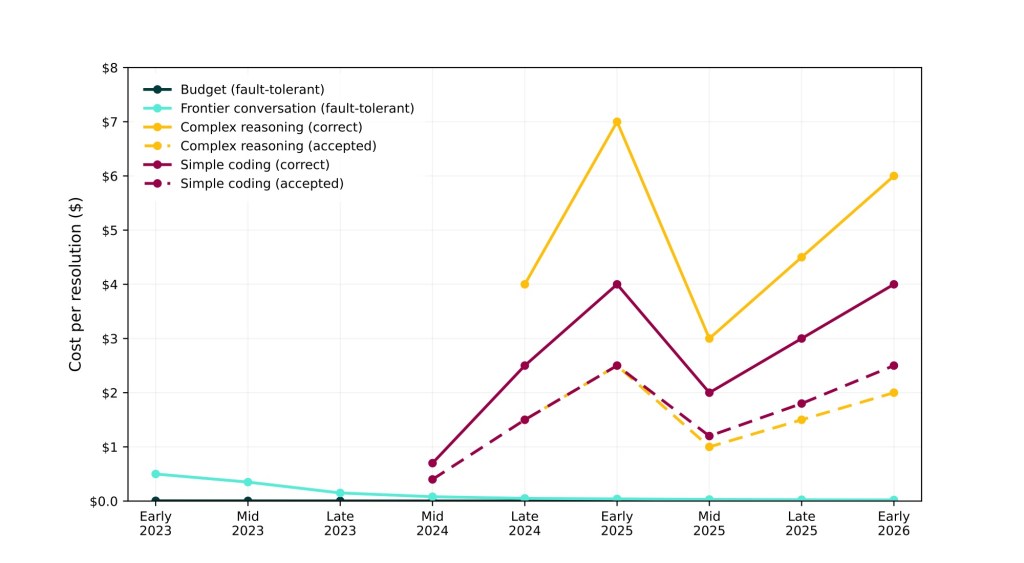
Two charts track cost-per-task over time. The first covers budget and frontier conversation costs plus simple coding — modest growth. The second adds complex multi-file coding tasks, which spike sharply after mid-2025 when Opus pricing dropped 3x but token consumption per task grew faster than the price fell.
The author is explicit about what he does not know: he assumes API pricing reflects real marginal cost, which may not be true. He used Claude itself to help research the piece and warns about that. He calls the whole thing "an educated guess, nothing more."
The Thread Disputes the Premise, Not Just the Numbers
The highest-karma rebuttal came from a commenter who cited actual enterprise AWS pricing for Opus 4.7 serving in China:
"Input: $0.257 / Output: $1.286 / Cache read: $0.0257 / Cache write: $0.322 — And I have zero doubts that using batching and other optimizations that subscription users are being served at an even lower cost. Most of their expenses likely come from training as we're far into the diminishing returns territory." — a commenter with enterprise connections citing AWS pricing data
If true, these inference costs are a small fraction of list API prices, which would make the subsidy claim collapse. The analysis in the blog post assumes API prices approximate marginal cost. If Anthropic is profiting on API while subsidizing subscriptions as a land-grab, the economics look different.
A commenter with 31,000 karma made the structural point:
"My own impression… is that Anthropic is offering subscriptions at cost (on average, power users are a bit more expensive, casual users more profitable) and making good profit on API pricing. Profit that then is spent on model training, marketing and development, for an overall negative bottom line." — a long-standing HN contributor on Anthropic's likely unit economics
A developer with a concrete counter-example:
"Our team ran cc-usage and our cost is right about what we pay as our monthly license… Our code base is not small, millions of lines of code. It does not take $65 in tokens to solve an issue. I'm running 3-4 claude code terminals at the same time and I'm still pretty close to what it would cost per a token for usage." — a developer reporting real team usage data
A third commenter flipped the whole framing:
"The people pushing the 'AI is heavily subsidised' narrative don't realise it actually flatters Anthropic and OpenAI more than the alternative. If inference is just cheap, that means the compute requirements are lower than we thought, and local hardware gets there even faster. Bullish on local either way. We'll find out once the Anthropic S-1 drops." — a commenter on the strategic implications either way
What the S-1 Will Settle
The methodological weakness in the blog post is the one the author concedes: without knowing Anthropic's actual inference cost — which is not the same as list API pricing — the subsidy calculation is speculation layered on speculation. The thread consensus is that the Anthropic IPO filing will provide the first real numbers. Until then, the debate has the shape of an argument about a price tag on a product whose actual cost nobody outside the building knows.
Get breakdowns like this every day
The top Hacker News stories, unpacked — by email, Telegram, or RSS.
Linear stores your whole database in the browser — here is how
Linear co-founder Tuomas wrote the sync engine before any product feature — an almost unheard-of startup decision. The payoff: every click applies locally in IndexedDB first; the server only hears about it afterward, making the app feel native while hiding the network entirely.