Teenage Engineering's $Price-on-Request record lathe weighs 308 pounds
Teenage Engineering just announced the APC-2: a 140-kilogram professional record-cutting lathe built from powder-coated aluminum and granite, distributed exclusively through SUPERSENSE. No price is listed anywhere on the product page — you email [email protected] and wait.
The APC-2 cuts stereo discs in real time: direct-drive tungsten shaft, wow/flutter below 0.01% WRMS, integrated vacuum swarf removal, Ethernet/WiFi remote control. Chassis is powder-coated aluminum and granite. Weight: 308 lbs.
No price on the page. HN split: boutique art object vs. absurd economics — 100 pressed records with jackets already cost ~$10 each professionally.
Thread consensus: the buyer is a mastering engineer or dub-plate specialist, not a hobbyist. The Vestax VRX-2000 filled this niche in the early 2000s for ~$10K.
A 308-Pound Record Cutter With No Price Tag
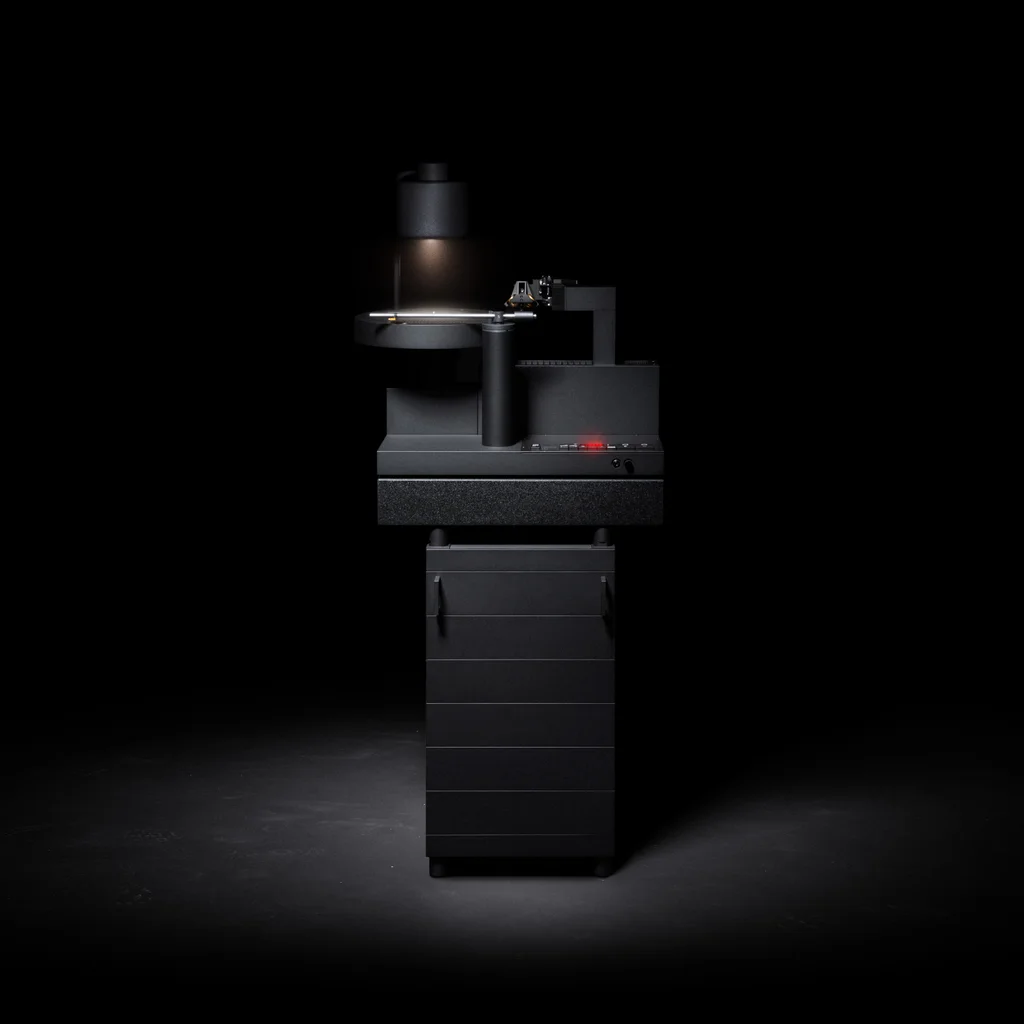
Teenage Engineering has a habit of releasing products that make you double-check the currency. The APC-2 is their most extreme entry yet: a professional-grade lacquer lathe that weighs 140 kilograms (308 lbs), measures 1,300 × 600 × 400 mm, and is distributed exclusively through SUPERSENSE, an analog-media specialist. Price? Inquire at [email protected]. There is no number on the page.
What the Machine Actually Does
The APC-2 is not a novelty. Its spec sheet reads like a professional mastering lathe: a direct-drive motor with a precision tungsten shaft, wow and flutter below 0.01% WRMS, a stereo feedback cutting head with an automated lift mechanism, an integrated vacuum system for disc hold-down and swarf removal, temperature-controlled heating, a power amp with RIAA encoder, a monitoring amplifier with headphone and line output, and remote control via Ethernet or WiFi. It runs on 230V or 120V. The chassis is powder-coated aluminum and granite. Teenage Engineering describes it as built for "producing original playback discs with superior sound quality in real time."
For context: a dedicated cutting shop charges per side, and 100 professionally pressed records with jackets can be had for roughly $10 a unit. The Gakken toy record cutter — the consumer-grade alternative that everyone has seen at a museum shop — costs $160 and delivers audibly limited results. The APC-2 sits somewhere between a boutique mastering facility and a collectible object of industrial design.
The Thread Debates Whether It Makes Sense
In the thread, the pushback was immediate and predictable — and then complicated.
"Not even a price listed. I don't understand the market for this… How many records would you need to make for this to be more economical than paying a dedicated shop?" — a high-karma HN regular
That's the obvious read. But a commenter who has owned both the OP-1 Field and the OP-XY offered a reframing that landed harder:
"Don't think of Teenage Engineering as a device product company. Think of them as a device art company. Suddenly it makes sense." — an HN hardware enthusiast
The historical parallel came from someone who remembered the Vestax VRX-2000:
"Vestax actually did something similar in the early 2000s with the VRX-2000 lathe cutter. It cost around $10K back then. The audio wasn't the best, but hey, you could make your own dubplates, and it did so in stereo!" — a commenter recalling prior art
So the APC-2 isn't unprecedented — it's a re-entry into a niche that Vestax briefly occupied and then abandoned. The difference is that Teenage Engineering is a design house with a global audience of instrument collectors, and SUPERSENSE gives it a distribution channel pointed directly at the analog-media faithful.
One commenter pointed out that a single one-off record can already be cut at shops like recordcut.com for $12 — "Rich will actually answer the phone, and guide you" — which reframes the APC-2 not as a cost-per-unit play but as capital equipment for someone who wants that capability permanently on-site.
The Granite Base and the Disappearing Price
The APC-2 is engineered for a buyer who has already internalized that professional mastering equipment costs serious money, wants the aesthetics of a Teenage Engineering object, and needs something they can operate at midnight without booking a studio. The "price on request" model isn't coyness — it's a filter. If you flinch at emailing for a quote, you're not the customer. The question the thread couldn't resolve is whether that customer exists in large enough numbers to justify a production run. Teenage Engineering's answer, implicitly, is that the run is limited by design.
Get breakdowns like this every day
The top Hacker News stories, unpacked — by email, Telegram, or RSS.
Science journal blames the internet's structure; HN blames the argument
A paper in Science argues that the internet's technical architecture — centralized platforms, engagement-optimizing algorithms, and advertising-dependent revenue — structurally degrades democratic discourse. The HN thread spent more time interrogating the paper's framing than its evidence.