A judge struck down the $100K H-1B fee as a tax Congress never authorized
The headline says tech, but the lawsuit that killed the $100,000 H-1B fee surfaced through rural Alaska — where visa teachers make up 50% to 80% of staff in some districts. A federal judge in Boston ruled the fee was an unlawful tax the president had no power to impose.
US District Judge Leo Sorokin in Boston struck down the $100,000 H-1B fee, ruling it an unlawful tax Congress never authorized and that the administration never explained — a violation of the Administrative Procedure Act.
The case came from 20 state attorneys general, and the most-cited impact in the thread wasn't Silicon Valley: rural Alaska school districts, where the fee on top of $6,000-$12,000 recruiting costs made hiring the teachers students depend on financially impossible.
The ruling that turned a $100K fee back into a question of who can tax
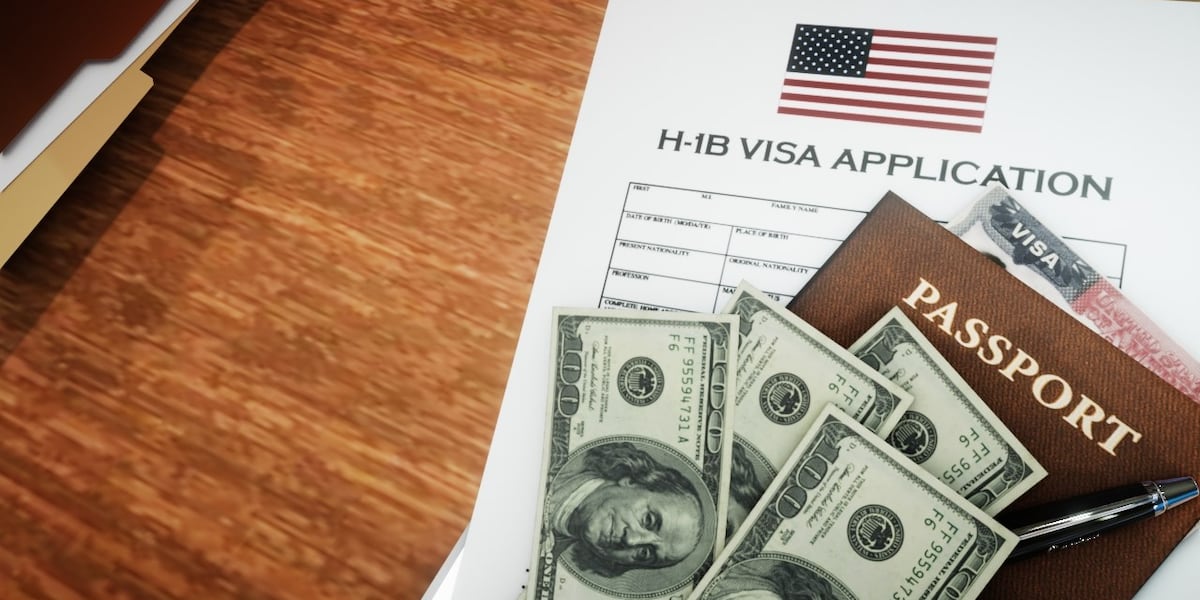
The report that surfaced on HN, "Federal judge blocks H1B visa $100K fee", came from an Alaska outlet — which set the frame for the whole discussion. The legal core, confirmed by Reuters and CNN reporting the thread surfaced: on June 8, 2026, US District Judge Leo Sorokin in Boston struck down the $100,000 fee on new H-1B visas that the president announced in September 2025 by proclamation.
The grounds: an unlawful tax, not a fee
The judge's reasoning is narrow and procedural, not a verdict on immigration policy. He concluded the charge functioned as a tax — and the power to tax belongs to Congress, which never authorized it. The administration also "did not explain the decision to implement the fee", which the court found violated the Administrative Procedure Act (the law requiring agencies to justify rules through proper process). The suit was brought by 20 Democratic state attorneys general. Because Sorokin's ruling vacated the policy rather than issuing a narrow injunction, commenters who tracked it read it as nationwide, not Alaska-only.
The thread: this was never really about Silicon Valley
The HN crowd's first instinct was tech hiring — then a commenter pulled the actual article into focus, and the debate changed shape:
"For those not reading the linked article, it was not about tech… In some rural districts, visa teachers make up 50% to nearly 80% of the teaching staff. School districts already invest $6,000 to $12,000 per teacher to recruit and sponsor educators… Adding a $100,000 federal visa fee has made it financially impossible…" — a commenter quoting the article's Alaska detail
A self-identified former policy analyst (now in VC) widened the sectors hit and named a second-order effect — the fee set a price floor that pushes companies to build engineering centers abroad:
"This is great news for healthcare, academia, and engineering subdisciplines that don't have the margins to support a $100K per application fee… Trump's announcement has done lasting damage to tech hiring in the US because it's set a price floor for opening a GCC [Global Capacity Center]…" — a former policy analyst, now in VC
The reform camp: the fee is a blunt fix for a real problem
A strong line in the thread held that the H-1B program genuinely is gamed — but that a flat six-figure fee is the wrong instrument. The recurring concrete fixes:
- No subcontracting — visa holders must work directly for the sponsor, disqualifying consulting-firm middlemen.
- No mass layoffs — a company that does mass layoffs is barred from sponsoring new visas for a set period.
- Prioritize by salary instead of a random lottery, so the visa actually goes to hard-to-fill high-wage roles.
One commenter put the structural critique plainly:
"The fact that people oppose this solution doesn't mean they disagree with the problem. We oppose it because it's stupid… Given the difference in expected engineering salaries… $100,000 is not an effective way of making that happen." — a commenter on why the fee misses
Another flagged a recurring surprise for non-Americans in the thread: the US importing teachers, doctors and nurses for rural areas at all.
"It's more alarming that US doesn't have enough skilled teachers in the nation that we have to hire from overseas. Education is an investment to the future generation…" — a commenter on the underlying shortage
Why a procedural win settles little
The ruling is a win for the plaintiffs but a narrow one: it says the president can't impose a six-figure tax by proclamation without Congress, not that the H-1B program is healthy. The reform fixes the thread kept naming — no subcontracting, no post-layoff sponsoring, salary-ranked allocation — all require Congress, the body one commenter dryly noted has "stopped doing anything." So the practical state of play: the fee is vacated, the Alaska classrooms and rural clinics keep their visa hires for now, an appeal is the obvious next move, and the design problems everyone agrees exist remain exactly where they were.
Get breakdowns like this every day
The top Hacker News stories, unpacked — by email, Telegram, or RSS.
EU-banned pesticides in 45 of 64 food samples — a boomerang of Europe's own exports
Foodwatch tested 64 rice, tea and spice products across four EU countries. Every paprika, chili and cumin sample carried banned pesticide residues — many of them chemicals European factories had exported abroad in the first place.