Ableton finally opens Live to JavaScript, and a sheet-music tool appears the same day
After years of Max for Live being the only door in, Ableton shipped an open JavaScript SDK in the Live 12.4.5 beta. Within a day a commenter had built an extension that renders MIDI clips as sheet music, and also mapped exactly where the SDK still hits a wall.
A JavaScript door into a DAW that only had a Max one
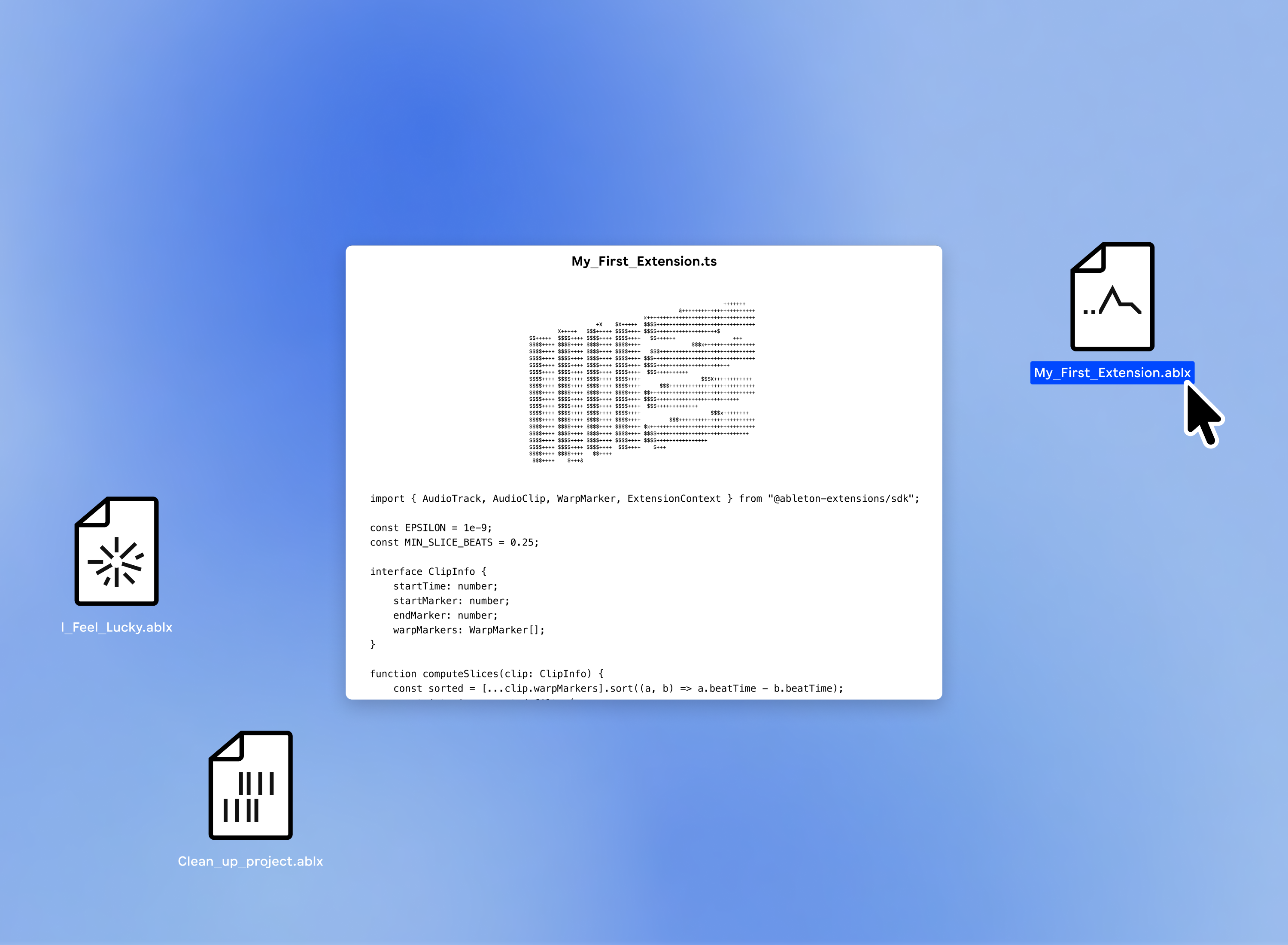
Ableton's Extensions, in public beta from Live 12.4.5 Suite, are "a new, open JavaScript SDK" for extending Live — the DAW (digital audio workstation, the software a track is built in). You trigger an extension from a right-click context menu on a clip, track or device; a panel pops up for parameters, it runs once, and stops. They're built on Node.js, and Ableton pitches them for transforming MIDI, analyzing song and track structure, automating repetitive tasks, building generative patterns, connecting to external services — even toy games. The company even claims that if you can describe the idea clearly, you may be able to build one with AI assistance and no coding.
The headline shift is the language. For years the only sanctioned way to script Live was Max for Live, with its visual patching syntax that many programmers actively dislike.
A working extension by end of day, and the limits with it
The most valuable comment didn't speculate — it shipped.
"I spent my day hacking on this… built a simple little tool that displays MIDI clips as sheet music… Strong: Using the TS/JS ecosystem to render UI and tools… Weak: Anything real-time, that's still the domain of M[ax]." — a developer who published an Ableton sheet-music extension on GitHub
Veterans pointed out scripting Live wasn't new, just newly pleasant: "it's already been possible to write Python extensions for Ableton using the LOM" — the Live Object Model — "which I was doing via ClyphXPro. But this looks easier," wrote a producer who already scripted Live in Python via ClyphX Pro. Another had pitched exactly this idea to Ableton long ago: "I applied for a job with them and proposed this exact thing about 8 years ago (got auto-rejected)… But I'm glad to see they finally did it," said a developer who pitched Ableton this exact feature eight years ago.
And the security reflex arrived right on cue.
"Woot, javascript in live, now we can have supply chain attacks in our daws; yay." — a skeptic flagging supply-chain risk in DAWs
One longtime user framed why it matters for Ableton specifically: "Far too much of Ableton's secret sauce is hidden away behind Max for Live and top-tier pricing only features. This is a great step in the right direction," wrote a longtime Ableton user.
Open SDK, closed edition
The catch underneath the openness: Extensions are Suite-only, locked out of Standard, Intro and Lite. So the "open" SDK still sits behind Ableton's most expensive tier — and, by the first builder's own account, can't yet touch the real-time audio path that is the whole reason Max for Live exists. The first day proved the easy half (UI, MIDI munging, external services) works; the hard half is still patched in green.
Get breakdowns like this every day
The top Hacker News stories, unpacked — by email, Telegram, or RSS.
Cloudflare says bots beat humans online — its own pages disagree by 30 points
Cloudflare Radar's traffic view shows automated requests edging out humans. Then a reader opened the Bots page and found 65.9% human, 34.1% bot. Same company, same week, opposite answers.