Topic

Programming & Languages

60 stories

He charted seven years of GitHub activity. AI made 2026 his busiest year since 2020 (oioannou.com)

Ioannou, an engineer at Bold.org, pulled his GitHub history and found his median weekday had gone from 3 or 4 contributions to 7. Days with no activity fell from 40 to 46 a year to 18 so far. He blames cheap starts: agents make every new project easy to begin and hard to put down.

The thread's sharpest reply came from commenters who think he misread the deal from the start.

Not just a headline — the discussion unpacked

The top HN threads: facts from the discussions, both sides, insider voices. Email, Telegram, or RSS.

Python's JIT shipped in 3.13, and its own authors just withdrew the PEP that would keep it (lwn.net)

The JIT, merged in 2024 without a standards-track PEP, was paused in June 2026 until one was accepted. Its maintainers drafted PEP 836, but the council wanted concrete support, performance and security plans, and objected to a compatibility review not due until August 2028. On October 19 the authors gave up.

Readers split between mourning and shrugging, and one pointed at a pattern.

A 1990s strategy game crashed past 255 units, and that is one reason this blogger defends modern software (bitlog.com)

Voytko lists what the old days actually looked like: blue screens from drivers, no autosave, screensaver passwords anyone could bypass, 20-minute boots, scratched CDs and corroded NES cartridges you could never patch. He still concedes that today's software is bloated and worries about delegating it to AI agents.

Commenters accepted the history but disputed one metric.

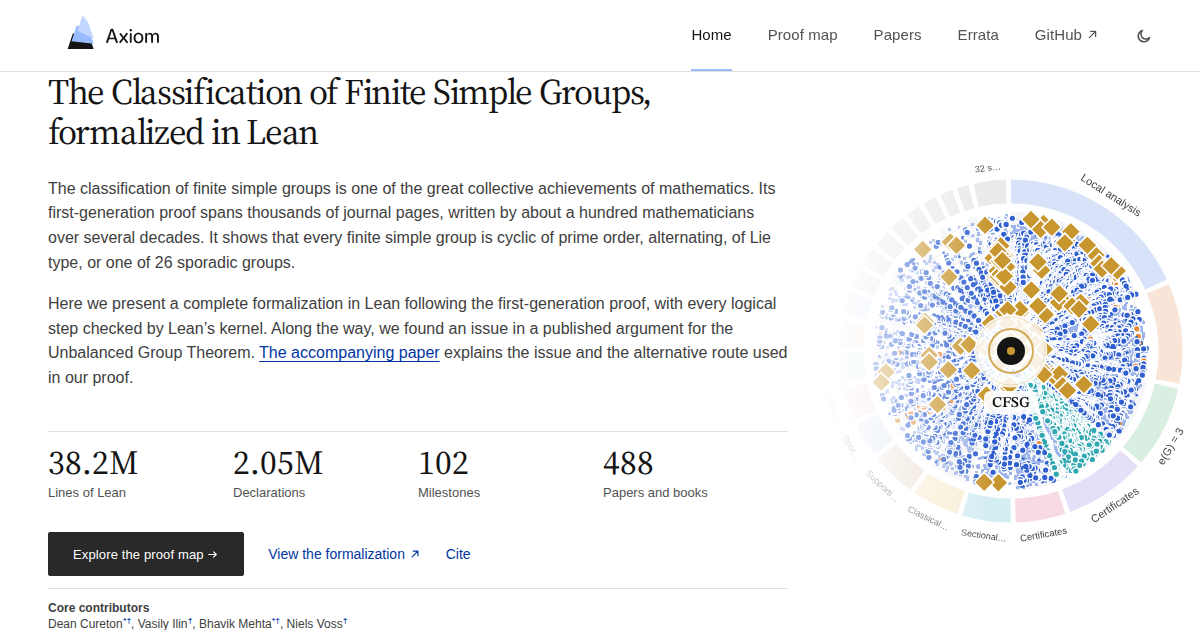
Lean has checked all 43.1 million lines of the finite simple groups classification, and found one gap (cfsg.axiommath.ai)

Every logical step of the classification, the theorem that every finite simple group is cyclic of prime order, alternating, of Lie type or one of 26 sporadic groups, was checked by Lean's kernel. The formalization has 2.05 million declarations and 100 milestones, and the team published an alternative route for the affected case.

Mathematicians in the thread were surprised the count was so low.

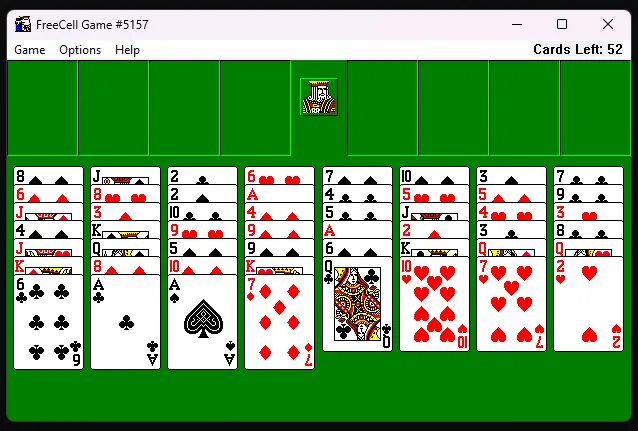
A 1993 FreeCell still runs on Windows 11, and a 1992 CD player almost does (blog.enlyth.com)

A pre-release NT 3.1 CD player linked on 16 November 1992 also runs, using the system's crtdll.dll. Earlier NT builds crash because they used the cdecl calling convention, where Windows 11 expects stdcall.

With the otvdm 16-bit emulator, even Windows 1.01's Reversi from 1985 launches, which the author admits feels like cheating.

🌍Other ★ 297 · 💬 189 · yesterday · #culture#programming#FreeCell#Microsoft#Win32+1

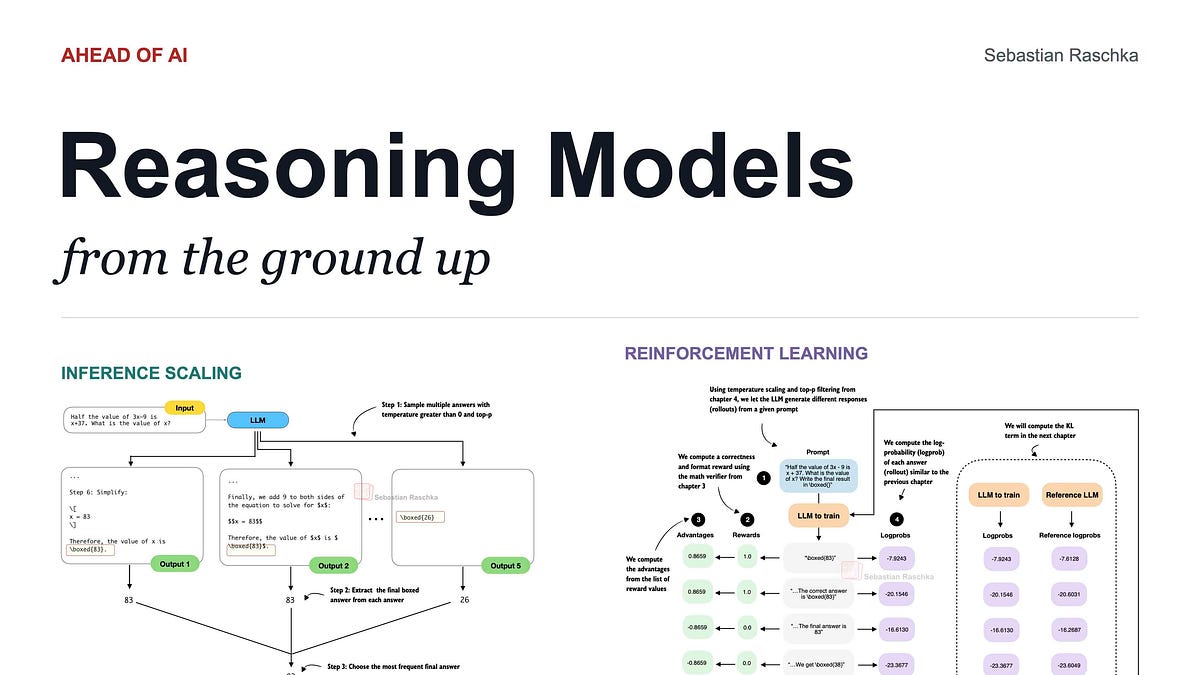
Sebastian Raschka's free 11-hour course trains a reasoning model from Qwen3 0.6B (magazine.sebastianraschka.com)

The course improves a pre-trained Qwen3 0.6B model rather than training from scratch, runs early sections on a CPU and ships code in a GitHub repository.

Commenters split between readers of his LLM book who loved it and skeptics who asked who the course is for.

🚀Tech ★ 564 · 💬 81 · yesterday · #AI#programming#PyTorch#Qwen3#Sebastian Raschka

A $500 bitcoin wallet sat on a PHP server for hours and nobody took it (stealmybitcoin.com)

The test was a price tag on the claim that AI makes PHP exploitation trivial. Within hours strangers had topped the wallet up to $2,000 and the prize was still unclaimed.

One commenter had an LLM-generated proof of concept that crashed the site. A crash is not a shell.

🚀Tech ★ 412 · 💬 251 · 3 days ago · #crypto#programming#security#Bitcoin#PHP#PHP2Shell

ClickHouse deleted a Postgres rewrite from its benchmark after finding per-query code in the binary (github.com)

ClickBench's maintainer removed pgrust, a Rust reimplementation of Postgres, saying its entry measured "a lookup table of the benchmark, not a database." Probes with slightly altered queries were refused with errors.

pgrust's creator showed up in the thread to say the accusations are false. Commenters wanted to know why the paths were in the binary.

UUIDv7 only promises uniqueness, and Python's version can run ahead of your clock (alexsci.com)

Alex Scott's post argues the three properties people credit to UUIDv7, monotonic order, a trustworthy creation time and unguessability, are not guaranteed by RFC 9562. Even Postgres warns that an extracted timestamp may differ from the creation time.

Commenters said that misses the real reason to use it: keeping new rows together in the index.

🚀Tech ★ 114 · 💬 99 · 4 days ago · #data#programming#web#Postgres#Python#RFC 9562+1

He broke the PHP RCE embargo, and says his source told him there wasn't one (news.ycombinator.com)

He follows the four-weekly PHP release cycle and compiles from source, so he wanted to warn people like him to update. The disclosure schedule changed after his post.

A commenter's rule: if you got the vulnerability details without the embargo, someone upstream broke it, not you.

💬Ask HN ★ 389 · 💬 161 · 5 days ago · #open source#programming#security#PHP

Claude proved 239 library entry points crash-free, using about 180 million lines of Rocq (anthropic.com)

The property is modest: no crash or failed assertion for any input under 64 MB. A typical proof is about 600,000 lines for a binary of roughly 18,000 instructions, and the process found hundreds of bugs, including one needing a ~20 MB input.

The proofs cover static musl builds on RISC-V, not the x86 and glibc most people run.

🚀Tech ★ 122 · 💬 62 · 5 days ago · #AI#programming#security#Anthropic#Claude#OSS-Fuzz+1

Ear clipping beat Delaunay six times over on 3.7 million map polygons (globus.software)

The author wrote earstrip, a C++ header with a WebAssembly build, adding a convex shortcut, strip output and branch-free counting to ear clipping. Native, it is about 14% faster than earcut.hpp.

Self-touching polygons fall back to Delaunay, as do those with 128 or more holes.

🚀Tech ★ 204 · 💬 38 · 5 days ago · #open source#programming#earcut#earstrip#Mapbox

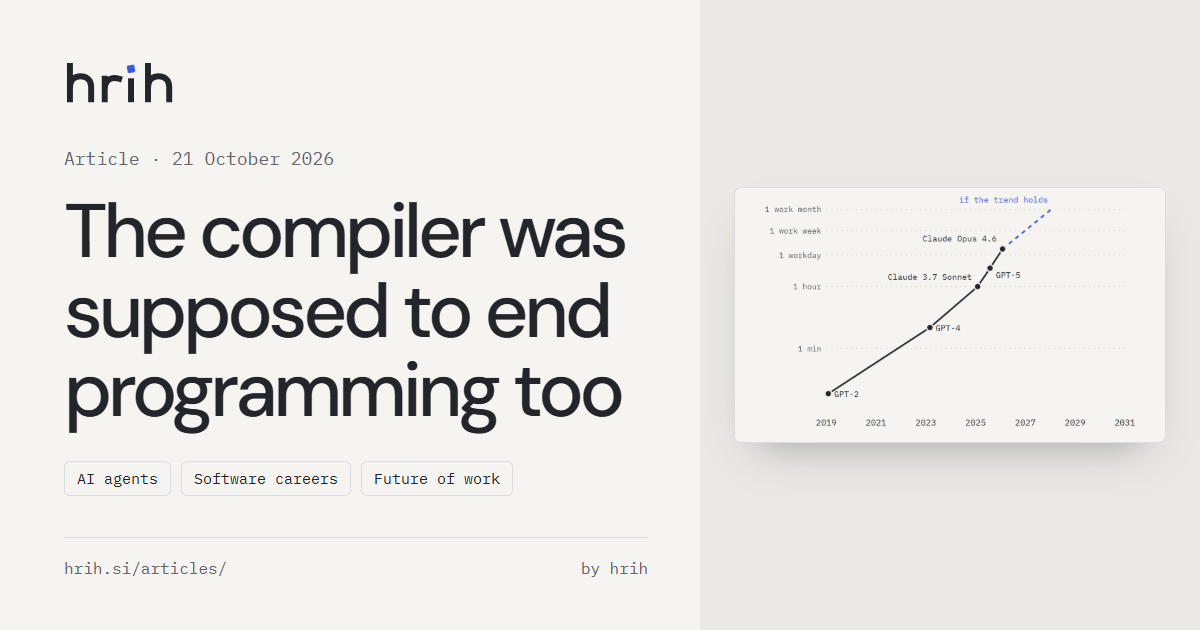
FORTRAN was also going to end programming: IBM said so in 1954 (hrih.si)

An essay at hrih.si says AI follows FORTRAN's pattern, only faster: a METR trial found experienced developers 19% slower with AI while believing they were faster, and Faros AI data showed more pull requests but much longer reviews.

Commenters attack the analogy itself. One says compilers were first called "automatic coders"; another says a compiler maps input to output roughly 1:1, and an LLM does not.

🚀Tech ★ 95 · 💬 134 · 6 days ago · #AI#culture#programming#Faros AI#FORTRAN#IBM+1

Cloudflare ports TypeScript to Rust and claims 8x speed with 70% less memory (blog.cloudflare.com)

Cloudflare's experimental Rust port of the TypeScript compiler claims up to 8x speed and about 70% less memory than TypeScript 7.0, with the code written by frontier models in days.

A TypeScript team member says much of the speed is not language choice, and some of it is already landing in TypeScript 7.1.

🚀Tech ★ 346 · 💬 172 · 7 days ago · #dev tools#programming#Cloudflare#Rust#TypeScript+1

A Ruby developer archived every gem he wrote, citing Matz's pivot to the AI age (po-ru.com)

Paul Battley, a London developer, archived all his Ruby gems and wrote that he no longer wants to feed a commons that big companies strip-mine for machines. He points at Ruby's own core team, which he says now builds the language largely with LLM agents.

In the thread, the founder of an email company described a friend on an 80K-star project who is disillusioned too: the robots work, but the joy of collaborating is gone.

Ask HN: what do you do when you ship AI-written code you don't understand? (news.ycombinator.com)

An Ask HN thread asked how engineers cope with shipping LLM-written code they haven't fully read. A Hasura engineer says his own system became fuzzy once he moved from IDE autocomplete to Claude and Codex CLIs, and argues the answer is formally verifiable code.

The loudest counter: you already ship code you haven't read. Principal engineers always have.

💬Ask HN ★ 276 · 💬 414 · Oct 20 · #AI#dev tools#programming#Claude#Codex#Hasura+1

Linux 7.3 ships with 18,765 commits and 807 first-time kernel contributors (lwn.net)

LWN calls Linux 7.3 a record-breaking release: 18,765 non-merge commits from 3,021 developers, 807 of them first-timers. The headline changes include a new fchroot() system call, per-CPU global data for BPF, and a finished sched_ext subscheduler.

There is also failfs, a filesystem that deliberately fails every operation, built for testing.

🚀Tech ★ 591 · 💬 276 · Oct 20 · #open source#programming#BPF#Linux#LWN+1

Parser combinators in TypeScript, shown by parsing real ping output (t3.at)

A parser here is a function from a string to a value and the unread remainder. Small ones chain into larger ones with pSeq, pMap and pRepeat, and the typed result is a tuple or object rather than a match array.

The finished example parses the header, per-packet lines and summary of a real ping run into one typed object.

Linux 7.2 was one of the busiest kernel cycles ever, and LWN is worried who understands the patches (lwn.net)

1,111 changes carry Assisted-by tags, up from 301 in 7.1, and 252 commits credit the Sashiko review system with the report. LWN says the surge in Fixes tags looks like people using LLMs to hunt bugs in old code.

Its worry: if the flood of patches continues, the kernel could end up with code nobody fully understands.

Vercel Labs compiled a TypeScript port of the TypeScript compiler into a native binary (github.com)

Each compiler stage was compared against tsgo on TypeScript's own test corpus of roughly 12,500 files, and the project reports matching results on the tested cases. No benchmark results are published, only a script to produce them.

A commenter who tested it against the Go build confirmed it is faster than the Go version, but warned the code targets the subset of TypeScript that scriptc supports, so the result may be tuned to the toolchain.

Claude writes 90% of Claude Code, so its team rebuilt code review around risk tiers (claude.dev)

Anthropic says merged PRs for Claude Code more than doubled from June to September while reverts fell by over 40%. A classifier now sorts changes into no-human, one-human or two-human review, and an agent's approval never counts as a human's.

Hacker News mostly doubted that throughput measures anything.

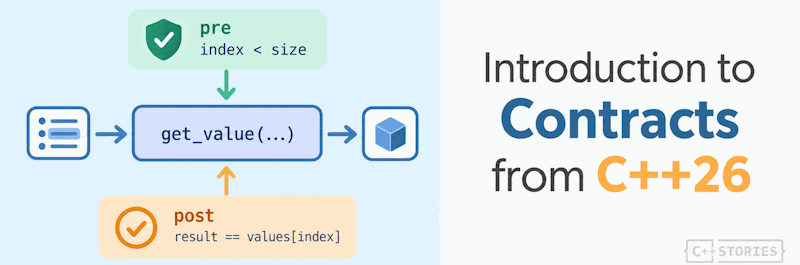
C++26 gets contracts. The man who built them into D says they weren't useful (cppstories.com)

Contracts let a C++ function state what callers must guarantee and what it promises back. A violation can be ignored, observed, enforced or quick-enforced, chosen per build with no portable per-assertion switch, and the guide warns they are not input validation.

Walter Bright, who says he added contracts to Zortech C++ in the 1990s and to D later, wrote that they "just turned out to not be very useful". An embedded developer wants the opposite trade: checks on at the workstation, off on weak production CPUs.

🚀Tech ★ 136 · 💬 147 · Oct 16 · #dev tools#programming#C++26#D#GCC+1

A CUDA search solved a random island’s location from its geometry (yassa9.github.io)

The author used the shape and perspective clues in a photograph to narrow the world, then used CUDA to compare geometry across possible locations.

Its value is methodological: the answer matters less than making the chain of inference reproducible enough for someone else to challenge.

🌍Other ★ 409 · 💬 75 · Aug 20 · #programming#science#security#CUDA#OSINT

PostgreSQL for everything is a design choice with a price (raphaelbauer.com)

PostgreSQL can cover relational data, full-text search, queues, and extensions in one familiar operational surface, which is attractive to small teams.

The counterpoint is not that Postgres is weak. It is that a default becomes cargo cult when workload shape, scale, or failure modes have not been examined.

🚀Tech ★ 307 · 💬 190 · Aug 20 · #data#dev tools#programming#PostgreSQL

Claude Code users build cleanup passes for its own prose (github.com)

The complaint is not only stylistic. Readers said the prose makes it harder to see the actual decision, so they add banned-word lists and ask for plain-language explanations with examples.

The sharpest irony was an Anthropic reply reportedly written with Claude in a thread criticising recognisable Claude phrasing.

GitHub alternatives become a stack, not a single replacement (news.ycombinator.com)

Forgejo and Codeberg kept coming up for people who want a lightweight forge they can host or use as a public service; GitLab was the answer for organizations that need a familiar enterprise-shaped platform.

The useful distinction was not hosted versus self-hosted. It was whether a team needs GitHub Actions and App integrations, or merely Git repositories with dependable CI.

Claude turns an abandoned Windows printer into a macOS project (twitter.com)

The author linked the resulting [hp-laser-1008a-macos](https://github.com/Kuberwastaken/hp-laser-1008a-macos) project after describing the machine as a useful case study.

Other developers replied with similar work on Xbox adapters, e-paper screens, and industrial printers: specs, captured traffic, and prior art become enough material for a model to help bridge an unsupported platform.

Anthropic says agent teams need social engineering, not just smarter models (anthropic.com)

Anthropic's multi-agent research treats coordination as its own engineering problem, not a capability that simply appears when each model gets stronger.

HN readers focused on the awkward practical consequence: clear roles and constrained communication may matter more than unleashing a roomful of equal agents.

Protobuf finally gets an IDE brain through Buf's LSP server (buf.build)

Buf released a production-grade Language Server Protocol server for Protobuf, bundled with its CLI and available through its VS Code extension or editor configuration.

The real upgrade is incremental, query-driven analysis that can diagnose schema mistakes while developers work, rather than treating .proto files as second-class text.

AI's larger working memory creates an audit problem (davidepiffer.com)

The claim is concrete: a system can keep far more intermediate material active than a person. That makes it able to search many more paths before it commits.

HN's important turn was about verification. A result can be useful while becoming too intricate for a human to audit without structured checkpoints.

🚀Tech ★ 460 · 💬 399 · Aug 16 · #AI#programming#science#AI#Hacker News

A 232× kernel experiment makes verification the agent skill (sankalp.bearblog.dev)

The experiment paired an agent with benchmarking, profiling, research, and correctness verification. That made optimization a constrained search problem.

HN readers reported that agents work best where a system supplies a hard answer. They fail more readily when success depends on credentials or a human-operated dashboard.

🚀Tech ★ 413 · 💬 90 · Aug 16 · #AI#dev tools#programming#Codex#Intel VTune

Working with agents feels like leadership, until it doesn't (allen.bargi.org)

The leadership analogy points to a real workflow: define outcomes, expose constraints, and make decisions explicit before implementation starts.

The counterargument is equally useful. Agent work is specification, review, and feedback design, not people management with its consent and motivation work.

An AI skeptic asks whether productivity claims have earned layoffs (blog.jsbarretto.com)

The essay warns against treating intellectual labor as interchangeable output. HN readers countered with supervised workflows that let them do work they otherwise could not.

Both views point to the same test: local task speed is observable, while organizational transformation must survive quality costs, oversight, and work omitted from benchmarks.

Unicode's ghost characters reveal how a standard preserves mistakes (dampfkraft.com)

The essay follows characters that entered reference works through transcription errors and historical ambiguity. Once encoded, they become part of the compatibility burden that keeps old text readable.

HN readers described the conservative trade-off: extra invalid characters are often safer than deleting a character that later proves to be real.

RISC-V’s critics say openness did not prevent old mistakes (dmitry.gr)

The RISC-V debate is not about whether an open instruction set is valuable. It is about whether the base specification makes the right compromises for cheap controllers and broad implementation.

HN’s reply was strikingly practical: even critics who recognize the flaws still prefer an open ISA to a future built only on proprietary ones.

DeepSeek Harness trends before readers can explain its job (deepseek.com)

DeepSeek Harness is a developer preview for coding-agent workflows, but its sparse initial material made its architecture clearer than its everyday use case.

HN readers were curious about first-party harnesses, yet the most repeated question was simpler: what is this tool for and why should a developer switch?

GitHub Trending: Today — free-for-dev, OpenBB, awesome-go, Playwright, Web Dev (github.com)

In today’s GitHub Trending: free-for-dev (a catalog of developer free tiers), OpenBB (an open data platform for analysis), awesome-go (a curated Go ecosystem), Playwright (cross-browser testing), and Web Dev for Beginners (a 24-lesson curriculum).

The unifying signal is reuse: each project shortens the path to a capability that would otherwise require searching, building infrastructure, or assembling a learning plan from scratch.

The ‘code was never hard’ argument hit a programmer nerve (blog.senko.net)

The essay argues that implementation is only one part of programming: requirements, constraints, integration, debugging, and responsibility do not disappear when generation gets faster.

In a 364-comment HN thread, the productive disagreement was not whether tools can write code, but which parts of software work remain hard after they do.

🚀Tech ★ 584 · 💬 364 · Aug 9 · #AI#dev tools#programming#Senko

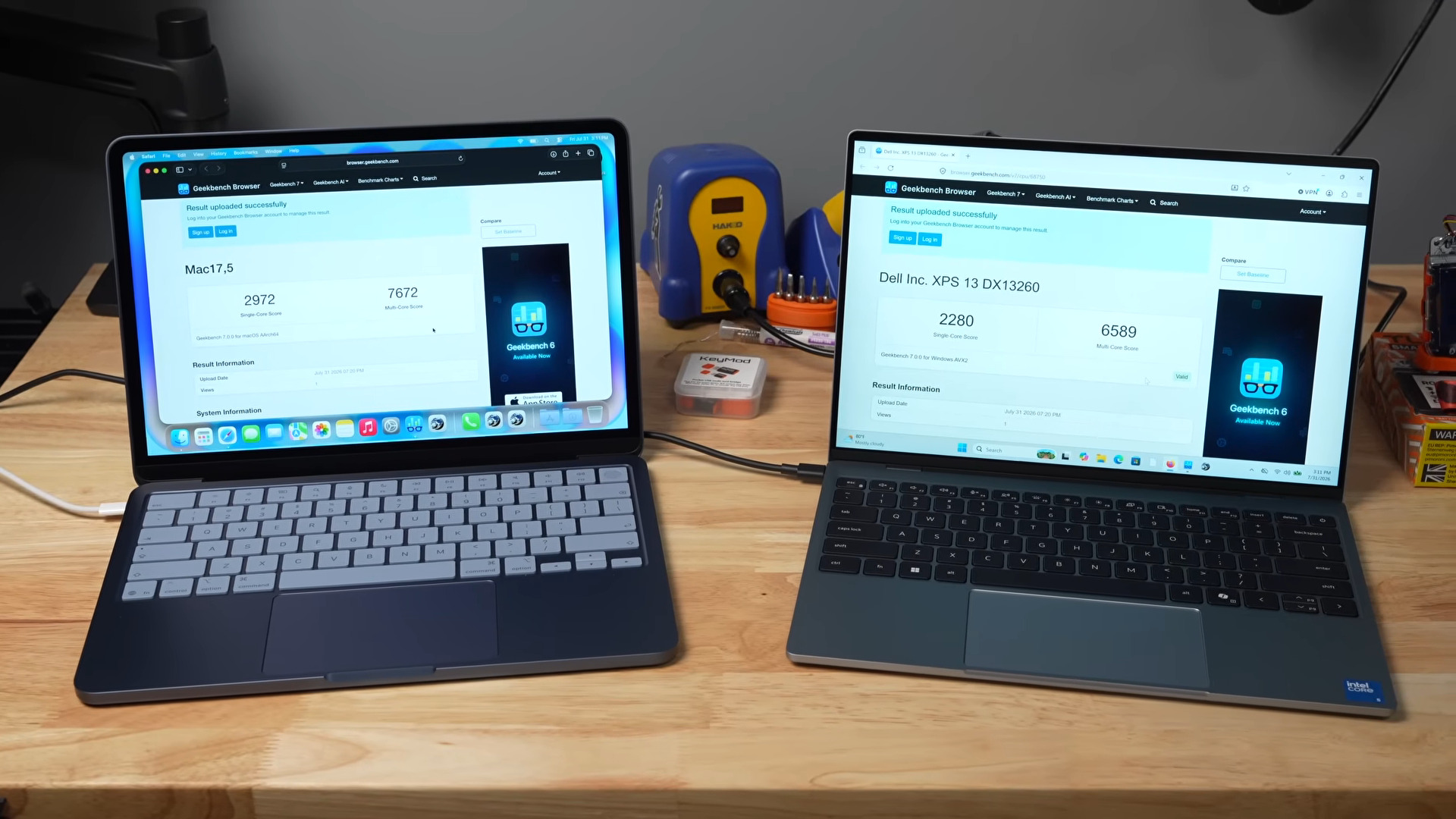
Intel-versus-ARM efficiency is still a system-level question (hackaday.com)

The comparison centers on power efficiency, not a single benchmark score. CPU, GPU, display, operating system, and application behavior all change the result a buyer experiences.

HN readers used the article to challenge simple architecture narratives and to ask which workloads still make the trade-off worthwhile.

Android 17 changes what debloating means without root access (github.com)

A Universal Android Debloater issue reports that non-rooted Android 17 no longer allows ADB to uninstall certain system apps for a user.

The thread found a less dramatic workaround—disable rather than remove—while warning that carrier and vendor apps make the difference meaningful to privacy-minded owners.

GitHub Trending: Today — Svelte, Nuclei, Awesome, Primer, Internships (github.com)

In today's GitHub Trending: Svelte, a compiler-led web framework; Nuclei, a template-driven vulnerability scanner; Awesome, a directory of curated lists; System Design Primer, interview study material; and Summer2027-Internships, a daily-updated opportunities board.

The list favors tools that organize a developer's existing work—learning, finding opportunities, checking exposure and choosing components—over a single shiny new platform.

FFmpeg 9.0 arrives with codecs, filters, and quiet infrastructure (github.com)

The release includes additions from animated WebP handling to new Vulkan and VideoToolbox acceleration paths. Each is a small capability until it becomes the missing piece in someone else's product.

HN readers celebrated the project as unusually durable open-source infrastructure: technical work that is visible mostly when it is absent.

A Shai-Hulud attack turns npm transitive dependencies into the incident (aikido.dev)

JavaScript dependency trees turn a tiny convenience library into a path for a compromise. The practical task is not merely to remove one package, but to find where it entered the build.

HN treated the episode as another reason that package provenance and update discipline belong to ordinary engineering work.

A color-space tool makes diverse skin tones a design parameter (toneyalexander.github.io)

The project turns a vague request for more inclusive visuals into a technical input developers can use when generating avatars, illustrations and examples.

HN's interest reflects a practical appetite for tools that make a design choice repeatable instead of requiring every team to rediscover it.

OpenAI lists ten mathematical advances, and HN asks for the denominator (openai.com)

The announcement presents ten advances and says researchers helped prepare manuscripts and formalize proofs in Lean. That turns a model result into a claim about a research process, not just an answer.

HN’s sharpest question was what the release leaves uncounted: attempted problems, failed runs, repeated attempts, and the cost of the surrounding harness.

🚀Tech ★ 459 · 💬 727 · Aug 4 · #AI#programming#science#Lean#OpenAI

Retyping AI code is a bet against the comprehension hole (ankursethi.com)

The proposed workflow does not reject coding assistants. It turns their output into a prompt: read it, type it, and notice each assumption before it enters the project.

Commenters agreed on the diagnosis more than the ritual: deliberate attention matters, while typing alone does not magically produce understanding.

🚀Tech ★ 401 · 💬 341 · Aug 4 · #AI#dev tools#programming#LLM

A ripgrep crash points past the command line to the kernel (github.com)

The ripgrep issue reports crashes in musl-based binaries during very large searches. The thread quickly moved beyond a simple application bug and linked to an external analysis of the kernel behavior.

That shift matters because a fast command-line tool can be the first visible symptom of a defect beneath its own code, so reproductions and build details become evidence rather than noise.

🚀Tech ★ 251 · 💬 168 · Aug 2 · #dev tools#programming#Linux#musl#ripgrep

NetBSD 11.0 arrives with an unusually candid release note (blog.netbsd.org)

NetBSD 11.0 is now available as a formal release. Users in the HN thread highlighted smooth upgrades from release candidates and the project’s detailed accounting of open issues.

The discussion’s real question was not whether NetBSD is fashionable as a desktop, but where a conservative Unix still earns trust: systems that value compatibility, documentation, and predictable maintenance.

🌍Other ★ 218 · 💬 94 · Aug 2 · #open source#programming#NetBSD#pkgsrc

Bun’s Rust rewrite became an argument about what AI actually changed (lockwood.dev)

The source asks how the Bun rewrite is progressing; the thread answered with a more immediate story about AI doing narrowly scoped maintenance in the new codebase.

Some readers treated source-to-source rewriting as a familiar transformation. Others argued that passing integration tests is not enough evidence when an agent chose both the patch and its explanation.

🚀Tech ★ 454 · 💬 349 · Jul 28 · #AI#dev tools#programming#Bun#Rust