Topic

Culture & History

60 stories

A 1990s strategy game crashed past 255 units, and that is one reason this blogger defends modern software (bitlog.com)

Voytko lists what the old days actually looked like: blue screens from drivers, no autosave, screensaver passwords anyone could bypass, 20-minute boots, scratched CDs and corroded NES cartridges you could never patch. He still concedes that today's software is bloated and worries about delegating it to AI agents.

Commenters accepted the history but disputed one metric.

Not just a headline — the discussion unpacked

The top HN threads: facts from the discussions, both sides, insider voices. Email, Telegram, or RSS.

About 20 percent of new Wikipedia drafts were AI-generated; a volunteer team cut it to 15 (spectrum.ieee.org)

With AI-detection company Pangram, Lebleu estimates about 20 percent of new articles and drafts were flagged in late 2025, falling to roughly 15 to 16 percent in early 2026. English Wikipedia now bans LLM-generated articles, and a source verifier checks whether citations support their claims. She cannot tell whether the drop is policy or models that evade the detector.

Commenters supplied the reader's side.

🌍Other ★ 454 · 💬 209 · 11h ago · #AI#culture#Ellia Lebleu#Pangram#Wikipedia+1

A 1993 FreeCell still runs on Windows 11, and a 1992 CD player almost does (blog.enlyth.com)

A pre-release NT 3.1 CD player linked on 16 November 1992 also runs, using the system's crtdll.dll. Earlier NT builds crash because they used the cdecl calling convention, where Windows 11 expects stdcall.

With the otvdm 16-bit emulator, even Windows 1.01's Reversi from 1985 launches, which the author admits feels like cheating.

🌍Other ★ 297 · 💬 189 · yesterday · #culture#programming#FreeCell#Microsoft#Win32+1

Oregon police quoted $2.5 million for records on one officer. The outlet is appealing (theintercept.com)

Double Sided Media, a small Eugene outlet, asked for misconduct records on Peckels from 2018 to 2026. The city said it could not narrow where to search and would have to look through every current and former employee's files.

Commenters traded their own wait times: a school district in 8 monthly installments, the NSA at over a year, New York City at three years.

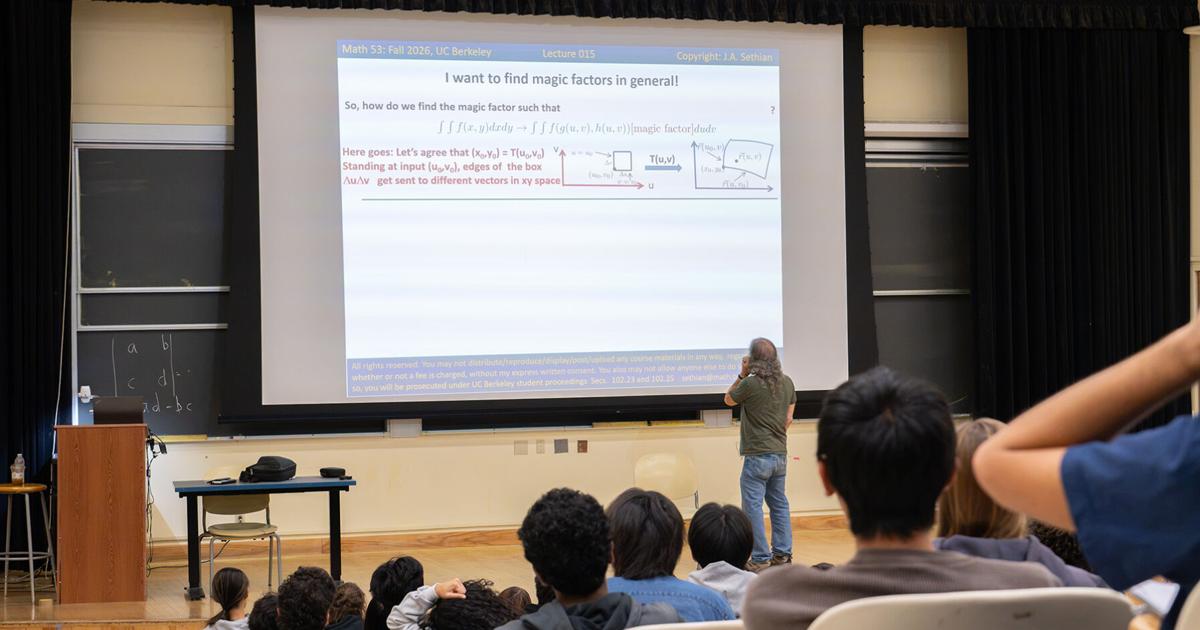
A Fields Medalist stopped grading homework for correctness, and HN argued about who ever graded it (dailycal.org)

Borcherds told the Daily Californian the system is "not a very good system," but that he has no alternative for now. The thread's first move was to question what grading homework ever meant at a big research university.


Its second was to ask who pays for the graders.

A Nikon microscope-video winner lost the title when scientists saw cilia popping in and out of existence (techspot.com)

The photographer says he used AI only in post-processing to help visualize features in grayscale images. Nikon found he broke the rules and handed the top spot to a roundworm video by Nguyen Nam Nhat.

In the thread, the debate was where the line sits between 'assisted' and 'generated'.

Netflix offered $500 million for seven years of Xbox adaptations. Microsoft countered at $800 million (darkhorizons.com)

Xbox says it has "record-breaking interest in our I.P." and points to upcoming Minecraft and Diablo animated series with Netflix. Gears of War, The Elder Scrolls and Sea of Thieves are reportedly being pitched.

A commenter who works through deal terms said the headline number says almost nothing.

📈Biz ★ 90 · 💬 135 · 2 days ago · #big tech#culture#gaming#Microsoft#Netflix#Puck+1

Disney+ raised Premium to $21.49 and changed its terms so ads can appear on every tier (tvfandomlounge.com)

Disney+ and Hulu Premium went from $18.99 to $21.49 a month on September 23. Mid-show ad breaks stay limited to the cheapest tier for now.

Readers argued about whether any price removes ads for good, or whether the ad-free tier is just the next tier to be sold again.

📈Biz ★ 415 · 💬 435 · 4 days ago · #big tech#culture#economy#Disney+#Hulu#Jellyfin

Why New York's bolt-on fire escapes lasted a century before the ban (practical.engineering)

Practical Engineering traces the fire escape from a cost shortcut to a ban for new construction in 1968, with the 1911 Triangle Shirtwaist fire in between, where an exterior escape buckled under the crowd.

Commenters argue over whether to miss them: one says everything else about fire safety got better, another would still risk a rusty escape over a blocked stair.

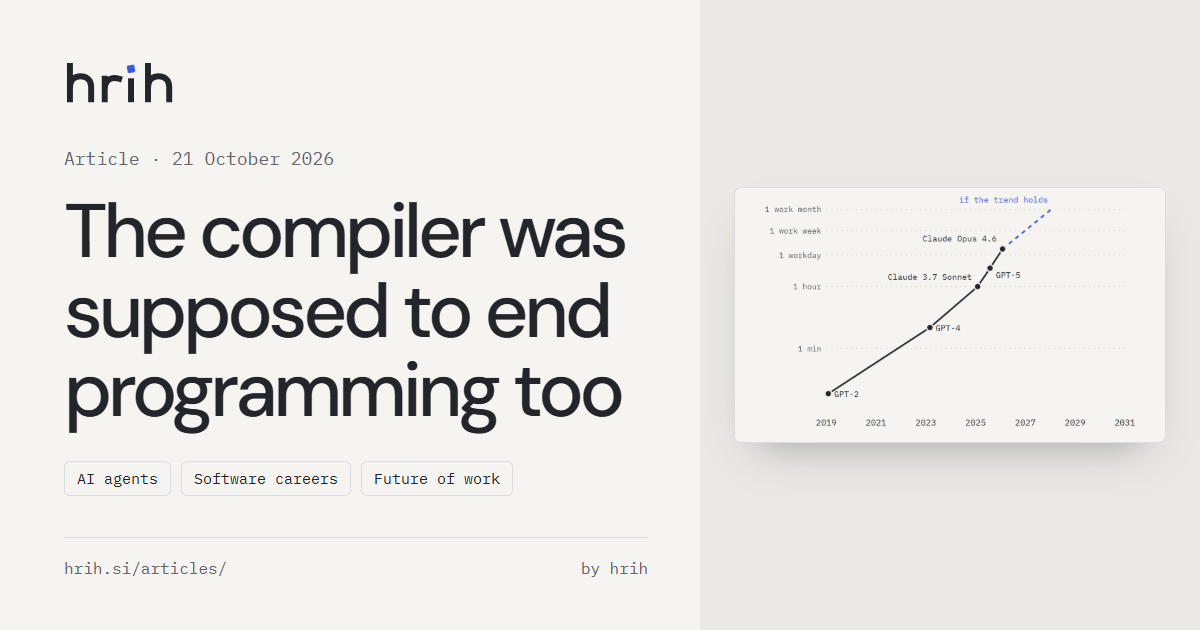
FORTRAN was also going to end programming: IBM said so in 1954 (hrih.si)

An essay at hrih.si says AI follows FORTRAN's pattern, only faster: a METR trial found experienced developers 19% slower with AI while believing they were faster, and Faros AI data showed more pull requests but much longer reviews.

Commenters attack the analogy itself. One says compilers were first called "automatic coders"; another says a compiler maps input to output roughly 1:1, and an LLM does not.

🚀Tech ★ 95 · 💬 134 · 6 days ago · #AI#culture#programming#Faros AI#FORTRAN#IBM+1

A Theranos documentary 'deceives' its audience, and Hacker News disagrees about whether that's a review or a stunt (readtheprofile.com)

Substack writer Pompliano says Nathan Fielder and Lance Oppenheim's three-hour film nudges viewers' feelings with close-ups and the order of reveals, then lets them mistake those feelings for conclusions. Her proof is a Canon experiment where six photographers shot one man, each told he was someone different.

Readers split on whether she showed any of this. One said the essay 'says nothing at all about how the documentary deceives you'.

Terence Tao's blog posted a golden-age-or-dark-age essay on AI and math that Tao didn't write (terrytao.wordpress.com)

Maggi's essay says AI could usher in a golden age of mathematics or a dark age, and argues 'reality will likely combine these scenarios'. His warnings: proofs correct but unreadable, mathematicians guarding their ideas, and a few companies controlling the tools.

Readers argued mostly about Tao himself, with one calling the move from AI booster to worry 'Oh nO MaThS iS KilLeD'.

eBay now demands FCC IDs for radio gear, but exempts ham-band-only transmitters (arrl.org)

The ARRL asked eBay to clarify, and eBay confirmed devices that can operate only on amateur frequencies are exempt. Two-way VHF/UHF radios able to transmit outside ham bands still need FCC certification.

The thread's real question: why ham radio operators police each other so hard.

🌍Other ★ 176 · 💬 138 · Oct 17 · #culture#hardware#policy#ARRL#eBay#FCC

A Fields medalist said he cried when OpenAI released its math proofs (derekthompson.org)

OpenAI has published hundreds of results in number theory, theoretical computer science and logic, many on problems that resisted the best mathematicians for decades. Derek Thompson's essay says the mathematicians weep because a shared conversation across generations just got cut short.

On HN, one commenter was "kind of disgusted by the tears" and blamed decades of chasing results and money. Another checked the pay at their own university: two associate professors on $80-85K, after postdocs that push tenure-track starts into the mid-30s.

Current Affairs bans AI-written text and art, written into its union contract (currentaffairs.org)

Current Affairs adopted one of publishing's strictest AI policies as part of its union contract, arguing that tools built to replace workers must be resisted. The article's example: 100 AI posts in four minutes at almost no cost versus 20 human posts for $5,000.

On HN, a commenter posted a parable of fifty diggers with shovels versus five with machines to argue no one will care who wrote what. The reply that stuck: dirt is paid for by the hole, but writing is only worth anything if someone chooses to read it.

A guest post on Terence Tao's blog mocks AI math as a Library of Babel (terrytao.wordpress.com)

Gambhir, a theoretical particle physicist, writes as someone who thinks it is inefficient to explain or check a result when the same resources can generate another, and calls the output a repo of potentially true facts nobody will read. Tao hosts it.

On HN, the sharpest hit ran the Library of Babel simulator: random pages are gibberish, while AI proofs are credible and frequently correct. A reply pointed out that the essay says exactly that, and that "look correct" is the joke.

Casio adds Bluetooth without turning the F-91W into a smartwatch (casio.com)

HN’s Casio fans focused less on novelty than restraint: a cheap, readable watch can gain a few useful functions without becoming a notification screen on the wrist.

The product’s appeal is the trade-off smartphones usually erase: limited capability in exchange for a device that asks little attention and little charging.

🌍Other ★ 278 · 💬 226 · Aug 20 · #culture#hardware#Casio#F-91W#F-B100W-1A

Claude watermark debate turns on who gets to edit generated prose (daringfireball.net)

Daring Fireball objects that watermarking generated prose would trade away the model's freedom to choose the best words for a detectable statistical pattern.

HN's practical challenge was narrower and sharper: constrained outputs, edits, translations, and code leave little room for a watermark to survive or mean anything.

Unicode's ghost characters reveal how a standard preserves mistakes (dampfkraft.com)

The essay follows characters that entered reference works through transcription errors and historical ambiguity. Once encoded, they become part of the compatibility burden that keeps old text readable.

HN readers described the conservative trade-off: extra invalid characters are often safer than deleting a character that later proves to be real.

657,607 old links expose the web’s disappearing memory (0.mk)

The project followed 657,607 historical links after recovering a 0.mk backup. The count turns link rot from an anecdote into a record of a web that quietly vanished.

HN’s reaction was not nostalgia alone: readers pointed out that archives are a design problem, not a promise the original web ever made.

🔥Hot Discussion ★ 133 · 💬 116 · Aug 14 · #culture#data#web#0.mk#Hacker News

Denmark is adding an oral defense to written schoolwork (mezha.net)

The proposed safeguard is an oral defense of written assignments. It shifts assessment from detecting provenance in a document to testing whether a student can reason through the work.

The HN discussion connected the policy to a broader design problem: education needs assessments that remain meaningful when drafting tools are ubiquitous.

🌍Other ★ 511 · 💬 243 · Aug 9 · #AI#culture#policy#Denmark

A mechanical Magic Keyboard exposes the limits of a beautiful replacement (electronicmaterialsoffice.com)

A two-year hardware project aims to pair the compact feel of Apple’s Magic Keyboard with mechanical switches and a more considered industrial design.

The enthusiasm was real, but the comments made the missing details—Touch ID, ISO layouts, keycaps, and ergonomics—the actual product brief.

🌍Other ★ 256 · 💬 218 · Aug 7 · #culture#hardware#Apple#Magic Keyboard

Quake turns 30 with an update that treats a classic as living software (slayersclub.bethesda.net)

Bethesda has released a 30th-anniversary update for Quake, returning attention to a game whose technical and cultural influence long outlasted its original hardware.

The news landed on HN as a reminder that preservation is strongest when old software stays playable rather than merely archived.

🌍Other ★ 216 · 💬 107 · Aug 7 · #culture#gaming#Bethesda#Quake

An Xbox outage turned physical game discs into permission slips (birchtree.me)

The outage was temporary; the dependency it exposed is not. A physical disc can still rely on online checks, account services, updates and a working console ecosystem.

HN readers treated it less as a bad afternoon than as a preview of what game preservation looks like when the authentication server is gone for good.

Readers now treat synthetic blog art as a warning label (nelson.cloud)

The complaint is not simply that generated images look strange. They can signal that a post was assembled quickly, with the same incentives that produce generic prose and unverified claims.

That makes the image an editorial choice, not a decorative one: it can either establish authorship or ask the reader to lower their guard.

🔥Hot Discussion ★ 739 · 💬 436 · Aug 5 · #AI#culture#web#AI

A color-space tool makes diverse skin tones a design parameter (toneyalexander.github.io)

The project turns a vague request for more inclusive visuals into a technical input developers can use when generating avatars, illustrations and examples.

HN's interest reflects a practical appetite for tools that make a design choice repeatable instead of requiring every team to rediscover it.

Dunning–Kruger may be a statistical artifact, not a licence for certainty (mcgill.ca)

The challenge is to the familiar curve, not to the everyday observation that people can be confidently wrong. Those are different claims, and the thread kept pulling them apart.

Commenters noted that a broad novice group can contain both over- and under-estimators, while public shorthand usually singles out the confident outlier.

A new German citizen writes about belonging, and HN adds caveats (mertbulan.com)

The essay’s power is observational rather than programmatic. It makes citizenship feel like accumulated ordinary encounters, not a single legal milestone.

The thread welcomed that perspective while adding the harder context: language access, economic strain, and political anxiety shape who gets to experience the country that way.

🌍Other ★ 418 · 💬 312 · Aug 4 · #culture#economy#policy#Germany

A restaurant's AI-redesigned menu made its own food look worse than the real plate (blog.fiddery.com)

A blog post collects small businesses that replaced real photography or plain typography with AI-generated menu and signage imagery — and argues the AI versions look worse, not just cheaper.

The centerpiece: an Austin restaurant's AI rendering of its spamsilog dish next to the actual $10 plate the author ordered. The real food is more appetizing than the AI's guess at it.

A commenter with 0.79 karma-weight standing: AI menus and signage are becoming "the dog whistle for 'cheap'" — telling customers what quality to expect before they've read a single item.

🚀Tech ★ 235 · 💬 165 · Jul 23 · #AI#culture

A historian's answer to AI slop: skip the algorithm, browse the library shelves by subject (resobscura.substack.com)

Historian Benjamin Breen argues quality non-fiction — vetted by prize committees, sustained readership, and expert library classification — is structurally the opposite of algorithmically-generated AI slop.

His evidence is personal: a college shelving job exposed him to prize-winning books like Stefan Zweig's memoir and a four-prize Du Bois biography, work no search algorithm would have surfaced for him.

A reader who'd volunteered judging a real book award pushed back with an inside detail: publishers mass-submit for prizes, meaning the curation Breen trusts is noisier and more gameable than it looks from outside.

🌍Other ★ 272 · 💬 97 · Jul 23 · #AI#culture

A 1980s BASIC game hid machine code inside a comment. It took 40 years to explain why (beej.us)

A cryptic REM comment opening a 1980s dungeon-crawler BASIC game turned out to be raw Z80 machine code, not text — planted at the precise memory address a USR() function call expected to execute from.

The trick exploited how the Exidy Sorcerer's BASIC interpreter tokenized and stored source in RAM — the comment's bytes landed exactly where executable code needed to sit, disguised as an unreadable remark.

The payload itself did something clever: read the Z80's ever-incrementing R register as a cheap source of randomness for the game's random number seed, decades before hardware RNG chips were common.

🌍Other ★ 165 · 💬 47 · Jul 23 · #culture#programming#Exidy Sorcerer

The Minneapolis Fed's new metric turns 65% homeownership into just 53% (minneapolisfed.org)

The youth number moves even harder than the headline figure: under the old rate, 37% of adults under 35 count as homeowners; run the same population through the new formula and it drops to 22%, because a grown kid back in a parent's owned house no longer counts.

On Hacker News, one of the highest-karma voices in the thread pulled the Fed's own five-house example apart line by line, arguing the new formula quietly punishes multigenerational households for a choice, not a failure.

A copyright fight over Anne Frank's diary just made EU geo-blocking VPN-proof (techradar.com)

The EU's top court ruled a geo-block only needs to be state-of-the-art, not VPN-proof, to keep a publisher in the clear. A reader who routes around it doesn't retroactively make the publication illegal — only a genuinely broken block does that.

One HN reader with 8,000+ karma wasn't convinced the precedent survives contact with real money: he predicted courts would rule differently the day a VPN is used to pull pirated football streams instead of a public-domain diary.

A map claims 2,438 world castles; readers found most of theirs missing (thecastlemap.com)

Readers ran the numbers on their own countries: Saxony alone has 700-plus historic fortifications against nine pins on the map; France counts roughly 180 listed castles against an estimated 45,000 nationwide.

One commenter guessed the map was only reading English-language Wikipedia before anyone confirmed it. Then the site's solo builder turned up in the replies, admitted the whole thing was built in a weekend, and promised to actually fix it.

🌍Other ★ 180 · 💬 134 · Jul 22 · #AI#culture#data#Acropolis#Castlemap#Versailles+1

TokyoDev Calls VTubing a New Global Wave. HN Says: Try 2020. (tokyodev.com)

VTuber viewership hours have been flat or dipping for a while now, several commenters said, and a number of major English and Japanese names have already retired.

An actual indie VTuber who also works as a Nintendo engineer jumped in to correct the article's own read on AI, calling its optimism "wishful thinking" and pointing to the real reason big agencies hesitate: contracts with the illustrators who draw their characters, not fear of AI itself.

A browser emulator's software just ran on the real hardware it copies (pcjs.org)

PCjs, a browser archive of 1970s and 80s computers built solo by developer Jeff Parsons, turns out accurate enough that software built inside it keeps working outside it too: a real binary, not a screenshot or a video capture.

One commenter's actual 1980s IBM PC just started throwing hard-drive read errors and RAM parity faults. He's seriously considering switching to the browser version instead. The copy has started outlasting the original.

A Historian Says the 'Convert' Button in Age of Empires Is Ethnic Cleansing (acoup.blog)

Historian Bret Devereaux argues Age of Empires never shows a real empire: players erase rival towns and resettle them with their own people. Rome did the opposite — its subject allies, the socii, made up over half its legions and were never wiped out.

The thread split between defending the design and correcting the historian. One reply called annihilation a genre requirement, not ignorance; another named Rise of Nations a game that actually models core-and-periphery empire. A third said Rome's "diversity" was centuries of forced Romanization.

A blog asked if we want AI slaves. Ohio has a bill for that. (yashthapliyal.com)

A developer wrote that we're happy to let AI do the parts of a job we don't want, then panic the moment it touches the parts we're proud of, like typing "generate 10 versions" instead of drawing them by hand.

One commenter didn't treat the framing as rhetorical: he pulled up an actual bill moving through Ohio's legislature that declares AI non-sentient and incapable of ever owning property, and suggested substituting "Negroes" for "AI systems" to see how the text reads.

A blogger's proof that AI can't understand context failed the moment HN tested it (rachelbythebay.com)

Her blog's URLs are date-stamped, and the phantom hits match that pattern too closely for coincidence: a model invents a post, hands a reader the link, and the link goes nowhere. She frames it as Michael Crichton's "Gell-Mann Amnesia effect": catching a source's confident errors on a topic you know, then trusting it on everything else.

A well-known HN security engineer dismissed her argument as relitigating a two-year-old debate. A second blogger said the same pattern hits her own site, her name attached to things she never wrote.

Google called her 'the Bard of Google.' Then HR called her walkout a breakdown. (newyorker.com)

The essay, adapted from Stapleton's book *Don't Be Evil: Bad Bosses, Fake Promises, and My Escape from Big Tech*, traces Google's arc from moon-shot optimism — Larry Page once dismissed curing cancer as too small a goal, since it would add only three years to average lifespan — to the 2018 walkout after the Andy Rubin harassment scandal.

A commenter who says he was at Google from 2006 to 2025 backed the account: "this matches my recollection. Honestly, it's a very restrained document" — a rare on-the-record insider confirmation.

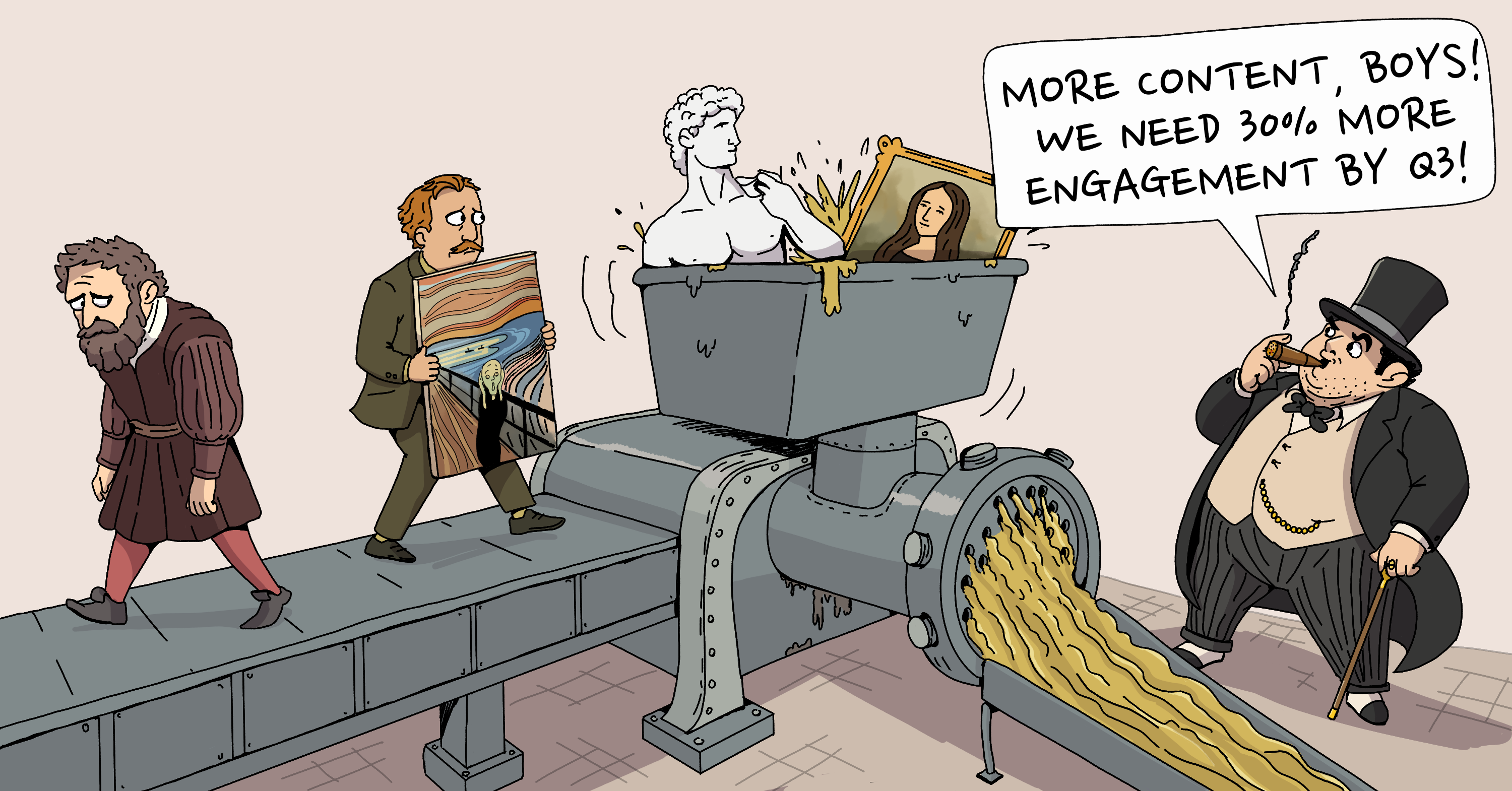
A Blogger Stopped Saying 'Content.' Not Everyone in the Thread Agreed. (refactoringenglish.com)

The trigger was smaller than the Michelangelo joke: a business contact called him a great source of "leads," and Lynch realized that from the vendor's side, the same fact reads as being good at spotting gullible marks.

Not everyone in the thread was persuaded. Several people who make a living calling themselves "content creators" argued the word is the only one broad enough to cover writing, video, and code without boxing them into one medium.

A rural bowling alley swapped a $120,000 vendor system for $1,600 of chips (news.ycombinator.com)

section33 (who runs an SRE and bespoke-tech consultancy on the side) tore out his bowling alley's original scoring hardware and rebuilt it lane by lane with off-the-shelf microcontrollers, open-sourcing the whole project as OpenLaneLink.

The sharpest pushback in the thread wasn't about his code — a longtime DevOps engineer argued the vendor's price was never really about parts: it buys a phone number to call, and a lane fixed in an hour instead of a weekend, when it fails mid-league night.

A new US rule to kill degree mills could also defund Juilliard (npr.org)

Roughly 800,000 students sit in college programs projected to fail a new federal earnings test, mostly for-profit certificate mills and a slice of elite conservatories. The bar: beat a high-school-only paycheck, or the program loses federal loans.

One HN reader ran a real school's numbers through the government's own earnings tool; a 16-year veteran called higher ed "a cash incinerating inferno"; another noted for-profit schools have faced this exact test since the Obama-era "Gainful Employment" rule.

A Veteran Told Her To Ask Claude. She'd Tried Twice Already. (blog.yaelwrites.com)

Grauer's essay names the moment exactly: a mentor she'd built up over years waved her toward a chatbot instead of sharing the judgment he'd use himself. She says she'd already asked twice.

The 105-comment thread split between engineers who called the redirect disrespectful and others who defended it as an earned shortcut, until one open-source maintainer admitted Claude would likely nail 98% of his own advice anyway.

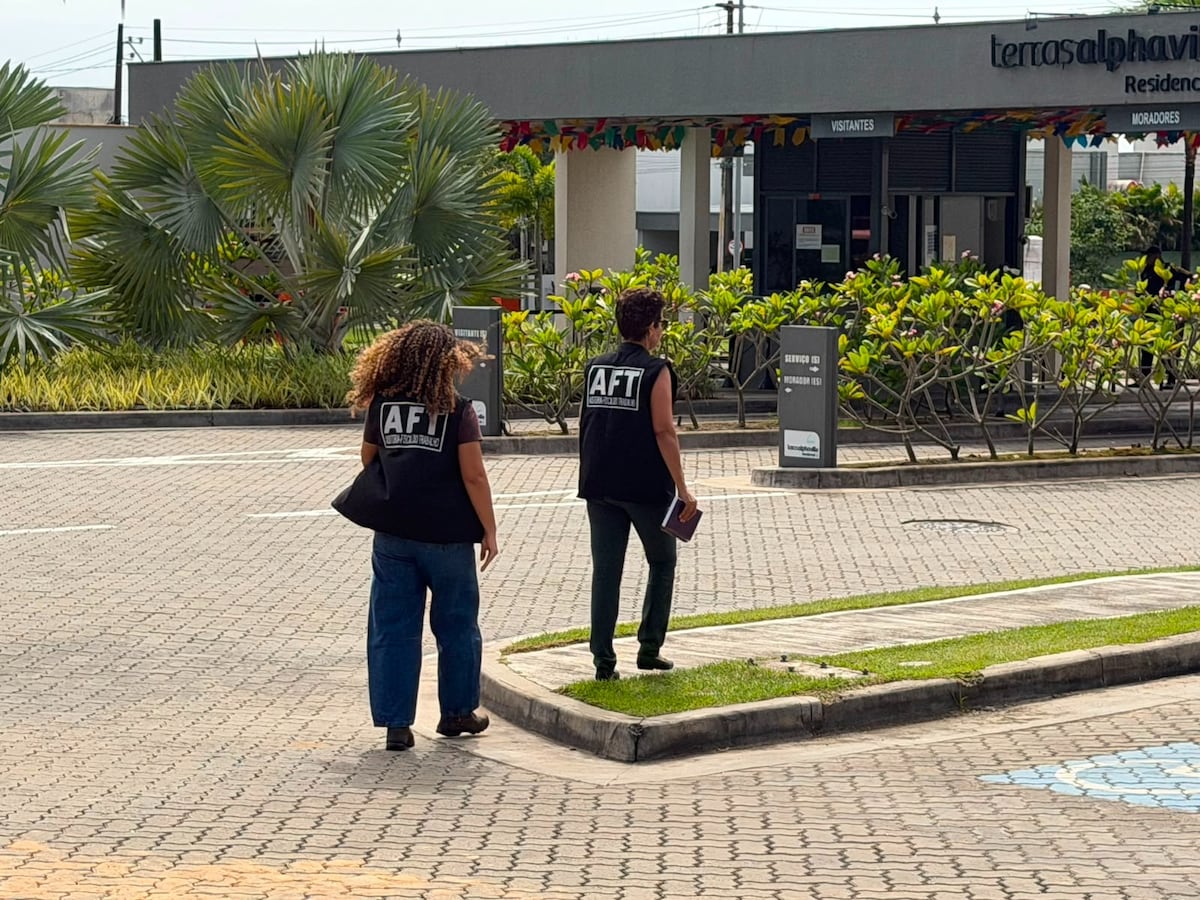
Rescued after 55 years of slavery in Brazil, she has nowhere else to go (english.elpais.com)

Maria worked unpaid for three generations of the same Brazilian family, from 1971 until investigators freed her this month. The settlement came to 50,000 reais, Brazil's currency, which works out to roughly three dollars for every week of the 55 years she spent there.

On Hacker News, two Brazilian commenters split hard on how it happened: one called arrangements like hers common well into the 1980s; a self-described Brazilian doctor said actual slavery like this was something he'd never personally encountered.

A Grand Canyon guide rowed solo to Hawaii, faster than any man (theguardian.com)

Pfendler, 32, guides river rafts through the Grand Canyon for a living. Her boat carried two sealed cabins, bow and stern, for sleeping and food, and nothing else: 21 feet long, 730 pounds, no engine, no way to call the trip short once she left in May.

A Hacker News reader caught what the article's headline missed: by the numbers, Pfendler didn't just break the women's record for this crossing. She rowed it faster than any man ever has, too.

A lender was fined $60m for a hotline built to stall your refund (theguardian.com)

The Consumer Financial Protection Bureau's case started with insurance products bundled into car loans that buyers never asked for. The refund fight was what came after.

On Hacker News, readers pushed back on the idea that shopper rage is an overreaction. Companies build complaint mazes on purpose, one argued: the only way to get a straight answer is to make enough noise that ignoring you costs more than helping you.

A Doctor's Cousin Declined Chemo and Died at Home for $20 (archive.cancerworld.net)

Ken Murray, a retired family doctor, watched a colleague named Charlie turn down surgery that could have tripled his pancreatic-cancer survival odds. Charlie died months later without chemo or radiation.

A reader in the resurfaced HN thread found HN's own algorithm had cut the headline in half: the original ends "but it should be," turning a curiosity into an argument for the rest of us. Physicians in the thread confirmed the pattern, one describing giving his dying mother a final dose of morphine himself.

🌍Other ★ 214 · 💬 123 · Jul 12 · #culture#health#policy#Cancerworld#Ken Murray

For Fifty Years, a GM-Funded Doctor Set the 'Safe' Dose of Lead (smithsonianmag.com)

Thomas Midgley Jr. discovered tetraethyl lead in December 1921, silencing his engine's knock, and was bedridden with lead poisoning before the first tank of it sold in 1923. A year later, five refinery workers making the stuff for Standard Oil were dead.

The government cleared the fuel anyway in 1926. The only scientist researching lead safety for the next fifty years was a doctor General Motors itself paid, and the thread's sharpest reply asks what a modern equivalent of that arrangement would look like.

A story blaming modern decor for headaches misread its own source study (studyfinds.com)

StudyFinds says striped floors and flickering LEDs may be quietly overloading your visual cortex, citing a 32-author review in the journal Vision. Readers went straight to the open-access paper and found the site had the science backwards: the actual mechanism is luminance contrast, not vaguely defined "visual complexity."

Even the thread's own leading theory - that minimalism exists because everyone expects to move - got shredded by a reader who pointed out that rich homeowners are its biggest fans.

Germany recruited skilled workers, then lost them to a ceiling outsiders can't crack (dw.com)

Germany loosened visa rules to pull in skilled workers, then kept losing them. The DW report and a large expat thread converged on the friction around the job, not the job itself: opaque paperwork where one small error snowballs, and a C1-German requirement, near-fluency, for almost any role outside software.

The sharpest counter came from Germans themselves: the ‘glass ceiling’ expats describe is partly a US import, the assumption that no promotion means failure, when staying in one role for a whole career is simply normal here.

A Nanjing official took $325M in bribes. The thread explains why he couldn't stop (bbc.com)

Yang Youlin, 69, a former Nanjing economic-zone official, was sentenced to death for taking 2.21 billion yuan ($325M) in bribes from 2013 to 2023, alongside embezzlement, abuse of power and money laundering. The thread's first reaction was disbelief that a ‘city official’ could reach that number.

The correction came from people who know the system: Nanjing anchors a province with GDP near Texas, and a seat over land grants and permits is exactly where the money collects. Once you are in, the network you pay off never lets you quietly retire.

Dua Lipa opened a 'banned books' library. The thread argued nothing on the shelves is banned (euronews.com)

Dua Lipa's Service95 book club installed the collection inside Porto's Livraria Lello, a ticketed tourist landmark where one visitor says staff refused to sell him a Naomi Klein paperback. Half the thread snagged on one word: with the titles a click away online and 'Livraria' meaning bookstore, not library, is anything here truly banned?

The blunter read: 'banned books' has decayed into a marketing label. The counter: the shelf gathers titles censored somewhere in the world, and Atwood really was banned in Portugal, under Salazar.

AI labs are hiring philosophers, the NYT says. The thread counted maybe two dozen (nytimes.com)

One reader tallied roughly twenty philosophers across every lab on earth, against thousands of engineers, and reckoned there are more economists than philosophers on the payroll. Another noted Starbucks employs orders of magnitude more philosophy graduates than all the labs combined.

Two reads of the actual job surfaced: 'hired to launder regulatory capture for a trillion-dollar corporation,' versus a Fortune 500 senior engineer who holds only a BA in philosophy and calls it the most underrated degree he owns.

A map of $3,000 government houses, and the $120,000 in back taxes attached (govauctions.app)

Under the bargain dots sit as-is sales where unpaid taxes, water bills and code liens follow the property. On that $3,000 Flint house, a commenter tallied $120,000 owed and a structure due for demolition.

Then the thread split: opportunity, or poverty tourism? One reader called it a digital rag-and-bone hunt and said buyers should 'demand better'; another mocked the pile of excuses people keep listing.

The gym-shorts drawstring trick HN keeps resharing turns out to be the Lapp knot (youtube.com)

Knot-tiers pinned it fast: a slipped sheet bend, a join sailors have used for generations. The thread's sharper turn was that the clever knot may be beside the point, since most loose ties, one commenter argued, are just a granny knot tied where a square knot belongs, no new technique required.

And the very loop that makes this one adjustable is, a programming-language maintainer warned, exactly what makes it less secure; several people said skip knots entirely and use a cord lock.

60 years, seven planned volumes: Knuth is still writing The Art of Computer Programming (www-cs-faculty.stanford.edu)

Volume 4B ran 714 pages when it landed in 2023; a fascicle on constraint satisfaction followed in 2025. The page still lists Volumes 5, 6 and 7, compiler techniques last, as work Knuth intends to write.

Then a reader surfaced Knuth's own recent preprint. An AI had solved a conjecture he'd left open, and he wrote it was time to 'revise my opinions about generative AI', calling it a joy rather than a threat.