An essay says interviews are random functions — then tptacek says its own fix misses the point
The argument is familiar: technical interviews filter for the wrong things and reject good engineers. The twist is in the thread, where the highest-karma commenter on the site dismantles the essay's proposed metric for not measuring the one thing that matters.
The essay everyone has read some version of
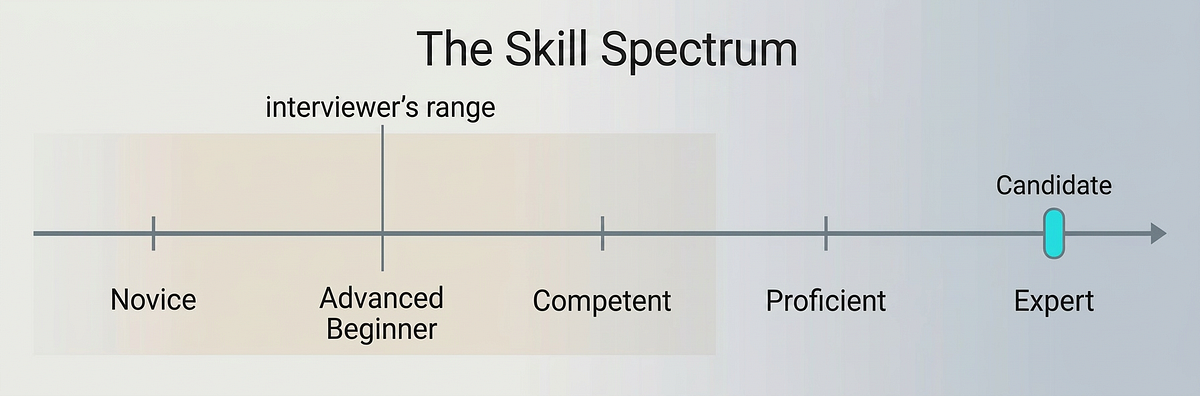
Fagner Brack's "Technical Interviews Reject the Wrong Engineers" makes an argument the industry has internalized but never solved. Its core claim, quoted approvingly even by its critics in the thread, is about tacit knowledge:
"The deeper issue is tacit knowledge. Most of what a skilled engineer knows is not something they can articulate on demand." — a commenter quoting the essay's central claim
The author's thesis, and the metric he lands on
Brack's argument runs: because so much real skill is tacit, a time-boxed interview can't surface it; the interviewer can't tell "skipped steps due to incompetence" from "skipped steps due to operating at a higher cognitive level," so they default to the reading that protects their ego — and reject. He cites the well-known finding that avoiding a toxic hire is worth roughly twice as much as landing a star performer. His proposed fix is to stop optimizing for a pass/fail signal and instead judge a hiring process on a scorecard — feedback to candidates, timeliness of decisions, effort, and accuracy — rather than treating the interview as a magic filter.
That's where the thread's heaviest hitter stepped in. The highest-karma account on Hacker News was unimpressed with the cure even while agreeing with the diagnosis:
"This post is 2/3rds about accuracy problems with interviews (and, yes, I think the weight of the evidence is that interviews are effectively random functions), and then it culminates in a 'FATE' metric that is mostly not about accuracy… selecting the right candidate [is what matters]." — tptacek
The "random functions" line is the essay's strongest empirical claim, and tptacek concedes it. His objection is that giving feedback and deciding quickly are nice-to-haves that don't change the odds or cost of a bad hire — so a scorecard built mostly around them dodges the actual problem.
"It critiques the process but offers nothing better"
The most common complaint was that the essay diagnoses without prescribing. A reader since 2009 put it precisely:
"This article repeats what we've long known… But it doesn't offer a better way of evaluating technical skills. It talks about how to evaluate other things that do matter but aren't substitutes or proxies for technical skills." — a commenter who reads the essay as all diagnosis, no cure
The same reader took a swing at the essay's most provocative line — its suggestion that an interviewer may misread brilliance as incompetence:
"this argument is some grade school smarty pants 'I'm too smart to show my work' bullshit… I thought the days of hiring toxic 'so smart I can't communicate' superstars was over?" — a commenter rejecting the 'higher cognitive level' framing
The dissent that flips the whole premise
Not everyone accepted the essay's sympathy for the rejected engineer. One reader inverted the framing of the headline itself:
"don't you realize it's exactly like 'attractive women reject the wrong suitors'???" — a commenter inverting the essay's framing
And a counter to the whole "engineers think alone in a room" defense came from someone pointing at the actual job:
"engineers talk to people they don't sit in rooms turning requirements into code… Articulating technical details when in conversation with your colleagues is [the job]." — a commenter arguing communication *is* the work
The sharpest practical proposal came from a reader who simply pointed at every other profession:
"How about the same way doctors, lawyers, and literally everyone else does it? Look at credentials, schooling, past experience, references and personality interviews rather than 99% leetcode?" — a commenter on how other professions hire
The diagnosis is settled; the cure is still missing
What the thread proves is that the essay's premise has become consensus — interviews are noisy, tacit knowledge is real, toxic hires cost more than star hires earn — and that consensus is exactly why a new essay restating it lands flat. The unresolved part is whoever can replace the leetcode ritual with something that actually predicts on-the-job performance, and on the evidence of 102 comments, nobody in the room has it. tptacek's verdict is the one that holds: a hiring process that feels fairer but isn't more accurate has optimized the wrong variable.
Get breakdowns like this every day
The top Hacker News stories, unpacked — by email, Telegram, or RSS.
A CLI filter claims 91.8% token savings — the thread does the math
Lowfat is a small Rust binary that strips noise out of command output before it reaches an AI agent. The headline number — 91.8% of tokens saved — is what got it to the front page, and what the thread immediately picked apart.