Qwen 3.7 Max costs a fraction of Claude and the gap is closing
A self-described engineer and sci-fi nerd argues that Anthropic and OpenAI have become 'OnlyFans economies' — extracting subscription money from loyal fans through parasocial brand attachment rather than genuine model superiority. Chinese open models, especially Qwen 3.7 Max, have crossed the threshold of good enough.
The author's $100 Qwen plan spans several Chinese providers — DeepSeek, Moonshot — while frontier Claude usage runs into the hundreds. The thread's loudest objection isn't the benchmark: it's the AI-ish prose and the claim that regulated US firms can't legally touch Chinese models at any price.
A former BigTech engineer confirms DeepSeek v4 Flash handles most of their daily coding, and their employer's Cursor defaults to Kimi 2.5. The sharpest rebuttal: US compliance is a moat pricing can't cross — the structural reason the 'cartel' survives.
When a blog post calls Anthropic's customers simps
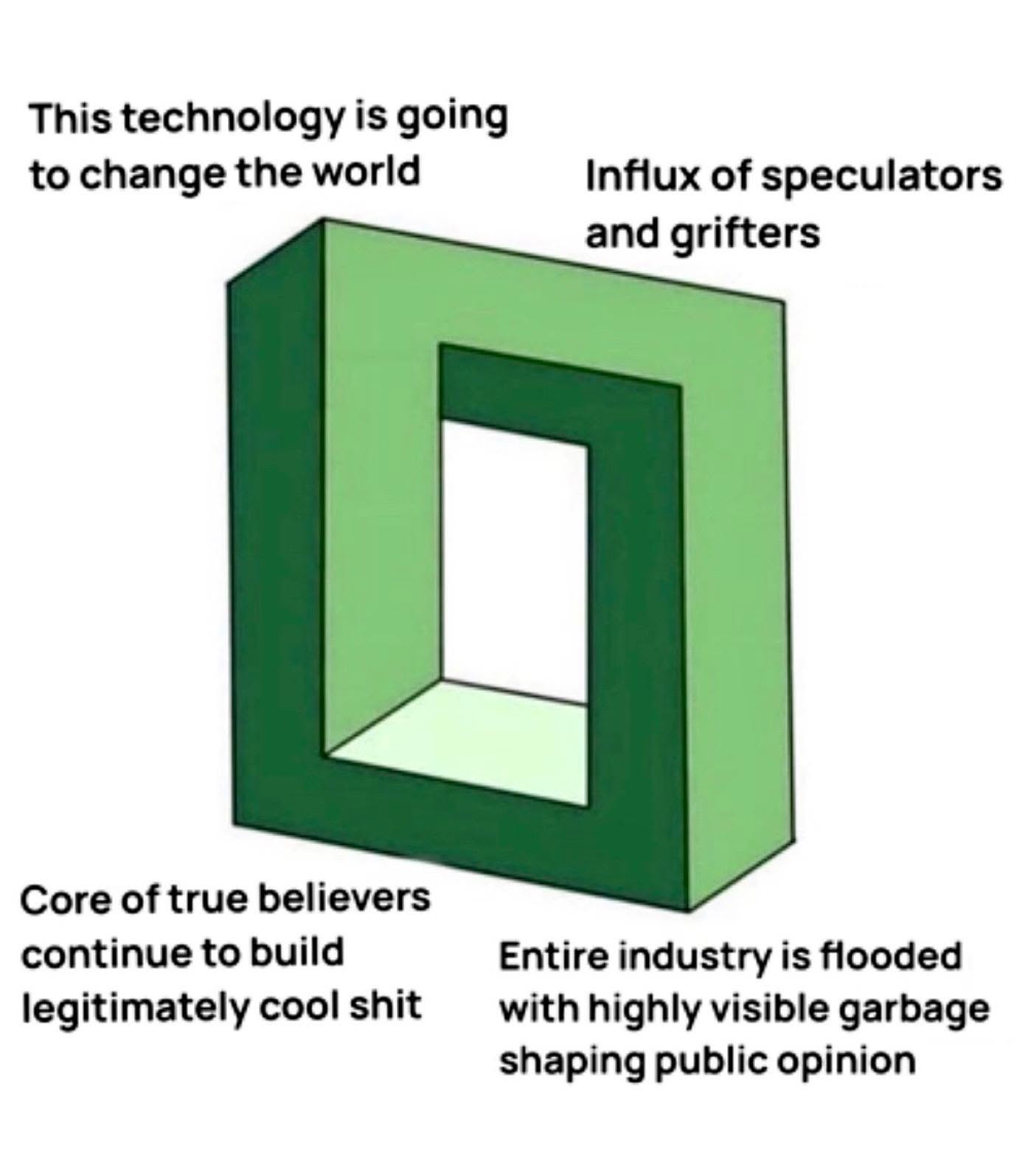
The article opens with a lamplighter metaphor and does not tone down from there. The author — an engineer and self-described sci-fi nerd — argues that American AI companies have built a parasocial economy: customers paying premium prices not because frontier models are genuinely superior, but because of brand devotion that resembles the creator-fan dynamic on subscription platforms.
The thesis and the numbers behind it
The core claim is that Chinese models, specifically Qwen 3.7 Max from Alibaba, have closed the practical performance gap with Claude Opus and GPT-5 while costing a fraction of the price. The author's $100 Qwen plan delivers 100,000 credits spanning multiple providers — DeepSeek, Moonshot, MiniMax — compared to what they characterize as rate-limited and overpriced American alternatives.
The author concedes they were once an idolater of OpenAI, then switched — only to commit what they call the cardinal sin of idolatry again with another Western provider before their current Chinese-model conversion. The piece predicts that enterprise customers not constrained by geopolitical regulation will judge that US frontier models have stopped earning their multiplier.
The OnlyFans economy framing: just as creators extract recurring payments through parasocial attachment rather than uniquely irreplaceable content, American AI labs extract $20–$200/month subscriptions from users who could get comparable outputs elsewhere. The investors propping up OpenAI valuations are funding a future that will disappoint them.
What the thread said — four reversals
In the thread, the 193 comments split between people who agreed on model commoditization and people who found the article's style more interesting than its argument.
Reversal 1 — a former BigTech engineer confirms the cheap-model thesis, quietly. The cleanest empirical confirmation came without rhetorical flourish:
"DeepSeek v4 Flash is sufficient for basically all day-to-day coding tasks… my employer hands us all Cursor, I've yet to actually switch it out of 'auto' mode, which mostly runs Composer (their in-house finetune of Kimi 2.5)." — a former BigTech engineer
Reversal 2 — the regulatory moat that pricing cannot cross. The most structurally important counter came concisely:
"Most American companies (regulated ones, definitely) can't dare to touch any Chinese models, though they knew that it makes perfect economic sense. Until the taboo prevails, the cartel get's their flood of profit. That's a cartel protected by regulations." — a commenter on the regulatory constraint
This is simultaneously an endorsement of the author's price-gap claim and an explanation of why it will not collapse the market the way the author predicts. A second commenter noted that Chinese models are already available through AWS Bedrock within US-controlled infrastructure, complicating the cannot-touch-it framing.
Reversal 3 — the OpenAI valuation bear who has been saying this since DeepSeek. A commenter laid out the structural argument for why frontier-lab valuations are untenable with more precision than the article:
"Several companies, most notably OpenAI, are predicated on: 1. There will be an AI moat; and 2. That company will 'win' or 'own' AI. That's the basis of the OpenAI valuation. If that doesn't happen, it's going to be a huge problem to recover sufficient revenue to recoup the investment. And I don't think it will happen." — a commenter on AI commoditization
Reversal 4 — the article itself as evidence against its own argument. Several readers flagged that the prose reads as AI-assisted despite arguing for more authentic AI use, and high-karma commenters found the style grating enough to undermine the substance:
"It's a ludicrous amount of words to say 'I use the cheap models and that makes me very smart.'" — a commenter on the article's style
The real split
The thread's consensus, stripped of the OnlyFans framing, is narrower than the article implies: cheap models are genuinely good enough for many tasks, and commoditization is real. The part the article misses is that the US frontier-lab cartel is partly protected by regulation that a price signal cannot dislodge — and partly by the fact that for the subset of tasks where Opus genuinely outperforms a smaller model, enterprises will keep paying. The question is how large that subset remains as Chinese models scale.
Get breakdowns like this every day
The top Hacker News stories, unpacked — by email, Telegram, or RSS.
475 upvotes for a GitHub issue Anthropic has not answered yet
A GitHub issue filed against the anthropics/claude-code repository asking for an official Claude Desktop build for Linux has attracted hundreds of upvotes, a thread full of Linux developers describing their workarounds, and exactly one Anthropic team member response — four words: "we're looking into it."