How many elementary particles are there? Quanta says 17 to 995.5. A physicist in the thread says the question is broken
Quanta's answer to a simple-sounding question runs from the textbook 17 up to 995.5, depending on what you count. Then physicists in the replies argue the article's middle answers — especially the eight gluons — quietly smuggle in a false picture.
Quanta lines up the counts: 17 in the textbook, 61 once you split quark colors and boson handedness, 995.5 if you count quantum degrees of freedom. David Tong's verdict: 'the true answer is not an integer.'
A physicist in the thread says the article breaks where it counts '8 gluons' as if they were discrete like the W and Z. Gluon color is a continuous space; the basis is arbitrary. Particles are just excitations of fields — count the fields, and the number collapses.
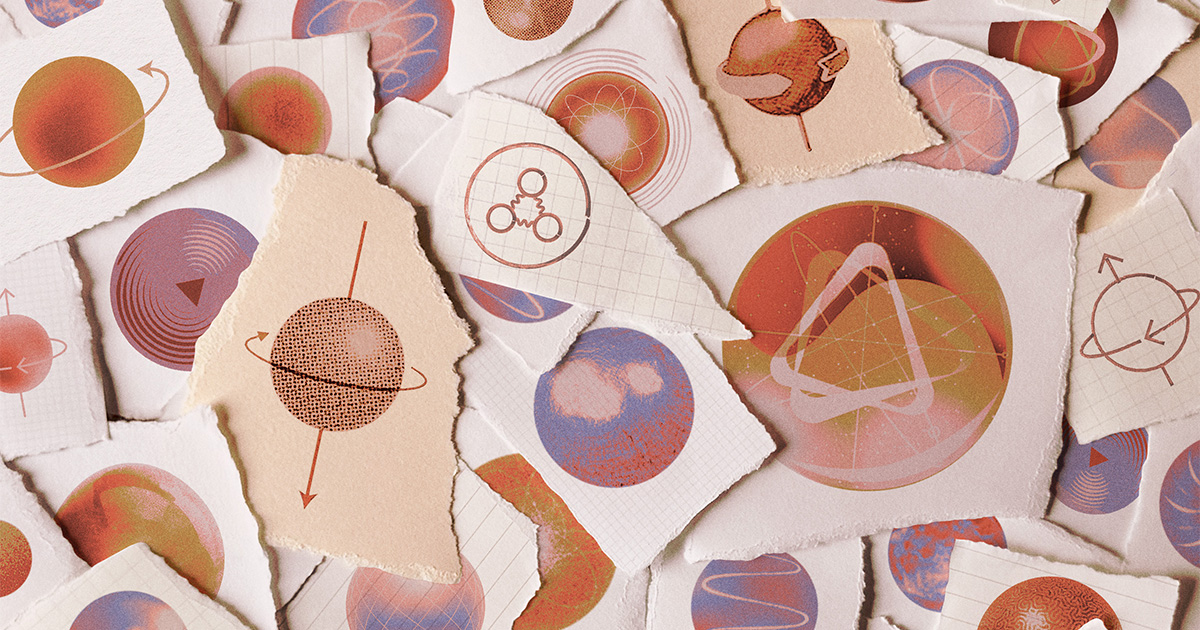
The escalating tally
Quanta's piece takes a question a child could ask and shows it has no clean answer. The textbook says 17 — twelve matter particles, four force-carrying bosons, the Higgs. Add antiparticles and it's 30; insist on counting all eight gluons separately, 37; split quarks by their three color charges and you reach 61; track chirality and polarization and it's 118; go all the way down to quantum field-theory degrees of freedom and you get 995.5 — the half being a genuinely interesting artifact. The article's organizing quote is from Cambridge's David Tong: "the true answer to your question is not an integer!" The deeper point is that the closer you look, the more the categories splinter.

The thread says the middle numbers cheat
This is a physics-literate crowd, and the most-upvoted technical reply argues the article's count of eight distinct gluons is misleading in a way that matters:
"W and Z bosons, photons, etc have fixed masses, charges, interaction strengths … These properties can exactly be listed and looked up in a table … Gluon color is [a] continuous property in a vector space. Gluons can have any color in that space, with any combination of the 8 basis vectors (and that choice of basis is also completely arbitrary)." — a commenter who stopped reading at the gluon claim
The cleaner reframing, repeated by several physicists, is to stop counting particles and count fields:
"You don't have to wonder … They're manifestations of fields. I think it is a reasonable answer to tell people 'if you're looking for the short list of simplest things, the number of types of fields there are is probably what you're looking for.'" — a commenter with \~93k karma
"A particle is simply the smallest excitation of a quantum field that can be detected. Fields can be 'excited' … in many different ways, and the OP article is interpreting each one of those as a different type of particle. It's misleading." — a commenter explaining the field view
Counting down instead of up
What the article never quite says, and the thread does, is that the interesting direction is fewer, not more. One physicist walked through both ends:
"I like to count the x3 colors of quarks and the x2 chirality of bosons. So I get 16*3 fermions … in total 61 … On the other extreme, there are some proposals to reduce the number … consider the electron and neutrino as a single class of particle, and the up and down quark as a single class … the number goes down to 6 fermions + 4 bosons = 10?" — a commenter with \~19.5k karma
That's the squint the headline invites and the thread supplies: "how many?" isn't a fact about the universe waiting to be looked up. It's a question about which bookkeeping convention you've quietly agreed to — and the physicists would rather you count the handful of fields than the cloud of their excitations.
Get breakdowns like this every day
The top Hacker News stories, unpacked — by email, Telegram, or RSS.
A site turned the internet's exposed webcams into a browsable live atlas. Half of them are bedrooms
IP Crawl indexes unsecured cameras streaming to the open internet and lets anyone scroll them like a map. The thread fractured on the ethics, then quietly agreed nothing has changed since people first did this in 2012.