Topic

Science

60 stories

Lean has checked all 43.1 million lines of the finite simple groups classification, and found one gap (cfsg.axiommath.ai)

Every logical step of the classification, the theorem that every finite simple group is cyclic of prime order, alternating, of Lie type or one of 26 sporadic groups, was checked by Lean's kernel. The formalization has 2.05 million declarations and 100 milestones, and the team published an alternative route for the affected case.

Mathematicians in the thread were surprised the count was so low.
Not just a headline — the discussion unpacked

The top HN threads: facts from the discussions, both sides, insider voices. Email, Telegram, or RSS.

A 2015 image classifier beat GPT-6 Astra and Claude Fable 5.1 at spotting skin cancer (lynchlab.net)

The test set was built to be hard: 100 lesions that should stay under care and 100 safe to discharge, every one confirmed by biopsy. On the 30 melanomas the margin is thin: the old network got 13 right, the chatbots 8 and 11.

The thread's sharpest question was whether the network was simply tuned to this benchmark.

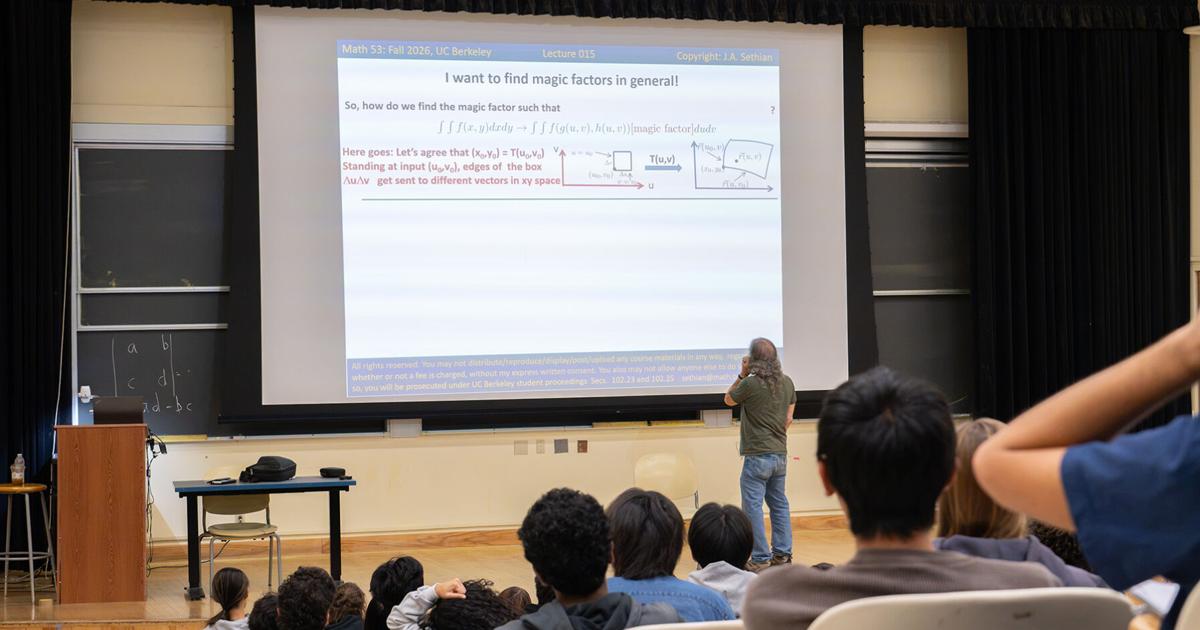
A Fields Medalist stopped grading homework for correctness, and HN argued about who ever graded it (dailycal.org)

Borcherds told the Daily Californian the system is "not a very good system," but that he has no alternative for now. The thread's first move was to question what grading homework ever meant at a big research university.

Its second was to ask who pays for the graders.

A Nikon microscope-video winner lost the title when scientists saw cilia popping in and out of existence (techspot.com)

The photographer says he used AI only in post-processing to help visualize features in grayscale images. Nikon found he broke the rules and handed the top spot to a roundworm video by Nguyen Nam Nhat.

In the thread, the debate was where the line sits between 'assisted' and 'generated'.

An expert vouched for an AI's multiplication breakthrough without reading its proof (web.maths.unsw.edu.au)

The claimed gain is a factor of (log n)^ε with ε = 2^-182, which the thread mocked as microscopic. Harvey calls it "gobsmackingly enormous": the first crack in a bound he had treated as a hard physical limit.

A game developer's reply on HN: "this does not feel like a healthy place to be."

UNEP declares 1.5°C lost and calls for 69% emission cuts by 2040 (unric.org)

Countries' current pledges would cut emissions 5 to 8% by 2030, against the 18% UNEP says is needed. Getting back under 1.5°C also means pulling about 320 gigatons of CO2 out of the air by 2100, roughly eight times what the world emitted in 2024.

A climate-tech worker with 12 years in the field answered with a plea for stamina: the physics never changes, so neither does the task.

Why New York's bolt-on fire escapes lasted a century before the ban (practical.engineering)

Practical Engineering traces the fire escape from a cost shortcut to a ban for new construction in 1968, with the 1911 Triangle Shirtwaist fire in between, where an exterior escape buckled under the crowd.

Commenters argue over whether to miss them: one says everything else about fire safety got better, another would still risk a rusty escape over a blocked stair.

Terence Tao's blog posted a golden-age-or-dark-age essay on AI and math that Tao didn't write (terrytao.wordpress.com)

Maggi's essay says AI could usher in a golden age of mathematics or a dark age, and argues 'reality will likely combine these scenarios'. His warnings: proofs correct but unreadable, mathematicians guarding their ideas, and a few companies controlling the tools.

Readers argued mostly about Tao himself, with one calling the move from AI booster to worry 'Oh nO MaThS iS KilLeD'.

Solar out-generated nuclear worldwide in 2025: 2,779 TWh against 2,703 (pv-magazine.com)

Nuclear's share of global electricity fell to 8.8%, its lowest in roughly four and a half decades, down from a 17.5% peak in 1996. The World Nuclear Industry Status Report also counts 73 reactors under construction, the most since 1987.

Commenters mostly fought over whether the headline is the right comparison: capacity factor, build cost, or a portfolio of both.

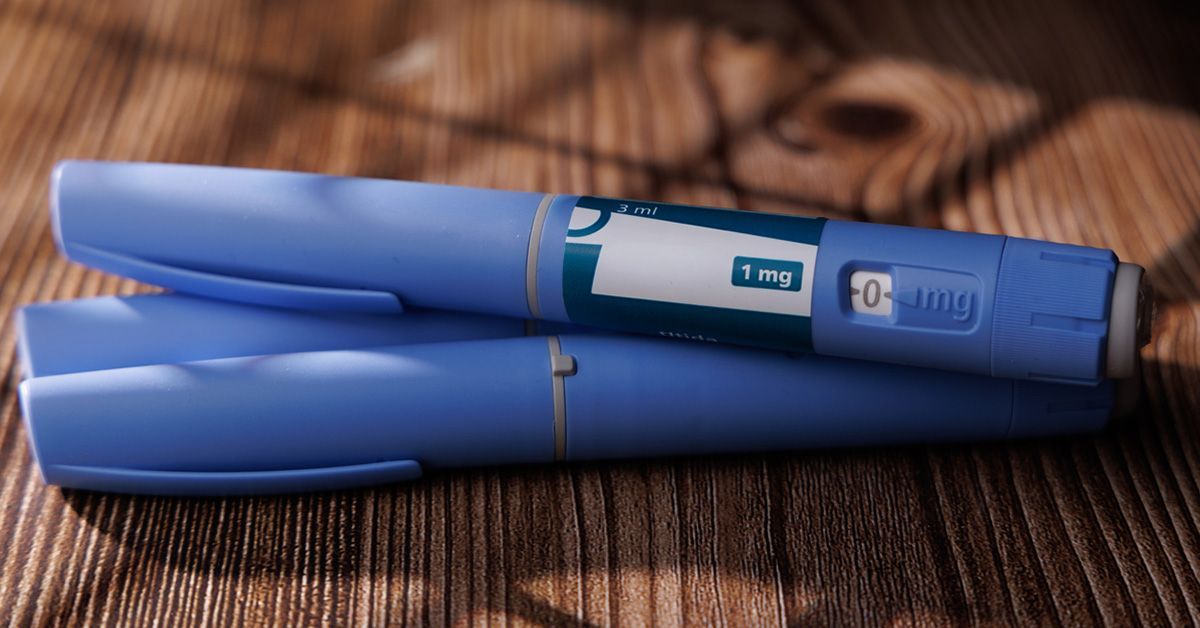
A semaglutide trial found 9% slower epigenetic aging, but the authors say it doesn't make anyone younger (universityofcalifornia.edu)

After 32 weeks, the semaglutide group showed a 9% slower pace of aging on the DunedinPACE clock and slowed PCGrimAge, which tracks mortality risk. The senior author's own caveat is explicit: 'We are not saying that semaglutide reverses aging.'

On HN, a geneticist said epigenetic clocks may simply read out things that don't affect healthspan.

Claude traced NIST's mysterious ECDSA curve seeds to a 1990s random number generator (anthropic.com)

Zero bits in the top of several published seeds were the tell: they matched lrand48, which returns only 31 bits of a 48-bit state. Claude brute-forced the hidden bits for the binary curves and used lattice reduction for the prime ones, dating the prime-curve seeding to between May 1997 and April 1998.

The HN thread skipped the cryptography and argued about who is allowed to run this kind of analysis.

🚀Tech ★ 692 · 💬 274 · Oct 17 · #AI#science#security#Anthropic#Claude#ECDSA+1

A Fields medalist said he cried when OpenAI released its math proofs (derekthompson.org)

OpenAI has published hundreds of results in number theory, theoretical computer science and logic, many on problems that resisted the best mathematicians for decades. Derek Thompson's essay says the mathematicians weep because a shared conversation across generations just got cut short.

On HN, one commenter was "kind of disgusted by the tears" and blamed decades of chasing results and money. Another checked the pay at their own university: two associate professors on $80-85K, after postdocs that push tenure-track starts into the mid-30s.

Goodfire argues neural networks are far cleaner inside than researchers feared (already-clean.goodfire.com)

Goodfire's Nick Cammarata revisits the famous "cat and car" neuron and finds it responds to pointed versus round shapes, not to a list of objects. His claim: much of the polysemanticity (one neuron firing for several things) came from fixable problems, not from superposition.

🌍Other ★ 661 · 💬 243 · Oct 16 · #AI#science#Goodfire#InceptionV1#Nick Cammarata+1

A guest post on Terence Tao's blog mocks AI math as a Library of Babel (terrytao.wordpress.com)

Gambhir, a theoretical particle physicist, writes as someone who thinks it is inefficient to explain or check a result when the same resources can generate another, and calls the output a repo of potentially true facts nobody will read. Tao hosts it.

On HN, the sharpest hit ran the Library of Babel simulator: random pages are gibberish, while AI proofs are credible and frequently correct. A reply pointed out that the essay says exactly that, and that "look correct" is the joke.

Moderna’s melanoma result arrives before the Phase 3 dataset (merck.com)

The announcement concerns an mRNA neoantigen therapy developed with Merck; commenters welcomed the prospect while noting that company statements are not the same as a published dataset.

The tension is healthy rather than cynical: oncology trials fail often, and a clinical headline needs endpoints, duration, and safety detail before it becomes practice.

🌍Other ★ 521 · 💬 251 · Aug 20 · #health#science#Keytruda#Melanoma#Merck+1

A CUDA search solved a random island’s location from its geometry (yassa9.github.io)

The author used the shape and perspective clues in a photograph to narrow the world, then used CUDA to compare geometry across possible locations.

Its value is methodological: the answer matters less than making the chain of inference reproducible enough for someone else to challenge.

🌍Other ★ 409 · 💬 75 · Aug 20 · #programming#science#security#CUDA#OSINT

Mirror life policy starts with a promise not to build it (rand.org)

RAND's 69-page strategy warns that organisms built from reversed-chirality molecules could evade familiar biological defenses and spread before a response exists.

The surprising recommendation is collective restraint: transparent risk assessment and an explicit US commitment not to develop mirror life, even amid suspicion of competitors.

AI's larger working memory creates an audit problem (davidepiffer.com)

The claim is concrete: a system can keep far more intermediate material active than a person. That makes it able to search many more paths before it commits.

HN's important turn was about verification. A result can be useful while becoming too intricate for a human to audit without structured checkpoints.

🚀Tech ★ 460 · 💬 399 · Aug 16 · #AI#programming#science#AI#Hacker News

AI is making progress on Erdős problems; verification is the bottleneck (quantamagazine.org)

The Quanta story tracks how AI is contributing to progress on Erdős problems. Readers accepted the intellectual excitement but emphasized the next constraint: systems can generate more candidate arguments than mathematicians can manually check.

That makes formalization and verification central. The value of machine-assisted proof is not just that a difficult statement falls, but that the resulting reasoning can be tested, explained, and reused.

🚀Tech ★ 126 · 💬 124 · Aug 6 · #AI#data#science#Paul Erdős#Quanta Magazine

OpenAI lists ten mathematical advances, and HN asks for the denominator (openai.com)

The announcement presents ten advances and says researchers helped prepare manuscripts and formalize proofs in Lean. That turns a model result into a claim about a research process, not just an answer.

HN’s sharpest question was what the release leaves uncounted: attempted problems, failed runs, repeated attempts, and the cost of the surrounding harness.

🚀Tech ★ 459 · 💬 727 · Aug 4 · #AI#programming#science#Lean#OpenAI

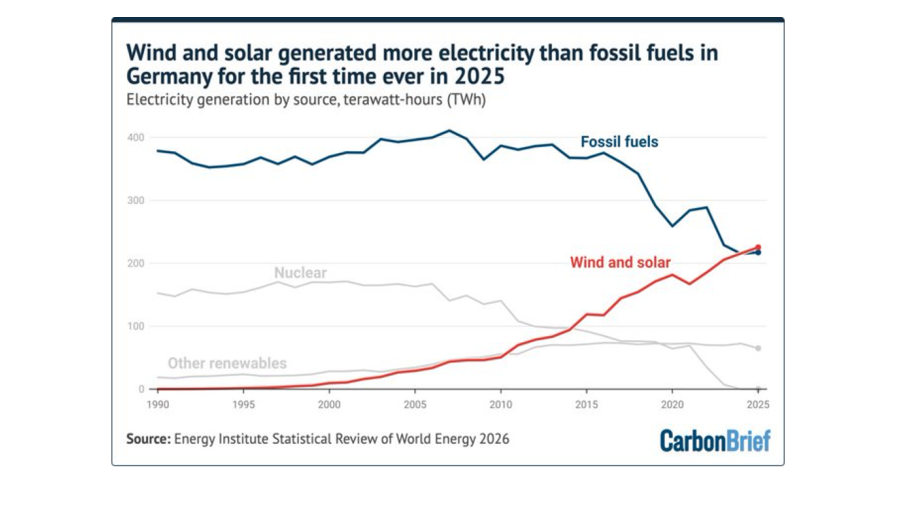
Germany’s renewables milestone comes with an argument about the metric (intellinews.com)

The reported milestone is about electricity generation, not every use of energy. That boundary is the difference between a real achievement and an overextended claim.

HN did not dismiss the change; it pressed for annual versus monthly comparisons, absolute generation, storage, and the unresolved role of gas and nuclear.

Dunning–Kruger may be a statistical artifact, not a licence for certainty (mcgill.ca)

The challenge is to the familiar curve, not to the everyday observation that people can be confidently wrong. Those are different claims, and the thread kept pulling them apart.

Commenters noted that a broad novice group can contain both over- and under-estimators, while public shorthand usually singles out the confident outlier.

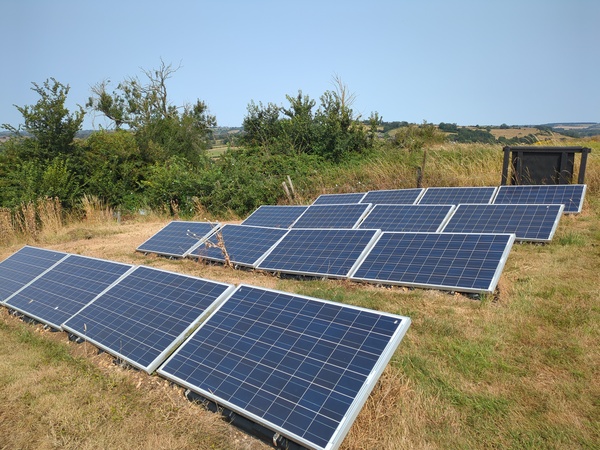
Solar-panel washing has a surprisingly strict burden of proof (incoherency.co.uk)

Panel washing sounds like preventive maintenance, but its value depends on local soiling, rainfall, output loss, cleaning cost, and the chance of damaging equipment or warranty terms.

The thread’s more useful instinct was to measure a before-and-after production difference first. A chore becomes an engineering decision once there is a baseline.

🌍Other ★ 226 · 💬 227 · Jul 28 · #energy#science#Solar Panels

Terence Tao shared his ChatGPT transcript on a math conjecture. The thread tried to unmask it as him (chatgpt.com)

Terence Tao published a raw ChatGPT transcript exploring a counterexample to the century-old Jacobian Conjecture — not a summary of the math, but the actual back-and-forth, phrased like an expert cutting straight to the point.

One line stood out to readers as unmistakably his register: "I've activated Pro. Can you continue to look for a potential geometric explanation of the X_3 ~ A3 miracle that avoids coordinates or other unmotivated constructions?"

Someone tried the trick everyone eventually tries: ask ChatGPT to guess who it's talking to from the same transcript. Unprompted, it guesses "math researcher or paper author."

🌍Other ★ 759 · 💬 452 · Jul 23 · #AI#science#ChatGPT#OpenAI#Terence Tao

The creatine-makes-you-smarter study everyone cites found an 18-point IQ jump. Nobody replicated it (dynomight.net)

Dynomight dug into the creatine-and-cognition literature and found the famous 2003 result — an 18-point-equivalent IQ jump in vegetarians — never held up under later, better-designed replication.

A 2023 study with nearly three times the sample size found an effect roughly a tenth the size, not statistically significant. Europe's food safety regulator reviewed ten human studies in 2024 and found no consistent effect.

The sharpest thread pushback: a null result doesn't mean "no effect," it means "not enough evidence to reject no effect" — and creatine reaching the brain at all is a real, different claim than most supplements can make.

🌍Other ★ 286 · 💬 234 · Jul 23 · #health#science

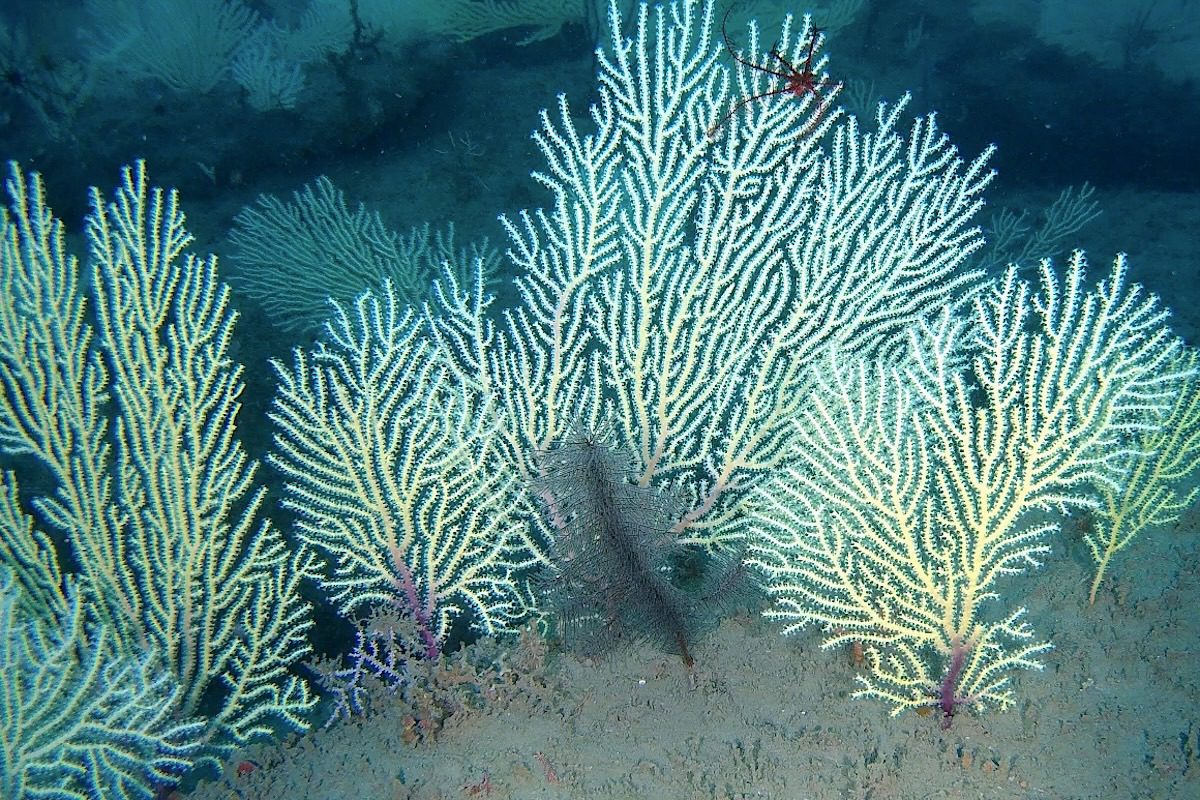
A West African Coral Reef Sat Buried in a Report for 60 Years (e360.yale.edu)

Gérard Zinzindohoué spent years getting rejected for grants before National Geographic gave him $20,000 — most of it swallowed by sonar gear towed behind a jury-rigged fishing boat. What his team confirmed 175 feet down, 14 miles off Benin's coast, was eight species of coral and a shark habitat nobody had mapped since that single 1960s paragraph.
One HN reader had a blunter theory for why this reef made it while so many didn't: it sits along a coastline where almost nobody wears chemical sunscreen, which is documented to kill coral elsewhere.

The Clearest Explanation of an AI Math Proof Was the AI's Own Chat Log (terrytao.wordpress.com)

Anthropic's Claude Fable 5 built a degree-seven map with constant Jacobian -2 that still sends three different points to one output, breaking an 87-year-old conjecture's promise that such maps must be reversible.

Tao's post rebuilds that construction piece by piece rather than calling it a miracle, and admits he leaned on an AI chatbot to check his own math.

One longtime commenter said the write-up lost him at the algebra, and pointed everyone to Tao's own chat transcript instead as the clearer explanation.

Meta calls its DOE lab AI open source. The license says otherwise. (ai.meta.com)

Two Meta vision models do the labeling: DINOv3 finds the structures, SAM 3 draws the pixel-precise boundaries around them, running across roughly 300 GPUs inside the DOE's Genesis Mission science program.

Meta's post calls the pipeline open source. A commenter who read the actual SAM 3 license found it bans reverse engineering and any weapons-related use, oddly restrictive wording for a federally funded lab.

A tweet says Claude Fable just broke an 87-year-old math conjecture (xcancel.com)

The map: three polynomials in three complex variables, Jacobian determinant exactly -2, sending three separate points to one identical output, the exact collision the conjecture rules out.

One top reply wasn't about the math: it noted the announcement describes two people and a model working together, not a lone AI feat. Mathematicians split hard, from "sweeping up easy leftovers" to "we're a bit fucked."

A lighting designer found brighter streetlights actually blind CCTV cameras too (spectrum.ieee.org)

LED streetlights went from rare to covering more than half of America's streets by 2019, sold almost entirely on the promise of lower energy bills. Global light pollution is still climbing by nearly 10 percent a year despite that switch.

One HN reader watched his own city get it backwards: after new LEDs replaced old lamps with a tightly aimed beam onto the road, nobody noticed the footpath beside it had gone dark until joggers started running in traffic instead.

An AI disproved a century-old math conjecture during the World Cup final (xenaproject.wordpress.com)

PhD students are now expected to pay $200 a month for access to models like Sol and Fable — Harvard already comps the subscription for every student, postdoc and faculty member in its math department.

Not everyone in the thread is impressed: one commenter dug into the Jacobian conjecture's citation history and found mathematicians had already bounded the search space by 1983 — the AI didn't discover new territory, it just finally searched it.

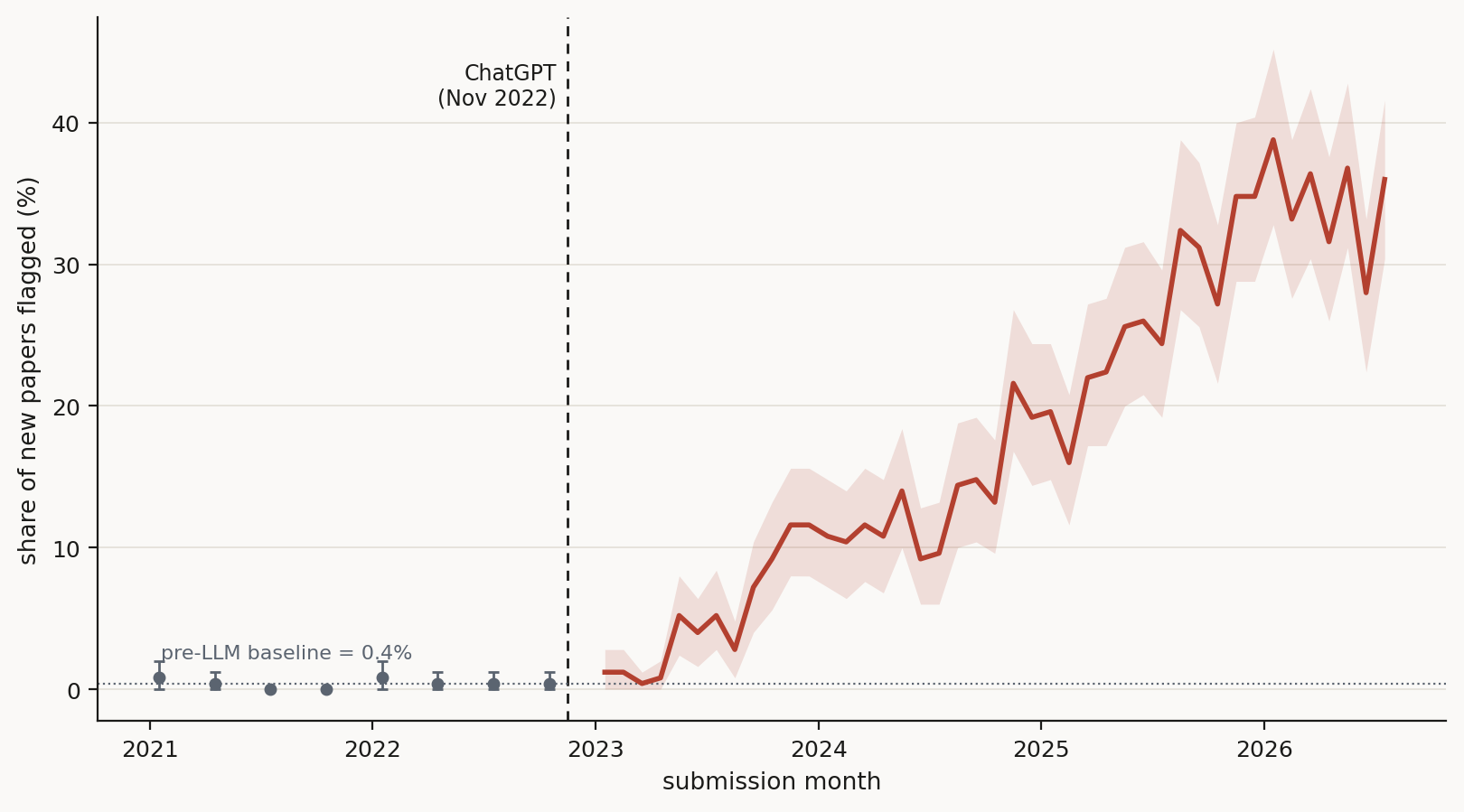
A Detector Flagged 65% of CS Papers as AI-Written, Then Flagged Its Own Post (unslop.run)

The detector flagged a 2015 conference paper at 74% machine-written and a 2012 PhD dissertation at 40%, both submitted years before large language models existed, according to a commenter who ran his own decade-old work through the tool.

The tool's creator conceded in the thread that he has no clean way to build a control group of human writing from after 2023, since every available shortcut relies on the very detectors he's trying to outperform.

🚀Tech ★ 194 · 💬 143 · Jul 21 · #AI#science#arXiv#ChatGPT#Pangram

The camo trick meant to fool AI drones may make trucks easier to spot (economist.com)

The Economist's report has soldiers painting trucks in looping stripes and blotches to throw off the machine-vision models steering today's autonomous strike drones, a decades-old fix aimed at a machine that costs far more to build than a can of paint.

One high-karma engineer in the thread called it battlefield theater: modern strike drones barely have the resolution at altitude to make out a stripe, and the pattern may flag the truck to a detection model rather than hide it.

A Grand Canyon guide rowed solo to Hawaii, faster than any man (theguardian.com)

Pfendler, 32, guides river rafts through the Grand Canyon for a living. Her boat carried two sealed cabins, bow and stern, for sleeping and food, and nothing else: 21 feet long, 730 pounds, no engine, no way to call the trip short once she left in May.

A Hacker News reader caught what the article's headline missed: by the numbers, Pfendler didn't just break the women's record for this crossing. She rowed it faster than any man ever has, too.

For Fifty Years, a GM-Funded Doctor Set the 'Safe' Dose of Lead (smithsonianmag.com)

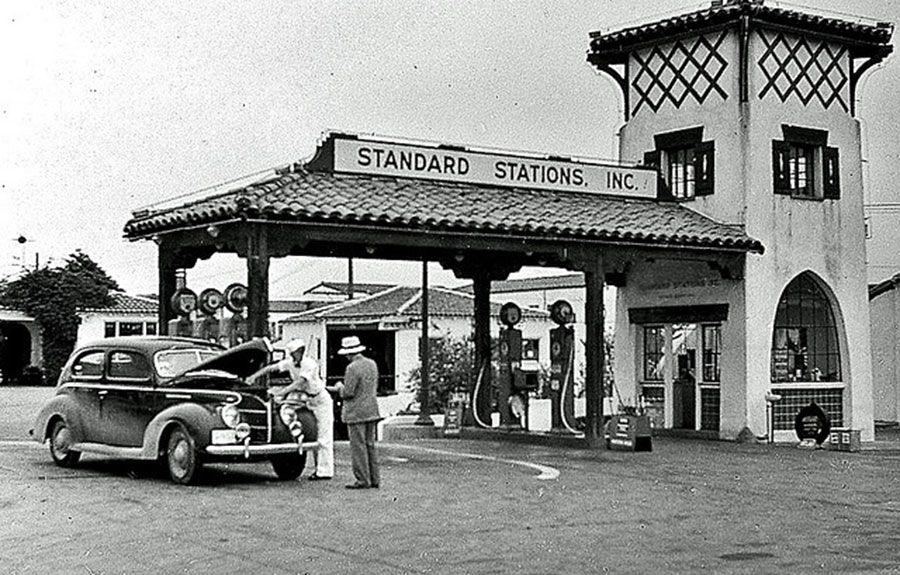
Thomas Midgley Jr. discovered tetraethyl lead in December 1921, silencing his engine's knock, and was bedridden with lead poisoning before the first tank of it sold in 1923. A year later, five refinery workers making the stuff for Standard Oil were dead.

The government cleared the fuel anyway in 1926. The only scientist researching lead safety for the next fifty years was a doctor General Motors itself paid, and the thread's sharpest reply asks what a modern equivalent of that arrangement would look like.

Mice that squatted for food beat runners on blood sugar control (news.vt.edu)

The findings, from Virginia Tech physiologist Zhen Yan's lab, target people who can't sustain long cardio: resistance training may guard against Type 2 diabetes just as well as running, through a mechanism that has nothing to do with bigger muscles.

Hacker News wasn't fully sold. Readers flagged that the weightlifting was forced before every meal while the running was optional, and diabetics in the thread said their own glucose monitors show a messier picture than mice ever could.

Biopsies find long-COVID patients' stomachs missing half their nerve fibers (ijidonline.com)

A new biopsy study found long-COVID patients' nerve damage is gut-specific: skin biopsies from the same patients came back normal, while gastric nerve density tracked with heart-rate variability and a cardiac marker, pointing to a structural cause behind the nausea and bloating many patients report.

A reader flagged what the headline skipped: the control group was eight people. A physician in the thread went further, arguing gut damage is the smaller half of long COVID's real driver, one seated in the brain instead.

Terry Tao Let AI Coding Agents Rebuild His 1999 Math Applets (terrytao.wordpress.com)

Tao's applets, which visualize Besicovitch sets and the honeycombs he co-designed with mathematician Allen Knutson, had stopped working on modern browsers entirely. An AI coding agent rewrote roughly two dozen of them in JavaScript, plus a new special-relativity sketchpad and a supplement for his recent Gilbreath conjecture paper.

Not everyone in the thread was charmed: one commenter said the more Tao talks about AI, the more he suspects an undisclosed conflict of interest, backed by a link to a Reddit thread.

The Math That Powers Modern AI Was Invented Three Times, Separately (math.ucdavis.edu)

Eugenio Beltrami published the singular value decomposition in 1873. Camille Jordan published the identical result a year later in France, apparently without reading Beltrami. James Joseph Sylvester found it again in 1889. G.W. Stewart's 1993 paper, now on Hacker News, retraces how a tool now core to linear algebra got invented three separate times before anyone noticed.

In the thread, a computer vision researcher who has used SVD professionally for years admitted Claude and Codex now write most of that code for him.

A Liquid With No Elastic Memory Just Fractured Like Glass (quantamagazine.org)

The threshold turned out oddly sharp: push the liquid past 300 millimeters a second and it snaps clean instead of stretching thin; at 100, it just flows like any ordinary liquid. Lima first caught the crack years earlier, testing hydrocarbons in a project with the oil company Exxon Mobil.

On Hacker News, the pushback arrived fast: if any liquid flows, why wouldn't all of them crack this way under enough force?

In 11 of 74 Autopsied Hearts, the Coronavirus Was Still Replicating (my.uscap.org)

Pathologists autopsied 74 people who had lived with COVID for at least 60 days before they died. In 11, the virus was still replicating inside the heart, and those 11 were far more likely to have died with the chest pain, palpitations, and breathlessness of cardiac long COVID: 82% versus 37%.

The finding is a conference abstract, not a published paper. A physician in the thread flagged the catch: the same theory was already tested with extended Paxlovid in real long COVID trials, and both came back negative.

🌍Other ★ 108 · 💬 24 · Jul 12 · #health#science#Long COVID#Paxlovid#SARS-CoV-2+1

A story blaming modern decor for headaches misread its own source study (studyfinds.com)

StudyFinds says striped floors and flickering LEDs may be quietly overloading your visual cortex, citing a 32-author review in the journal Vision. Readers went straight to the open-access paper and found the site had the science backwards: the actual mechanism is luminance contrast, not vaguely defined "visual complexity."

Even the thread's own leading theory - that minimalism exists because everyone expects to move - got shredded by a reader who pointed out that rich homeowners are its biggest fans.

A €50M Dutch fund poached 34 researchers, 29 from the US — reverse Operation Paperclip (nwo.nl)

The Netherlands' new Tulp Fund announced its first cohort: 34 researchers recruited, 29 currently in the US, from Harvard, Stanford, Columbia, Yale and the National Cancer Institute, across vaccines, cancer, nuclear energy, Alzheimer's and astrophysics. The pitch: up to €1M per researcher over five years.

HN's first instinct was to call the money thin, until commenters noted the €1M is a research budget, not salary, enough to fund a lab of PhD students. As the submitter told one skeptic doing the after-tax math: ‘Yet still they come.’

A first-year turned 'Ilya's 30 ML papers' into a site nobody can source (30papers.com)

The list traces back to a 2024 tweet with 876k views, not to any statement from Ilya himself. As the reader who found it shrugged, that barely matters: AlexNet, attention, ResNet and the Transformer are landmark reading no matter who assembled the set.

The 'beginner friendly format' promise drew the sharpest fire, from broken LaTeX to a three-line review ('beginner friendly format / looks inside / math'). But the author, posting openly and taking the hits, shipped toggles for the animations within a day.

A Claude trained to sabotage code betrayed its intent in a hidden "J-space" (anthropic.com)

J-space is tiny: it holds only a few dozen concepts at once and accounts for under a tenth of the model's activity, with most processing routing around it. Yet Claude can report, and even nudge, what sits inside.

One reader deflated the mystique, reading J-space as a shared abstract-reasoning subspace, not a mind.

The one ingredient in DayQuil that works is also the dangerous one (theargumentmag.com)

Acetaminophen sends more than 50,000 people to US emergency rooms and kills 500+ a year, about half of them by accident. It's the one part of the combo bottle that works, hiding beside two ingredients Richman calls placebo-grade.

Readers fired back with counter-studies, accusing the essay of citing only the research that agrees with it.

Bender, five years on: "stochastic parrots" was about LLMs, not all AI (spectrum.ieee.org)

Her clarification is narrow: the phrase covers large language models and text generation only, not chess engines, AlphaFold, or image systems. The vivid "octopus" thought experiment, she says, was a teaching device for non-specialists.

One reader shrugged that the phrase now mostly signals which team you're on.

An AI tutor posted a 1.3 SD gain at Dartmouth — then the thread found the 16 students it rests on (intextbooks.science.uu.nl)

A Dartmouth stats course ran a study platform where Claude grades constructed-response quizzes against instructor rubrics. Reported effect: 0.71–1.30 SD on the midterm for full engagement, 90.2% voluntary adoption versus a ~10% baseline for reading the textbook.

Then commenters did the arithmetic: "90% adoption" means "used it at least once," only ~16 students (11%) hit the engagement tier that produced the big number, and the "tutor" is really a practice-quiz autograder.

🚀Tech ★ 134 · 💬 80 · Jul 6 · #AI#science#Claude#Dartmouth#Phosphor

Cannabis "6x heart-attack risk" hits HN — and the guy who read the study defends it both ways (acc.org)

An American College of Cardiology release pairs a 4.6-million-patient cohort (≈6x heart-attack risk in healthy under-50s) with a meta-analysis of 75M+ people showing a milder 1.5x. Researchers admit the studies are retrospective and can't fully control dose, route, or other drugs.

The thread's best correction is contrarian in both directions: yes it controlled for tobacco, no the effect size isn't remarkable next to income, and nobody split smoking from edibles.

"EV batteries are defying expectations" — the good-news stat quietly compares new cars to old ones (wsj.com)

The WSJ piece argues high-mileage EV batteries are outlasting fears, citing a 2025 Recurrent study (1-in-12 for 2011–2016 cars vs 0.3% for 2022-on) and Geotab data that heavy fast-charging loses range twice as fast.

The thread's survivorship-bias catch is clean: of course a three-year-old car hasn't needed a replacement yet — and every article like this skips the calendar-age degradation that kills batteries regardless of miles.

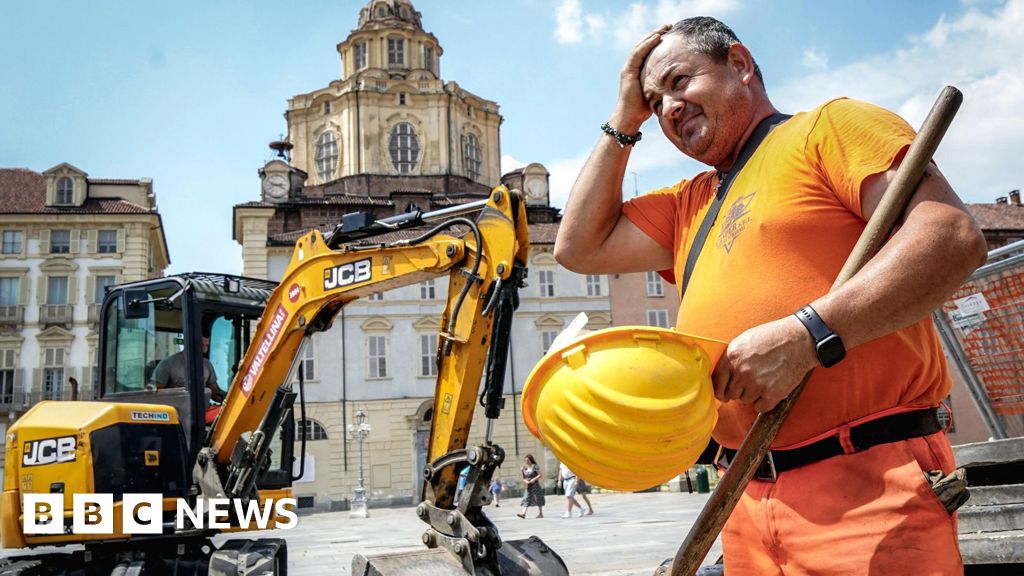
Europe's heat charts hide a paradox: cleaning up our air is part of why it's warming faster (bbc.com)

The BBC lays out Europe's faster-than-global warming in seven charts — temperature records, rising "tropical nights" in cities. The causal line that catches the thread: less bright snow and fewer reflective aerosols mean more sunlight reaches the surface.

The reactions range from aerosol-science nuance (this is real, and it's the same dangerous ground as geoengineering) to a data-presentation gotcha: one "Europe" chart greys out Ireland and plots only England.

🌍Other ★ 147 · 💬 233 · Jul 6 · #energy#science#BBC#IPCC

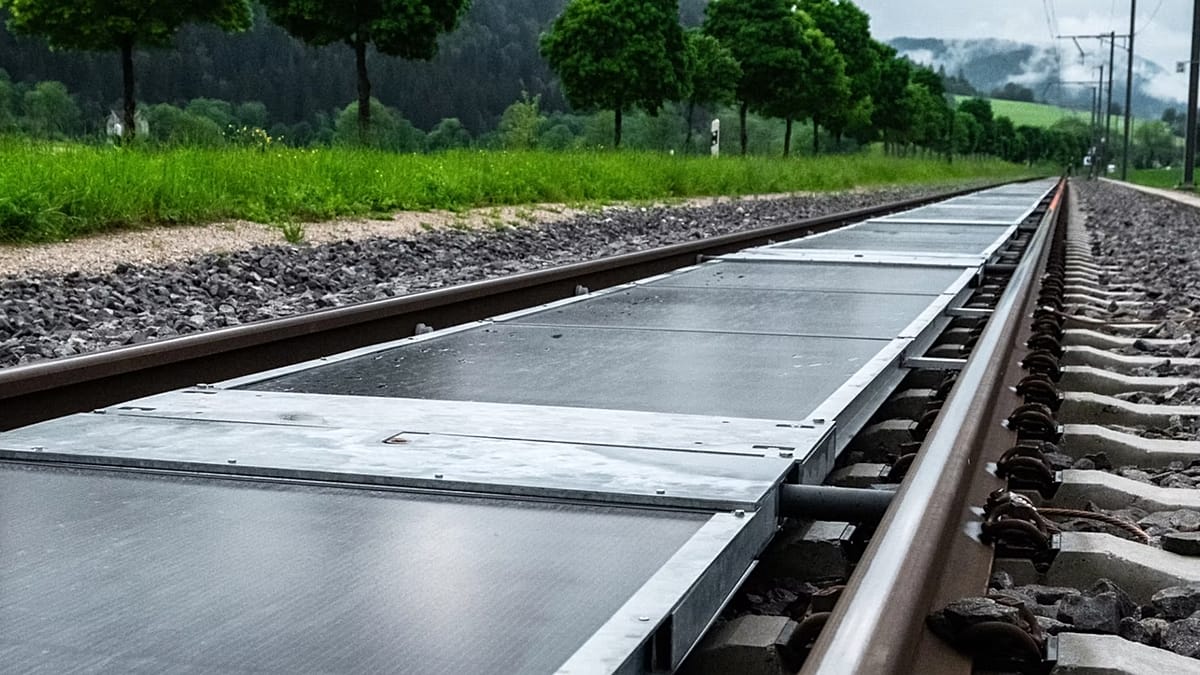
Switzerland's solar railway works — and HN's napkin math says 44 km of it moves one locomotive (euronews.com)

Swiss startup Sun-Ways put 18 kWp of panels across 100 m of track in Buttes, producing ~16,000 kWh/year, and the trial went well enough that a permanent install looks likely, with Italian and other partners lining up.

The thread does the arithmetic: 18 kW over 100 m is less than a big house rooftop, you'd need ~44 km of track to power one locomotive — and the reply is that efficiency was never the point.

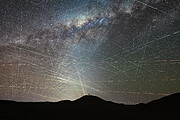
An ESO astronomer sets the sky's limit at 100,000 faint satellites (eso.org)

Operators have filed for 1.7 million satellites; an ESO study finds ground astronomy breaks past 100,000, calling the rest 'devastating.'

The proposed fix is a brightness floor of magnitude 7. SpaceX's mooted million would streak dozens of trails across each VLT frame; Reflect Orbital's 50,000 mirrors would outshine Venus.

The thread pitted progress against dark skies and flagged the launcher missing from the doom list: China.

Webb keeps finding black holes too big, too early to exist (quantamagazine.org)

Webb has photographed a billion-solar-mass black hole just 650 million years after the Big Bang, feeding at 40 times the limit physics allows, plus hundreds of enigmatic 'little red dots.'

The problem isn't too little data but too many theories. ZeroTier's founder is betting on primordial black holes; another reader dug up the paper testing whether the red dots are just brown dwarfs.

A two-dose nasal spray rejuvenated aging brains — in 18-month-old mice (stories.tamu.edu)

Ashok Shetty's lab at Texas A&M dosed 18-month-old mice twice with extracellular vesicles from human stem cells, sprayed up the nose. Object-recognition memory improved; inflammation markers in the hippocampus dropped and held for months.

The press release says 'reverse brain aging.' The thread says something smaller: it lowered inflammation, in mice, and no human has tried it. A neuroimaging scientist and a skeptic both landed on the same asterisk.