Tag

Quanta Magazine

5 stories

AI is making progress on Erdős problems; verification is the bottleneck (quantamagazine.org)

The Quanta story tracks how AI is contributing to progress on Erdős problems. Readers accepted the intellectual excitement but emphasized the next constraint: systems can generate more candidate arguments than mathematicians can manually check.

That makes formalization and verification central. The value of machine-assisted proof is not just that a difficult statement falls, but that the resulting reasoning can be tested, explained, and reused.

🚀Tech ★ 126 · 💬 124 · Aug 6 · #AI#data#science#Paul Erdős#Quanta Magazine

Not just a headline — the discussion unpacked

The top HN threads: facts from the discussions, both sides, insider voices. Email, Telegram, or RSS.

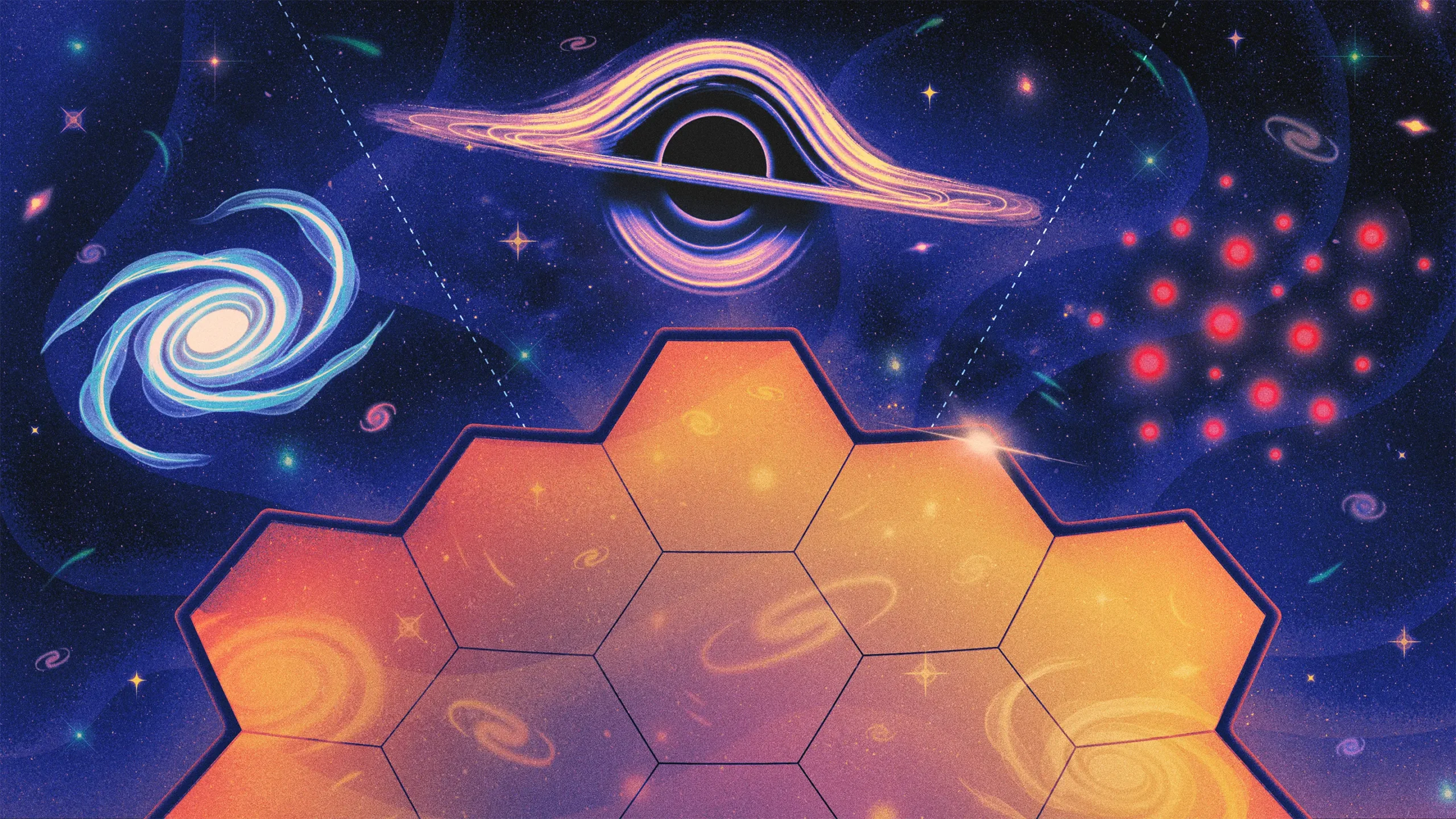
Webb keeps finding black holes too big, too early to exist (quantamagazine.org)

Webb has photographed a billion-solar-mass black hole just 650 million years after the Big Bang, feeding at 40 times the limit physics allows, plus hundreds of enigmatic 'little red dots.'

The problem isn't too little data but too many theories. ZeroTier's founder is betting on primordial black holes; another reader dug up the paper testing whether the red dots are just brown dwarfs.

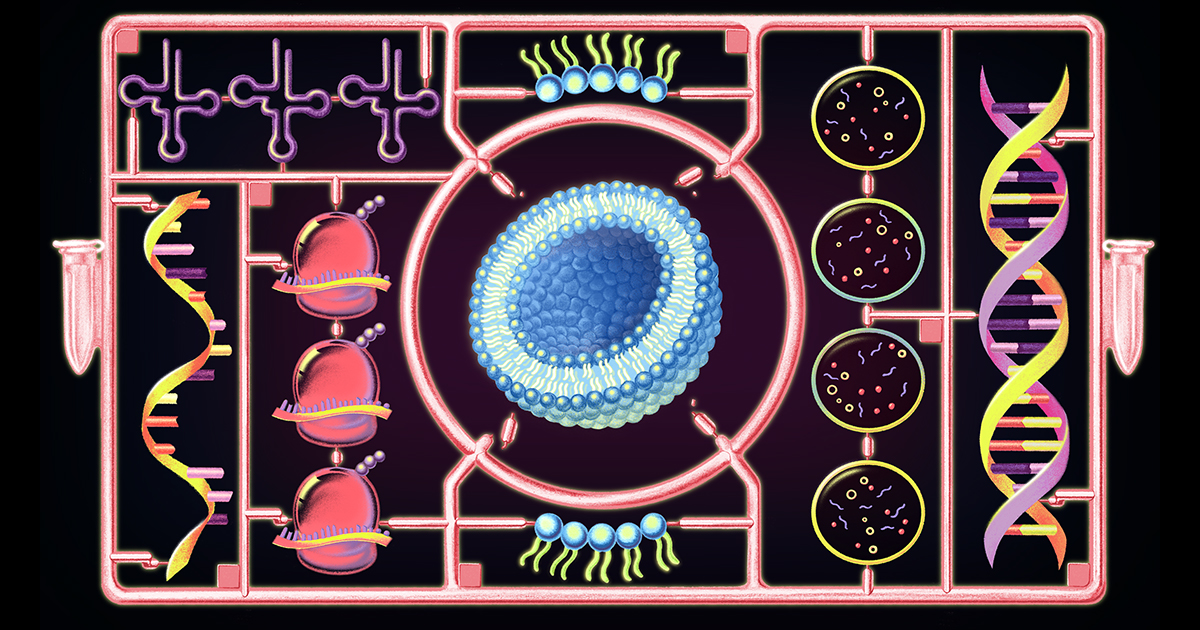
A lab-built cell that feeds, grows and divides, yet still isn't alive (quantamagazine.org)

The wall the field kept hitting was division. Adamala's fix was to ditch the cytoskeleton: protein tags on the membrane pull in crowding proteins that bend it until the sac splits. Everything else runs on borrowed parts, 36 off-the-shelf enzymes plus feeder bubbles of sugar and ribosomes.

The team is candid that it is "not alive by any definition" and can't make its own ribosomes. The same lab also drew grumbling: the manuscript was rejected by Cell, then mailed to reporters before a preprint went up for peers to check.

How many elementary particles are there? Quanta says 17 to 995.5. A physicist in the thread says the question is broken (quantamagazine.org)

Quanta lines up the counts: 17 in the textbook, 61 once you split quark colors and boson handedness, 995.5 if you count quantum degrees of freedom. David Tong's verdict: 'the true answer is not an integer.'

A physicist in the thread says the article breaks where it counts '8 gluons' as if they were discrete like the W and Z. Gluon color is a continuous space; the basis is arbitrary. Particles are just excitations of fields — count the fields, and the number collapses.

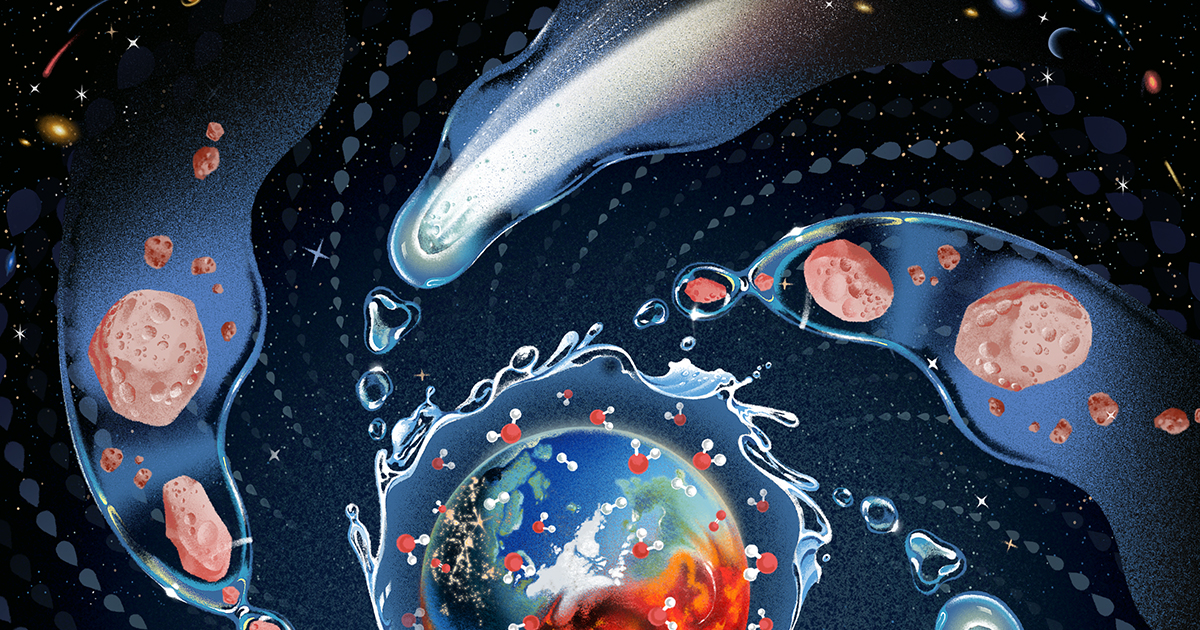
Earth may have manufactured its own oceans, not imported them from comets (quantamagazine.org)

The catch with the delivery story is isotopes. Comets like Halley carry deuterium ratios that don't match Earth's oceans. So researchers ran the alternative in a lab: diamond anvils and lasers recreating a magma-ocean world, where hydrogen and molten rock fuse into water.

The result was startling — up to 1,000 times more water than predicted. The open question is whether an Earth-sized planet ever held enough atmospheric hydrogen to drive the reaction. As one researcher put it: it's unclear you can do this for an Earth-mass planet.