The "open" repairable printer that isn't open source and has no working prototype yet
A DRM-free, refillable, repairable inkjet lands to applause and "Richard, they did it, you can rest now." The top comment explains why open inkjet printers have never existed in forty years — and it's still just a pre-order page.
OpenPrinter pitches refillable HP-compatible cartridges from bulk ink, cut sheets or paper rolls up to 37.5 m, a Raspberry Pi Zero W and CUPS. No price, no timeline, and a crowdfunding page with no demonstrated prototype.
The teardown is brutal and expert: open inkjet doesn't exist because the hard part — the print head — is materials science nobody hand-rolls, the whole design still depends on a commercial cartridge that clogs, and its license (CC BY-NC-SA) means it isn't even open source.
The pitch every HP victim wants to believe
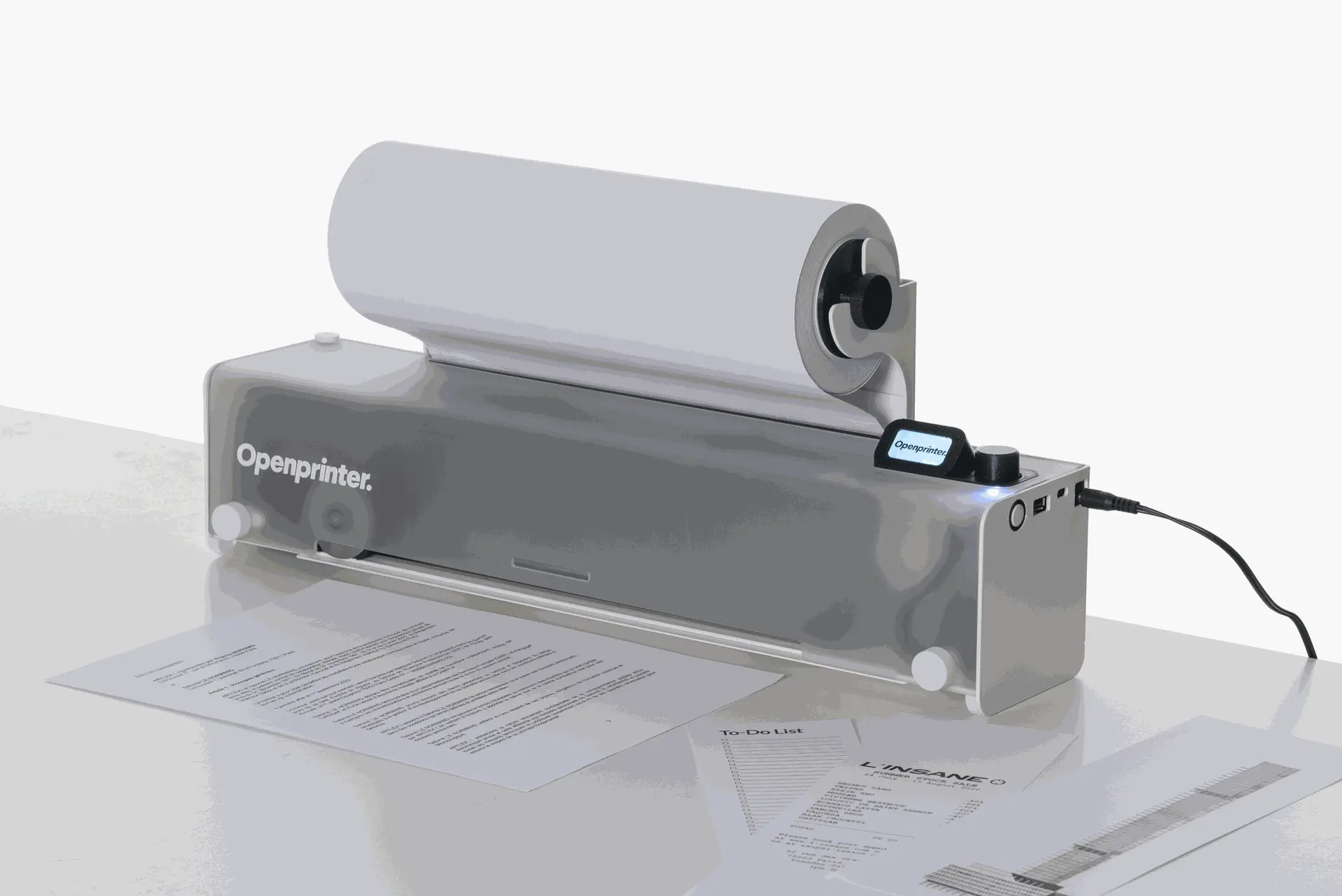
OpenPrinter is a compact inkjet sold on repairability and freedom from lock-in: DRM-free cartridges (HP-compatible 63/302/803) refilled from 100 ml bottles, acceptance of both cut sheets and paper rolls up to 37.5 meters, standard replaceable parts, and independent black/color operation so one dry cartridge doesn't brick the other. Specs cite 600 dpi black, 1200 dpi color, a Raspberry Pi Zero W and CUPS. It's a Crowdsupply pre-order campaign with no listed price and no production timeline.
The thread opens euphoric — a reference to Richard Stallman finally resting. Then the domain experts arrive, and the mood does not survive contact.
Why "open inkjet" is a forty-year no-show
The load-bearing objection is about physics and money, not enthusiasm:
"Inkjet printing requires orders of magnitude more engineering expertise, materials science, industry experience and financial resources than most people imagine … open inkjet printers don't exist despite having been consumer products … for more than forty years. That is why this is a pre-crowdfund landing page without a demonstrating a working prototype." — a commenter quoting a prior inkjet-materials teardown

The "repairable" promise then eats itself, because the one part you can't make is the one part that fails:
"This design 100% depends on commercial print cartridges containing the actual print-head. Once that clogs, you need to get another one, good luck getting one once production has stopped." — a commenter evaluating it for long-term resilience
A hardware designer pointed at the category the project should have picked — laser printing is genuinely easier to build and remanufacture around cheap old toner cartridges. And the label got audited by someone who ships open-source software:
"Open Printer is distributed under the Creative Commons BY-NC-SA 4.0 license. So not open source." — the creator of the open-source project BookStack
The honest read
There's a real, unmet demand here — everyone in the thread wants this printer to exist. But wanting it doesn't move the wall: the print head is the product, the project outsources it to the exact vendors it's rebelling against, and a non-commercial Creative Commons license isn't open source. Right now it's a mood board for a printer, not a printer.
Get breakdowns like this every day
The top Hacker News stories, unpacked — by email, Telegram, or RSS.
Canada quietly paid Palantir up to $46.8M while launching a strategy about owning its own AI
An AI founder argues Ottawa already buys foreign AI like Palantir — just secretly — while preaching sovereignty. His fix: buy Canadian the same way, only out loud. The thread notices he runs a Canadian AI company.