Auto-download daily
Issue · July 6, 2026

Top of Hacker News

22 stories of the day: AI, technology, business and simply interesting discussions — recapped and unpacked.

GitHub Trending: Today — Immich, Whisper, Whisper.cpp, Helix, Nautilus (github.com)

In today's GitHub Trending: Immich, the self-hosted photo library now at 3.0; two builds of OpenAI's Whisper for transcription on your own machine; Helix, a Rust terminal editor with a language server built in; and NautilusTrader, a Rust trading engine you run yourself.

Four of the five swap a cloud service for something you host. The loudest thread isn't praise but a bug: Whisper hallucinating a stranger's name into perfectly silent audio.

Not just a headline — the discussion unpacked

The top HN threads: facts from the discussions, both sides, insider voices. Email, Telegram, or RSS.

Organic Maps hit 6 million installs — and the thread points newcomers to its fork instead (organicmaps.app)

The pitch is clean: 100% of features work offline, no ads, no registration, verified tracker-free, 6 million installs by December. Then a CoMaps contributor shows up in the thread recruiting iOS developers, and others start listing why the community walked out a year ago — quietly added ads, a slice of code turned proprietary, donations that allegedly went missing.

The awkward footnote from a long-time user: even fans admit the search is so bad they keep crawling back to Google Maps.

"Web crypto is always snake oil" — and the cryptographers show up to disagree with each other (devever.net)

Landau calls it an "incoherent cryptosystem": the server that wants to read your messages is the same server shipping the JavaScript that's supposed to stop it — and it can push different code to one IP at any moment. He extends the charge to Signal, WhatsApp and iMessage.

The pushback is credentialed on both sides. One security researcher says you can build Signal from source yourself, so it doesn't apply — then, in the same breath, points out iMessage isn't really end-to-end anyway because iCloud Backup is on by default.

An AI tutor posted a 1.3 SD gain at Dartmouth — then the thread found the 16 students it rests on (intextbooks.science.uu.nl)

A Dartmouth stats course ran a study platform where Claude grades constructed-response quizzes against instructor rubrics. Reported effect: 0.71–1.30 SD on the midterm for full engagement, 90.2% voluntary adoption versus a ~10% baseline for reading the textbook.

Then commenters did the arithmetic: "90% adoption" means "used it at least once," only ~16 students (11%) hit the engagement tier that produced the big number, and the "tutor" is really a practice-quiz autograder.

🚀Tech ★ 134 · 💬 80 · Jul 6 · #AI#science#Claude#Dartmouth#Phosphor

A game-dev of 20 years says the fix is to ban the word "buy" — and only 3% of Sony's revenue is physical (popcar.bearblog.dev)

Sony ends PlayStation disc production by January 2028, and popcar argues the real loss isn't the disc but the right to sell, lend, or keep a game a company can delist. PC stays ownable through GOG and DRM-free copies; consoles are heading for Netflix-style rental.

Then a developer who's run a studio for two decades agrees the honest fix is linguistic — stop letting stores say "buy" — while another pulls Sony's own filing: physical was 3% of 2025 revenue.

🌍Other ★ 334 · 💬 248 · Jul 6 · #culture#gaming#policy#GOG#PlayStation#Sony+1

"The word you're looking for is unionizing": HN rewrites an AI-coder's meditation pitch as a labor problem (jacob.gold)

Jake Gold says deep-focus coding used to quiet the brain's rumination circuit, and juggling multiple agent sessions replaced flow with constant context-switching. He's more productive, less calm, and recommends meditation apps.

The top replies flip the frame: a 15k-karma dev calls the new normal "a steady stream of medium stress" he won't stick around for; another asks why you'd meditate to tolerate a bad tool instead of fixing the tool; a third answers in one word — unionizing.

The Chat Control panic thread, and the commenter who says the encryption-breaking version already lost (heise.de)

Heise reports the Council revived an expired rule letting messaging providers voluntarily scan for known child-abuse imagery, pushed as new legislation on an urgent second-reading track right before recess — where blocking needs a near-impossible absolute majority.

A commenter untangles it: the far more dangerous Chat Control 2.0, with mandatory scanning that would weaken end-to-end encryption, is not what's being voted here — and protest has arguably pushed 2.0 off the table for good.

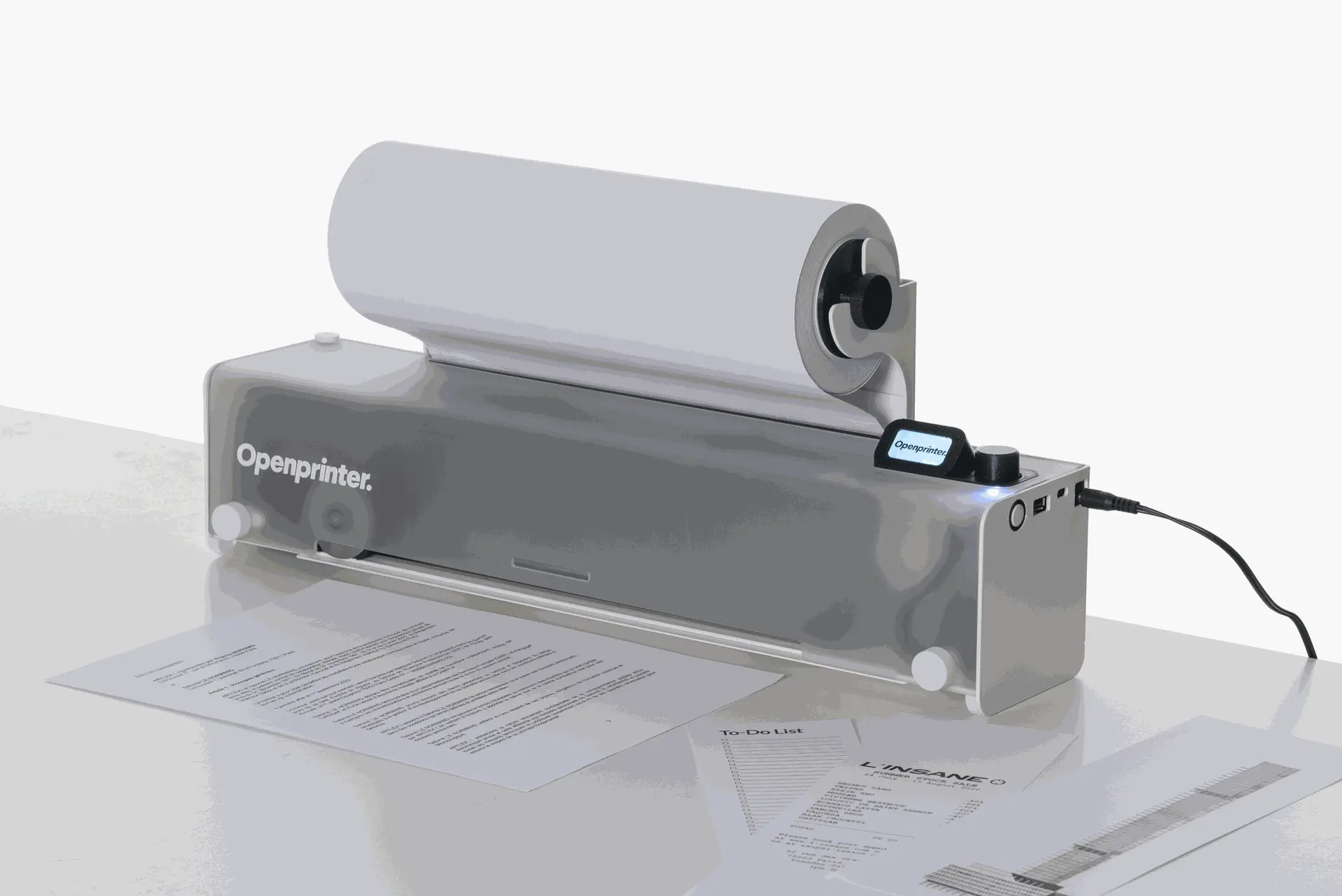
The "open" repairable printer that isn't open source and has no working prototype yet (opentools.studio)

OpenPrinter pitches refillable HP-compatible cartridges from bulk ink, cut sheets or paper rolls up to 37.5 m, a Raspberry Pi Zero W and CUPS. No price, no timeline, and a crowdfunding page with no demonstrated prototype.

The teardown is brutal and expert: open inkjet doesn't exist because the hard part — the print head — is materials science nobody hand-rolls, the whole design still depends on a commercial cartridge that clogs, and its license (CC BY-NC-SA) means it isn't even open source.

🚀Tech ★ 489 · 💬 122 · Jul 6 · #hardware#open source#BookStack#HP#OpenPrinter+1

Canada quietly paid Palantir up to $46.8M while launching a strategy about owning its own AI (readtheline.ca)

Al Vigier's numbers are concrete: a Defence Palantir contract that began at $14.4M in March 2020 climbed past $44M by last October through a dozen-plus amendments, a separate $3.7M contract surfaced only via an MP's question, and Ontario police have run Palantir's Gotham since 2015 — all undisclosed.

The sharpest reply turns his own pitch against him: flag-wrapped calls like this usually come from a company hoping for a sole-source contract it has no business getting.

Cannabis "6x heart-attack risk" hits HN — and the guy who read the study defends it both ways (acc.org)

An American College of Cardiology release pairs a 4.6-million-patient cohort (≈6x heart-attack risk in healthy under-50s) with a meta-analysis of 75M+ people showing a milder 1.5x. Researchers admit the studies are retrospective and can't fully control dose, route, or other drugs.

The thread's best correction is contrarian in both directions: yes it controlled for tobacco, no the effect size isn't remarkable next to income, and nobody split smoking from edibles.

Jim Keller's startup wants to mass-produce chip fabs from Texas — a semiconductor expert calls it smoke and mirrors (tomshardware.com)

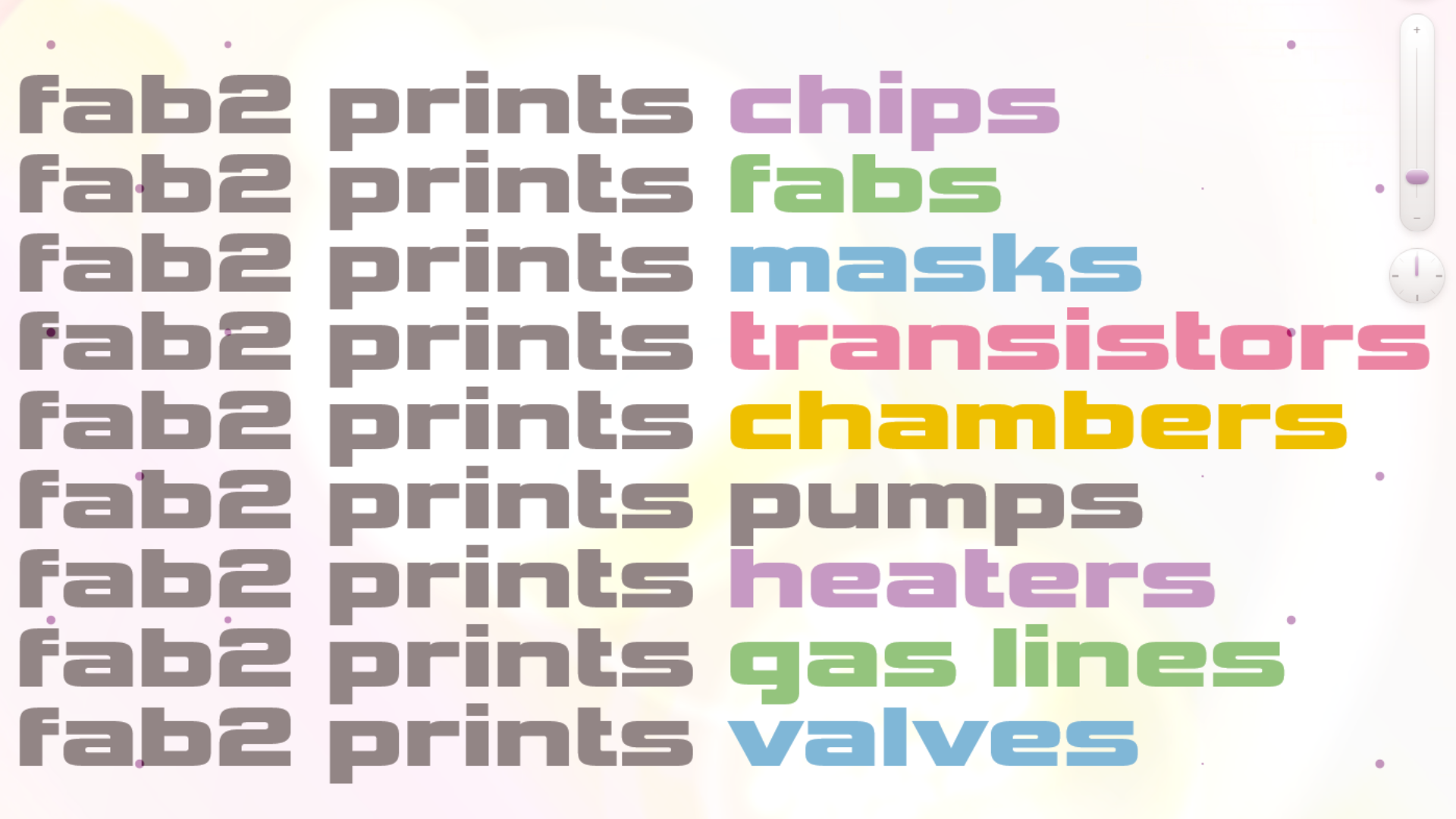
Fab2 now runs three sites — a 120,000 sq ft Austin HQ, a 30,000 sq ft Lockhart "fab fab," and the original SF garage fab — chasing the idea of mass-producing small chip fabs rather than chips, co-founded by Jim Keller and DIY-fab pioneer Sam Zeloof.

A semiconductor insider is unimpressed: no fundamental manufacturing advance, likely electron-beam lithography that suits prototypes, not volume — and why not just verify in simulation?

📈Biz ★ 110 · 💬 28 · Jul 6 · #hardware#startups#Atomic Semi#Fab2#Jim Keller+2

He earned a first-class CS degree on Coursera for £17k — a PhD holder in the thread calls his own 11 years a waste (notesbylex.com)

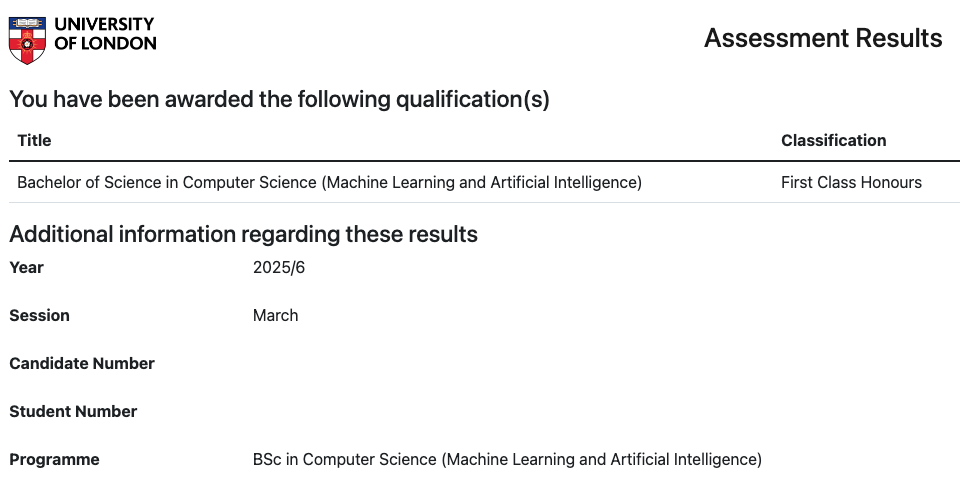
The write-up is concrete: ~3 years 9 months, ~£823 per module, three modules swapped for Coursera certificates, tax-deductible, remotely proctored with Inspera, one group project sabotaged by "ghost" members — and a first-class result he judges worth it.

The thread turns it into a referendum on the credential itself: eleven years of CS degrees called "the biggest waste of time," against recruiters who say the degree is non-negotiable table stakes.

"EV batteries are defying expectations" — the good-news stat quietly compares new cars to old ones (wsj.com)

The WSJ piece argues high-mileage EV batteries are outlasting fears, citing a 2025 Recurrent study (1-in-12 for 2011–2016 cars vs 0.3% for 2022-on) and Geotab data that heavy fast-charging loses range twice as fast.

The thread's survivorship-bias catch is clean: of course a three-year-old car hasn't needed a replacement yet — and every article like this skips the calendar-age degradation that kills batteries regardless of miles.

Europe's heat charts hide a paradox: cleaning up our air is part of why it's warming faster (bbc.com)

The BBC lays out Europe's faster-than-global warming in seven charts — temperature records, rising "tropical nights" in cities. The causal line that catches the thread: less bright snow and fewer reflective aerosols mean more sunlight reaches the surface.

The reactions range from aerosol-science nuance (this is real, and it's the same dangerous ground as geoengineering) to a data-presentation gotcha: one "Europe" chart greys out Ireland and plots only England.

🌍Other ★ 147 · 💬 233 · Jul 6 · #energy#science#BBC#IPCC

The libel trick where a plaintiff can only win by admitting the insult fits — and lawyers say it barely works (en.wikipedia.org)

The "small penis rule" traces to a 1998 NYT piece: authors deter libel suits by attaching a demeaning detail to a thinly-veiled character. Michael Crichton allegedly used it on a critic; a law professor argues it's mostly ineffective.

The thread reframes it — the point is exaggerating low-status traits, not anatomy — and questions the logic, before a former estates lawyer drops the will-drafting version of the exact same trap.

Switzerland's solar railway works — and HN's napkin math says 44 km of it moves one locomotive (euronews.com)

Swiss startup Sun-Ways put 18 kWp of panels across 100 m of track in Buttes, producing ~16,000 kWh/year, and the trial went well enough that a permanent install looks likely, with Italian and other partners lining up.

The thread does the arithmetic: 18 kW over 100 m is less than a big house rooftop, you'd need ~44 km of track to power one locomotive — and the reply is that efficiency was never the point.

shadcn didn't ship a codemod for the Radix-to-Base-UI switch — it shipped an LLM "skill" instead (ui.shadcn.com)

shadcn/ui now defaults to Base UI over Radix (Base UI at v1.6.0, 6M+ weekly downloads; users picked it 2-to-1). Radix isn't deprecated. The migration story is the twist: an LLM-driven skill, component by component, instead of a deterministic codemod.

The thread's unease is about tone and trust: if even a flagship release note is visibly AI-written, where's the line — and does replacing codemods with an agent trade repeatability for vibes?

🚀Tech ★ 275 · 💬 154 · Jul 6 · #AI#dev tools#web#Base UI#Radix#React+1

A 2019 essay says fast software is a proxy for trust — the thread asks whether fast means correct or just risky (craigmod.com)

Mod's thesis: speed is "the most valuable, least valued asset" in software, a proxy for engineering quality and trust. Slowness reads as danger; fast tools grant flow. Examples: nvALT instant vs Photoshop's 3–5s dialogs, Figma near-native in a browser.

The reframe that lands: fast-because-simple aligns with correctness, but fast-because-optimized is the opposite — you added risk to code that already worked.

OpenAI's new "Ultra" mode arrives — and an employee says the token scoreboards became "use cheaper models" emails (twitter.com)

The announcement is thin — Ultra reportedly uses subagents to go beyond a single agent. The thread fills with access logistics and a guess that Pro-tier already runs ~12 parallel agents synthesized into one answer.

The reversal is a corporate weather report: praise for the biggest token users flipped to weekly emails begging for restraint — arriving just as OpenAI reportedly found a way to halve inference cost.

🚀Tech ★ 82 · 💬 40 · Jul 6 · #AI#big tech#Codex#GPT-5.6#OpenAI

Those slanted blinking "computer" panels in a hundred movies aren't computers — they're 1950s modems (starringthecomputer.com)

Starring the Computer logs specific machines per film and episode with screenshots, from the CDC 6600 to NeXT cubes. It's pure nostalgia reference — sortable by machine or year.

The insider gem: the AN/FSQ-7 panels from 1950s SAGE have appeared in a huge number of movies, still get rented out in LA — and those slanted panels aren't the computer, they're the modems.

🚀Tech ★ 174 · 💬 42 · Jul 6 · #culture#hardware#Apple II#DEC#John Nagle+1

A museum API flags art "not viewed much" — and the moment you look, you disqualify it (iamwillwang.com)

Will Wang spotlights `has_not_been_viewed_much` — under 200 views since Jan 2010 — in the museum's public API, as an invitation to discover overlooked works rather than a finished app.

The thread names the observer paradox — look, and the count ticks up — and remembers Forgotify, the site that played only zero-listen Spotify songs and thereby deleted them from its own pool.

Simon Willison shipped a release mostly written by AI for $149.25 — the number everyone will misuse (simonwillison.net)

Willison used Fable to do a pre-release review of sqlite-utils 4.0rc2: 37 prompts, 34 commits, five blocker bugs found — the worst, delete_where() leaving a transaction open so later writes silently rolled back. He estimates $149.25 in API cost; a cross-review by GPT-5.5 caught two more.

The reversal: $150 spent by an expert who knows exactly what to ask is not the $150 a novice will spend chasing invented problems — because these models never say "nothing found, good to go."