Dua Lipa opened a 'banned books' library. The thread argued nothing on the shelves is banned
The books it showcases aren't banned in Portugal, or anywhere you could be jailed for owning one. Yet Dua Lipa's new Manifesto Library frames its shelves with a grave line: "In some cases, the author has paid for their words with their life."
Dua Lipa's Service95 book club installed the collection inside Porto's Livraria Lello, a ticketed tourist landmark where one visitor says staff refused to sell him a Naomi Klein paperback. Half the thread snagged on one word: with the titles a click away online and 'Livraria' meaning bookstore, not library, is anything here truly banned?
The blunter read: 'banned books' has decayed into a marketing label. The counter: the shelf gathers titles censored somewhere in the world, and Atwood really was banned in Portugal, under Salazar.
The Manifesto Library, and the book club behind it
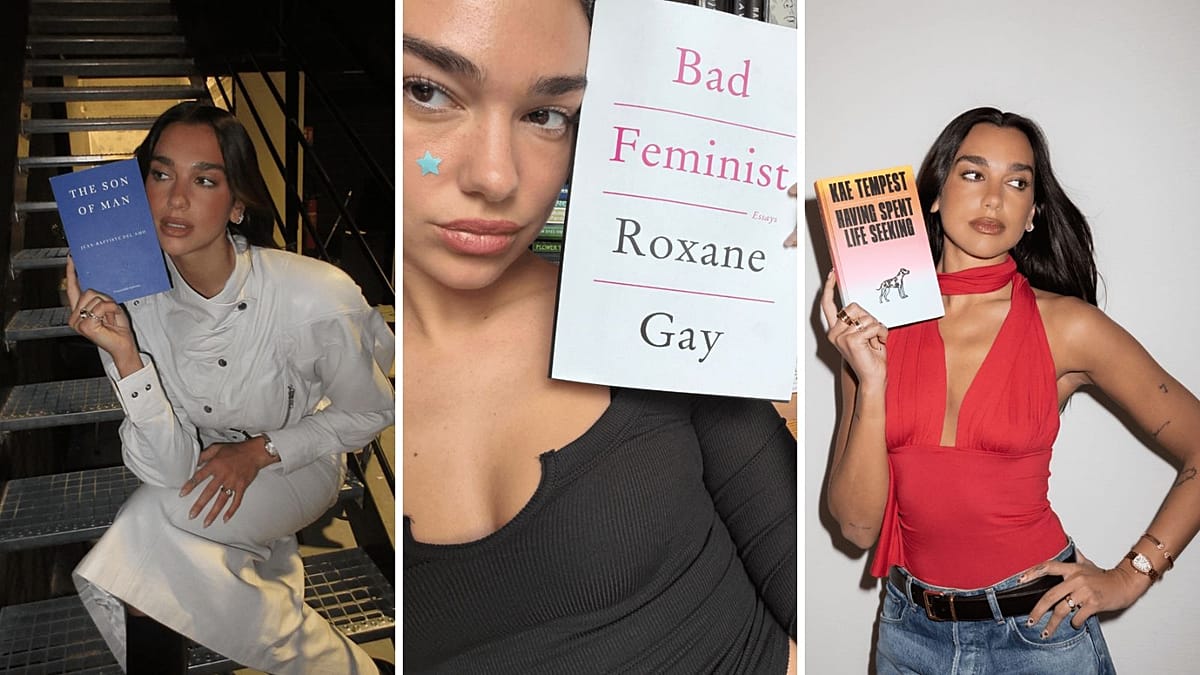
Dua Lipa has opened a permanent collection she calls the Manifesto Library inside Livraria Lello, a century-old bookshop in Porto. It grows out of Service95, the newsletter and book club she runs, which picks a title each month and pairs it with author interviews on a podcast. Nearly 100 books are arranged under four headings: power, control, voice and memory.
The shelves lean on literary heavyweights, Margaret Atwood's The Handmaid's Tale, Reginald Dwayne Betts' Felon, and work by Salman Rushdie and Olga Tokarczuk. The launch is part of a wider literary turn; Lipa is also curating the Southbank Centre's 2026 London Literature Festival this autumn.
The thread's hang-up: what "banned" is doing in that sentence
The 226-comment thread barely discussed the books and spent its energy on one word. A reader who checked what the article actually documents reduced the claim to its parts:
"The two books explicitly listed are not banned in Portugal or anywhere else. They are simply not subsidized with public money in some libraries."
A quick search, another pointed out, turns up every named title on Amazon for under $25. And the dominant read went structural. One commenter argued the label itself had been hollowed out:
"The 'banned books' theme has become intentionally vague because it has become a marketing tool… people buying books on Amazon as a form of slacktivism."
Even the venue got corrected. Ludwig Weinzierl flagged a false friend: livraria is Portuguese for bookstore, not library, and Livraria Lello is very much a shop, one that charges admission and, by one regular's account, keeps its more interesting titles as decoration behind a permanent queue.
The counter: it's a worldwide collection, and Portugal really did ban these
Not everyone accepted the pedantry. The point of the shelf, as one reader understood it, is a worldwide gathering of books censored somewhere, with Porto simply the address. And the history is not hypothetical: The Handmaid's Tale was itself banned in Portugal under the Salazar dictatorship, which fell only in 1974.
When "banned" stops meaning banned
Underneath the semantics sat a real disagreement about the word's newest usage, a US school board declining to stock a title. One commenter held the hard line: "Declining to buy and stock a book in a school library is not a ban at all." A reader who described how those removals actually unfold pushed back, saying it is "generally a parent, or a small group of parents… bullying the library or school district into reversing curation decisions they had already made" — a handful of people deciding what every child in a district may read.
Both can be true, and that is the trap. When the word for a government jailing a writer and the word for a school PTA winning a shelf-space fight become the same word, the first case quietly loses the only vocabulary that ever fit it. Lipa's shelf is a kindly gesture; the cost is that it spends that word on a photo the algorithm was always going to like.
Get breakdowns like this every day
The top Hacker News stories, unpacked — by email, Telegram, or RSS.
Vercel acquired the open-source auth library built to replace the one it already owned
Bereket Engida shipped the first release of Better Auth in September 2024. Less than two years later, after Y Combinator and a Peak XV-led round, he wrote the post announcing his library is joining Vercel.