A browser emulator's software just ran on the real hardware it copies
A hobbyist wrote a small Visual Basic program inside a copy of Windows 3.1 running entirely in his browser, saved the .exe to a virtual floppy, and carried it to a real Intel 486 built in 1992. It ran on the first try.
PCjs, a browser archive of 1970s and 80s computers built solo by developer Jeff Parsons, turns out accurate enough that software built inside it keeps working outside it too: a real binary, not a screenshot or a video capture.
One commenter's actual 1980s IBM PC just started throwing hard-drive read errors and RAM parity faults. He's seriously considering switching to the browser version instead. The copy has started outlasting the original.
PCjs turns a browser tab into an IBM PC, a TI-57, or a 1978 arcade cabinet
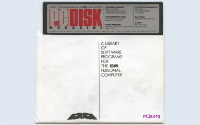
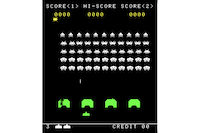
PCjs re-implements 1970s and 80s computing hardware in JavaScript, running fully in the browser with no plugin and no download. Its creator, developer Jeff Parsons, describes the project simply: JavaScript emulating "a small collection of hardware and software that I grew up with" in the 1970s and 80s. The catalog runs wider than that modesty suggests: original IBM PC models (5150, 5160, 5170), COMPAQ compatibles, DEC minicomputers, a Texas Instruments TI-57 programmable calculator from 1978, and an Ohio Scientific Challenger 1P sit alongside a 1978 Space Invaders arcade cabinet.
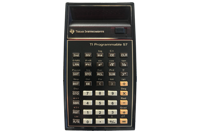
The software side runs just as deep: DOS variants, CP/M-86, OS/2, every Windows release from 1.0 through 95, plus period applications like Lotus 1-2-3, VisiCalc, WordStar and Norton Utilities. PCjs also mirrors entire magazine diskette collections and public-domain software libraries that would otherwise only survive on decaying 5.25" media. The project is MIT-licensed and open for anyone to extend.
"Go check Visicalc to learn what a revolution looks like"
In the thread, most replies read as a nostalgia crawl through the catalog (Dune II, Wolfenstein 3D, Commander Keen) until someone pushed back on how loosely "revolutionary" gets used elsewhere.
"Those who consider every little JS framework, iPhone and AI iteration "revolutionary", go check the thing labeled "Visicalc (1981)" on this site to learn what a revolution looks like." — a longtime commenter with 7,300+ karma
VisiCalc, the first spreadsheet, is the one program on PCjs that genuinely rewrote what a personal computer was for: the reason "personal computer" caught on with accountants and small-business owners, not just hobbyists.
A program written inside emulated Windows 3.1, carried to real 1992 silicon
One reply turned the whole site from museum piece into working toolchain. A Mac owner installed Windows 3.1 inside PCjs, opened the copy of Visual Basic bundled with it, wrote a small program with a window and a few buttons, and compiled it to an .exe, the same way anyone would have in 1993. He saved that .exe and its one dependency onto a virtual floppy image, downloaded the image to his own Mac, then carried it on an actual floppy disk to an old 25 MHz Intel 486 DX industrial computer he still owns.
"A real GUI windows program, made in VB running in Windows 3.1, inside an entire emulated machine in Javascript in a browser window running on an Apple Silicon macbook in 2026.... Exported and saved to disk and then ran without issue on a piece of hardware made in 1992!" — a Mac owner who keeps a 1992 industrial 486 in a closet
Underneath the nostalgia, that's the actual claim PCjs is making: the emulation is faithful enough at the instruction level that software built inside it is real software, portable to the original silicon and back.
That claim gets a harder edge from the commenter running the experiment in reverse. He still owns a genuine IBM PC with a 20 MB Seagate ST-225 hard drive and has kept it alive for years.
"I have my IBM PC set up... but I got a file read error for the first time recently on the 20 MB (Seagate ST-225) hard drive and parity errors from the RAM (again)... I could just be emulating it instead (lol)." — an owner of a real IBM PC currently swapping out its failing RAM chips
He also noted the emulator isn't flawless: the background music on one bundled program drops its rests, missing beats the real hardware would have played. One visitor found that even that level of fidelity has consequences:
"You'll want to turn down your speakers for a few of these. I did not find any volume knob in time for Dune II to finish booting, unfortunately." — one visitor
The real shift here isn't that old software survives in a browser tab. Screenshots and video already do that. It's that PCjs is accurate enough to work as a development environment for hardware nobody manufactures anymore: write the program in the emulator, ship the binary to the metal.
Get breakdowns like this every day
The top Hacker News stories, unpacked — by email, Telegram, or RSS.
Meta calls its DOE lab AI open source. The license says otherwise.
At Lawrence Berkeley National Laboratory's X-ray beamline, a micro-CT scan that once took a scientist a month to label by hand now comes back as a fully annotated 3D volume in about 15 minutes.