GPT-5.6 Drew the Mona Lisa for $7.74; Claude Spent $160
Four AI models were handed an identical set of virtual colored pencils and a scoring function, then told to redraw the Mona Lisa one logged brushstroke at a time. One finished quickly and cheaply; another kept going for far longer and still didn't come out on top.
GPT-5.6 Sol needed 29 logged tool calls to finish; Claude Fable 5 took 54, working the same virtual pencil box, draw, smudge, erase, a peek at the target, inside a benchmark that prices every stroke in tokens and dollars.
The scoring table quietly contradicts the write-up's own verdict: Gemini's similarity score actually beat Sol's on both paintings, yet Sol is the one crowned "runaway leader." A Hacker News reader wasn't buying the piece at all, calling the whole benchmark AI-written.
GPT-5.6 sketched the Mona Lisa for $7.74. Claude spent $160.58 on the same portrait
Four vision models were handed an identical toolkit of virtual colored pencils and set loose on two famous paintings, in a test called Canvas Arena. The harness, open-sourced on GitHub, gives every model the same eight tools: a thinking scratchpad, buttons to peek at the target and its own canvas, controls for color, brush and pressure, plus draw, smudge, erase and clear. Nothing is generated in one shot. Every stroke is a separate logged tool call, priced in tokens and dollars.
The four contenders were GPT-5.6 Sol, Claude Fable 5, Grok 4.5 and Gemini 3.6 Flash. Two subjects were scored against a real reference photo using structural similarity (SSIM): the Mona Lisa and Starry Night. Five more prompts, an elderly fisherman, a sunset over the ocean, a rose in a vase, a tabby cat on a windowsill, a cabin interior with a fireplace, had no target to grade against, just a text description to work from.
The four Mona Lisas ended up looking less like forgeries and more like four different students copying the same reference photo, each with their own tics.
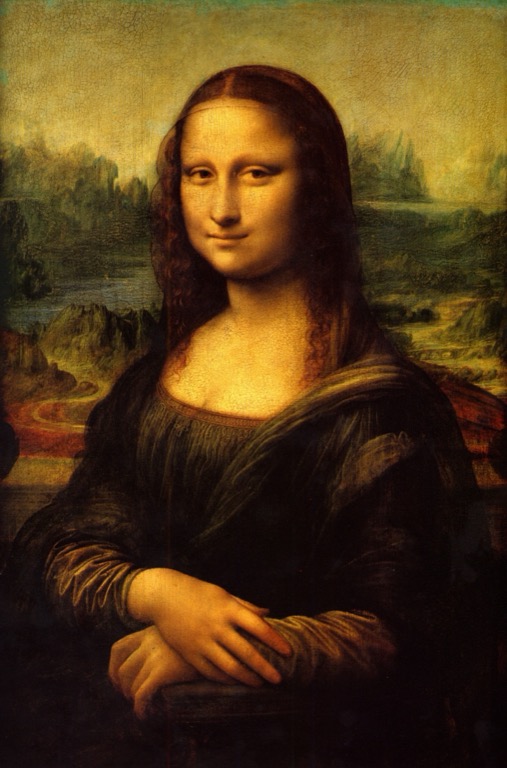
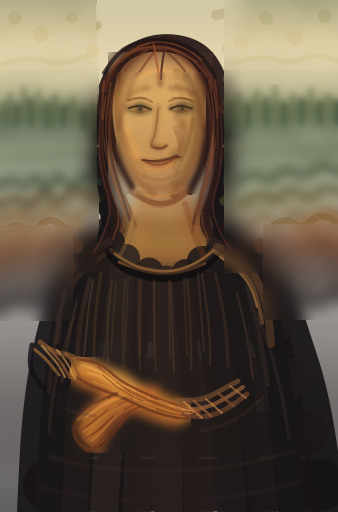
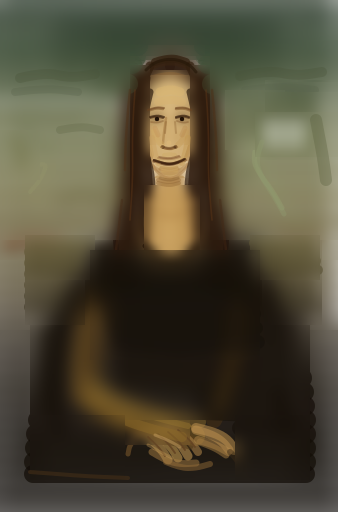
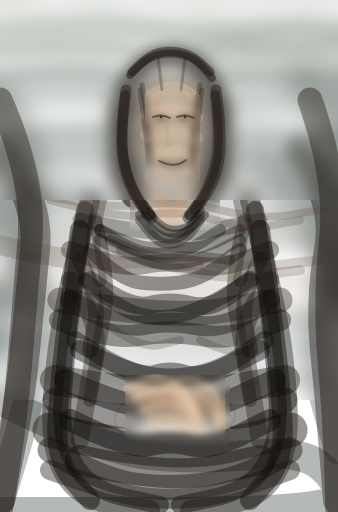
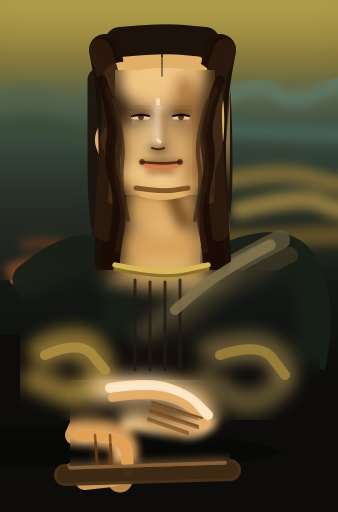
What each model burned to finish two paintings
| Model | Cost | Tokens | Avg. steps |
|---|---|---|---|
| GPT-5.6 Sol | $7.74 | 3.4M | 29 |
| Grok 4.5 | $9.21 | 34.0M | 99 |
| Gemini 3.6 Flash | $12.87 | 27.7M | 73 |
| Claude Fable 5 | $160.58 | 14.6M | 54 |
Fable's bill is the strange one. It burned fewer tokens than both Grok and Gemini, yet cost roughly 20 times more than Sol, as the write-up itself puts it. The gap isn't verbosity; it's the per-token price of the model doing the drawing.
The score that doesn't match the write-up's own praise
| Target | GPT-5.6 Sol | Gemini 3.6 Flash | Claude Fable 5 | Grok 4.5 |
|---|---|---|---|---|
| Mona Lisa | 0.325 | 0.337 | 0.286 | 0.151 |
| Starry Night | 0.130 | 0.172 | 0.153 | 0.039 |
By SSIM, Gemini 3.6 Flash actually finished ahead of Sol on both paintings. The authors call Sol "the runaway leader" anyway, crediting it for cheaper, faster, more charming output rather than the raw similarity number. It's a defensible call on style, just not the one their own table supports on accuracy.
There's a second wrinkle buried in the same report: across all eight scored runs, every model's final drawing landed below the best version it had produced mid-session. Given more strokes to work with, each one edited its way to a worse result than it had already reached.
The thread's first read: "I think this is just an ad"
Skepticism showed up within the first few replies.
"I think this is just an ad." — an HN account active since 2008, sitting on nearly 57,000 karma
A commenter on HN since 2015 landed on the same suspicion from an odder angle, in three words flat: "Article is AI-written."
Neither offered evidence beyond gut feel. But out of the forty replies in the thread, nobody stepped up to defend the piece as straightforwardly earnest, either.
Grok's Ecce Homo problem
The one point of near-consensus was Grok 4.5's output.
"Sol's the best in each one, while Grok looks like the work of that person who 'fixed' that Jesus painting.." — a developer whose bio links to his own open-source game project on GitHub
The reference is to the infamous 2012 botched restoration of a Spanish fresco, and it stuck: the score table above already marked Grok as the clear outlier, and the thread just gave that outlier a name.
What $160 actually buys, according to the thread
One reply zeroed in on the model nobody expected to root for.
"GPT 5.6 Sol had the best two drawings … but even more impressive was how efficient it was RE cost/time/tokens vs Fable … OpenAI has quietly innovated around inference - this is will be a growing differentiator even against open models." — co-founder of a document-workflow startup
A different reply looked past the numbers entirely, at what the drawings felt like.
"GPT-5.6 Sol is the knock out here. Some of those results are really human/charming. The rectangular smudge tool is a weird tool in the first place, but it's cute to see the models try to use it." — a commenter with nearly 23,000 karma
Put together, the thread's real argument isn't about who drew the prettiest Mona Lisa. It's that Sol's edge shows up precisely in a benchmark built to reward it: a closed loop between a target image and a scoring function, where a cheap, low-token model can rack up an efficiency win almost by design. The harder test is what happens to that price gap once there's no reference image to check against.
Get breakdowns like this every day
The top Hacker News stories, unpacked — by email, Telegram, or RSS.
A Historian Says the 'Convert' Button in Age of Empires Is Ethnic Cleansing
In Age of Empires, the only way to absorb a rival town is to send a priest to convert its villagers one by one. Historian Bret Devereaux argues that's the closest the series comes to depicting an actual empire — and even that plays out more like ethnic cleansing than government.