A historian's answer to AI slop: skip the algorithm, browse the library shelves by subject
Benjamin Breen argues the best non-fiction defense against AI slop was already sitting in research libraries — curated by prize committees and shelf classification, not engagement algorithms. A commenter's rebuttal: even prize juries get gamed by publishers submitting in bulk.
Historian Benjamin Breen argues quality non-fiction — vetted by prize committees, sustained readership, and expert library classification — is structurally the opposite of algorithmically-generated AI slop.
His evidence is personal: a college shelving job exposed him to prize-winning books like Stefan Zweig's memoir and a four-prize Du Bois biography, work no search algorithm would have surfaced for him.
A reader who'd volunteered judging a real book award pushed back with an inside detail: publishers mass-submit for prizes, meaning the curation Breen trusts is noisier and more gameable than it looks from outside.
The argument: filtration by humans versus filtration by algorithm
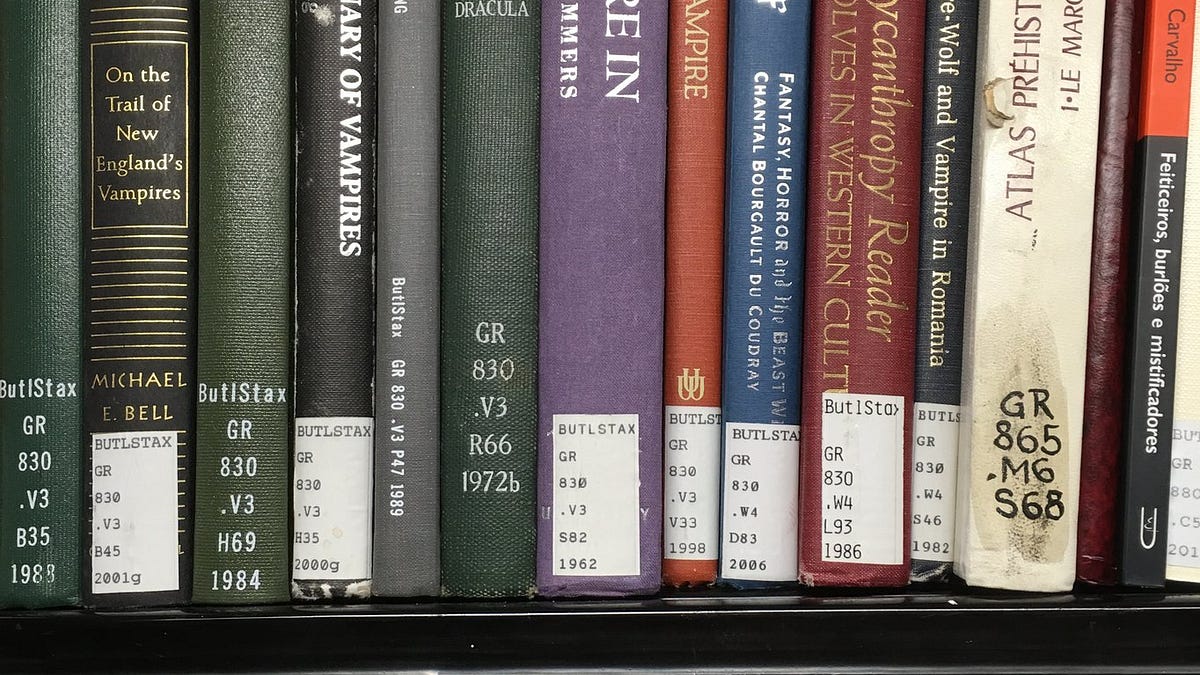
Benjamin Breen's essay makes a case that sounds almost old-fashioned in 2026: the surest way to avoid AI-generated "slop" content isn't a better filter or a smarter prompt — it's returning to non-fiction books that have already been filtered by humans, repeatedly, over time. His definition of quality rests on three overlapping signals: institutional validation (major literary prizes like the Pulitzer or National Book Award), lasting readership (books that keep circulating decades after publication, rather than spiking and vanishing), and human curation by expert librarians and academic subject classification, rather than engagement-optimized recommendation algorithms.
His specific examples carry real weight: Stefan Zweig's The World of Yesterday, a memoir of pre-war Vienna; David Levering Lewis's W.E.B. Du Bois biography, which won four major prizes in 1993; The Education of Henry Adams; Bernard Rudofsky's Are Clothes Modern?. None of these are new or algorithmically trending — they're the kind of books that survive because successive generations of readers and scholars kept independently deciding they were worth keeping in print and on shelves.
A library job as the origin story
Breen's evidence isn't abstract — it's autobiographical. A college job shelving books exposed him, purely through subject classification and physical proximity, to titles a search engine or recommendation algorithm would never have surfaced for him — books sitting next to what he was actually looking for, organized by a librarian's taxonomy rather than by what's currently popular or clickable. He argues this kind of serendipity, structurally embedded in how research libraries organize physical collections, is something modern discovery tools — built to maximize engagement and immediate relevance — have quietly stopped offering. His broader claim is that 20th-century non-fiction hit a genuine golden age, driven by improved jet travel, wider social access, and better cataloging systems, and that despite declining overall readership, the long tail of contemporary non-fiction remains exceptionally strong — it's just harder to find without the library-shelf kind of serendipity.
The rebuttal: even the curators get gamed
The most substantive pushback in the 97-comment thread came from a reader who'd previously volunteered judging a book award: "I do think book prizes are a better-than-average signal but I previously volunteered with a book award. I will caution that pretty much every publisher mass-submits these..." — an inside detail that complicates Breen's trust in prize committees as clean, human-vetted filtration. If publishers submit in bulk regardless of actual merit, hoping volume increases their odds, then "won a major prize" isn't purely a signal of quality selected by discerning judges — it's partly a signal of which publisher had the marketing budget and submission strategy to get in front of the judges at all. The curation Breen holds up as the antidote to algorithmic slop turns out to have its own upstream gaming dynamics, just slower and less visible than a recommendation algorithm's.
A second reply added a related worry about a different Breen-adjacent project: "the provenance of the code does undermine the intention" — pointing at the broader irony of building tools meant to fight AI-generated content while leaning on AI-assisted development to build them, a tension Breen's essay doesn't directly address but that several commenters felt was worth naming. The strongest version of Breen's argument survives both critiques intact — sustained readership across decades is a much harder signal to game than any single prize cycle — but the thread is a useful reminder that "curated by humans" was never a synonym for "free of its own incentive problems."
Get breakdowns like this every day
The top Hacker News stories, unpacked — by email, Telegram, or RSS.
A 1980s BASIC game hid machine code inside a comment. It took 40 years to explain why
The line `10 REM"_(C2SLFF4` opens The Wizard's Castle on the Exidy Sorcerer — gibberish to any human reader. It's actually Z80 machine code, planted at the exact RAM address a function call expected to find it, because BASIC's own comment parser was the easiest way to smuggle bytes past 1980s magazine typesetting.