A 1990s strategy game crashed past 255 units, and that is one reason this blogger defends modern software
Jake Voytko remembers a game that died when a country exceeded 255 units, a limit its programmers picked to save memory. His post says software used to be horrible.
Voytko lists what the old days actually looked like: blue screens from drivers, no autosave, screensaver passwords anyone could bypass, 20-minute boots, scratched CDs and corroded NES cartridges you could never patch. He still concedes that today's software is bloated and worries about delegating it to AI agents.
Commenters accepted the history but disputed one metric.
What the old days actually broke
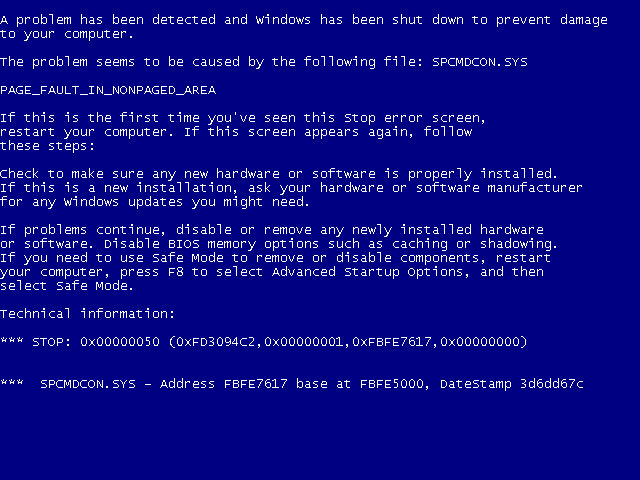
In his post, Jake Voytko argues that nostalgia for older software is misplaced. His evidence is a list of failures from 1990 onward: Windows crashing on buggy drivers, resource leaks, programs without autosave that lost hours of work, and screensaver passwords that were trivially bypassed. Disk fragmentation needed manual defragmenting, and some aging machines took 20 minutes to start.
The details are specific. A strategy game crashed when a country exceeded 255 units. Software tied to processor speed needed a "Turbo" button. Diablo II suffered from client-side hacks, item duplication and scams. Years later, he notes, Google Docs' team found users still pressed Ctrl+S out of a reflex learned from losing work.
He grants that modern software is bloated, slow and complex, and fears delegating development to AI agents may erode understanding of how it works. He still prefers process isolation, online updates, higher-level languages and platforms like Steam and Windows Update to software shipped once on physical media and never fixed.
The metric nobody in the post mentioned: latency
A commenter who searched the post for "latency" found no hits and wrote:
"Latency is one metric by which computing has gotten noticeably worse over the years."
He blames everything being "some sort of monstrosity of React or simila[r]". Another said right-clicking the Windows 11 desktop on a work laptop consistently took over about 500ms to open a menu.
Worse, or just never better?
The best-supported reply was a reframing. One commenter said:
"No, latency hasn't gotten worse. It just hasn't gotten better."
His mechanism: developers fix latency only when it gets intolerable, so it sits at the edge of tolerable, set by human behavior and not chip speed. He recalled iTunes in the 2000s and PageMaker in the 1980s being just as slow.
A commenter pointing to Dan Luu's input-lag measurements countered with the one dataset on the other side: according to the 2017 article, the two lowest-latency personal computers ever tested are the Apple IIe from 1983 and the TI-99/4a from 1979. Another set up a 2007 PC with XP and a CRT and says nothing has felt so responsive.
One developer who now runs mostly custom software offers a third answer: browser engines and macOS GUI primitives are fast, and what is slow is the chrome and the extensions around them, which he simply rewrites.
Both sides can be right: crashes and data loss fell, and the delay between a keypress and the screen did not.
Get breakdowns like this every day
The top Hacker News stories, unpacked — by email, Telegram, or RSS.
Ghostty 1.4 compresses idle scrollback and parses plain ASCII at 725 MB/s
Cat-ing a 150 MB text file in Ghostty now takes 566 milliseconds instead of 1.5 seconds, and idle scrollback uses 70 to 90 percent less memory.