A farmer gave the town land for a park. The town sold it as data-center dirt for $10M
The gift was nominal — $10 and a deed for a park. The city's exit is not: a $10 million sale for data-center development, with $30 million in expected tax over the next decade. The thread says this isn't a fluke. It's an industry.
Commenters who've watched rural land deals say the pattern is routine: cash-starved counties sign no-strings deals with companies promising data centers, who sometimes just flip the land.
The bleaker observation cut civic: American zoning will let you walk to a data center but not to a grocery store.
The gift, and the exit
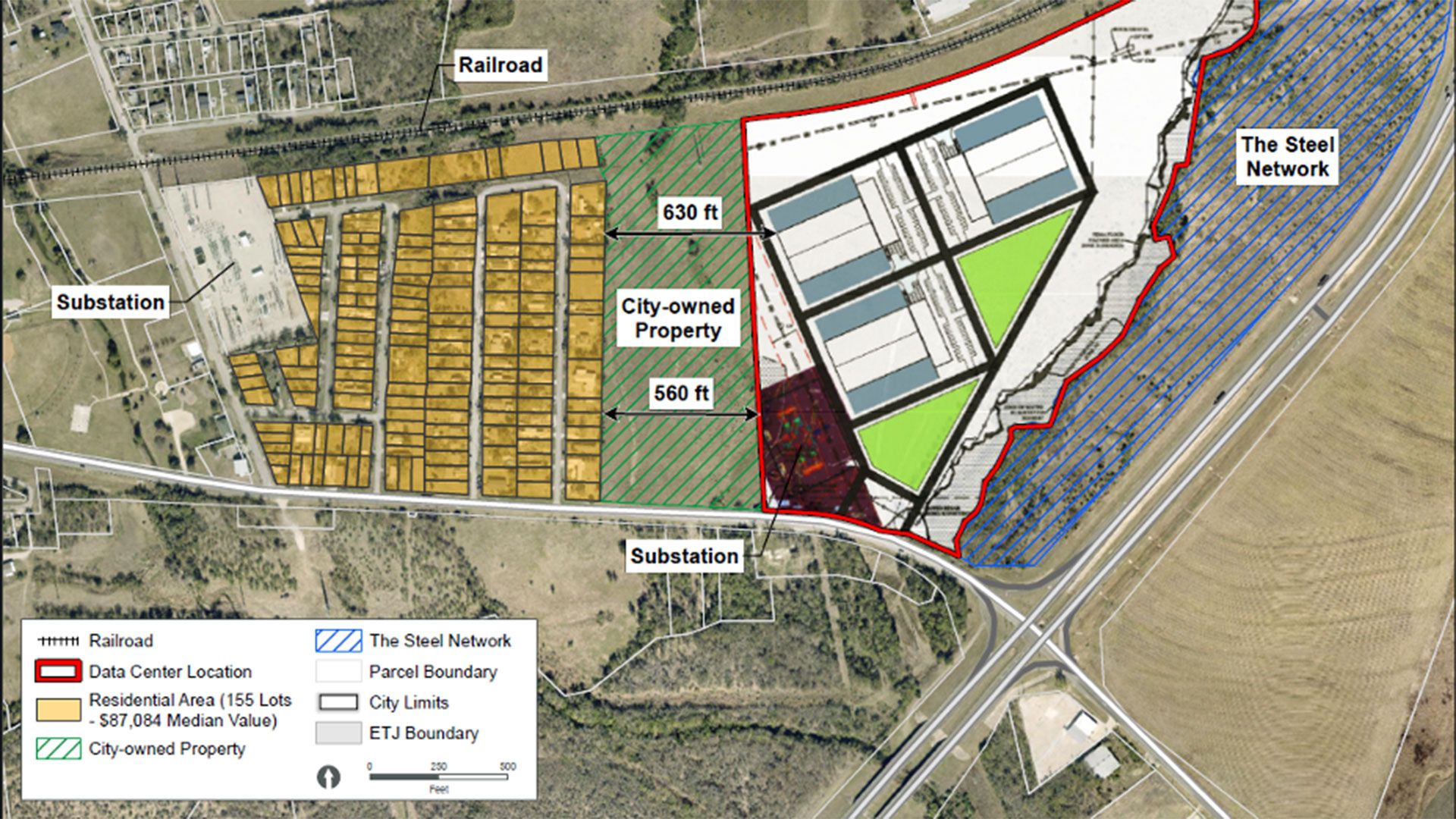
The Tom's Hardware story is in its own headline: a farmer donated land to a Texas city for a nominal $10, intended as a park; the city is now moving to sell it for $10 million as data-center land, with roughly $30 million in tax revenue projected over the next decade. The thread quickly established it as a follow-up to an earlier discussion — the original poster of this submission asked for updates on the same case.
"There's a killing to be made by those type of grifts"
The most valuable comment came from someone who's watched these deals up close and recognized the genre:
"More than once I've read stories about small local counties selling huge plots of lands to companies promising to build data centers, only for those companies to flip the land instantly for double or triple the price. There seems to be no shortage of desperate rural areas … willing to sign ridiculous no-strings-attached deals … in the hopes that they'll get a couple of years with economic stimuli." — TrackerFF
A physicist extended it into something closer to a theory of the land market — that someone is always prospecting:
"there are people out there who are fully occupied searching every square foot of the earth for places where they can wheedle their way into a land deal. If it's not for a data center, then it's a CAFO, a mine, logistics center, etc." — analog31
The civic punchline
The line that traveled was a zoning observation, delivered deadpan:
"American zoning is weird. You can't walk to a grocery store, but you can walk to a data center." — enaaem
The steelman — and why it still grates
Not everyone saw villainy. The most-upvoted defense did the math the city presumably did:
"$10 gift became $10M for city government, with $30M tax expected over next decade — I mean… pretty easy to see why. … I think if the city tried to communicate what that money is going to be used for, perhaps it'd be slightly more palatable." — spicyusername
That's the real tension. A cash-strapped municipality turning $10 of dirt into $40 million of revenue is, on a spreadsheet, governance working. The reason it reads as betrayal is the deed — a gift made for a park becoming server racks — and a high-karma regular named the powerlessness underneath:
"It's exhausting that the 'solution' to problems like this is getting tens or hundreds of thousands of citizens stressed until enough public attention gives some small chance of redress." — zug_zug
The open legal question — whether a deed restriction "for a park" is even enforceable in that jurisdiction — went asked but unanswered in the thread, which is probably where the next chapter gets decided.
Get breakdowns like this every day
The top Hacker News stories, unpacked — by email, Telegram, or RSS.
A 28-pound motor makes 1,000 hp — and Britain had to watch Germany build it
Mercedes just started mass-producing the axial-flux motor that came out of YASA, a UK company it bought. The second-gen unit weighs 12.7 kg and puts out 750 kW. The thread's ache: another British breakthrough commercialized abroad.