Topic

Economy & Labor

60 stories

He charted seven years of GitHub activity. AI made 2026 his busiest year since 2020 (oioannou.com)

Ioannou, an engineer at Bold.org, pulled his GitHub history and found his median weekday had gone from 3 or 4 contributions to 7. Days with no activity fell from 40 to 46 a year to 18 so far. He blames cheap starts: agents make every new project easy to begin and hard to put down.

The thread's sharpest reply came from commenters who think he misread the deal from the start.

Not just a headline — the discussion unpacked

The top HN threads: facts from the discussions, both sides, insider voices. Email, Telegram, or RSS.

Microsoft offered buyouts to 60,000 people while saying AI isn't why (seattletimes.com)

Microsoft is offering voluntary exits to about 60,000 staff in the US, UK, Canada and India, a few months after an early-retirement round that about 30% of eligible employees took. The company expects fewer takers this time.

In the thread, an ex-Microsoft engineer's reading was that the best people leave first.

📈Biz ★ 772 · 💬 693 · yesterday · #big tech#economy#Amy Coleman#Microsoft

Apollo's chief economist: AI has paid off for the Mag 7 and nobody else in the S&P 500 (apollo.com)

Slok's chart set also checks total factor productivity from a San Francisco Fed series and finds no AI lift. His read: mainstream companies now treat token spend as a margin cost, not a growth engine.

The thread's counter was a mill with a water wheel: you can't drop an electric motor into it, you rebuild the building.

Disney+ raised Premium to $21.49 and changed its terms so ads can appear on every tier (tvfandomlounge.com)

Disney+ and Hulu Premium went from $18.99 to $21.49 a month on September 23. Mid-show ad breaks stay limited to the cheapest tier for now.

Readers argued about whether any price removes ads for good, or whether the ad-free tier is just the next tier to be sold again.

📈Biz ★ 415 · 💬 435 · 4 days ago · #big tech#culture#economy#Disney+#Hulu#Jellyfin

Ask HN: if the models are so good, why doesn't OpenAI start 100 companies? (news.ycombinator.com)

An Ask HN thread of 665 comments put the question to OpenAI. One answer: the labs need revenue now, and selling tokens through long-running agents is the only thing that is provably growing.

A rival answer: the models are not good enough yet, and a fully automated business at scale would be a landmark nobody has delivered.

💬Ask HN ★ 594 · 💬 665 · 4 days ago · #AI#economy#startups#McKinsey#OpenAI

US homes pay 17.8 cents per kWh at investor-owned utilities and 14.5 at public ones (kadoa.com)

Utilities with shareholders also had longer outages in 2025: 120 minutes per home excluding major storms, against 80 at public utilities. Co-ops averaged 14.1 cents but 166 minutes.

The analysis reports what homes paid, not why. Public utilities do not pay income tax and can borrow tax-free.

📈Biz ★ 526 · 💬 384 · 4 days ago · #economy#energy#policy#EIA#Kadoa

Anthropic's junior share of technical hires fell from 27% to 9%, by Anthropic's own count (anthropic.com)

Anthropic's report says agents logged six hours of work for every human hour by August, and juniors fell from 27% to 9% of technical hires. Its revenue per employee was 2 to 4 times Meta's and Google's at the same age.

Hacker News mostly distrusted the messenger: the report 'would say that', and one reader pointed out that every line of code is a liability, not a trophy.

📈Biz ★ 108 · 💬 191 · Oct 19 · #AI#big tech#economy#Anthropic#Claude#Google+1

A 78-year-old professor was cited for disorderly conduct after standing in front of an Uber Eats robot (phillyvoice.com)

She stepped in front of one on Filbert Street just after a flu shot, and refused repeated requests to move and let it finish. Police issued a disorderly conduct notice; Marvin plans to contest it on First Amendment grounds.


HN split between 'sidewalks are for humans' and 'she's protesting the wrong thing'.

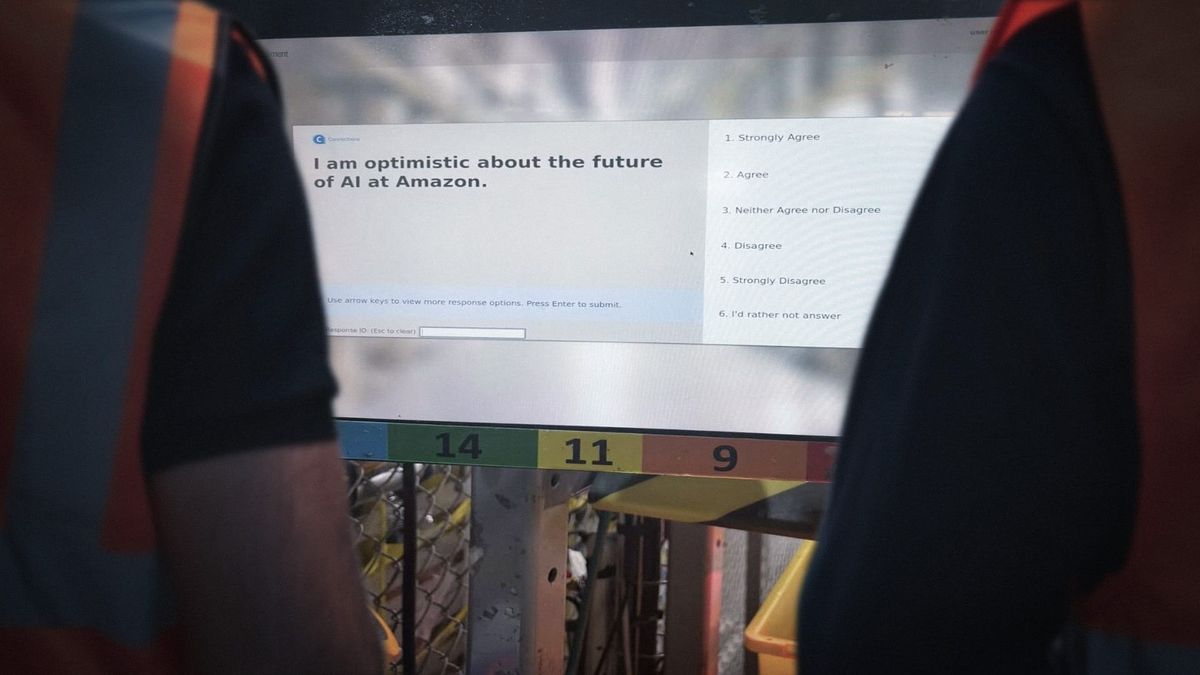
Amazon's internal AI scores warehouses 100 to 900 on how likely workers are to unionize (opendemocracy.net)

Atlas sorts sites into five tiers, from 'activity imminent' to 'no immediate risk'. Sixteen sites in the US, Canada and UK are Tier 1, including EMA4 in Sutton Coldfield and BHX4 near Coventry.

Amazon says it tracks buildings, not individuals, and that Atlas is not used in the UK.

📈Biz ★ 147 · 💬 58 · Oct 18 · #big tech#economy#privacy#Amazon#Atlas#Foxglove+1

90% of US working hours fall outside what AI benchmarks measure, Mercor finds (mercor.com)

Of 18,797 tasks in the US occupational database, only 924 have at least five benchmark prompts behind them. Software engineering and financial analysis are heavily tested; truck driving and gas plant operation barely appear.

Readers argued about whether that gap means safety for physical jobs or just a longer wait for robots.

Waymo picks Toronto as its first Canadian market, with riders in 2028 (waymo.com)

Waymo is partnering with Toronto's Element Fleet Management to run the fleet and says the work will create hundreds of local roles. It cites 400 million fully autonomous kilometres and claims 95% fewer serious-injury crashes than human drivers.

The thread was dominated by riders from other cities saying the same thing: it just works.

Current Affairs bans AI-written text and art, written into its union contract (currentaffairs.org)

Current Affairs adopted one of publishing's strictest AI policies as part of its union contract, arguing that tools built to replace workers must be resisted. The article's example: 100 AI posts in four minutes at almost no cost versus 20 human posts for $5,000.

On HN, a commenter posted a parable of fifty diggers with shovels versus five with machines to argue no one will care who wrote what. The reply that stuck: dirt is paid for by the hole, but writing is only worth anything if someone chooses to read it.

An AI skeptic asks whether productivity claims have earned layoffs (blog.jsbarretto.com)

The essay warns against treating intellectual labor as interchangeable output. HN readers countered with supervised workflows that let them do work they otherwise could not.

Both views point to the same test: local task speed is observable, while organizational transformation must survive quality costs, oversight, and work omitted from benchmarks.

Deutsche Bank’s yuan role tests currency power in Europe (tradersunion.com)

A yuan clearing bank gives institutions a dedicated route for settling renminbi transactions. Deutsche Bank's new role makes that route more accessible from Europe.

HN turned the announcement into a larger argument about reserve currencies: gradual trade plumbing may matter more than dramatic declarations.

ProvenMetal wants faster circuit boards, but sourcing still sets the clock (provenmetal.com)

ProvenMetal is pitching faster PCB assembly for hardware teams, including upstream feedback on bills of materials and lead-time alternatives.

The thread welcomed the ambition but warned that domestic assembly, component sourcing, and price competition are the hard constraints—not the upload form.

A new German citizen writes about belonging, and HN adds caveats (mertbulan.com)

The essay’s power is observational rather than programmatic. It makes citizenship feel like accumulated ordinary encounters, not a single legal milestone.

The thread welcomed that perspective while adding the harder context: language access, economic strain, and political anxiety shape who gets to experience the country that way.

🌍Other ★ 418 · 💬 312 · Aug 4 · #culture#economy#policy#Germany

Wikipedia’s union fight reaches the recognition vote (en.wikipedia.org)

Wikimedia staff organizing a union now face an argument about process: management wants an NLRB election, while critics read the hiring of a labor firm as a signal about power. The thread turned a procedural dispute into a question about what a donor-funded institution owes its employees.

AI financial advice looks useful until the question needs judgment (mitsloan.mit.edu)

The study’s practical promise is behavioral: AI can encourage saving, diversification, and lower risk as retirement approaches. Those are useful defaults, not proof that a model can tailor a portfolio.

A reader who supplied exported budgeting data described finding spending patterns and better categories; skeptics replied that a model can also make a user’s preferred risk sound sensible.

🚀Tech ★ 162 · 💬 115 · Aug 2 · #AI#economy#Claude#MIT Sloan#YNAB

GPT-5.6 makes the cheapest model 80% cheaper (openai.com)

Luna now costs $0.20 per million input tokens and $1.20 per million output tokens. OpenAI says the cut makes high-volume tasks such as document analysis, classification, testing and routine implementation practical at a much wider scale.

The useful split is operational: use Sol for ambiguity and planning, then hand well-specified implementation and evaluation to Luna. Fast mode speeds up Sol up to 2.5×, but costs twice the Standard rate.

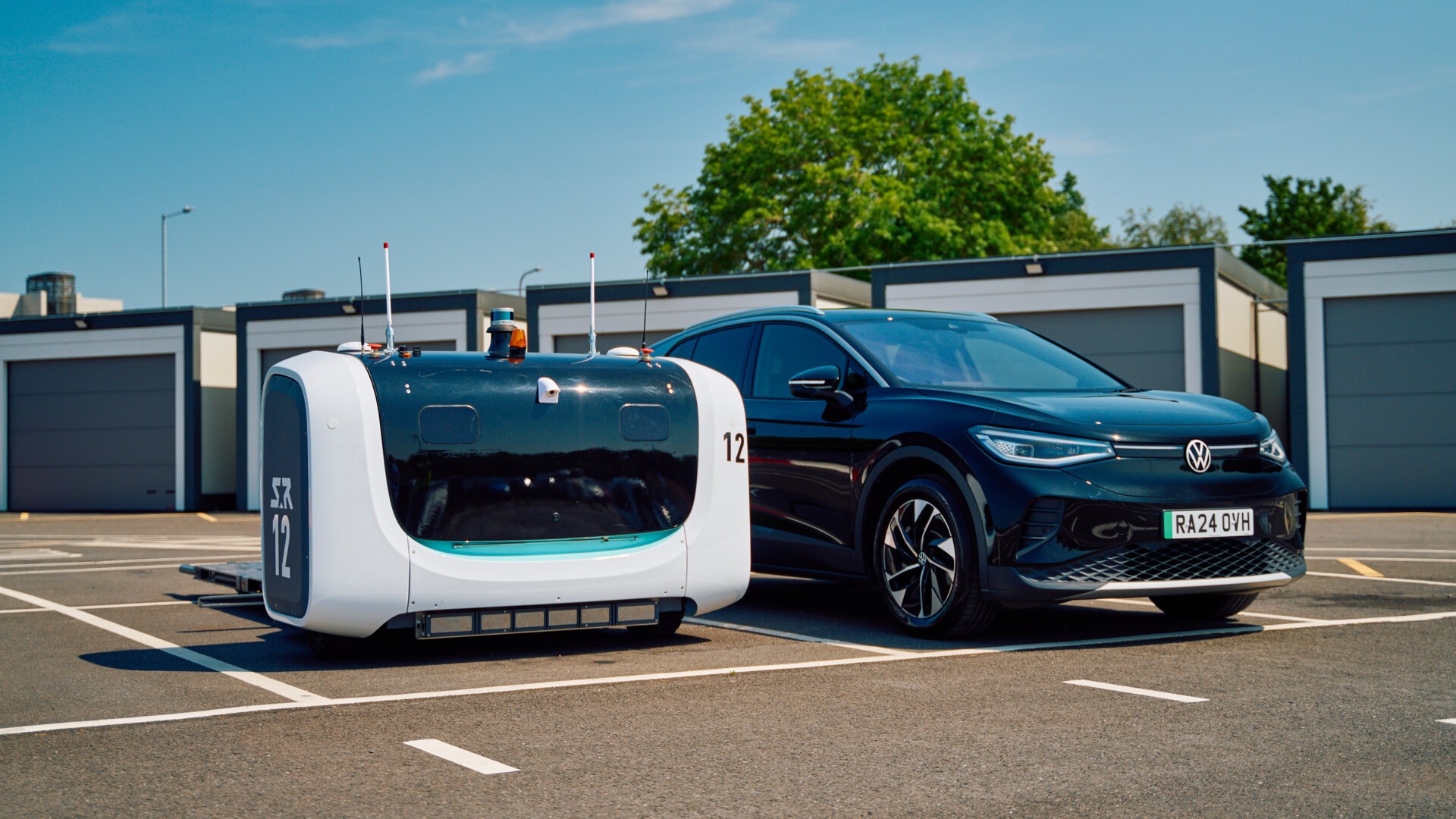
Gatwick’s parking robot keeps your keys but not your car (aerospaceglobalnews.com)

The Stanley Robotics system is advance-booking only. It takes standard cars up to 2.6 tonnes, moves them into denser storage, and is meant to have them ready when a booked return flight lands.

HN noticed the service’s unglamorous boundary: passengers still park in a cabin and may still take a shuttle. The robot optimizes the airport’s real-estate problem more than the airport journey.

When code gets cheaper, management’s bottleneck becomes choosing what deserves code (karimjedda.com)

The post asks managers to shift from measuring delivery to deciding which bets create durable impact. Readers agreed with the diagnosis of a changing job, but challenged its premise that code was ever the primary constraint.

If AI makes it easier to start projects, organizations may need stronger mechanisms for stopping them—and for pricing the future maintenance hidden in a fast first draft.

Loudoun County has 176 data centers. Its teachers just got a 40% raise, funded by them (redfin.com)

A Redfin survey of 4,000 Americans found 53% oppose new data centers nearby — more resistance than apartments or mixed-use development draws. Baby boomers oppose them 65% to 34%; Gen Z splits closer to even at 42%.

Redfin's own county tax-record data cuts the other way: Loudoun County, VA — 176 data centers, the most in the US — saw education spending per resident jump 77% and teacher pay rise roughly 40%, funded entirely by data centers' property taxes.

A resident with 9,000+ karma who lives near several data centers: the backlash isn't really about the old, quiet ones — it's the new generation, built at a scale that didn't exist five years ago.

🚀Tech ★ 134 · 💬 285 · Jul 23 · #AI#economy#policy#Loudoun County#Redfin

A satirical site pitched replacing CEOs with a $4,699 PC. The math it used was real (overpaid.lol)

OverpAId is satire: a fake product page pitching an AI "Chief Executive Replacement Engine" that runs on a $4,699 desktop and decides in 4 milliseconds what a real CEO takes weeks to deliberate.

Its numbers aren't fake — a 290:1 CEO-to-worker pay ratio, executive pay up over 1,000% in four decades, and over half a million tech layoffs already blamed on "AI efficiency" while compensation at the top held steady.

One HN reply, unprompted: living in New York, they've met plenty of real Harvard/Yale "CEOs" — and the gap between the polished all-hands persona and any unscripted conversation is the actual punchline.

📈Biz ★ 650 · 💬 339 · Jul 23 · #AI#economy

The Minneapolis Fed's new metric turns 65% homeownership into just 53% (minneapolisfed.org)

The youth number moves even harder than the headline figure: under the old rate, 37% of adults under 35 count as homeowners; run the same population through the new formula and it drops to 22%, because a grown kid back in a parent's owned house no longer counts.

On Hacker News, one of the highest-karma voices in the thread pulled the Fed's own five-house example apart line by line, arguing the new formula quietly punishes multigenerational households for a choice, not a failure.

HN suspects an ACM essay on AI and coding was itself written by AI (cacm.acm.org)

One HN veteran flatly rejected the essay's framing: coding did get easier, he said, he just never keeps the gains, because competitive markets absorb them. A freelance product engineer made the opposite complaint from the same thread: his codebases have never been healthier, and he's never enjoyed the job less.

The bluntest read borrowed an old parable: a farmhand who'll chop all the wood you want, then quits the moment he's asked to sort a basement of potatoes.

A blog asked if we want AI slaves. Ohio has a bill for that. (yashthapliyal.com)

A developer wrote that we're happy to let AI do the parts of a job we don't want, then panic the moment it touches the parts we're proud of, like typing "generate 10 versions" instead of drawing them by hand.

One commenter didn't treat the framing as rhetorical: he pulled up an actual bill moving through Ohio's legislature that declares AI non-sentient and incapable of ever owning property, and suggested substituting "Negroes" for "AI systems" to see how the text reads.

Google called her 'the Bard of Google.' Then HR called her walkout a breakdown. (newyorker.com)

The essay, adapted from Stapleton's book *Don't Be Evil: Bad Bosses, Fake Promises, and My Escape from Big Tech*, traces Google's arc from moon-shot optimism — Larry Page once dismissed curing cancer as too small a goal, since it would add only three years to average lifespan — to the 2018 walkout after the Andy Rubin harassment scandal.

A commenter who says he was at Google from 2006 to 2025 backed the account: "this matches my recollection. Honestly, it's a very restrained document" — a rare on-the-record insider confirmation.

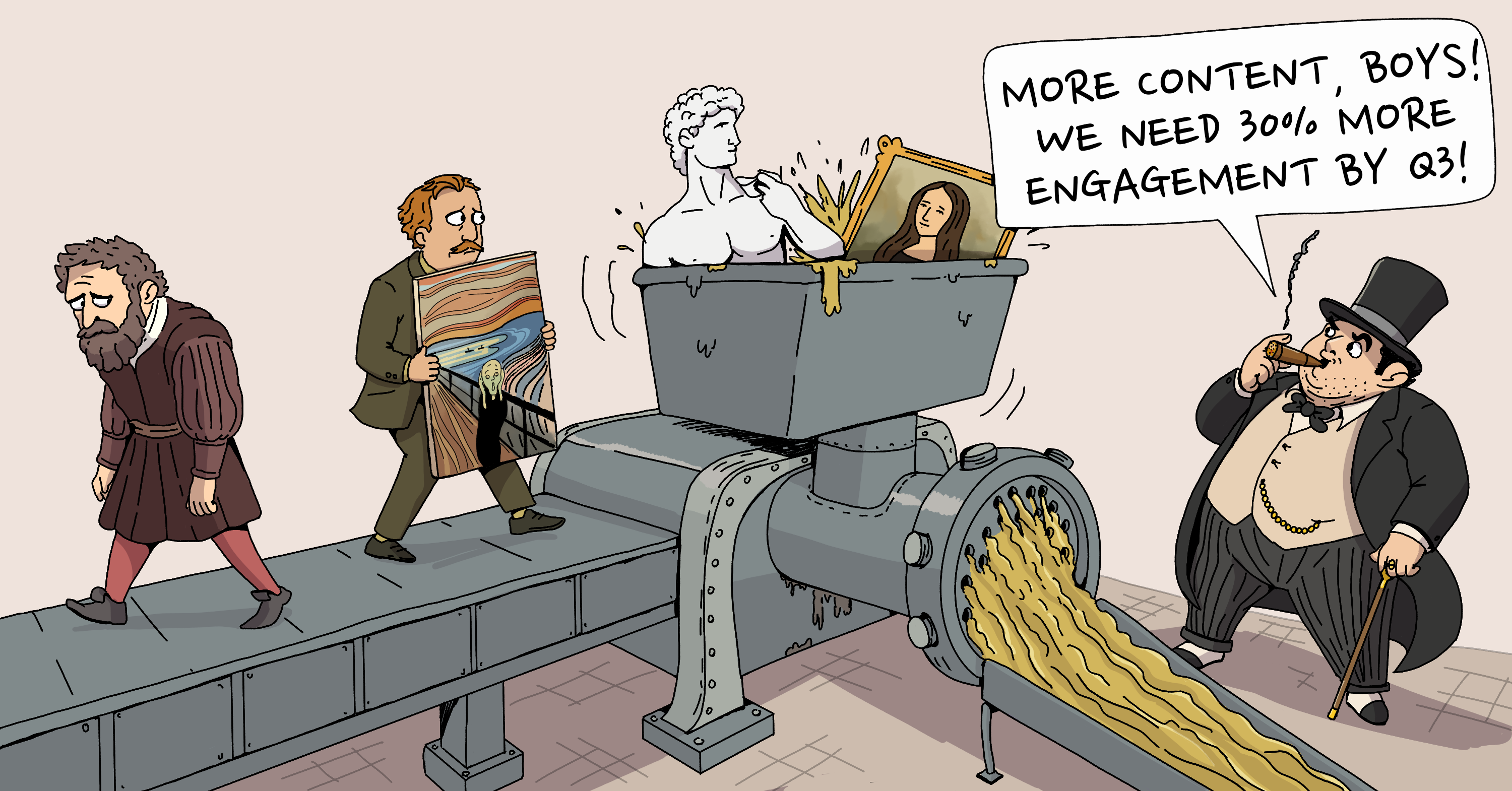
A Blogger Stopped Saying 'Content.' Not Everyone in the Thread Agreed. (refactoringenglish.com)

The trigger was smaller than the Michelangelo joke: a business contact called him a great source of "leads," and Lynch realized that from the vendor's side, the same fact reads as being good at spotting gullible marks.

Not everyone in the thread was persuaded. Several people who make a living calling themselves "content creators" argued the word is the only one broad enough to cover writing, video, and code without boxing them into one medium.

Airbus's exit from AWS keeps one system running on rebranded Palantir (theregister.com)

The distrust behind the move isn't new paranoia: in 2000, a former CIA director wrote in the Wall Street Journal that Washington spies on European allies specifically for economic advantage, not just security.

A small SaaS founder in the thread said EU customers are already switching to European competitors over exactly this concern, even though his servers already sit in Europe too, and he expects the pool of US-only buyers to keep shrinking.

A rural bowling alley swapped a $120,000 vendor system for $1,600 of chips (news.ycombinator.com)

section33 (who runs an SRE and bespoke-tech consultancy on the side) tore out his bowling alley's original scoring hardware and rebuilt it lane by lane with off-the-shelf microcontrollers, open-sourcing the whole project as OpenLaneLink.

The sharpest pushback in the thread wasn't about his code — a longtime DevOps engineer argued the vendor's price was never really about parts: it buys a phone number to call, and a lane fixed in an hour instead of a weekend, when it fails mid-league night.

A new US rule to kill degree mills could also defund Juilliard (npr.org)

Roughly 800,000 students sit in college programs projected to fail a new federal earnings test, mostly for-profit certificate mills and a slice of elite conservatories. The bar: beat a high-school-only paycheck, or the program loses federal loans.

One HN reader ran a real school's numbers through the government's own earnings tool; a 16-year veteran called higher ed "a cash incinerating inferno"; another noted for-profit schools have faced this exact test since the Obama-era "Gainful Employment" rule.

22 Billion UPI Payments a Month Move Through One Central Switch (timeseriesofindia.com)

Every UPI payment routes through seven separate parties, and the PIN you type never reaches the app collecting it - a certified chip on the phone encrypts it before your bank's sponsor even signs off. When both sides bank with the same sponsor, NPCI skips the whole relay and waives its own resolution fee.

One HN reader dismissed the whole design as a government ledger dressed up as peer-to-peer cash, tied to your phone number and identity at every hop rather than free of intermediaries.

🚀Tech ★ 216 · 💬 102 · Jul 12 · #economy#policy#privacy#Alipay#Google Pay#NPCI+3

Rescued after 55 years of slavery in Brazil, she has nowhere else to go (english.elpais.com)

Maria worked unpaid for three generations of the same Brazilian family, from 1971 until investigators freed her this month. The settlement came to 50,000 reais, Brazil's currency, which works out to roughly three dollars for every week of the 55 years she spent there.

On Hacker News, two Brazilian commenters split hard on how it happened: one called arrangements like hers common well into the 1980s; a self-described Brazilian doctor said actual slavery like this was something he'd never personally encountered.

A lender was fined $60m for a hotline built to stall your refund (theguardian.com)

The Consumer Financial Protection Bureau's case started with insurance products bundled into car loans that buyers never asked for. The refund fight was what came after.

On Hacker News, readers pushed back on the idea that shopper rage is an overreaction. Companies build complaint mazes on purpose, one argued: the only way to get a straight answer is to make enough noise that ignoring you costs more than helping you.

USAA closed 51% of home claims unpaid the year its CEO made $14 million (expressnews.com)

USAA closed just over half its 2025 home insurance claims without paying a cent, per compiled industry data — a rate that sits above the 48% average among the 14 largest US home insurers. USAA disputes the framing: it says under 6% of claims were true denials once reopened and consolidated cases are stripped out.

One 20-year USAA customer described two 2025 claims that took months and a lawsuit threat to get paid. Another member, with two claims the same year, said USAA settled both without a single hassle.

Cory Doctorow: the 'reverse centaur' who takes the blame for AI's mistakes (pluralistic.net)

A Hearst freelancer got a byline on a 64-page summer reading guide full of hallucinated books — work that used to take three interns and a fact-checking desk. Cory Doctorow's name for that setup: a "reverse centaur," where the machine drives and the human absorbs the blame.

On Hacker News, John Nagle, who read Doctorow's full book on the idea, said it undersells how cheaply AI now lets corporations run the kind of surveillance only a government once could afford.

🚀Tech ★ 107 · 💬 67 · Jul 12 · #AI#economy#Cory Doctorow#Hearst#John Nagle+2

One essay's fix for AI chaos is giving every worker their own agent (off-policy.com)

An engineer used 64 Claude Code instances in parallel to rewrite 535,496 lines of Zig into Rust in 11 days, about 750 engineer-days of work. Gavriel Cohen calls it proof AI agents need a human directly accountable for what they ship, not a handful of AI labs deciding for everyone.

On Hacker News, a SaaS founder said the alarm over ungoverned agents smelled like the "shadow IT" scares vendors sell before pitching a governance platform, while a survey the essay cites found 52% of workers already run unapproved AI tools anyway.

A free extension deletes Amazon's junk brands. An Amazon seller says it's guessing wrong (knockoff.shopping)

The heuristic scores unknown brands on ALL-CAPS length, missing vowels and consonant mashing, then hides, dims or labels them, with three strictness levels, all running locally in the browser.

A seller who owns a dozen Amazon brands tried it and watched it bury KUIU, a high-end hunting label, and flag his own trademarked lines. His explanation: Amazon itself A/B-tests hiding brand names to commodify sellers, so 'no brand name' is a terrible signal for junk.

Germany recruited skilled workers, then lost them to a ceiling outsiders can't crack (dw.com)

Germany loosened visa rules to pull in skilled workers, then kept losing them. The DW report and a large expat thread converged on the friction around the job, not the job itself: opaque paperwork where one small error snowballs, and a C1-German requirement, near-fluency, for almost any role outside software.

The sharpest counter came from Germans themselves: the ‘glass ceiling’ expats describe is partly a US import, the assumption that no promotion means failure, when staying in one role for a whole career is simply normal here.

A Nanjing official took $325M in bribes. The thread explains why he couldn't stop (bbc.com)

Yang Youlin, 69, a former Nanjing economic-zone official, was sentenced to death for taking 2.21 billion yuan ($325M) in bribes from 2013 to 2023, alongside embezzlement, abuse of power and money laundering. The thread's first reaction was disbelief that a ‘city official’ could reach that number.

The correction came from people who know the system: Nanjing anchors a province with GDP near Texas, and a seat over land grants and permits is exactly where the money collects. Once you are in, the network you pay off never lets you quietly retire.

A €50M Dutch fund poached 34 researchers, 29 from the US — reverse Operation Paperclip (nwo.nl)

The Netherlands' new Tulp Fund announced its first cohort: 34 researchers recruited, 29 currently in the US, from Harvard, Stanford, Columbia, Yale and the National Cancer Institute, across vaccines, cancer, nuclear energy, Alzheimer's and astrophysics. The pitch: up to €1M per researcher over five years.

HN's first instinct was to call the money thin, until commenters noted the €1M is a research budget, not salary, enough to fund a lab of PhD students. As the submitter told one skeptic doing the after-tax math: ‘Yet still they come.’

AI labs are hiring philosophers, the NYT says. The thread counted maybe two dozen (nytimes.com)

One reader tallied roughly twenty philosophers across every lab on earth, against thousands of engineers, and reckoned there are more economists than philosophers on the payroll. Another noted Starbucks employs orders of magnitude more philosophy graduates than all the labs combined.

Two reads of the actual job surfaced: 'hired to launder regulatory capture for a trillion-dollar corporation,' versus a Fortune 500 senior engineer who holds only a BA in philosophy and calls it the most underrated degree he owns.

A map of $3,000 government houses, and the $120,000 in back taxes attached (govauctions.app)

Under the bargain dots sit as-is sales where unpaid taxes, water bills and code liens follow the property. On that $3,000 Flint house, a commenter tallied $120,000 owed and a structure due for demolition.

Then the thread split: opportunity, or poverty tourism? One reader called it a digital rag-and-bone hunt and said buyers should 'demand better'; another mocked the pile of excuses people keep listing.

Why Microsoft would rather run id Software on Unreal than pay its engine coders (gamefromscratch.com)

Xbox's new layoffs cut 1,600 roles now and 3,200 by 2027, with four studios spun out. Among the reported casualties: the idTech engine team at id Software, the lineage behind Doom, Quake and every Wolfenstein since.

The thread's sharpest read wasn't nostalgia. Keeping an in-house engine means keeping engineers who know it, and can therefore ask for more. Switch to Unreal Engine and you rent low-wage contractors instead, hired per project and dropped when it ships.

Anthropic spends 2.3x its payroll on compute, roughly $2M per employee yearly (tomtunguz.com)

Outside the frontier labs the picture inverts: the top 1% of software companies spend $89k per engineer a year on AI, about 40% of a fully loaded $224k senior salary. The median company spends $137.

One reader flips it: at 40% of an engineer's cost, and near-zero for many use cases, that is cheap, not expensive.

"The word you're looking for is unionizing": HN rewrites an AI-coder's meditation pitch as a labor problem (jacob.gold)

Jake Gold says deep-focus coding used to quiet the brain's rumination circuit, and juggling multiple agent sessions replaced flow with constant context-switching. He's more productive, less calm, and recommends meditation apps.

The top replies flip the frame: a 15k-karma dev calls the new normal "a steady stream of medium stress" he won't stick around for; another asks why you'd meditate to tolerate a bad tool instead of fixing the tool; a third answers in one word — unionizing.

He earned a first-class CS degree on Coursera for £17k — a PhD holder in the thread calls his own 11 years a waste (notesbylex.com)

The write-up is concrete: ~3 years 9 months, ~£823 per module, three modules swapped for Coursera certificates, tax-deductible, remotely proctored with Inspera, one group project sabotaged by "ghost" members — and a first-class result he judges worth it.

The thread turns it into a referendum on the credential itself: eleven years of CS degrees called "the biggest waste of time," against recruiters who say the degree is non-negotiable table stakes.

"EV batteries are defying expectations" — the good-news stat quietly compares new cars to old ones (wsj.com)

The WSJ piece argues high-mileage EV batteries are outlasting fears, citing a 2025 Recurrent study (1-in-12 for 2011–2016 cars vs 0.3% for 2022-on) and Geotab data that heavy fast-charging loses range twice as fast.

The thread's survivorship-bias catch is clean: of course a three-year-old car hasn't needed a replacement yet — and every article like this skips the calendar-age degradation that kills batteries regardless of miles.

Junior coders are down 19% while total dev jobs grew 10% (seldo.com)

Developers aged 22-25 have lost 19% of their jobs since late 2022, even as total US developer headcount grew 10% to 1.69 million. Laurie Voss argues the collapse is hiding inside a boom.

His flip: 36 million people joined GitHub last year, and most never call themselves programmers. The job title is dissolving into a skill.

The thread splits on whether the charts even carry AI's fingerprints.

Seattle's office towers sit a third empty, and rents won't budge (seattletimes.com)

Amazon's retreat to Bellevue and the Eastside hollowed out downtown blocks it once filled, and the Seattle Times frames it as a city in decline.

In the thread, a real-estate investor and a former Indeed insider split on the cause: hostile city government, or the mortgage covenants that keep rents frozen and floors dark.

Converting the towers to housing sounds obvious. Zoning and the loan math both say otherwise.

Germany's sick days are climbing, but the number may be an accounting artifact (dw.com)

From January, a fever alone won't earn a remote sick note in Germany; workers must see a doctor in person on the first day off.

The headline reads as a lazy-workforce story. The thread's sharpest correction: much of the 'rise' is just better counting, after a 2022 switch to electronic sick notes that finally logged short illnesses.

A Swedish reader recalls his country's own day-one fix, and what it actually changed.

California outlaws 'sell by,' betting clearer labels will shrink food waste (nytimes.com)

The phrase 'sell by' was never meant for shoppers; it tells a store when to rotate stock, yet shoppers read it as an expiration date and toss good food.

California's fix standardizes the wording. The thread's asterisk: stores can keep 'sell by' dates if they're coded for staff, so a shopper may lose the one clue that stock is old.

Several call it a near-nothing law. A small clarity gain, at best.

Switzerland's 25 Gbit fiber isn't the free market winning — it's a regulator forcing four fibers to every home (stefan.schueller.net)

The post's argument: cheap symmetric 25 Gbit isn't a free-market miracle but the result of treating last-mile fiber as a regulated natural monopoly — four strands per home, point-to-point, any ISP gets equal physical access, and you switch providers with a phone call.

The thread doesn't let the framing stand. Speedtest's index shows Swiss average speeds roughly matching the US; the States already sells 25–50 Gbit in places; and the real variable, one commenter argues, isn't speed or density but who controls the last mile.

🌍Other ★ 527 · 💬 418 · Jul 4 · #economy#policy#web#Init7#Swisscom#UTOPIA+1

An essay begging you to stop the AI hype ends in a paid AI ad — and the thread noticed (elenaverna.com)

The piece calls out 'AI confidence theater': performative fluency in vector databases and RAG, hustle culture with '17 agents' swapped in for 5am cold plunges, and a hiring pool that all suddenly sounds the same. Its test: name something AI made truly indispensable.

The thread answered the test — and caught the contradiction. One reader points out the anti-hype essay is a Firecrawl ad; another notes the author was among the loudest AI boosters before demand shifted to think-pieces like this one.

🚀Tech ★ 225 · 💬 240 · Jul 4 · #AI#economy#Descript#Elena Verna#Firecrawl

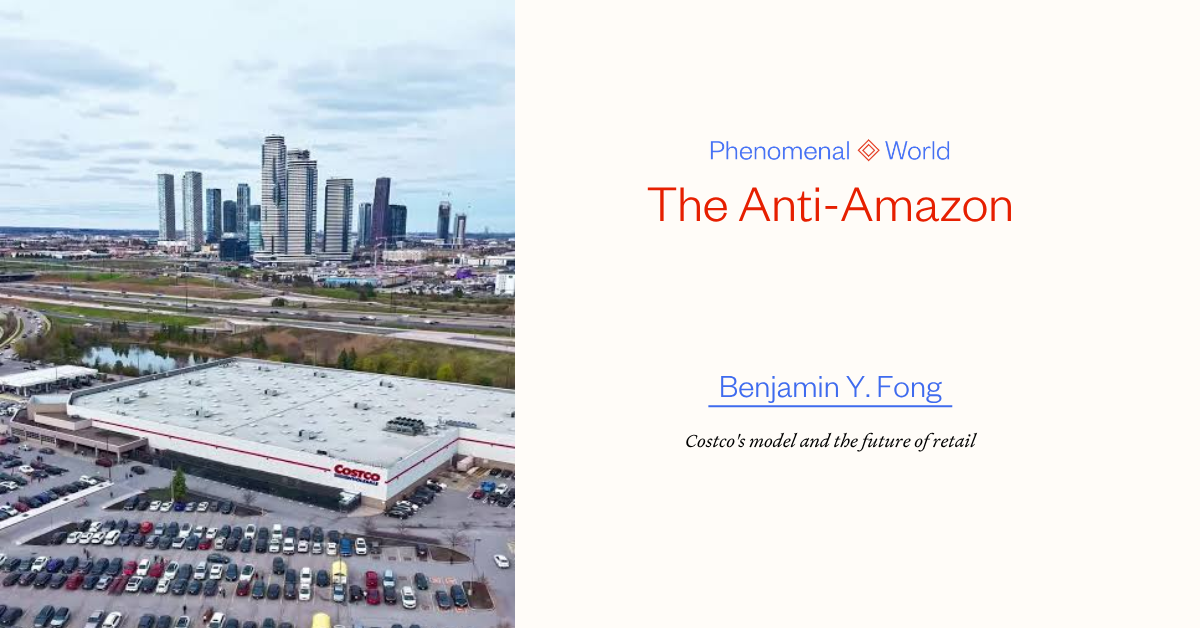
The case for Costco as the anti-Amazon runs into a study saying its 'greener' model is the dirtiest option (phenomenalworld.org)

The argument: Costco is Amazon's mirror image and the better one — SG&A near 10% of sales versus Amazon's ~40%, over 90% membership renewal, higher wages, single-digit turnover. Constraint beats infinite assortment, and the customer's own last-mile trip is the efficiency.

The thread inverts the green claim: in-store pickup by a gas car was the dirtiest option in an emissions study — and Costco already outsources delivery to Instacart, quietly running the very last mile the essay says it avoids.

📈Biz ★ 330 · 💬 304 · Jul 4 · #economy#markets#policy#Amazon#Costco#Instacart+1

A 100-year-old federal report describes 1926 America — and the thread argues over whether we're better off or just louder about it (derekthompson.org)

Derek Thompson's dive into the 1926/1933 'Recent Social Trends' report argues America's present unease over technology, work, family and values rhymes with a century ago, when the car, radio and rural-to-urban flight destabilized the old order. Life is materially far better now, he insists, yet the emotional echoes are real.

The thread turns it into a referendum on progress. One reader notes wealth was more concentrated in the 1920s; a Xoogler argues the poorest American today outlives Rockefeller.

A new paper proves markets stay competitive only if P≠NP. The thread's rebuttal: we watch cartels fix prices all the time (arxiv.org)

The claim: catching a cartel's cheater is a computational problem. If P=NP, firms detect cheating efficiently, punishment stays credible, and collusion holds. If P≠NP, detection is infeasible and markets stay competitive. Paired with Maymin's 2011 'efficient iff P=NP' result, it yields an impossibility: a market can be efficient or competitive, not both.

The thread's objection is empirical: we've watched stable cartels for decades, and 'computationally infeasible' collapses the moment you allow the heuristics everyone actually uses.