BYD is bringing 5-minute, 1,500 kW charging to Canada — three times anything in North America
BYD's "Flash" charging puts ~400 km into a car in five minutes at 1,500 kW, triple Tesla's fastest stalls. It's coming to Canada first in North America, riding a tariff cut. The thread's battery engineers tackled the obvious fear: does charging that hard wreck the cells?
The specs are blunt: 1,000-volt systems, 10–70% in about five minutes even at −20°C, against Tesla's 500 kW ceiling. BYD already built 5,700 of these stations in China in roughly a year.
The reassuring answer, from people who know batteries: heat is the enemy, not speed, and BYD dips its cells in phase-changing coolant. The worried answer: flash charging is 3x faster than the fast-charging we've actually studied.
A charging spec that doesn't sound real
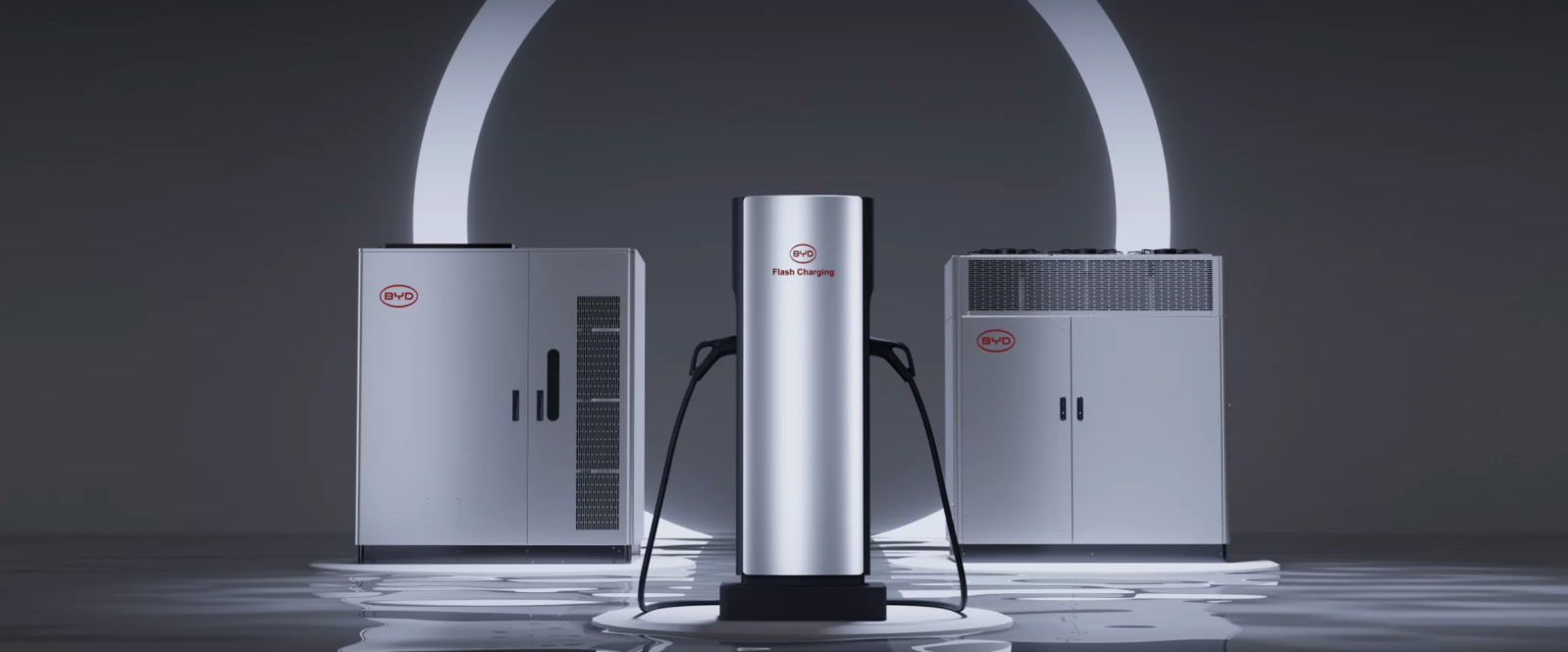
Per the report, BYD is bringing its megawatt "Flash" charging to Canada — its first North American deployment — built around 1,500 kW, 1,000-volt systems that add roughly 250 miles (400 km) in five minutes, and can take a battery from 10% to 70% in about five minutes even at −20°C. For scale: Tesla's V4 Superchargers top out near 500 kW and most North American EVs sustain only 350 kW. BYD has already built over 5,700 Flash stations in China in about a year, and Canada's tariff cut on Chinese EVs (from 100% to 6.1% in January) is what opened the door, starting with 20 dealerships around Toronto.
The question everyone asked: does it kill the battery?
The thread's first instinct was skepticism about longevity — and it got answered by people who clearly work with cells. A commenter gave the empirical baseline and its limit:
"Fast charging appears to damage batteries less than expected. There are lots of reports of taxis which almost exclusively used fast charging with over 200,000 miles on their battery… Flash charging is 3x or more faster, so that's unknown."
The mechanism got a clear explanation. A commenter described BYD's thermal trick:
"It's less the lone act of moving ions and more the heat that affects battery longevity. BYD is using… a '3D direct refrigerant cooling system', so the batteries are dipped in phase-changing coolant. Aside from that the cells are pre-warmed and were optimised for lower internal resistance."
A commenter added the deeper engineering: the old failure mode was dendrites — crystals growing across the cell — and that's been steadily tamed, so "now it's all down to temperature. Control-loop monitoring has got a lot better than 'shove X amps in there and hope for the best'."
The sensible caveat
The practical voice in the room kept it in perspective. A commenter noted the longevity question barely matters for most owners:
"The answer shouldn't matter for most cases. Regular users should only use these stations for road trips. Nearly all charging should be done with L2 chargers."
The part that stings for Americans
The undertone wasn't engineering, it was geography. A commenter watched the technology route around his country: "As an American, I'm going to be really sad when we miss this transition. Maybe there's still time?" The battery science says flash charging is manageable — heat is the enemy, and BYD engineered around heat. The open variable is 3x: every reassuring longevity study was run on charging a third as aggressive as this. Canada gets to find out first.
Get breakdowns like this every day
The top Hacker News stories, unpacked — by email, Telegram, or RSS.
AMD's updater downloaded code over plain HTTP and ran it. The bug bounty called it out of scope
AMD's AutoUpdate tool fetched executables over unencrypted HTTP and ran them with zero signature checks — a textbook remote-code-execution path. The bounty program rejected the report as out of scope, until a blog post hit Hacker News and AMD's own security team reversed in a day.