Topic

Climate & Energy

52 stories

Google's Finnish data-center site was cleared without an environmental assessment, and Finland is angry (nypost.com)

The NY Post headline says Google cut down 250K trees illegally. A thread commenter reduced it to 1.5 square miles of planted forest cleared before a legally required environmental assessment.

Finns in the thread said that is exactly why the country is angry.

Not just a headline — the discussion unpacked

The top HN threads: facts from the discussions, both sides, insider voices. Email, Telegram, or RSS.

A Swedish AI host says the same request emits 8.5 times more CO2 in Texas than in Sweden (berget.ai)

The figures come from an open-source per-request method that Berget AI built with SEI, WattTime and Klimatkollen, for a 5,000-token-in, 387-token-out request on a B300 node. Energy use is about 4 Wh in both places.

The company notes that an embargoed version had overstated the gap, and the final numbers were revised down after a grid-intensity correction.

🚀Tech ★ 140 · 💬 154 · 4 days ago · #AI#energy#hardware#Berget AI#Kimi K3#SEI+1

US homes pay 17.8 cents per kWh at investor-owned utilities and 14.5 at public ones (kadoa.com)

Utilities with shareholders also had longer outages in 2025: 120 minutes per home excluding major storms, against 80 at public utilities. Co-ops averaged 14.1 cents but 166 minutes.

The analysis reports what homes paid, not why. Public utilities do not pay income tax and can borrow tax-free.

📈Biz ★ 526 · 💬 384 · 4 days ago · #economy#energy#policy#EIA#Kadoa

UNEP declares 1.5°C lost and calls for 69% emission cuts by 2040 (unric.org)

Countries' current pledges would cut emissions 5 to 8% by 2030, against the 18% UNEP says is needed. Getting back under 1.5°C also means pulling about 320 gigatons of CO2 out of the air by 2100, roughly eight times what the world emitted in 2024.

A climate-tech worker with 12 years in the field answered with a plea for stamina: the physics never changes, so neither does the task.

Solar out-generated nuclear worldwide in 2025: 2,779 TWh against 2,703 (pv-magazine.com)

Nuclear's share of global electricity fell to 8.8%, its lowest in roughly four and a half decades, down from a 17.5% peak in 1996. The World Nuclear Industry Status Report also counts 73 reactors under construction, the most since 1987.

Commenters mostly fought over whether the headline is the right comparison: capacity factor, build cost, or a portfolio of both.

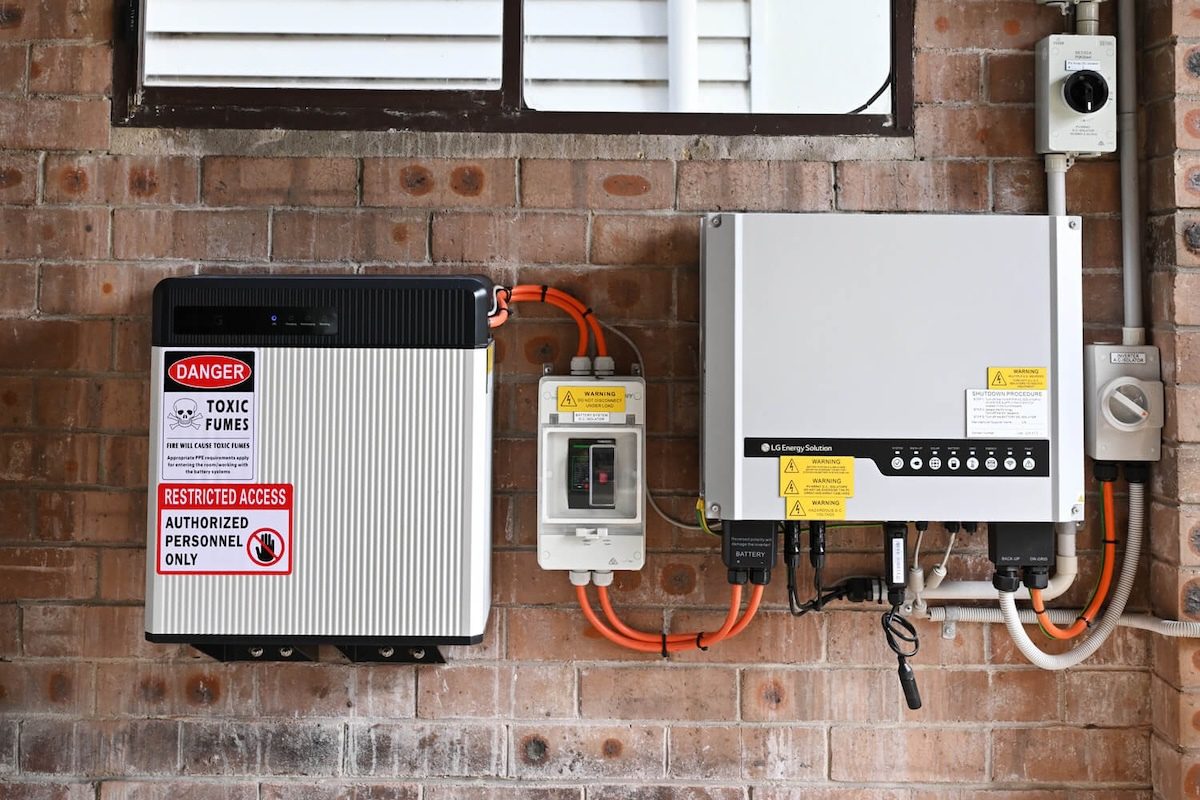
Australia’s household batteries expose a grid design choice (e360.yale.edu)

Australia’s solar surplus can push daytime power prices negative. Home batteries shift some of that energy into the evening, and governments are also encouraging households to consume power when it is abundant.

The thread’s real dispute is architectural: pay households to own storage, or build utility-scale batteries and use electric vehicles as a distributed reserve.

Heart’s electric aircraft flies, but range remains the story (heartaerospace.com)

Heart Aerospace says its aircraft uses electric motors for short hops up to 124 miles, with reserve generators for a longer hybrid range.

HN readers welcomed the test flight but focused on the operational constraint: routes short enough for battery power can still compete with a drive door to door.

🚀Tech ★ 120 · 💬 121 · Aug 14 · #energy#hardware#space#Heart Aerospace

Amazon’s Texas data-center plan puts power at the center (nytimes.com)

The report examines a Texas data-center project and the power plant planned around it. It makes infrastructure, not model capability, the concrete subject of the story.

HN commenters used the project as a prompt to argue about grid planning, permitting, and whether compute growth is being priced honestly.

🚀Tech ★ 216 · 💬 286 · Aug 9 · #big tech#energy#policy#Amazon#Texas

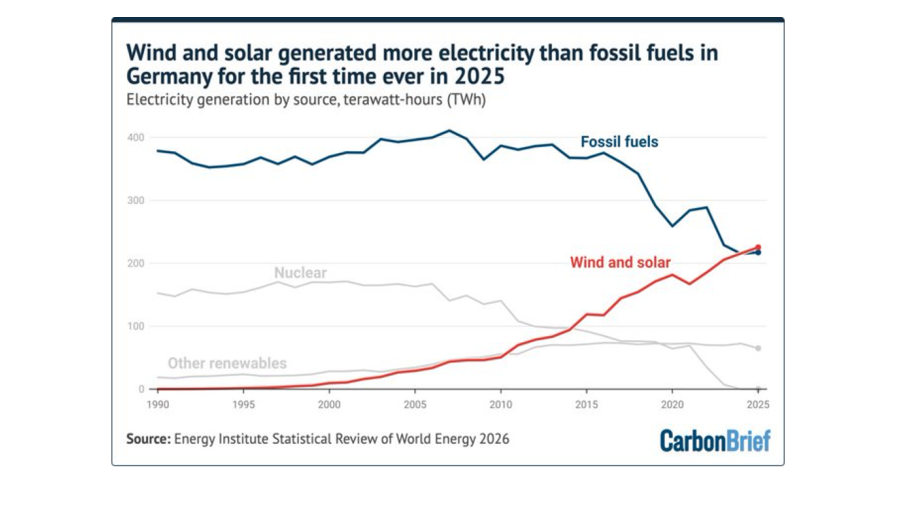
Germany’s renewables milestone comes with an argument about the metric (intellinews.com)

The reported milestone is about electricity generation, not every use of energy. That boundary is the difference between a real achievement and an overextended claim.

HN did not dismiss the change; it pressed for annual versus monthly comparisons, absolute generation, storage, and the unresolved role of gas and nuclear.

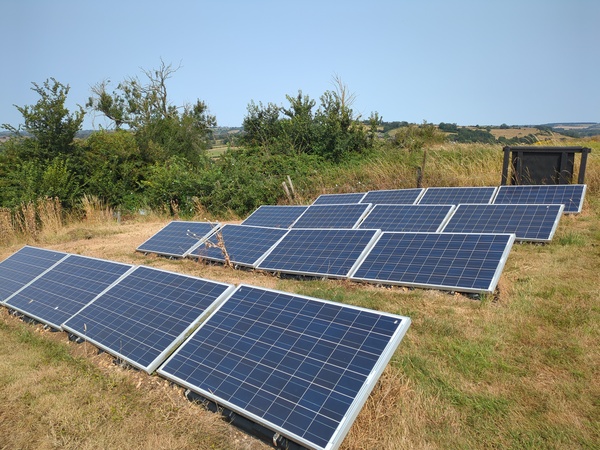
Solar-panel washing has a surprisingly strict burden of proof (incoherency.co.uk)

Panel washing sounds like preventive maintenance, but its value depends on local soiling, rainfall, output loss, cleaning cost, and the chance of damaging equipment or warranty terms.

The thread’s more useful instinct was to measure a before-and-after production difference first. A chore becomes an engineering decision once there is a baseline.

🌍Other ★ 226 · 💬 227 · Jul 28 · #energy#science#Solar Panels

JetZero promises 50% less fuel. HN asks about certification (jetzero.aero)

The Z4 is designed for international range and has backing or purchase options from Alaska and United, while JetZero has begun its Greensboro assembly campus and raised a $175 million Series B.

HN’s response was less about aerodynamic promise than the bottleneck behind it: pressurisation, evacuation rules, airport gates, support equipment, and certification all favor the familiar tube and wings.

A West African Coral Reef Sat Buried in a Report for 60 Years (e360.yale.edu)

Gérard Zinzindohoué spent years getting rejected for grants before National Geographic gave him $20,000 — most of it swallowed by sonar gear towed behind a jury-rigged fishing boat. What his team confirmed 175 feet down, 14 miles off Benin's coast, was eight species of coral and a shark habitat nobody had mapped since that single 1960s paragraph.

One HN reader had a blunter theory for why this reef made it while so many didn't: it sits along a coastline where almost nobody wears chemical sunscreen, which is documented to kill coral elsewhere.

Oracle's Credit Rating Is Two Notches Too Low for Its $7 Billion Wisconsin Bill (ft.com)

We Energies won't let Oracle break more ground on its Port Washington campus without $7 billion in collateral: the tariff penalty for any data-center developer whose S&P rating falls below single-A-minus. Oracle's is BBB, two notches under that line, and it just got cut again.

Wisconsin regulators declined to waive the rule, so the guarantee costs Oracle over $100 million a year. In the thread, one member says a friend spent five years on Oracle's own team building its cloud data centers worldwide, then got laid off from it this year.

A lighting designer found brighter streetlights actually blind CCTV cameras too (spectrum.ieee.org)

LED streetlights went from rare to covering more than half of America's streets by 2019, sold almost entirely on the promise of lower energy bills. Global light pollution is still climbing by nearly 10 percent a year despite that switch.

One HN reader watched his own city get it backwards: after new LEDs replaced old lamps with a tightly aimed beam onto the road, nobody noticed the footpath beside it had gone dark until joggers started running in traffic instead.

Oregon's data-center power line took 20 years to approve, not a land grab (theconversation.com)

Aaron Walayat, a law professor who studies eminent domain, traces the doctrine to the Fifth Amendment: 'public use' plus 'just compensation' — the same tool that let Connecticut bulldoze homes for a Pfizer redevelopment in Kelo v. New London that never got built.

Commenters flagged that the circulating headline had it backwards: it's the power line being condemned, not the data center, and state courts have drawn a hard line here before, denying takings that serve mostly out-of-state or private buyers.

Microsoft's carbon emissions jumped 25% in a year building AI data centres (theguardian.com)

Google's emissions grew 18% on capital-goods spending for new capacity, and Amazon's cloud arm burned an estimated 78,000 gigawatt-hours in 2025, its largest jump on record.

In the thread, one reader flagged a live preview: Irish datacentres already draw 23% of the country's entire electricity supply, up from just 5% in 2015 - not alarming, another shrugged, since datacentres will simply "ride the transition to green energy for free."

🌍Other ★ 63 · 💬 84 · Jul 12 · #AI#big tech#energy#Amazon#France#Google+2

A Liquid With No Elastic Memory Just Fractured Like Glass (quantamagazine.org)

The threshold turned out oddly sharp: push the liquid past 300 millimeters a second and it snaps clean instead of stretching thin; at 100, it just flows like any ordinary liquid. Lima first caught the crack years earlier, testing hydrocarbons in a project with the oil company Exxon Mobil.

On Hacker News, the pushback arrived fast: if any liquid flows, why wouldn't all of them crack this way under enough force?

"EV batteries are defying expectations" — the good-news stat quietly compares new cars to old ones (wsj.com)

The WSJ piece argues high-mileage EV batteries are outlasting fears, citing a 2025 Recurrent study (1-in-12 for 2011–2016 cars vs 0.3% for 2022-on) and Geotab data that heavy fast-charging loses range twice as fast.

The thread's survivorship-bias catch is clean: of course a three-year-old car hasn't needed a replacement yet — and every article like this skips the calendar-age degradation that kills batteries regardless of miles.

Europe's heat charts hide a paradox: cleaning up our air is part of why it's warming faster (bbc.com)

The BBC lays out Europe's faster-than-global warming in seven charts — temperature records, rising "tropical nights" in cities. The causal line that catches the thread: less bright snow and fewer reflective aerosols mean more sunlight reaches the surface.

The reactions range from aerosol-science nuance (this is real, and it's the same dangerous ground as geoengineering) to a data-presentation gotcha: one "Europe" chart greys out Ireland and plots only England.

🌍Other ★ 147 · 💬 233 · Jul 6 · #energy#science#BBC#IPCC

Switzerland's solar railway works — and HN's napkin math says 44 km of it moves one locomotive (euronews.com)

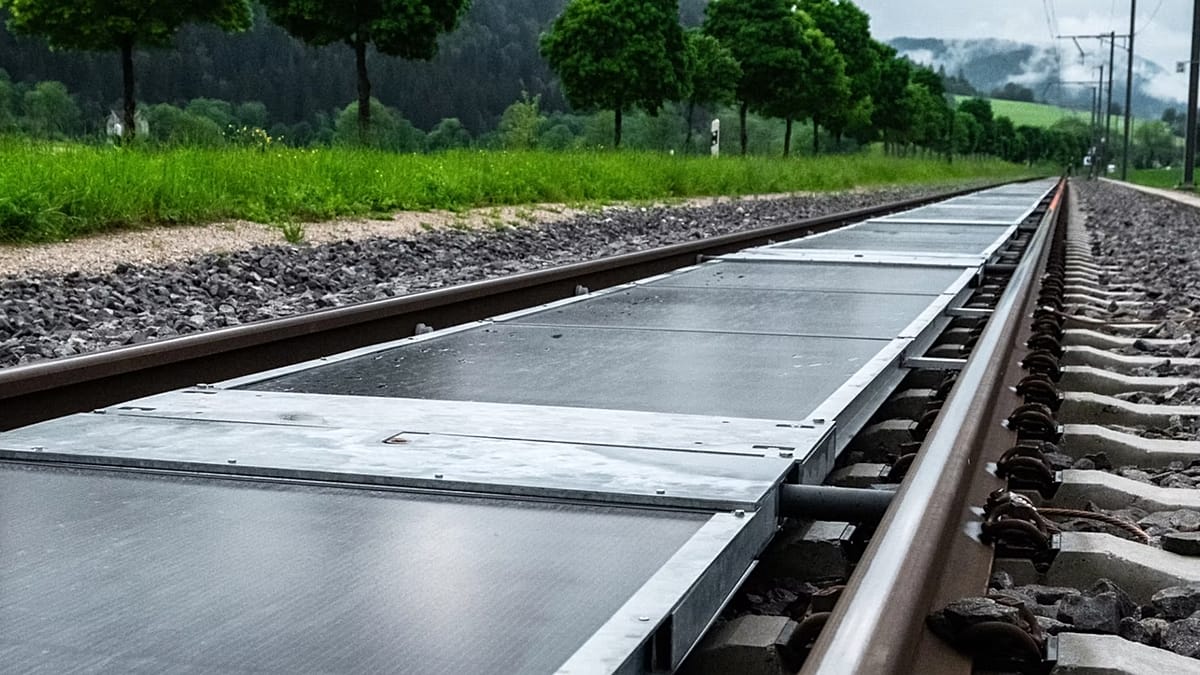
Swiss startup Sun-Ways put 18 kWp of panels across 100 m of track in Buttes, producing ~16,000 kWh/year, and the trial went well enough that a permanent install looks likely, with Italian and other partners lining up.

The thread does the arithmetic: 18 kW over 100 m is less than a big house rooftop, you'd need ~44 km of track to power one locomotive — and the reply is that efficiency was never the point.

A rare bacterium in Cheyenne's water halted Meta's data-center discharges (tomshardware.com)

A rare metal-resistant bacterium, Cupriavidus gilardii, turned up in Cheyenne's reclaimed water. The city traced it to Goat Systems LLC, the contractor building Meta's data-center campus, and suspended the plant's fill-and-flush and closed-loop discharges.

Officials say it isn't a drinking-water emergency. A former microbiologist in the thread calls the find routine; others map how even 'closed-loop' cooling still breeds bacteria that force these purges.

Study says giant trees have 'no trouble' pumping water up 70 metres. A commenter notes they aren't pumping at all (news.exeter.ac.uk)

Exeter and Cardiff researchers, studying trees 7–71 m tall in Malaysian Borneo, found the tallest showed no height-related growth loss even through the 2023–24 El Niño drought. The mechanism: low-pressure suction through vessels that widen toward the ground, plus leaves adapted to greater water stress.

The thread's caveats: the study only reached ~80 m while no tree exceeds ~130 m for exactly this hydraulic limit, some giants drink from fog, and 'pumping' is a misnomer for passive transpiration tension.

County with 37 data centers tells schools to 'conserve electricity' as rates jump 25% (404media.co)

Henrico County's manager emailed thousands of staff that power for all county and school buildings would rise 25% on July 1, about $5 million more a year, and urged them to conserve. The county hosts 37 data centers with plans for 17 more, some on Civil War battlefields.

The thread refused the easy villain. A Berkeley Lab analysis, cited in the thread, pins most of Virginia's rate rise on the state's 2020 clean-energy mandate, not the data centers. Another noted the email went to all government buildings; only 'schools' hit the headline.

A startup fired up the first private non-light-water reactor in four decades (antaresindustries.com)

Antares hit initial criticality on its Mark-0 microreactor at Idaho National Laboratory, the first privately developed non-light-water reactor to go critical in the U.S. in over four decades. The fuel is BWXT-made TRISO pebbles; the roadmap reads criticality 2026, electricity 2027, 'power to the warfighter' 2028.

The thread caught the tell: the milestone is real engineering on schedule, but the end user is a military base, not the grid, which is why the commercial-power pitch rings hollow to some readers.

EU HQ cut AC on lower floors in a heatwave, sparing the commissioners' offices (politico.eu)

During a 40C heatwave the European Commission's Brussels HQ cut air conditioning on floors 1 to 7 while upper floors stayed cool. The thread surfaced the timeline from an EU-politics journalist: the shutdown rolled floor by floor from 4pm Friday, hit the whole building by day's end, and worked fine by Monday.

The mundane cause: ACs sized for 30C can't cope at 40C, so cutting the lower half buys performance up top. The awkward detail, from a separate outlet: the failure spared floors above level 8, where von der Leyen and the commissioners sit.

An article calls the radiation safety model a lie. The thread fact-checks it line by line (worksinprogress.co)

The piece leans on a Taiwan case: hundreds of apartments built with radioactive rebar gave residents years of chronic exposure, yet showed lower cancer rates than the general population. From that and Chernobyl's toll it concludes the Linear No-Threshold model overstates harm.

Then a researcher who worked on whole-genome sequencing of Chernobyl thyroid tumors pushed back: the claim of no chromosomal damage just means nobody measured at the resolution that would find it.

A PCMag columnist's inversion: the US that demanded the best tech now bans it (pcmag.com)

The column lines up the bans, the Connected Vehicles Rule on cars, DJI import limits, tariffs on solar and EVs, and contrasts them with a US that once raced to buy the best of everything. It quotes the line that China now resembles the competitive capitalism Americans were taught to admire.

The flip from the thread: one OpenAI researcher worries AI hype is a way to avoid admitting the US can't build competitive cars and drones, while another argues the export bans on top US AI models mostly hand the lead to whoever isn't banned.

📈Biz ★ 127 · 💬 85 · Jun 29 · #economy#energy#policy#Aptera#BYD#DJI+2

'Arrested for going 5 seconds over' went viral. The bodycam shows a longer story — and a worse one underneath (gadgetreview.com)

A man was arrested at an Oklahoma council meeting on a proposed data center, the headline saying he ran five seconds past a three-minute limit. Newly released bodycam captured an officer's 'Arrest him.'

Commenters who watched it push back: he stood at the dais shuffling papers for nearly a minute and refused repeated orders to leave. But the buried facts hold up — water and power decided before residents spoke, and the city first quoted $1,750 for the footage.

“Do I think the data center vote cost me the election? Yes I do” (newsweek.com)

A proposed 9-gigawatt data center in Box Elder County — twice the size of Manhattan, drawing more power than all of Utah uses — is now a live electoral liability. Incumbents who advanced it are losing primaries and naming the project as the reason.

The thread split on what voters are actually angry about: one camp says it's jobs and economic resentment dressed up as environmentalism; Utah locals say water and power bills are the whole story in a drying desert.

Slate's $24,950 EV truck has no paint, no screen, and 205 miles of range (slate.auto)

Over 80% of Slate's 200-plus accessories cost under $500, and the spec sheet skips paint, a center touchscreen, and even a stated range. Thread sleuths found it: 205 miles on a roughly 63 kWh pack.

An owner-to-be configured a 'hatchback' with ordinary options — speakers, wheels, spare carrier — and watched the sticker climb to $35,000, close to EV sedans with nicer interiors.

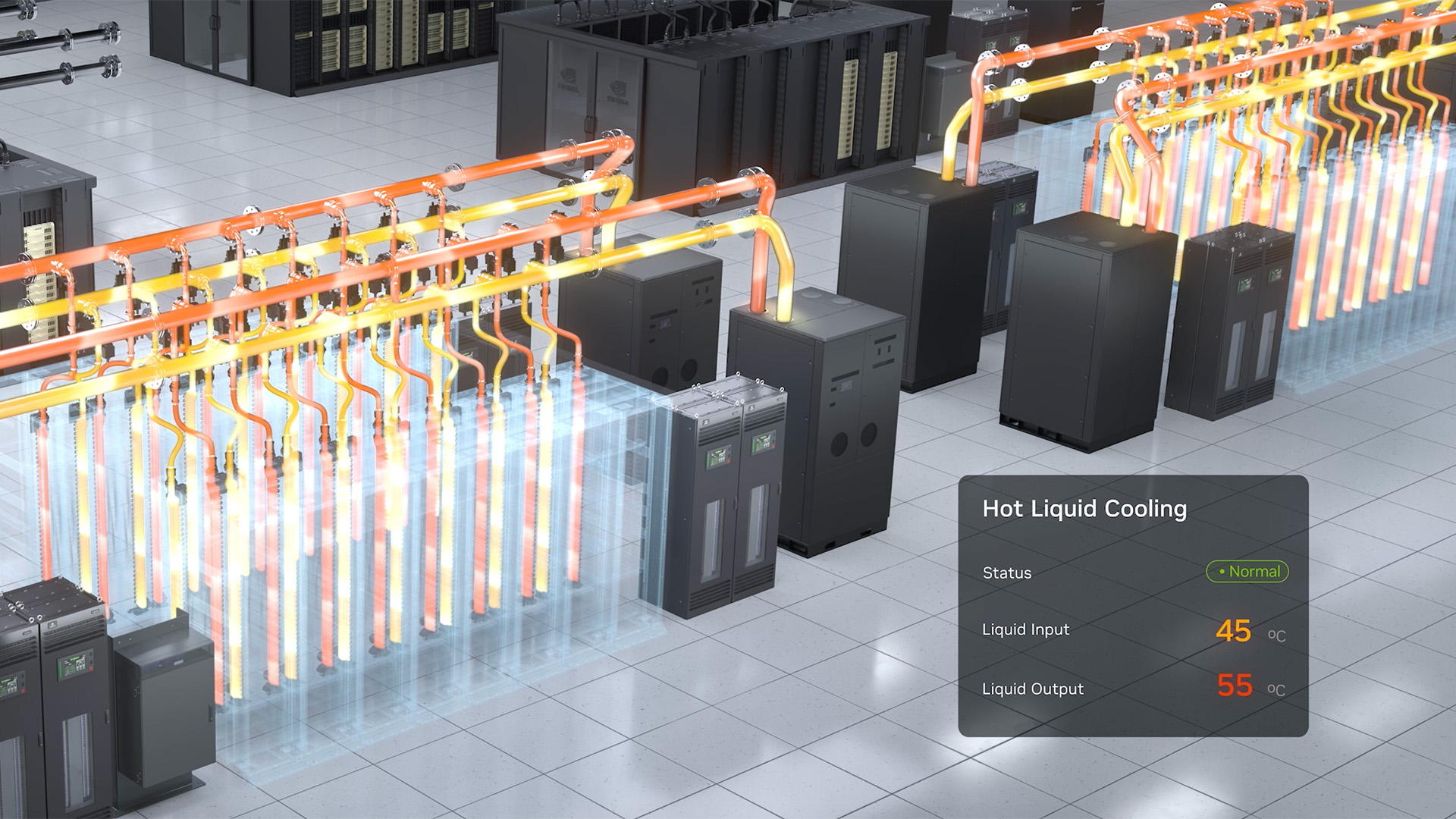
NVIDIA's 45C inlet water lets a data center run with no evaporation (blogs.nvidia.com)

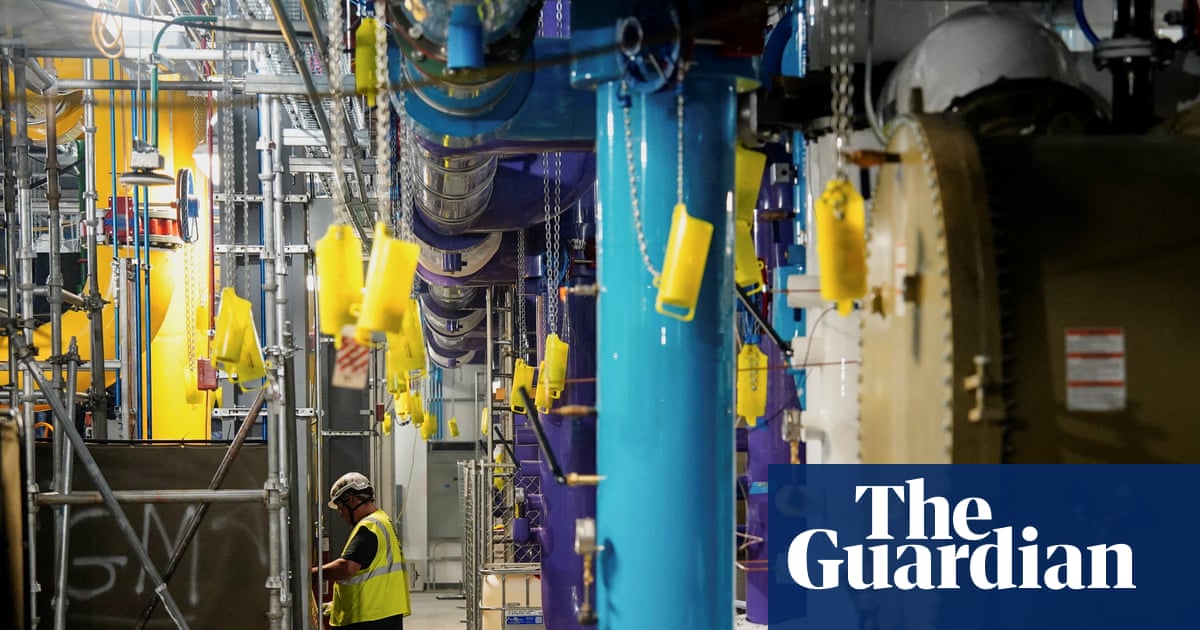
Rubin-generation racks go fully liquid: every chip and switch sits on a cold plate, no fans, with 75% water and 25% glycol in a sealed loop. A 50MW site is pitched at over $4M a year saved on cooling and water.

Practitioners say the catch is climate. You need outside air below about 37C to guarantee a 45C outlet, so most sites still keep cooling towers for the hot days.

And the bigger water sink stays untouched: power generation, not the building, is where most of a data center's water actually goes.

🚀Tech ★ 213 · 💬 158 · Jun 25 · #AI#energy#hardware#Blackwell#NVIDIA#Rubin

An extreme-heat conference was cancelled by an extreme-heat warning (lse.ac.uk)

The Grantham Institute's London conference on extreme-heat governance — co-hosted with the Zurich Climate Resilience Alliance, closing with a 'fire side chat' — was cancelled when the Met Office issued a red extreme heat warning. The cause wasn't irony but the venue: LSE's Shaw Library has no air conditioning.

The thread turned the joke into a number: Greece records about twice as many heat deaths per capita as Mississippi has gun deaths, and Europe's resistance to AC is the unscolded scandal underneath.

Microsoft buys 20 years of gas power in a state drowning in cheap solar (chevron.com)

The plant sits where natural gas prices at the WaHa hub have gone negative, as low as -$9 per MCF, because there's nowhere to send it. Microsoft pledged to be carbon-negative by 2030, and just signed a two-decade contract to burn stranded fossil fuel at the wellhead instead.

Canada Bets $100 Billion and 10 Reactors on a Nuclear Renaissance (cbc.ca)

Investment figures cited run near $100 billion, with Saskatchewan and Alberta's oil sands named as fresh industrial demand. "There is no credible plan to do that without nuclear energy," the strategy argues, listing assets few other countries can match.

Read the fine print and 2040 means start, not switch on — and a UK reactor announced in 2010 to run by 2019 is now hoping for 2030.

Mexico's $8,500 Government EV Tops Out at 31 Miles Per Hour (gizmodo.com)

Built under her six-year Plan México, the car targets a summer 2027 launch with 2,000 charging stations planned across Mexico City, the State of Mexico and Puebla, and domestic content rising from about 50% to 75% by 2030.

The instinct to judge it against US cars misses the target: Mexicans say its real rival is the motorcycle, and getting 100,000 riders off two wheels would cut accident costs more than it threatens Detroit.

Shipping's fossil emissions shrink themselves as the cargo disappears (cleantechnica.com)

Maritime work is measured in ton-miles, not tonnage. Fossil fuels move in huge flows over long distances, so they punch above their weight in freight energy. As coal, oil, and gas demand falls, the bulk carriers and tankers hauling them disappear — a double-dip.

The prescription: subtract that shrinking denominator first, then electrify the rest and reserve biofuels for the residue.

The thread's verdict on the writing was less kind than on the logic.

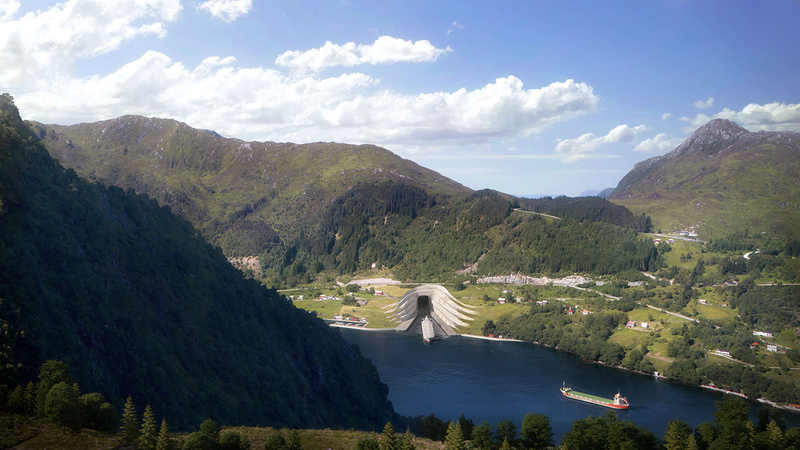
Norway approves the world's first full-size ship tunnel through a mountain (eandt.theiet.org)

The 8.6-billion-NOK tunnel, designed by Snohetta and run by the Norwegian Coastal Administration, breaks ground in 2026 for a 2031 opening, letting vessels skip 56 km of open ocean. A reader who heard it debated on national radio noted the word thrown around most was 'waste'.

On HN the doubts were practical: does it even connect anywhere major, how do you handle ship fumes in a 1.8 km bore, and what happens when a vessel breaks down halfway through the mountain?

Switzerland un-bans nuclear by 100-98, but the real fight is the referendum (bluewin.ch)

The vote that lifted Switzerland's post-Fukushima nuclear ban came down to 100-98 in the lower house, an indirect counterproposal to the 'Blackout Initiative'. Nothing gets built yet. The repeal still has to clear a mandatory popular referendum.

A Swiss voter laid out why it matters anyway: 50% of the country's energy is still oil and gas, two-thirds of its electricity is hydro fed by glaciers that are melting, and prices are 'sky-high'. The thread's sharper economists fired back that wind and solar already beat nuclear on cost.

Meta orders eight reactors that don't exist yet, delivery promised by 2032 (neutronbytes.com)

Bill Gates's TerraPower signed a deal with Meta for up to eight Natrium reactors, 345 MW each, up to 2.8 GW baseload and 4 GW with storage, first units 'as early as 2032'. The catch: the demonstration plant in Kemmerer, Wyoming isn't running yet.

The Natrium design is sodium-cooled with a molten-salt heat battery that peaks at 500 MW for five hours. Skeptics in the thread flagged that a 690 MW '24/7/365' figure is being advertised for a reactor with zero operating history.

U.S. yanks 900 ocean sensors right as the next El Nino forms (timescolonist.com)

The trigger is money: the Trump administration's 2026 budget proposed a 55% cut to the National Science Foundation, and the order to start shutting the network down arrived in early May.

Most of the system is slated to be dismantled by 2027, gutting a long-running record of the Pacific just as El Nino conditions return.

The quiet flip from the thread: pulling the hardware costs more than leaving it in place and unmaintained, which makes the move read as a choice, not a saving.

'US battery output breaks records' — until the thread puts China's number next to it (fred.stlouisfed.org)

The linked page is raw data labeled 'Industrial Production: Battery,' indexed to 2017 — no value, no chemistry breakdown. As one reader noted, breaking your own record every year is what a rising line does.

The context that recolored everything: 2025 cell-production capacity at roughly USA 70 GWh, Europe 252, China 1,755. The US line is genuinely up and, in global terms, still tiny — and the materials are mined overseas anyway.

🌍Other ★ 160 · 💬 132 · Jun 16 · #economy#energy#hardware#BYD#China#FRED

A cold patch in the North Atlantic refuses to warm — and the data on what it means is only 20 years old (cnn.com)

The 'cold blob' sits where the Labrador Current meets the Atlantic — a region cooling while the rest of the ocean warms. It's read as a possible fingerprint of a weakening AMOC, the Atlantic Meridional Overturning Circulation that shunts tropical heat north and keeps Europe mild.

The honest catch a commenter surfaced: continuous AMOC monitoring only began in 2004. Twenty years of data is thin for calling a multi-century system's collapse, and a recent Science news piece argued the current is, for now, holding up.

🌍Other ★ 195 · 💬 288 · Jun 15 · #energy#science#AMOC#Atlantic Ocean#Greenland

Google wants to build a datacenter from 2,000 retired Pixels. The thread lists what kills phones (research.google)

A 20-phone cluster already grades a 75-student class; a 2,000-Pixel datacenter is planned for this fall. The pitch is reuse over recycling: keep the silicon working instead of smelting it.

The thread aimed at the company, not the idea. Why preach open Linux on phones, one reader asked, when Google built the platform specifically to stop you installing your own OS — and others flagged eMMC chips that simply die.

'Too hot to work' isn't a forecast in the Gulf and South Asia. It's the current labor model (bloomberg.com)

An Oxford study cited in the thread projects nearly half the world living with extreme heat by 2050 at 2°C of warming. The lived answer is already here — disposable labor that works until health breaks, then gets replaced.

Wealthier economies adapt structurally: siesta, night shifts, air conditioning. One reader adds the cruel detail — heat sickness isn't one-and-done; once it hits, tolerance can take a month to rebuild.

🌍Other ★ 90 · 💬 49 · Jun 14 · #economy#energy#science#Dubai#India

Renault's CEO says EV orders jumped 50% in France and Germany since the Iran war (reuters.com)

Renault's CEO links a 50% jump in EV orders across France and Germany to fuel-price fears since the Iran war. A charging-network founder in the thread confirms it from the ground: 'the summer has never started off this well.'

The unease underneath: today's pump prices are held down by countries draining strategic reserves, which one commenter warns will eventually run out.

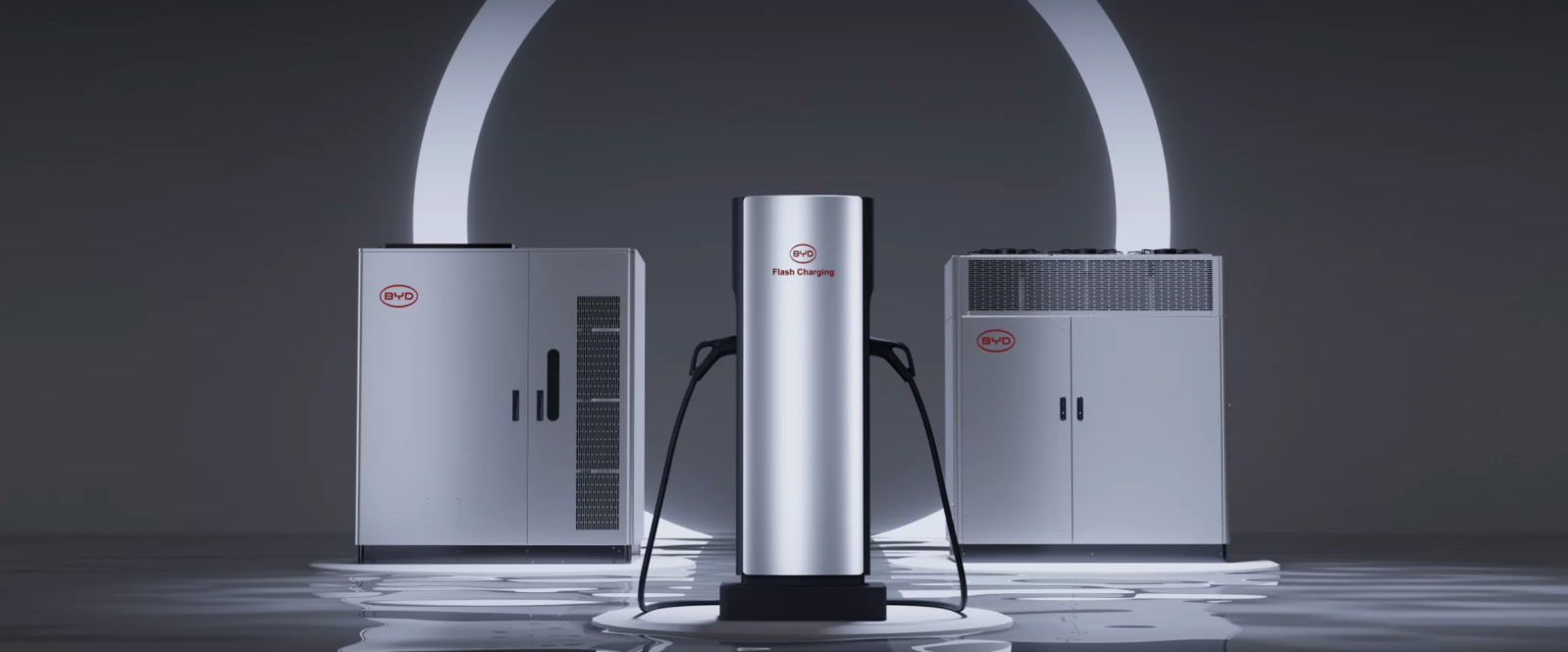
BYD is bringing 5-minute, 1,500 kW charging to Canada — three times anything in North America (electrek.co)

The specs are blunt: 1,000-volt systems, 10–70% in about five minutes even at −20°C, against Tesla's 500 kW ceiling. BYD already built 5,700 of these stations in China in roughly a year.

The reassuring answer, from people who know batteries: heat is the enemy, not speed, and BYD dips its cells in phase-changing coolant. The worried answer: flash charging is 3x faster than the fast-charging we've actually studied.

🚀Tech ★ 127 · 💬 129 · Jun 12 · #economy#energy#hardware#BYD#Canada#Tesla

Solar out-generated coal in the US for the first time. An ex-nuclear engineer added the asterisk (theguardian.com)

An ex-nuclear plant engineer put up the 2025 figures: 389 TWh solar against 1,807 TWh gas. The crossover with coal is real but partly a story of coal plants converting to gas over 20 years, not solar overpowering them.

The optimists had receipts too: solar is already the cheapest energy source, and its learning rate points to it becoming the single largest source on Earth by 2035.

🌍Other ★ 419 · 💬 201 · Jun 12 · #energy#policy#science#EMBER#The Guardian

A 28-pound motor makes 1,000 hp — and Britain had to watch Germany build it (media.mercedes-benz.com)

Axial-flux motors are 'pancake' designs — far higher power density than the radial motors in normal EVs. Three of them give the AMG GT 4-Door a 0–100 km/h of 2.1 seconds.

An engineer who'd watched the field warned that betting on hideously complex manufacturing is exactly how Europe's auto industry is painting itself into a corner.

'Solar saved Europe $135M a day' is a real number — but it's fuel not bought, not money in your pocket (cleantechnica.com)

The figure compares actual solar output against what the fuel to replace it would have cost — about $135M a day over roughly 100 days.

The correction: that's avoided imports, not net savings. It excludes the hundreds of billions in panels and the grid costs of intermittency.

And a neat aside on why solar-heavy Germany still pays a lot: marginal pricing means the most expensive plant still running sets the price.

Texas data centers flunk ERCOT voltage tests, threatening grid stability (reuters.com)

When a large DC load cuts abruptly, the generator overspeeds, phase angles diverge, relays trip in a cascade. Grid restart takes days. That's what ERCOT's voltage tests gate.

Texas's isolated grid has no cushion. DC-heavy loads — data centers, crypto mines — contribute zero rotational inertia, compounding fragility renewables already create.

A grid engineer in the thread proposed $1/W connection fees: a 100 MW data center would pay $80 million upfront. Today residential ratepayers cover that capacity cost.

📈Biz ★ 52 · 💬 37 · Jun 8 · #energy