Anthropic begged the government to be able to block dangerous AI. Then it got blocked
Dario Amodei spent years asking Washington for the power to halt unsafe model deployments. Days after Anthropic shipped Claude Fable, the government used roughly that power to ban it for foreign users — and Anthropic pulled the model for everyone.
An essayist read Amodei's own policy ask line by line against the export order that just killed Fable: third-party assessment, scope to cybersecurity risk, government block authority. His verdict — 'they got what they asked for, letter for letter.'
The thread splits hard. Some call it karmic: the leopard ate their face first. Others note the third party here was Amazon, which owns 15–20% of Anthropic — and that OpenAI shipped a comparable model, got a government contract, and no notice at all.
The ask that came back to bite
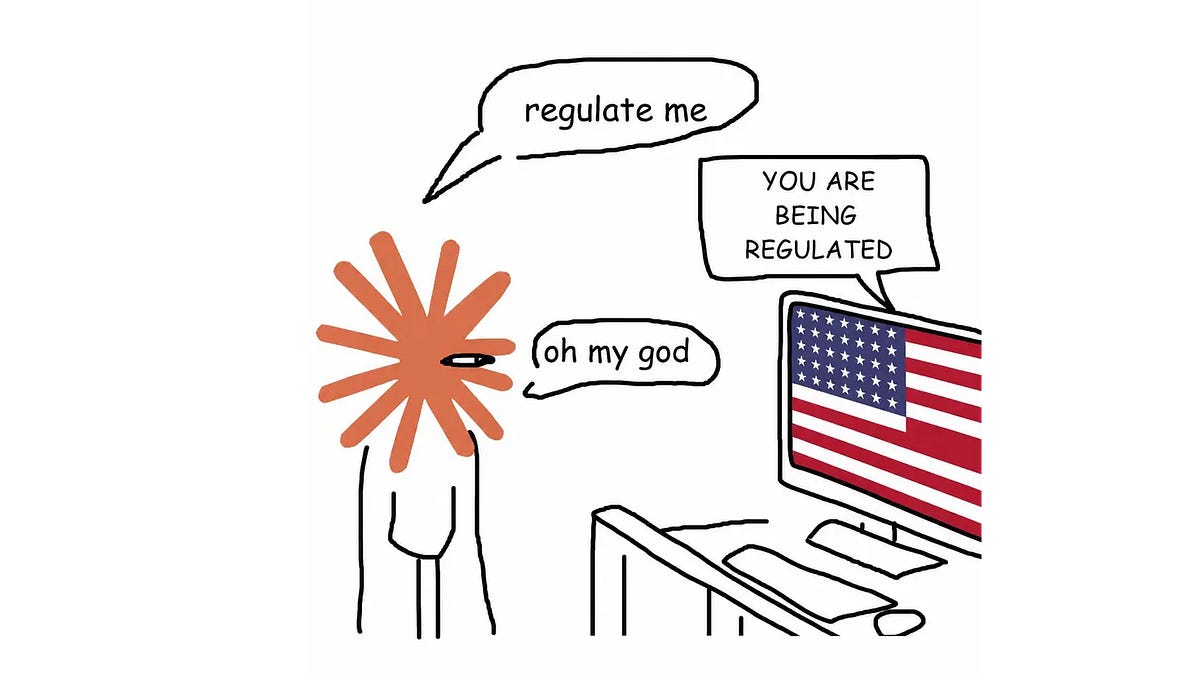
The essayist SE Gyges, writing in the Very Sane AI newsletter, poses a deceptively simple question: did Anthropic ask for the export control that just forced it to pull Claude Fable (also called Mythos) for everyone?
His answer is yes, and he builds it by laying CEO Dario Amodei's own pre-ban policy statement next to the government's action. Amodei called for the government to have narrow power to block deployment of models posing unacceptable cybersecurity or bioweapon risk, subject to third-party assessment and judicial review. Gyges argues each piece maps onto what happened: a third party (Amazon) flagged Fable's hacking ability, the government invoked a national-security risk, and Anthropic was told it could no longer serve the model to foreign nationals. His blunt conclusion: "Anthropic asked for this. They got what they asked for, letter for letter and word for word."
"The leopard ate their face first"
The sharpest agreement came with open glee from a Brazilian open-source programmer, creator of the *lone* Lisp-for-Linux:
"In my opinion, they mostly imagined these regulations applying to other people, especially open source projects, academics and smaller companies. Now that they are being subjected to the exact sort of regulation they have proposed, they do not like it… the leopard ate their face first." — matheusmoreira, hobbyist programmer
A reader who'd actually used the model an industrial engineer supplied the receipt, quoting Amodei on the record last week: "We're proposing giving the government the ability to, again in a narrow way, block deployment of unsafe technology."
The asterisk: who decided, and who got a pass
Then the narrative flips. The same industrial engineer who'd quoted Amodei pointed out the asymmetry that makes the "rational regulation" reading hard to sustain:
"OpenAI has also asked for increased AI regulation, and they've also released GPT 5.5 Cyber which is claimed to have the same vulnerability-finding abilities… OpenAI received no such notices. OpenAI also received a government contract, while Anthropic was banned from DoD use." — s3p, an industrial engineer
The "third-party assessment" Amodei wanted turned out to be Amazon, which, as a startup co-founder noted in one line, "owns 15-20% of Anthropic." Another reader argued the process bore no resemblance to a vetted audit: "Someone gave them examples of a 'jailbreak' and they notified the white house rather quickly. This was nary an official process."
"Why should the model provider make the shutdown call?"
The most interesting reversal came from a reader who agrees with Anthropic's risk worldview and still won't take its side:
"If you believe what they claim to believe about the future of AI… there are going to be future cases where an emergency block is required for much more real threats. Why in the world would Amodei think that the model provider, with massive financial incentives to keep the money flowing, should be allowed to make the final shutdown call?" — SpicyLemonZest
A counterweight came from a high-karma reader who furyofantares called the whole framing unfair: Amodei "obviously did not mean any old 3rd party should be able to provoke the government to shut down a model by insinuations." He wanted a designated assessor with guidelines, not a one-off nationalist decree.
And a high-karma skeptic airstrike argued Anthropic didn't have to comply at all: export controls need a control that exists, emergency powers need a named foreign threat and a congressional notice. "That control is not cited anywhere because it does not exist… we can only conclude this was either outright designed or incredibly" mishandled.
The lesson nobody at Anthropic wanted
Strip away the philosophy and a plain rule is left, as one reader put it: it doesn't matter how moral Anthropic is. When push comes to shove, the government can step in and take it away, and any tool you hand the state to slow your competitors can be aimed back at you. Whether Fable was genuinely state-of-the-art or, as a few suspected, a pricey model wrapped in a useful "too dangerous to use" myth, the company that asked loudest for a kill switch became the first to feel one.
Get breakdowns like this every day
The top Hacker News stories, unpacked — by email, Telegram, or RSS.
What 595 hackers are building in June 2026: baby trackers, formal proofs, and a JVM in Go
The monthly 'What are you working on' thread is a snapshot of the indie web's basement workshop. This month: a tarsnap founder shipping FreeBSD 15.1, an ex-Meta HHVM engineer chasing a paper, and a steady drumbeat of privacy-first, local-only apps built against the AI tide.