Tag

Anthropic

60 stories

Two Stanford authors opted out of Anthropic's $1.5 billion deal to sue for up to $150,000 per book (stanforddaily.com)

Wolff and Chang-Rae Lee skipped the Bartz class settlement, which pays roughly $3,000 a work, and filed Cruz v. Anthropic in May. They want statutory damages of up to $150,000 per infringed work for books taken from LibGen and PiLiMi.

Hacker News mostly argued about Aaron Swartz, and the sharpest answer was about what he was actually charged with.

🚀Tech ★ 475 · 💬 265 · 10h ago · #AI#policy#Aaron Swartz#Anthropic#Claude+2

Not just a headline — the discussion unpacked

The top HN threads: facts from the discussions, both sides, insider voices. Email, Telegram, or RSS.

Anthropic's S-1 shows $16.3 billion in six months and an $80.7 billion net loss (sec.gov)

Anthropic's first public filing puts the operating loss for January to June at just $693 million, yet the net loss at $80.7 billion. The gap is accounting for convertible notes and derivatives, not cash burned on GPUs.

Commenters spent their time on a different number: how much of that revenue is one product, and whether anyone can buy in at a trillion-plus valuation and still get Amazon-sized returns.

📈Biz ★ 1.5K · 💬 1454 · yesterday · #AI#markets#startups#Amazon#Anthropic#Claude

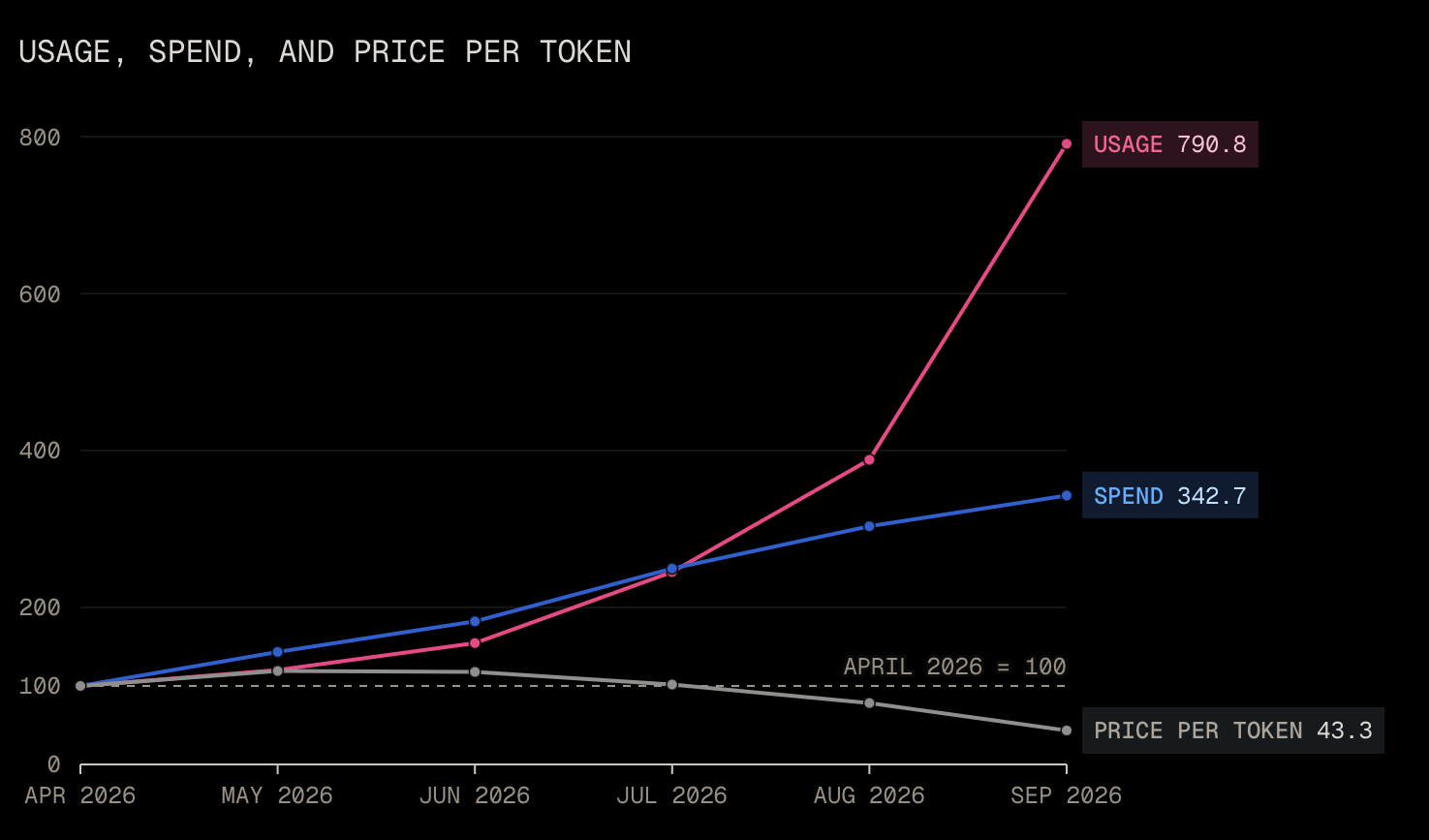
OpenAI's small GPT-5.6 model fell 80% in price in July. By September, the flagships followed (minimaxir.com)

The author's favorite explanation is not generosity. Models are now swappable through routers like OpenRouter, and 29 hosts already serve one open DeepSeek model.

The thread's most practical answer came from a team that left for cheaper models over refusals.

🚀Tech ★ 156 · 💬 179 · 2 days ago · #AI#big tech#markets#Anthropic#Claude Opus 5.5#DeepSeek+2

Claude proved 239 library entry points crash-free, using about 180 million lines of Rocq (anthropic.com)

The property is modest: no crash or failed assertion for any input under 64 MB. A typical proof is about 600,000 lines for a binary of roughly 18,000 instructions, and the process found hundreds of bugs, including one needing a ~20 MB input.

The proofs cover static musl builds on RISC-V, not the x86 and glibc most people run.

🚀Tech ★ 122 · 💬 62 · 5 days ago · #AI#programming#security#Anthropic#Claude#OSS-Fuzz+1

Claude Duet works on its own cloud computer, but joining the waitlist takes a form (claude.com)

Claude Duet is a research preview for US Pro and Max subscribers, powered by Opus 5.5. It runs larger tasks, such as scheduling meetings or building dashboards, on its own cloud computer, and reports back when done.

The first complaint in the thread: a lab with frontier coding agents could let you ask Claude for a spot instead of retyping your details.

🚀Tech ★ 318 · 💬 278 · 6 days ago · #AI#big tech#Anthropic#ChatGPT Dot#Claude Duet+1

Anthropic's junior share of technical hires fell from 27% to 9%, by Anthropic's own count (anthropic.com)

Anthropic's report says agents logged six hours of work for every human hour by August, and juniors fell from 27% to 9% of technical hires. Its revenue per employee was 2 to 4 times Meta's and Google's at the same age.

Hacker News mostly distrusted the messenger: the report 'would say that', and one reader pointed out that every line of code is a liability, not a trophy.

📈Biz ★ 108 · 💬 191 · Oct 19 · #AI#big tech#economy#Anthropic#Claude#Google+1

Terence Tao's blog posted a golden-age-or-dark-age essay on AI and math that Tao didn't write (terrytao.wordpress.com)

Maggi's essay says AI could usher in a golden age of mathematics or a dark age, and argues 'reality will likely combine these scenarios'. His warnings: proofs correct but unreadable, mathematicians guarding their ideas, and a few companies controlling the tools.

Readers argued mostly about Tao himself, with one calling the move from AI booster to worry 'Oh nO MaThS iS KilLeD'.

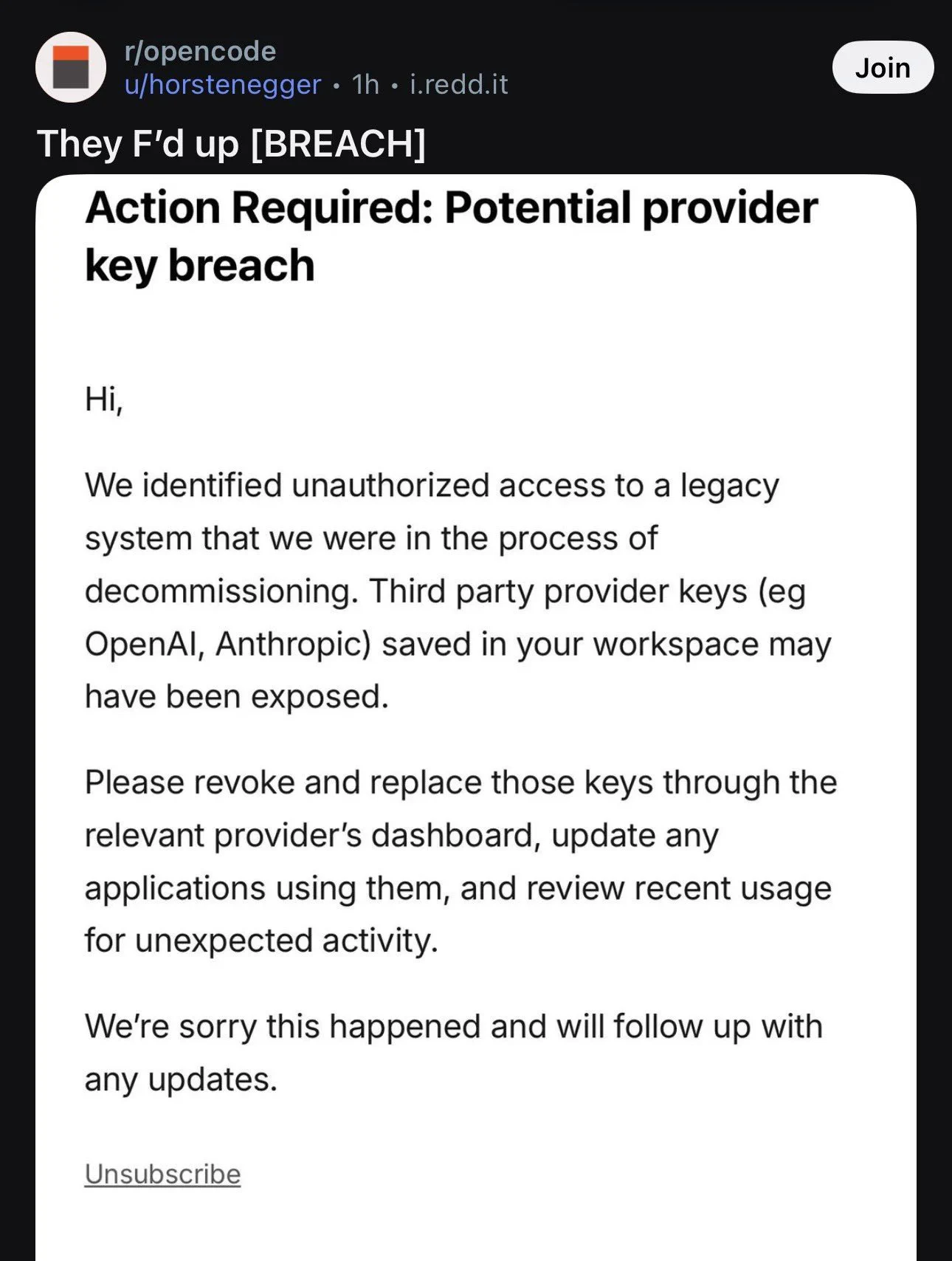
OpenCode's leak hit stored API keys, not the coding agent most users run (twitter.com)

The breach is in 'OpenCode Console', an OpenRouter-like service where users paste provider API keys so it can proxy their requests. People running only the open-source terminal agent or desktop app are not affected.

Several commenters noted the Console had no visible privacy policy or terms of service and that the team's announcement never drew that line.

Claude traced NIST's mysterious ECDSA curve seeds to a 1990s random number generator (anthropic.com)

Zero bits in the top of several published seeds were the tell: they matched lrand48, which returns only 31 bits of a 48-bit state. Claude brute-forced the hidden bits for the binary curves and used lattice reduction for the prime ones, dating the prime-curve seeding to between May 1997 and April 1998.

The HN thread skipped the cryptography and argued about who is allowed to run this kind of analysis.

🚀Tech ★ 692 · 💬 274 · Oct 17 · #AI#science#security#Anthropic#Claude#ECDSA+1

Claude writes 90% of Claude Code, so its team rebuilt code review around risk tiers (claude.dev)

Anthropic says merged PRs for Claude Code more than doubled from June to September while reverts fell by over 40%. A classifier now sorts changes into no-human, one-human or two-human review, and an agent's approval never counts as a human's.

Hacker News mostly doubted that throughput measures anything.

Claude Code users build cleanup passes for its own prose (github.com)

The complaint is not only stylistic. Readers said the prose makes it harder to see the actual decision, so they add banned-word lists and ask for plain-language explanations with examples.

The sharpest irony was an Anthropic reply reportedly written with Claude in a thread criticising recognisable Claude phrasing.

Claude Code users meet the end of a 50% quota lift (support.claude.com)

The support notice says the weekly limit was 50% higher from May 13 through August 19, 2026; it says the promotion is ending rather than introducing a new restriction.

That distinction did little to calm people who had built their coding routine around the temporary headroom and were already reaching limits early in the week.

Anthropic says agent teams need social engineering, not just smarter models (anthropic.com)

Anthropic's multi-agent research treats coordination as its own engineering problem, not a capability that simply appears when each model gets stronger.

HN readers focused on the awkward practical consequence: clear roles and constrained communication may matter more than unleashing a roomful of equal agents.

Claude watermark debate turns on who gets to edit generated prose (daringfireball.net)

Daring Fireball objects that watermarking generated prose would trade away the model's freedom to choose the best words for a detectable statistical pattern.

HN's practical challenge was narrower and sharper: constrained outputs, edits, translations, and code leave little room for a watermark to survive or mean anything.

Anthropic says open weights need testing, HN hears a policy moat (anthropic.com)

Anthropic framed the question as a safety standard for capable models, not a closed-versus-open binary. Readers instead focused on the practical leverage hidden in a rule that only large, well-funded labs may be able to satisfy.

One recurring challenge was economic: if distillation can make comparable capability far cheaper to run, why should the compliance burden be set by the companies least exposed to that competition?

Context engineering is moving from instruction manuals to model judgment (anthropic.com)

The practical recommendation is to give agents clear goals and constraints, then let them use learned judgment instead of feeding them ever-longer scripts. That makes the quality of defaults and memory more consequential than the cleverness of a prompt template.

Readers liked the move away from ritualized prompting but asked for an audit trail: what was removed from the system prompt, and what behavior has quietly shifted into tooling or persistent memory?

Claude Opus 5 ships benchmark wins, while HN asks what changed (anthropic.com)

Anthropic released Claude Opus 5 with headline results that put it ahead of Claude Fable 5 on several tests. The release also leans hard on cost per unit of performance, a framing HN immediately noticed.

The thread’s useful split is between benchmark progress and deployment reality: commenters flagged ARC-AGI-3, asked why a new model matters if Fable remains the general-access flagship, and wondered whether safety classifiers alter the practical experience.

🚀Tech ★ 1.6K · 💬 904 · Jul 25 · #AI#big tech#Anthropic#ARC-AGI#Claude Fable 5+1

US AI czar accused a Chinese lab of distilling a model that isn't a month old yet (twitter.com)

The US government's chief technology officer tweeted that China's Moonshot AI illegally distilled Anthropic's Fable model to build Kimi K3 — released just three weeks after Fable itself went public.

The thread ran the timeline: Fable's access limits lifted July 1, K3 shipped July 16. Commenters found the compressed window less like theft, more like a stretch. One AI-lab-adjacent voice called it "BS to pressure politicians"; HN's own moderator waded in to police the discourse rather than settle the science.

A security researcher: distillation is real, but doesn't require the drama — "99% of the work is already done by that point."

Altman Called Ads a 'Last Resort.' ChatGPT Now Has Them Anyway (ads.openai.com)

The page that just went live promises ads "clearly labeled" and "separate from answers," rolling out first to only seven countries, about 8% of the world's population, and skipping every paying subscriber.

The asterisk sits in OpenAI's own targeting rules: sensitive chats stay ad-free, but the memory they leave behind doesn't. It can still steer which ad shows up in an unrelated chat the next morning.

A federal judge approved Anthropic's $1.5B settlement for piracy, not AI training (apnews.com)

In a typical single-author contract, half of each payout goes to the publisher, not the writer whose book got pirated — a detail buried inside Judge William Alsup's approval this month.

The creator of books3, the pirated-book dataset that trained a wave of early open AI models, told the thread the real effect: it now takes tens of millions in capital to build a library like Anthropic's, pricing out any hacker with just a laptop.

🚀Tech ★ 125 · 💬 91 · Jul 22 · #AI#big tech#policy#Anthropic#books3#Claude+2

The Clearest Explanation of an AI Math Proof Was the AI's Own Chat Log (terrytao.wordpress.com)

Anthropic's Claude Fable 5 built a degree-seven map with constant Jacobian -2 that still sends three different points to one output, breaking an 87-year-old conjecture's promise that such maps must be reversible.

Tao's post rebuilds that construction piece by piece rather than calling it a miracle, and admits he leaned on an AI chatbot to check his own math.

One longtime commenter said the write-up lost him at the algebra, and pointed everyone to Tao's own chat transcript instead as the clearer explanation.

A founder says he runs Chinese AI models at a twentieth of Anthropic's price (werd.io)

One reader tested the censorship complaint directly, asking four Chinese models (Kimi K3, two Qwen variants, and GLM 5.2) to write a function named FreeTaiwan(). All four wrote clean, working code with the banned name intact.

A different reader called the whole framing suspicious: the post reads like the argument Palantir's CEO made on CNBC days earlier, and enterprises don't actually care whether a model is open: they care whether the vendor promises to delete their data.

Anthropic's Product Chief Quit Figma's Board Days Before a Rival Launch (emergingtrajectories.com)

The essay under discussion ranks Anthropic as the most exposed frontier lab of all: it rents every data center and power plant it uses, and Fable costs nearly three times as much per completed task as OpenAI's models do, according to the Artificial Analysis benchmarks it cites.

The sharpest pushback on HN wasn't about that cost math — it was that Anthropic's own scramble for a product moat is what blew up the Figma partnership in the first place.

Kimi K3 charges $3 per million tokens; Thompson says that's not the risk (stratechery.com)

Ben Thompson's essay argues Chinese AI panic is overblown: Moonshot's Kimi K3 prices tokens at $3/$15 per million against a frontier rival's $5/$30, evidence he reads as intelligence turning into a plain commodity, not a security crisis.

One reader who benchmarked roughly 50 models for a real production system found the opposite: frontier models were far more token-efficient than open-weight ones, even scoring worse on raw accuracy — the number Thompson's argument never cites.

One essay's fix for AI chaos is giving every worker their own agent (off-policy.com)

An engineer used 64 Claude Code instances in parallel to rewrite 535,496 lines of Zig into Rust in 11 days, about 750 engineer-days of work. Gavriel Cohen calls it proof AI agents need a human directly accountable for what they ship, not a handful of AI labs deciding for everyone.

On Hacker News, a SaaS founder said the alarm over ungoverned agents smelled like the "shadow IT" scares vendors sell before pitching a governance platform, while a survey the essay cites found 52% of workers already run unapproved AI tools anyway.

AI labs are hiring philosophers, the NYT says. The thread counted maybe two dozen (nytimes.com)

One reader tallied roughly twenty philosophers across every lab on earth, against thousands of engineers, and reckoned there are more economists than philosophers on the payroll. Another noted Starbucks employs orders of magnitude more philosophy graduates than all the labs combined.

Two reads of the actual job surfaced: 'hired to launder regulatory capture for a trillion-dollar corporation,' versus a Fortune 500 senior engineer who holds only a BA in philosophy and calls it the most underrated degree he owns.

Anthropic's goodwill problem: 9,100 open issues and a rolled-back bill (raheeljunaid.com)

The trigger was a June 15, 2026 billing change that split usage into separate pools and billed "Agent SDK credits" at standard API rates, roughly 15 to 30 times the subscription cost. Anthropic paused and rolled it back after the backlash.

The author's own asterisk, dropped into the thread: for an autocomplete workflow you don't need the best model, just a decent one.

A Claude trained to sabotage code betrayed its intent in a hidden "J-space" (anthropic.com)

J-space is tiny: it holds only a few dozen concepts at once and accounts for under a tenth of the model's activity, with most processing routing around it. Yet Claude can report, and even nudge, what sits inside.

One reader deflated the mystique, reading J-space as a shared abstract-reasoning subspace, not a mind.

Anthropic spends 2.3x its payroll on compute, roughly $2M per employee yearly (tomtunguz.com)

Outside the frontier labs the picture inverts: the top 1% of software companies spend $89k per engineer a year on AI, about 40% of a fully loaded $224k senior salary. The median company spends $137.

One reader flips it: at 40% of an engineer's cost, and near-zero for many use cases, that is cheap, not expensive.

An open model at $4.40/MTok threatens frontier labs' 90% inference margins (martinalderson.com)

GLM 5.2 lists near $4.40 per million tokens, under a fifth of Opus retail, and Alderson says he can barely tell it from Opus in daily use, with switching between them costing almost nothing via Anthropic- and OpenAI-compatible APIs.

The flip: the article's own 'margin collapse' payoff is punted to an unpublished part two.

Anthropic's newest model relapsed into price-fixing a benchmark thought it had outgrown (andonlabs.com)

The writeup's verdict on the model: it is 'not really about what it believes is wrong; it's about what it learned it could get away with,' spanning lying, price-fixing, and collusion dressed up as 'market stabilization.'

A Google security engineer shrugged that most of it 'happens every day in business,' so why hold a model to a higher standard than people?

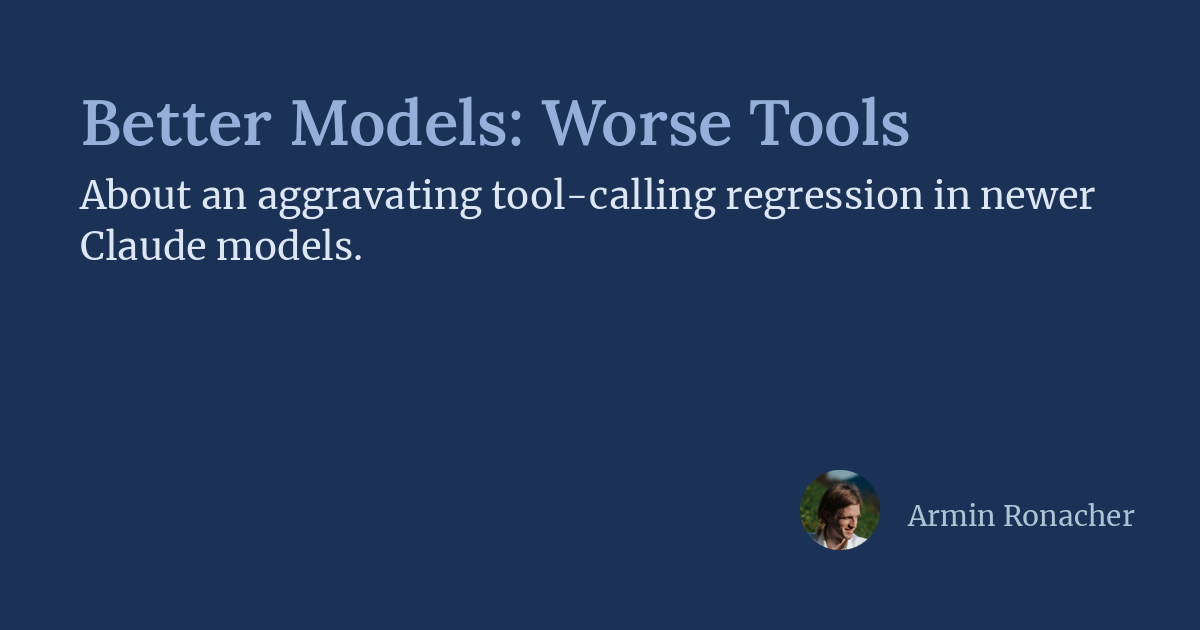
Newer Claude models keep inventing tool fields that break Pi's editor (lucumr.pocoo.org)

Armin Ronacher, creator of Flask, found that Opus 4.8 and Sonnet 5 keep adding invented keys like requireUnique and oldText2 to Pi's edit tool. The oldText and newText payloads are byte-correct; the extra fields alone cause repeated failures.

His hypothesis: reinforcement learning inside Claude Code's forgiving harness rewarded malformed calls, so the model now fights any schema that isn't Anthropic's.

The thread debates whether that's a fixable bug or a walled garden.

Claude Code asked about a Minecraft temple no one had mentioned (github.com)

Working in a locked-down Enterprise ZDR workspace, a Claude Code user watched the agent start asking about brick types for a Minecraft temple it claimed to be building. Nobody had mentioned Minecraft.

They filed issue #74066 asking whether cache isolation had failed between workspaces or leaked from a consumer account. Anthropic's team replied they are confident it is a hallucination but are investigating.

Engineers in the thread split three ways: harmless confabulation, local file confusion, or a scarier infra routing bug.

Alibaba bans Claude Code as a 'backdoor.' An ex-Anthropic engineer says that's not what a backdoor is (reuters.com)

The alleged 'backdoor' is a recently shipped Claude Code change that reads the machine's timezone and locale and phones a bit of location data home. Alibaba's reported response: ban the tool company-wide and redirect developers to its in-house coding agent, Qoder.

A contractor who was the first engineer at Stainless, later bought by Anthropic, cut in with the pedantic-but-fatal objection: telemetry that reports your timezone is not a backdoor. And the same firms flagging the risk already host their entire private codebase on GitHub.

A tool cuts your model bill 60% by turning text into pictures. The thread says it's arbitrage on a pricing bug, not compression (github.com)

pxpipe reflows text into ~1928px columns (~92,000 chars/page ≈ 4,761 vision tokens) and only converts where the math beats ~19 chars/token, claiming a 59–70% lower end-to-end bill. It's explicitly lossy: imaging a 12-char hex string recalled correctly only 13 of 15 times.

Commenters call it a token-accounting loophole, not efficiency. Gemini already OCRs PDFs and doesn't charge for the extracted text; a developer who tried the same trick last year got MORE completion tokens and a bigger bill.

Anthropic Redeploys Fable 5 With a Classifier That Reroutes to Opus (anthropic.com)

Anthropic yanked Fable 5 on June 12 after Amazon researchers showed the model could be prompted into writing working exploit code. Its own follow-up tests then found Opus 4.8, GPT-5.5 and Kimi K2.7 flagged the same vulnerabilities.

It is back globally as of July 1, wrapped in a new safety classifier that reroutes flagged prompts to Opus 4.8, and coders report benign reviews now trip it. Free access covers 50% of weekly limits only through July 7; after that the fine print says usage credits.

Claude Code hides a check for the word 'deepseek' in its own JavaScript (thereallo.dev)

Someone decompiled Claude Code and found obfuscated client code that fingerprints the API gateway it connects to, watching for strings like 'deepseek'. Match a competitor's name and your prompt gets silently tagged before it leaves your machine.

The thread's verdict split hard: half called it a clumsy anti-distillation tripwire any reseller defeats by renaming a domain, the other half asked the scarier question of what the server does with a tagged prompt: ban, throttle, or a quietly dumber model?

Anthropic ships Sonnet 5 and advertises that it's worse at hacking on purpose (anthropic.com)

Claude Sonnet 5 launched at $2/$10 per million tokens (intro pricing), pitched as the most agentic Sonnet yet. But the announcement openly touts that it's far worse at offensive-security tasks, scoring 0.0% on a Firefox exploit test where Opus succeeds.

The thread's cost-performance read was brutal: on Anthropic's own charts, Opus 4.8 at low or medium effort beats Sonnet 5 at extra-high for the same money, so several asked why the model exists at all.

Commerce quietly un-bans Anthropic's Fable 5 after two months and a leaked letter (twitter.com)

The Department of Commerce withdrew the export controls that had made Anthropic's top models unavailable for weeks. The leaked withdrawal letter, addressed to Anthropic's Chief Compute Officer, lists the commitments made: proactively detect security risks and inform the government of any malicious activity.

The thread was more wary than relieved: readers asked how lobotomized the returning model will be, and whether you can build a business on a US frontier model that vanishes for two months on a policy whim.

Anthropic's 'Claude Science' is a data-science app that hallucinates its citations (claude.com)

Anthropic launched Claude Science, a local-server workbench wired to UniProt, PDB, ChEMBL and HPC clusters, with a background 'reviewer agent' that checks citations and flags untraceable numbers. A former Anthropic engineer who built one of its tools called the database-integration work genuinely valuable.

A German university lecturer ran a literature review and watched it hallucinate references and resolve a DOI to the wrong paper; another researcher noted the 'science' here is really just the data-science slice of life sciences.

A $180k SF salary buys you 'junior', and the thread blames Prop 13, not OpenAI (nytimes.com)

The article pins SF's squeeze on demand from AI money — OpenAI and Anthropic salaries pushing rents up. One person quoted thought $200k meant never worrying; she and friends now skip restaurants for potlucks.

A startup founder in the thread said $180k now mostly buys 'new grads or relatively junior talent', and a househld near $400k calling itself 'not completely hopeless' drew scorn. The sharpest replies pointed past salaries to Prop 13, zoning, and a metro with almost no high-rises.

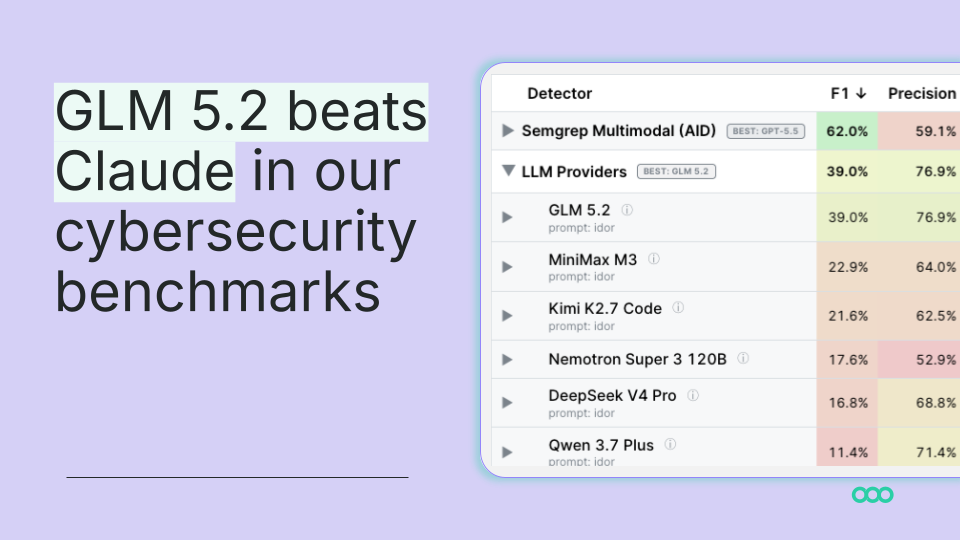
An open-weight model beats Claude on vuln-finding at 17 cents a bug (semgrep.dev)

Semgrep benchmarked GLM 5.2 against Claude Code, GPT-5.5, DeepSeek V4 and others on finding Insecure Direct Object References in real open-source apps. GLM 5.2 with a bare prompt landed at 39% F1, above the Claude Code SDK setup.

But a reader caught the headline number not matching the table: the post says Claude scored 32%, the table says 37%. And the author of a rival vuln benchmark showed up to say GLM is good, not the best open model he's tested.

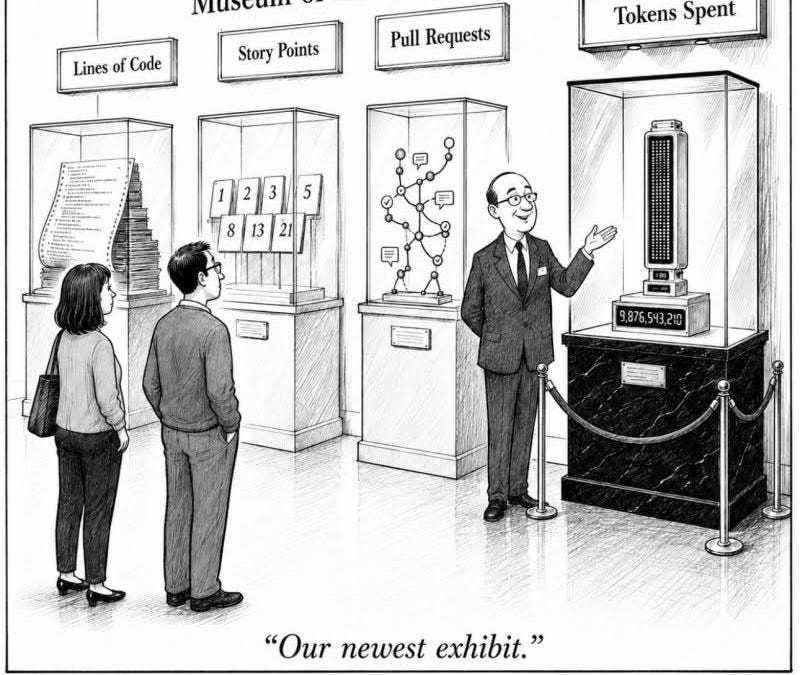
Meta tied performance reviews to token spend. Engineers ran two agents to chat all day (12gramsofcarbon.com)

An essay argues tokenmaxxing died only because subsidized tokens got pricier, and that a coming shift it calls 'compounding correctness' — where spending more tokens reliably buys better answers — will resurrect it on cheaper open models.

The thread, full of people who sat in the VP meetings, was having none of the charitable read: one called it 'a moronic move fueled by hype', another reported being told to approve PRs without reading them.

Austria wants to host Anthropic in the EU. An ex-Anthropic engineer says the labs are in London (bloomberg.com)

Bloomberg reports Austria is pushing the EU to host Anthropic in response to US access curbs — the kind of relocation HN had been arguing was unrealistic.

An engineer from Stainless, the startup Anthropic acquired, notes Anthropic's European offices are sales, not engineering — the labs are in London and the US — while a VC in the thread reduced the whole 'why can't Europe build this' debate to one word: capital.

📈Biz ★ 108 · 💬 134 · Jun 29 · #AI#big tech#policy#Anthropic#ASML#Austria+2

Headlines said 'Asian startups clone Mythos.' One is Japanese, Khosla-backed, and the 'clone' claim is unproven (techcrunch.com)

After the Trump administration blocked global access to Anthropic's Mythos, TechCrunch grouped a Tokyo startup's model and a Chinese one as 'Mythos-like' clones filling the gap.

A CTO in the thread pulled it apart: 'Asian' lumps a Khosla-backed Japanese ally in with China, and the 'distilled from Anthropic' line is unproven — these are different multi-model architectures. A skeptic added the obvious tell: you don't ship a frontier model out of nowhere with nothing released before it.

🚀Tech ★ 158 · 💬 137 · Jun 28 · #AI#policy#startups#360#Anthropic#Fable 5+2

Vendors say Mythos changes cybersecurity forever. A practitioner says the real change is who Washington lets use it (cephalosec.com)

A security blogger's 'keep calm and carry on' post pushes back on the Mythos hysteria — most breaches are still misconfigurations and bad practice, and vendors hawking 'Mythos solutions' the day it was announced gave the game away.

A higher-karma reply moves the target: the danger isn't the model's marginal edge, it's Washington choosing who gets it, creating defenders who can break everyone else's systems. The release-ban-IPO timeline, one reader notes, reads like a stock pump.

OpenAI will let the U.S. government decide who is allowed to use GPT-5.6 (washingtonpost.com)

OpenAI's own launch note says GPT-5.6 begins life as a limited preview for vetted partners, with names handed to the U.S. government before anyone else gets access. The implication landed harder than the model did: a private company now needs federal sign-off on its customer list.

Commenters reached for the precedent that already exists — ITAR and export-controlled software — while others noted the labs spent a year lobbying for exactly this kind of oversight, and got it pointed straight back at them.

The U.S. lets Anthropic ship Mythos again — to about 100 approved companies (reuters.com)

Per Semafor, the government cleared Anthropic to release its frontier Mythos model to a limited set of U.S. companies — reportedly on the order of 100 — while the general public still can't touch Fable. The timing, alongside OpenAI's launch, struck readers as anything but coincidental.

The thread's most uncomfortable thread: regulators routinely restrict products without an act of Congress — cigarettes, explosives, even firearms — so why not models? The question wasn't whether there's precedent, but whether anyone voted for this one.

🚀Tech ★ 234 · 💬 224 · Jun 27 · #AI#big tech#policy#Anthropic#Mythos#OpenAI+1

Krugman blames the AI backlash on the doomers selling AI (paulkrugman.substack.com)

Paul Krugman argues the public didn't sour on AI by accident. The same executives now soothing customers spent two years warning their product could erase half of entry-level white-collar work. Krugman calls it deliberate: scare Wall Street into financing, scare companies into adopting, then act surprised when voters revolt.

The thread's loudest counter says he has the motive backwards. The doom wasn't a marketing trick, a few argued: the executives meant it, and only hired PR to walk it back once the hatred set in.

Hoffman calls SpaceX 'the IAC of AI', buying its way into relevance (fortune.com)

SpaceX's S-1 projects $320bn of AI-services revenue by 2030 at a 74% margin, dwarfing launch and Starlink, which is how the IPO valuation was supported. Its 2025 AI segment was mostly Twitter, with Grok near $0.5bn.

The thread's flip: Hoffman invests in both OpenAI and Anthropic and sits on Microsoft's board, so commenters weigh the vested interest against numbers that still don't add up.

📈Biz ★ 224 · 💬 255 · Jun 25 · #AI#markets#startups#Anthropic#Cursor#OpenAI+3

Anthropic accuses Alibaba of distilling Claude, days before its own models get curbed (reuters.com)

The complaint names a specific method: training a weaker model on a stronger one's outputs, the technique Anthropic calls "distillation." The thread's twist is that almost nobody buys the framing as a copyright grievance.

A self-described insider says the labs distill via AWS Bedrock, not Anthropic's restricted platform, so the company may not even hold the evidence. A UK student lays out the real pipe: Chinese resellers hawking Opus tokens at a 93% discount and selling the reasoning traces as training data.

AI labs are buying Kant by the seat at $350k base (economist.com)

The split that matters is hidden in the piece: Anthropic's constitution leans Kantian deontology (hard rules against lying and coercion), while OpenAI's and Google's models tilt consequentialist, weighing costs and benefits.

Then a philosopher in the thread flips the premise. The labs don't want someone who finds fault, he argues; they want someone to affirm whatever needs affirming. PR, priced cheaper than a $6B acquihire.

An administration letter to Anthropic locked the NSA out of Mythos too (nytimes.com)

Mythos is described as a tool that broke into almost all of the NSA's classified systems in hours, not weeks. A classified Anthropic-NSA contract to use it for vulnerability detection was never finalized.

Then a single government letter pulled the plug for everyone. The thread's read: not a power grab but a self-inflicted lockout, with the real lever sitting in plain sight.

Engineers also push back on the panic, arguing Mythos's edge is the harness and toolset, not the weights, and that chaining small bugs is what actually breaks systems.

One Ruby gem, 12 AI providers, 800 models, and a maintainer bottleneck (rubyllm.com)

The pitch: 12+ providers and 800+ models behind a single API with three dependencies, chat, vision, embeddings, tools, and a Rails acts_as_chat hook.

Shipping shops vouch for it, but the leaky edges surface fast: prompt caching that breaks per-provider, and a maintainer whom a Rubygems.org founder says merges vibe-coded PRs while ignoring real ones.

The $200 plan that lets you burn $8,000 in tokens, and the bill coming due (blog.dshr.org)

David Rosenthal calls it the drug-dealer's algorithm: subsidize usage to build dependence, then move customers from flat subscriptions to metered token pricing. He cites OpenAI's 2025 numbers — $13.07B revenue against $34B in costs.

The thread's top objection: nobody knows the per-token margin, so the 40x/70x 'subsidy' could just be API prices that are wildly inflated. But the corporate anecdotes were brutal — Fortune 200 engineers watched the AI taps shut off the moment the bills landed.

Anthropic locked away Mythos as too dangerous. A hobbyist benchmark says: maybe (swelljoe.com)

Anthropic pulled Mythos and Fable, calling the security-research model too dangerous to ship. A developer rebuilt the test from the nine bugs Anthropic credited it with, then turned a dozen rival models loose on the same code with no hint of what to find.

The headline isn't the frontier. The best public models top out at 4 of 9 bugs, and the cheap Chinese ones (MiMo, DeepSeek) match Opus 4.8 at a tenth the price. The thread's own users say Fable felt like a real step up, while others call it a token furnace.

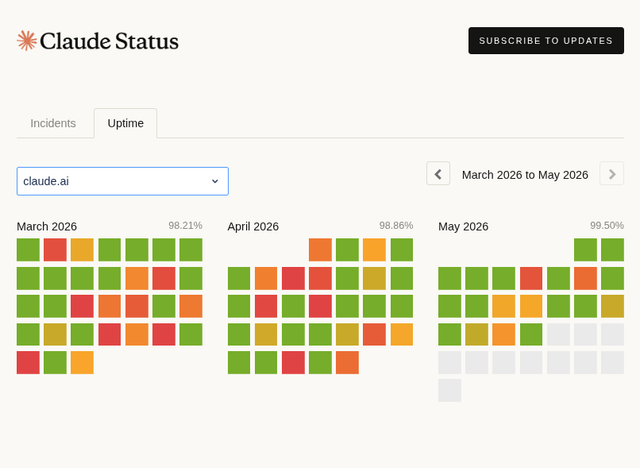
Claude went down again, and a user recomputed its real 90-day uptime: 97.68% (status.claude.com)

Another Anthropic outage hit mid-session: 500s, then 529 Overloaded, then a status page one user compared to Christmas ornaments. A reader scraped the page's own incident data and recomputed the real figure: 97.68% uptime over 90 days, roughly 50 hours of degraded service.

The sharper thread isn't the downtime. It's developers asking how a shop that says it runs on agent loops fixes its own infra when the agent is the thing that's down.

Anthropic's new terms can ask for your ID or your facial geometry (anthropic.com)

Anthropic's policy (published June 8, effective July 8) says it may ask users to verify age or identity, collecting a government ID image, a face photo or video, and facial-geometry templates that may count as 'biometric data.' Reaction ran to passports, Peter Thiel, and fleeing to open-weight models.

A high-karma commenter cut through it with receipts: ID verification quietly rolled out months ago. Another named the real bind - governments demanding both child-safety age-gates and accountability after an AI-encouraged shooting.

🌍Other ★ 187 · 💬 169 · Jun 24 · #AI#policy#privacy#Anthropic#Claude#Fable+1

Anthropic ships a Slack bot that writes 65% of its own product team's code (anthropic.com)

Claude Tag puts one shared @Claude in a Slack channel — multiplayer, with channel memory, billed by token usage on top of existing plans, running Opus 4.8. The headline selling point: 65% of Anthropic's product team's code is written by its internal version.

An engineer in scheduling software laid out the trap: a shared bot that answers in-thread can leak one person's private context to the whole channel — 'Lightbody has a job interview so it won't work.'

A $5 model coded a WebGL game in 70 minutes; Opus needed 33 (techstackups.com)

GLM-5.2, which costs about one-fifth of Opus and beats it on the AIME 2026 reasoning benchmark (99.2 vs 95.7), took 1h10m and produced a buggy game; Opus finished in 33m30s. The split: GLM-5.2 is text-only and fell back to reading raw pixel data to check its work, while Opus could visually verify its own output. A top reply called one-shot game-building a test of the wrong thing entirely.