30 years of Emacs and 'I still don't understand Dired': the discoverability problem, in one thread
A post showcases 20+ stock Emacs commands most users never find — ruler-mode, compare-windows, turning your keystroke history into a macro. Then a famous longtime user admits the actual problem isn't hidden features. It's that things break.
The author, who also wrote the popular gptel package, frames Emacs as having a discoverability problem he's chipping at 'one demo at a time.' The built-ins are genuinely useful and genuinely buried.
The top reply reframes the whole premise: the issue was never finding features, it's keeping a large config stable across package updates. The fix people actually want is a good out-of-the-box experience, not another blog post.
A tour of the buried built-ins
Even more batteries included with Emacs, by Karthik Chikmagalur (also author of the popular gptel package), is the third in a series with a clear thesis: "Emacs features have a discoverability problem, and we're chipping away at it one demo at a time." It walks through 20+ stock commands most users never stumble onto.
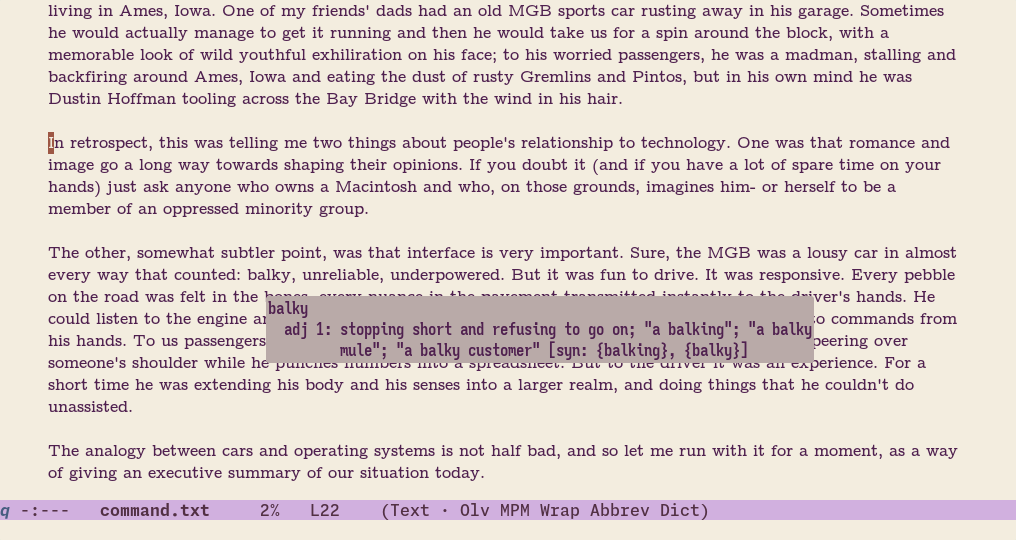
The standouts are the kind of thing you wish you'd known years ago: compare-windows for lightweight diffing, ruler-mode, scroll-all-mode, dictionary-tooltip-mode, and kmacro-edit-lossage, which turns your recent keystroke history into an editable macro. One reader captured the experience exactly: "TIL about ruler-mode; now I can delete my own half-assed implementation" — and then found a note from his past self already recommending compare-windows.
"I still don't understand Dired"
The most-upvoted reply came from one of HN's most recognizable Emacs veterans, and it was a confession:
"I have been using Emacs since 1994 (Lucid!) and I still don't understand Dired." — tptacek
Thirty years in, still lost in the file manager — which quietly validates the author's whole discoverability thesis even as the rest of the thread argued the diagnosis is wrong.
The real complaint: it's not discoverability, it's stability
The sharpest pushback relocated the problem entirely.
"In my experience it's not a discoverability problem at all. Not even a little bit… The issue with emacs is that it's difficult to create large [configs] stable between different combinations of packages." — a 15-year Emacs user now part-time on VSCode
A widely-followed engineer took it to the adoption level: for most people the editor is a means to an end, so the only way to "make a dent" is a great out-of-the-box experience like Doom or Spacemacs provide — "this also means ditching the 'vanilla Emacs only' snobbery." The counter-testimony came from a Doom user reporting years of stability, arguing the slower-moving ecosystem is exactly what keeps it from breaking the way Neovim's does.
Demos fix the wrong layer
The post is a delight and the commands are real wins. But the thread's center of gravity is a polite disagreement with its author: the barrier keeping people off Emacs in 2026 isn't that ruler-mode is hidden — it's that assembling and maintaining a working setup is a project in itself. When a 30-year user still doesn't get Dired, the answer probably isn't one more demo. It's defaults good enough that you never needed the demo.
Get breakdowns like this every day
The top Hacker News stories, unpacked — by email, Telegram, or RSS.
A 214-page teardown of how Commander Keen made a 1990 PC scroll like a console
Why could a slow Nintendo outscroll a faster PC in 1990? A free, full-color book reverse-engineers id Software's answer — Carmack's adaptive tile refresh — three years in the making. The thread debates a different kind of cloning.