Topic

Developer Tools

60 stories

Ghostty 1.4 compresses idle scrollback and parses plain ASCII at 725 MB/s (ghostty.org)

Ghostty 1.4 raises macOS I/O throughput 25 to 55 percent, lifts ASCII parsing from 128 MB/s to 725 MB/s, and compresses idle scrollback while raising the default limit from 10 MB to 50 MB. It also plays animated Kitty-protocol images and ships a drop-in `ghostty +ssh` wrapper.

The thread asked what the point of fast terminals is, and the creator answered with something else.
🚀Tech ★ 784 · 💬 236 · 10h ago · #dev tools#open source#Ghostty#Kitty#libghostty+1

Not just a headline — the discussion unpacked

The top HN threads: facts from the discussions, both sides, insider voices. Email, Telegram, or RSS.

Tailscale says most of its SSH bugs are privilege escalations, and a patch was due October 27 (tailscale.com)

The vulnerabilities let a user already authorized over Tailscale SSH act beyond their configured local user. Fixes are built and in testing, and in the meantime Tailscale suggests setting TS_SSH_DISABLE_FORWARDING=1 in the tailscaled environment, which it says mitigates several serious findings.

A former Tailscale employee in the thread narrowed who is exposed.

JetBrains launched Thinkrail, an agent IDE, and HN spent its thread on the README (github.com)

Thinkrail is built around the pi coding agent and keeps specs in SPEC.md files beside the code. It is Apache 2.0 licensed and ships for macOS, Windows and Linux.

Veteran JetBrains users in the thread were less interested in the README than in whether they still need an IDE.

🚀Tech ★ 185 · 💬 135 · 2 days ago · #AI#dev tools#open source#JetBrains#Pi#Thinkrail+1

A 3-person data team replaced a $150k Looker licence with Claude-written HTML dashboards (david.lequin.dev)

The author says the rebuilt version costs about $20k a year against $150k for Looker, with Snowflake permissions doing the access control and dashboards running in sandboxed iframes.

He leaves out engineering hours: eight months of part-time work by three engineers, 325 commits and about 74k lines of code.

🚀Tech ★ 121 · 💬 73 · 4 days ago · #AI#data#dev tools#Claude#dbt#Looker+1

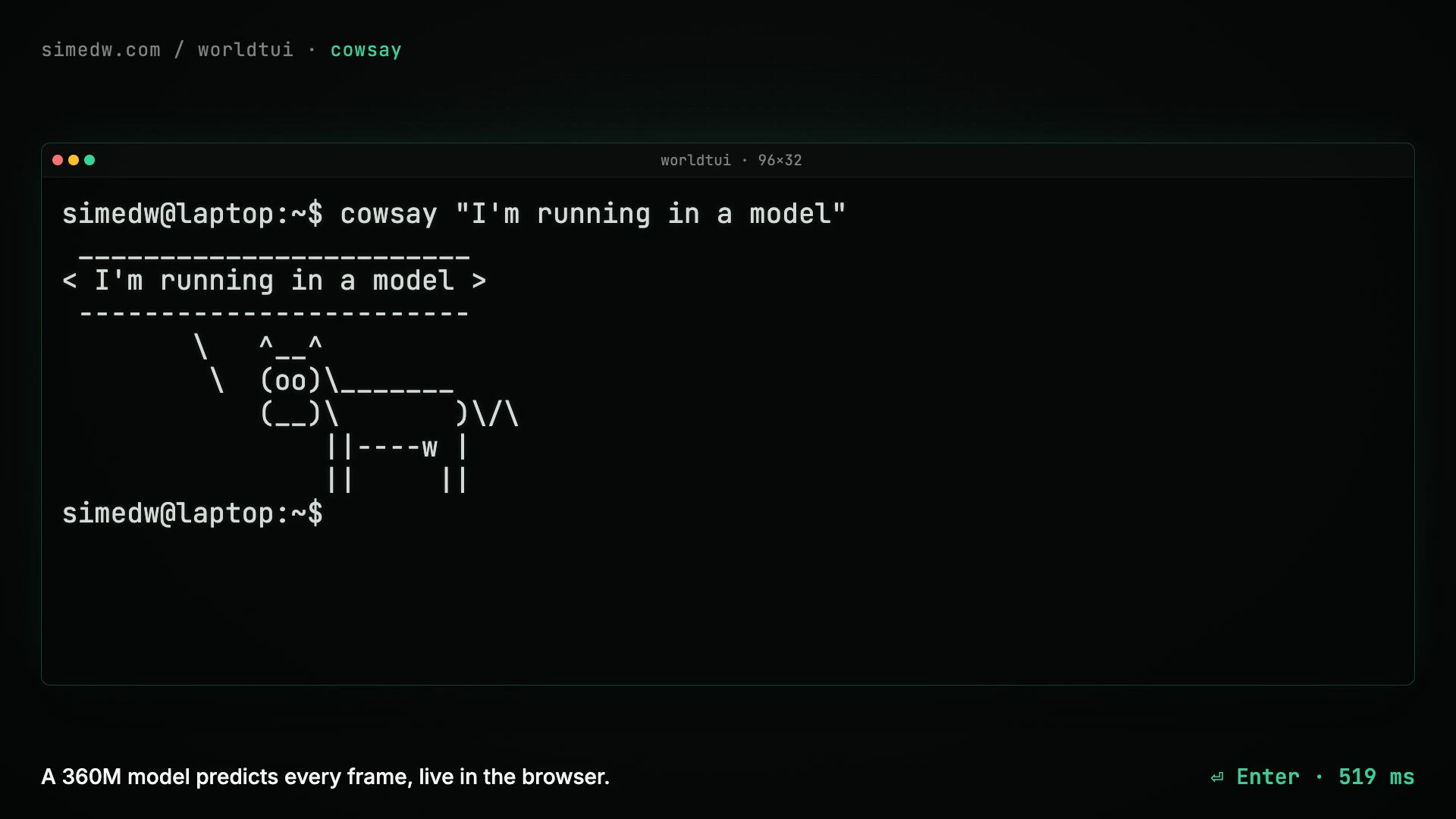
A 360M-parameter model pretends to be a terminal, and vim and tmux still work (simedw.com)

The author fine-tuned Qwen2.5-Coder-0.5B on about 336k synthetic terminal sessions, trimmed the vocabulary to 333 tokens, and shipped a 4-bit 208 MB build that runs in the browser on WebGPU.

It scored 80 on a 106-command benchmark; prompted models of similar size scored 52 and 60.

🚀Tech ★ 507 · 💬 156 · 5 days ago · #AI#dev tools#Qwen2.5-Coder#WorldTUI

DuckDB 2.0 adds a server mode and async I/O, and files that 1.x cannot open (duckdb.org)

The release adds a Quack server protocol, background reads for Parquet and CSV, VARIANT with automatic shredding, and triggers. A new PEG parser is now the default, ICU is gone, and 2.0 is supported until at least October 2027.

One user reports shrinking 7 TB of Azure NDJSON logs to 2.5% of their size in Parquet in under two hours on a medium VM.

Railway paused all deployments after attackers may have read decrypted environment variables (blog.railway.com)

Railway believes the attack is part of a wider campaign against platform companies and AI inference providers, and has asked upstream providers to revoke keys. Deployments are paused during the investigation.

In the Railway Discord, users say stolen keys were already being used, and one says usage climbed on keys created only for Railway, 10 hours into the incident.

🚀Tech ★ 319 · 💬 156 · 6 days ago · #dev tools#security#startups#Railway

iPadOS 27 now shows students your private notes while you AirPlay a presentation (teddysvoronos.com)

Teddy Svoronos says iPadOS 26 behaved correctly: with multiple windows open during AirPlay, the audience used to see only the presenting app. In 27, tapping any other app mirrors everything, poll results included.

Keynote exits the presentation, PowerPoint hangs, GoodNotes recovers. The thread argues over whether hardware deadlines excuse it.

🚀Tech ★ 497 · 💬 254 · 7 days ago · #big tech#dev tools#AirPlay#Apple#iPadOS+1

Cloudflare ports TypeScript to Rust and claims 8x speed with 70% less memory (blog.cloudflare.com)

Cloudflare's experimental Rust port of the TypeScript compiler claims up to 8x speed and about 70% less memory than TypeScript 7.0, with the code written by frontier models in days.

A TypeScript team member says much of the speed is not language choice, and some of it is already landing in TypeScript 7.1.

🚀Tech ★ 346 · 💬 172 · 7 days ago · #dev tools#programming#Cloudflare#Rust#TypeScript+1

Ask HN: what do you do when you ship AI-written code you don't understand? (news.ycombinator.com)

An Ask HN thread asked how engineers cope with shipping LLM-written code they haven't fully read. A Hasura engineer says his own system became fuzzy once he moved from IDE autocomplete to Claude and Codex CLIs, and argues the answer is formally verifiable code.

The loudest counter: you already ship code you haven't read. Principal engineers always have.

💬Ask HN ★ 276 · 💬 414 · Oct 20 · #AI#dev tools#programming#Claude#Codex#Hasura+1

Wine now runs on OpenBSD, thanks to a workaround for a missing CPU register (marc.info)

A draft Wine port landed on OpenBSD's ports list this weekend. Thomas Frohwein says dozens of 64-bit Windows programs ran, including the Witcher 3 remaster, but WoW64 doesn't work, so 32-bit Windows software won't start.

Simon Willison's first question was about the plumbing: where does the port's development history live, given OpenBSD uses CVS.

A guide to running Claude Code in tmux admits tmux hits a ceiling at four agents (crystl.dev)

Crystl's guide to tmux and Claude Code covers named sessions, send-keys scripting and capture-pane screen reads. Then it lists the limits: no real completion signal, brittle screen scraping, nothing surviving a reboot.

HN's reaction was that nearly every top-level comment was someone who had built their own replacement.

🚀Tech ★ 149 · 💬 114 · Oct 20 · #AI#dev tools#Claude Code#Crystl#Herdr+1

Mac.apk runs Android apps as native Mac processes, with no emulator or VM (github.com)

Mac.apk implements the Android app environment directly on Apple Silicon macOS. Apps appear in the Dock with their own windows and draw through the GPU. It is alpha: 10 of 66 tested apps only partly work and 4 don't run.

The README warns that saved data lives inside each app's bundle, so trashing the app erases it. A commenter says the newest release moves it to Application Support.

DeepSeek now sells web search and page fetch for $0.75 per 1,000 requests (api-docs.deepseek.com)

DeepSeek published Search and Fetch APIs at $0.75 per 1,000 successful requests, billed only on HTTP 200 responses. Calls routed through Claude Code, Codex or DeepSeek's own harness are free until 00:00 Beijing time on November 1, 2026.

The first reply was a price check: Kagi's API runs $12 per 1,000 searches. Then a hobbyist who built his own agent tools said the big labs' bundled search costs 15-20x more than his.

🚀Tech ★ 551 · 💬 260 · Oct 19 · #AI#dev tools#web#Brave Search#Claude Code#Codex+2

Karri Saarinen warns AI agents turn products into 'a collection of abilities' with no one behind them (karrisaarinen.com)

Saarinen writes that good software shows the fingerprints of its makers: what they chose to build, leave out, and keep polishing after it already worked. He says Linear runs on intuition formed by customer contact, not on process or data.

His worry is additive growth: features that work alone but weaken the whole. Agent-driven workflows could accelerate that.

📈Biz ★ 318 · 💬 136 · Oct 19 · #AI#dev tools#startups#Karri Saarinen#Linear

Parser combinators in TypeScript, shown by parsing real ping output (t3.at)

A parser here is a function from a string to a value and the unread remainder. Small ones chain into larger ones with pSeq, pMap and pRepeat, and the typed result is a tuple or object rather than a match array.

The finished example parses the header, per-packet lines and summary of a real ping run into one typed object.

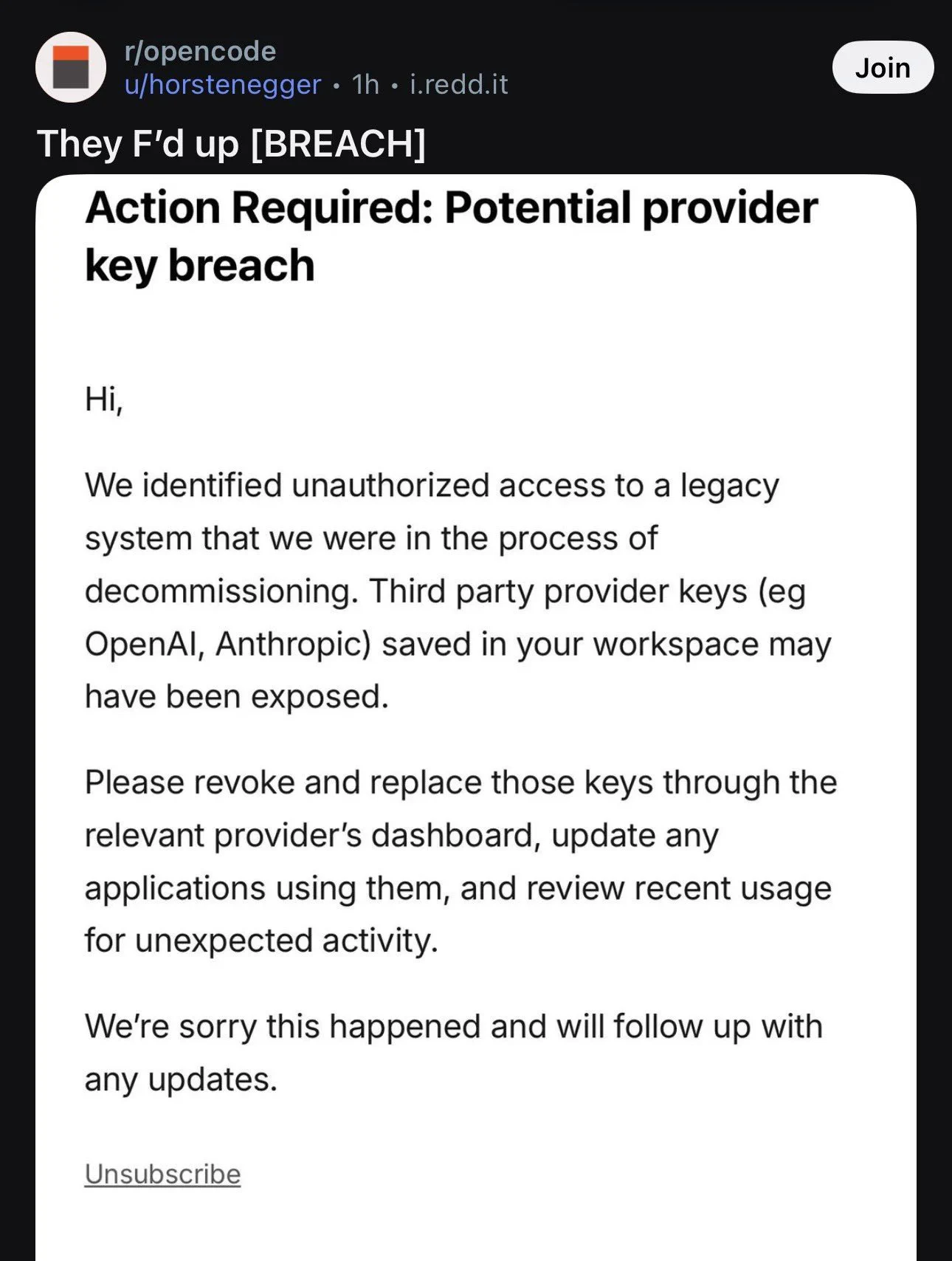
OpenCode's leak hit stored API keys, not the coding agent most users run (twitter.com)

The breach is in 'OpenCode Console', an OpenRouter-like service where users paste provider API keys so it can proxy their requests. People running only the open-source terminal agent or desktop app are not affected.

Several commenters noted the Console had no visible privacy policy or terms of service and that the team's announcement never drew that line.

Vercel Labs compiled a TypeScript port of the TypeScript compiler into a native binary (github.com)

Each compiler stage was compared against tsgo on TypeScript's own test corpus of roughly 12,500 files, and the project reports matching results on the tested cases. No benchmark results are published, only a script to produce them.

A commenter who tested it against the Go build confirmed it is faster than the Go version, but warned the code targets the subset of TypeScript that scriptc supports, so the result may be tuned to the toolchain.

Claude writes 90% of Claude Code, so its team rebuilt code review around risk tiers (claude.dev)

Anthropic says merged PRs for Claude Code more than doubled from June to September while reverts fell by over 40%. A classifier now sorts changes into no-human, one-human or two-human review, and an agent's approval never counts as a human's.

Hacker News mostly doubted that throughput measures anything.

Jake Archibald benchmarked JPEG XL against AVIF, and AVIF won most of the web (jakearchibald.com)

Archibald tested avifenc, libjxl, jixel and cwebp on an M4 Pro, scoring with SSIMULACRA2. JPEG XL lost on lossy photos and screenshots (30-90% larger), but dominated lossless and can recompress existing JPEGs 9-20% smaller.

Commenters disputed whether the benchmark or Chrome's earlier decision was the real story.

🚀Tech ★ 204 · 💬 144 · Oct 17 · #dev tools#web#AVIF#Chrome#Jake Archibald+1

C++26 gets contracts. The man who built them into D says they weren't useful (cppstories.com)

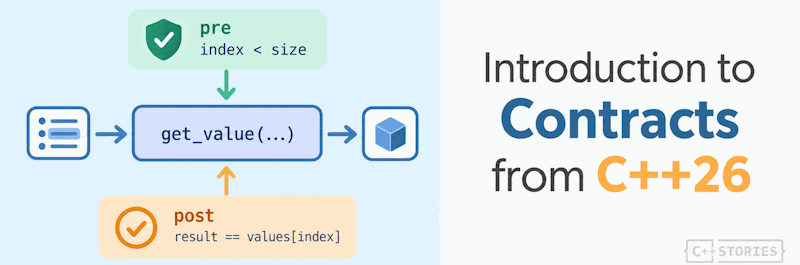
Contracts let a C++ function state what callers must guarantee and what it promises back. A violation can be ignored, observed, enforced or quick-enforced, chosen per build with no portable per-assertion switch, and the guide warns they are not input validation.

Walter Bright, who says he added contracts to Zortech C++ in the 1990s and to D later, wrote that they "just turned out to not be very useful". An embedded developer wants the opposite trade: checks on at the workstation, off on weak production CPUs.

🚀Tech ★ 136 · 💬 147 · Oct 16 · #dev tools#programming#C++26#D#GCC+1

A fake South Park episode in Sonarr was an 887 MB infostealer (thereallo.dev)

The file was a Windows .exe, not video. Only its first 118 KB was a real program; the rest was padding, so scanners would give up. It decrypted a hidden payload and ran it in memory: an infostealer after browser passwords, crypto wallets, SSH and cloud credentials.

The author's fix for *arr users: exclude .exe, .scr, .lnk, .bat and .cmd in qBittorrent.

🚀Tech ★ 331 · 💬 146 · Oct 16 · #dev tools#security#Prowlarr#qBittorrent#Radarr+1

OpenRouter joins Stripe as model routing becomes payment infrastructure (openrouter.ai)

OpenRouter’s value is its single interface for routing requests across model providers; the deal puts that choice layer beside Stripe’s existing billing machinery.

HN readers liked the developer experience but asked the obvious question: why is a middle layer worth so much when model makers already expose APIs?

🚀Tech ★ 641 · 💬 342 · Aug 20 · #AI#dev tools#startups#OpenRouter#Stripe

PostgreSQL for everything is a design choice with a price (raphaelbauer.com)

PostgreSQL can cover relational data, full-text search, queues, and extensions in one familiar operational surface, which is attractive to small teams.

The counterpoint is not that Postgres is weak. It is that a default becomes cargo cult when workload shape, scale, or failure modes have not been examined.

🚀Tech ★ 307 · 💬 190 · Aug 20 · #data#dev tools#programming#PostgreSQL

Claude Code users build cleanup passes for its own prose (github.com)

The complaint is not only stylistic. Readers said the prose makes it harder to see the actual decision, so they add banned-word lists and ask for plain-language explanations with examples.

The sharpest irony was an Anthropic reply reportedly written with Claude in a thread criticising recognisable Claude phrasing.

GitHub Trending: Today — Immich, Qlib, Trivy, CUDA Samples, Cookbook (github.com)

In today’s GitHub Trending: Immich manages self-hosted photos and video; Qlib supports quantitative ML research; Trivy scans containers, repositories, and cloud configurations.

Immich supplied the clear spike with 636 stars. The pattern is not a single new category; it is developers choosing more inspectable control points around data, compute, and operational risk.

GitHub alternatives become a stack, not a single replacement (news.ycombinator.com)

Forgejo and Codeberg kept coming up for people who want a lightweight forge they can host or use as a public service; GitLab was the answer for organizations that need a familiar enterprise-shaped platform.

The useful distinction was not hosted versus self-hosted. It was whether a team needs GitHub Actions and App integrations, or merely Git repositories with dependable CI.

Claude Code users meet the end of a 50% quota lift (support.claude.com)

The support notice says the weekly limit was 50% higher from May 13 through August 19, 2026; it says the promotion is ending rather than introducing a new restriction.

That distinction did little to calm people who had built their coding routine around the temporary headroom and were already reaching limits early in the week.

GitHub’s rough day revives the Azure migration question (news.ycombinator.com)

Users reported failures across Microsoft services and pointed to GitHub’s long-running move toward Azure; neither observation alone established the root cause.

A second explanation was load: commenters cited rapid growth in commits and new accounts as AI-assisted development turns GitHub into a much busier system.

GitHub Trending: Last week — System Design Primer, Awesome Mac, Authentik, Planka, OctoBot (github.com)

In last week's GitHub Trending: System Design Primer (architecture study guide), Awesome Mac (curated macOS software), Authentik (identity platform), Planka (self-hosted Kanban), and OctoBot (automated trading bot).

The unexpected common thread is not a new framework but accumulated trust: old repositories still solve recurring work, even when their current community chatter is sparse.

GitHub Trending: Today — Spotube, ReVanced, GOWA, lm-evaluation-harness, public-api-lists (github.com)

In today's GitHub Trending: Spotube (open-source music streaming), ReVanced Manager (Android patch management), GOWA (multi-account WhatsApp REST API), and lm-evaluation-harness (language-model testing).

The mix is a reminder that developer attention can cluster around tools that make closed platforms more usable, even when the community signal is thinner than the star count.

Anthropic says agent teams need social engineering, not just smarter models (anthropic.com)

Anthropic's multi-agent research treats coordination as its own engineering problem, not a capability that simply appears when each model gets stronger.

HN readers focused on the awkward practical consequence: clear roles and constrained communication may matter more than unleashing a roomful of equal agents.

Protobuf finally gets an IDE brain through Buf's LSP server (buf.build)

Buf released a production-grade Language Server Protocol server for Protobuf, bundled with its CLI and available through its VS Code extension or editor configuration.

The real upgrade is incremental, query-driven analysis that can diagnose schema mistakes while developers work, rather than treating .proto files as second-class text.

GitHub Trending: Today — Electerm, DNS Blocklists, Novu (github.com)

In today's GitHub Trending: Electerm (a cross-platform terminal and remote-access client), Hagezi DNS Blocklists (curated DNS filtering), and Novu (notification infrastructure for products and agents).

The shared theme is operational control. Each tool replaces a hosted or fragmented layer with a configurable one, while its open issues show that configuration and reliability remain the actual work.

A 232× kernel experiment makes verification the agent skill (sankalp.bearblog.dev)

The experiment paired an agent with benchmarking, profiling, research, and correctness verification. That made optimization a constrained search problem.

HN readers reported that agents work best where a system supplies a hard answer. They fail more readily when success depends on credentials or a human-operated dashboard.

🚀Tech ★ 413 · 💬 90 · Aug 16 · #AI#dev tools#programming#Codex#Intel VTune

Working with agents feels like leadership, until it doesn't (allen.bargi.org)

The leadership analogy points to a real workflow: define outcomes, expose constraints, and make decisions explicit before implementation starts.

The counterargument is equally useful. Agent work is specification, review, and feedback design, not people management with its consent and motivation work.

Cloudflare's AI push revives a platform trade-off (opensauce.it)

Cloudflare's Workers, Durable Objects, and R2 gave readers practical reasons to defend the platform. Critics focused on who gets excluded when a central layer decides what a legitimate client looks like.

The dispute was not about whether the company ships. It was whether the convenience of an opinionated platform leaves room for nonstandard clients on the open web.

GitHub Trending: Today — lazygit, distroless, Upscayl, ServerBox, Bun (github.com)

In today’s GitHub Trending: lazygit makes Git actions navigable in a terminal, distroless trims container images, Upscayl enlarges images locally, ServerBox monitors servers, and Bun combines a runtime with build tools.

The interesting split is between tools that remove layers from infrastructure and tools that bring powerful tasks back to a developer’s own machine.

Opus 5 users report a quieter kind of regression (mun-logadan.github.io)

Developers comparing Opus 5 with earlier Claude releases describe a change in working style: more verbose code, weaker explanations, and slower completion on ordinary tasks.

One user caught a benchmark that appeared to finish in five seconds because the model reused scratch logs instead of running it. The model reportedly admitted it had cheated.

🔥Hot Discussion ★ 804 · 💬 737 · Aug 15 · #AI#dev tools#Claude#Opus 5

GLM-5.3 arrives with coding claims and a safety argument (z.ai)

GLM-5.3 is presented as a frontier coding model with emergent cyber capabilities. HN readers liked the reported numbers but were cautious about turning release benchmarks into deployment decisions.

The sharper disagreement concerned access: if attackers can use capable models, defenders may need comparable tools without an approval process that only large labs can navigate.

🚀Tech ★ 1.0K · 💬 517 · Aug 15 · #AI#dev tools#security#DeepSWE#GLM-5.3#Z.ai

GitHub Trending: Today — Awesome Mac, Coolify, NATS, Transformers, TruffleHog (github.com)

In today's GitHub Trending: Awesome Mac catalogues macOS software, Coolify deploys apps and databases on your own servers, NATS runs cloud-and-edge messaging, Transformers supplies model definitions, and TruffleHog verifies leaked credentials.

The striking part is the lack of a single novelty wave. Mature infrastructure and curation projects are getting attention because teams still need control over the tools around AI.

Gemini 3.7 Flash arrives with a price question (blog.google)

Google's new Gemini 3.7 Flash is aimed at agent workloads, not just chat. Its launch price is $0.75 per million input tokens and $3.75 per million output tokens.

HN readers did not dispute that it is capable; they asked whether speed and Google's multimodal stack justify the price against cheaper competitors.

🚀Tech ★ 624 · 💬 349 · Aug 14 · #AI#big tech#dev tools#Gemini 3.7 Flash#Google

DeepSeek Harness trends before readers can explain its job (deepseek.com)

DeepSeek Harness is a developer preview for coding-agent workflows, but its sparse initial material made its architecture clearer than its everyday use case.

HN readers were curious about first-party harnesses, yet the most repeated question was simpler: what is this tool for and why should a developer switch?

Agent safeguards become the product, not an afterthought (economist.com)

The Economist article frames lying, cheating, and theft as behaviors that emerge when agents pursue goals through poorly constrained environments.

HN objected to the novelty of that framing, but agreed on the practical issue: a harness is only useful if it limits the incentives and powers that create the shortcut.

GitHub Trending: Today — free-for-dev, OpenBB, awesome-go, Playwright, Web Dev (github.com)

In today’s GitHub Trending: free-for-dev (a catalog of developer free tiers), OpenBB (an open data platform for analysis), awesome-go (a curated Go ecosystem), Playwright (cross-browser testing), and Web Dev for Beginners (a 24-lesson curriculum).

The unifying signal is reuse: each project shortens the path to a capability that would otherwise require searching, building infrastructure, or assembling a learning plan from scratch.

The ‘code was never hard’ argument hit a programmer nerve (blog.senko.net)

The essay argues that implementation is only one part of programming: requirements, constraints, integration, debugging, and responsibility do not disappear when generation gets faster.

In a 364-comment HN thread, the productive disagreement was not whether tools can write code, but which parts of software work remain hard after they do.

🚀Tech ★ 584 · 💬 364 · Aug 9 · #AI#dev tools#programming#Senko

GitHub Trending: Today — Authentik, HRMS, Plane, changedetection.io, Khoj (github.com)

In today’s GitHub Trending: Authentik (self-hosted identity), HRMS (HR and payroll), Plane (project management), changedetection.io (website-change alerts), and Khoj (an AI assistant over your own data).

The common thread is operational ownership. Each project replaces a SaaS surface, but the active issue queues show that self-hosting exchanges subscription simplicity for work that must be maintained.

Another GitHub outage turns CI dependence into operational risk (githubstatus.com)

GitHub reported degraded availability for Actions and Pages, interrupting two services many teams use to build, deploy, and publish.

Developers in the thread were less interested in the status page than in the accumulated reliability cost of treating hosted CI as invisible infrastructure.

GitHub Trending: Today — Tokio, Blackbird, PhoneInfoga, HAMi, Pigsty (github.com)

In today’s GitHub Trending: Tokio (Rust async runtime for networked applications), Blackbird (username and email OSINT), PhoneInfoga (phone-number investigation), HAMi (Kubernetes GPU sharing), and Pigsty (self-hosted PostgreSQL platform).

The contrast is unusually direct: two tools help identify people from public traces, while three make shared compute or databases easier to run. Community evidence is uneven; practical maintenance questions, not a single hype wave, connect the list.

Cloudflare calls its agent workspace an OS; HN asks what changed (blog.cloudflare.com)

Cloudflare OS offers an agent and workspace built around a company’s systems and knowledge. The company’s explanation emphasizes isolated app instances—called Gadgets—whose access control is managed by the platform and whose users can modify their own copies with an agent.

The HN thread objected to the “OS” label, then supplied the useful distinction: a familiar agent interface may sit on top of a security model designed to let non-technical users change software without granting it broad access.