Typst 0.15 ships multiple bibliographies and real HTML export — 'killed the invoice industry'
The LaTeX challenger's new release lands a feature researchers waited years for and pushes HTML/MathML export forward. The thread is full of people who already run businesses and write books on it — and one honest gap.
0.15 adds multiple bibliographies in one document, automatic MathML in HTML export, an experimental bundle export, variable fonts and spot colors. For people generating PDFs programmatically, it's been saving real money.
The one recurring wish: a double-click desktop editor so non-developers can use a .typ file without setting up VSCode and plugins. And LLMs still struggle to write Typst, which complicates the otherwise slick Pandoc-to-Typst book pipelines.
What's new in 0.15
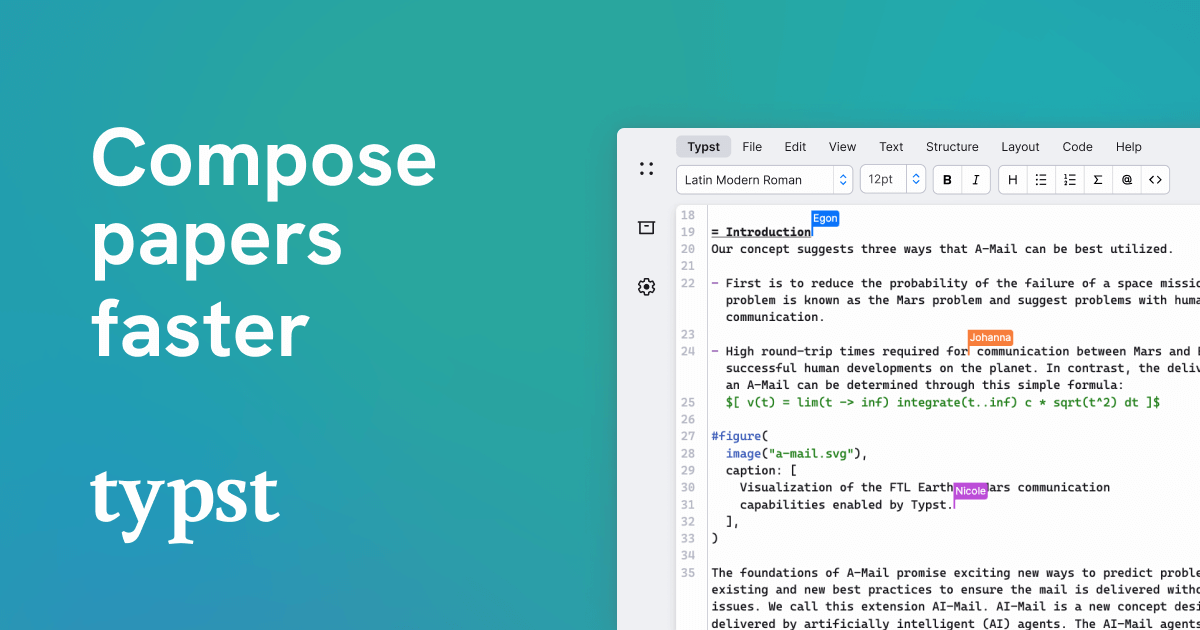
Typst 0.15.0 — Typst being a modern, programmable typesetting system positioned as a LaTeX alternative — headlines with a feature long on wishlists: a single document can now hold multiple bibliographies, via new target and group parameters. The release also pushes web output hard: mathematical equations now export automatically to MathML, preserving semantics and accessibility; an experimental bundle export can emit HTML, PDF, PNG, SVG and assets from one compilation; plus variable font support and spot colors for offset printing.
The thread is mostly people who already depend on it
This wasn't a curiosity thread; it was users reporting ROI. A computational social scientist named his personal favorite without hesitation — "A single document can now contain multiple bibliographies." Others were blunter about the economics: Typst has saved one team "thousands of dollars generating PDF documents programmatically," and a third delivered the thread's mic-drop: "Typst killed the invoice industry."
The deepest endorsement came from someone shipping books on it:
"I'm currently working on my fourth book produced using Typst, and it has been nothing but amazing. LLMs struggle with Typst a bit but other than that it has been an absolute joy to work with." — a co-founder publishing essay collections
His Word-to-Typst-to-PDF pipeline runs through Pandoc — and his aside about LLMs is a real friction point as people lean on models to write markup.
The honest gaps
Praise didn't crowd out the wishlist. A heavy user of every layout tool from InDesign to LaTeX called Typst the most enjoyable "way of programmatically generating layouted stuff I ever used," then named the missing piece: "a good Desktop editor that allows dumb users to double-click a .typ file" instead of wiring up VSCode and plugins. And a contrarian pointed past batch typesetting entirely toward WYSIWYG, programmable systems like TeXmacs, arguing 2026 should expect more than compile-and-view.
The LaTeX exodus has a destination now
The signal isn't the changelog; it's who's in the thread. Typst has crossed from "promising LaTeX alternative" to the tool people quietly run their document businesses and books on, and 0.15 deepens the two things that matter most for that crowd — academic citation handling and credible web export. The remaining barrier is the one the power users keep naming: until a non-technical person can double-click a file and edit it, Typst's reach stops at people comfortable in an editor.
Get breakdowns like this every day
The top Hacker News stories, unpacked — by email, Telegram, or RSS.
30 years of Emacs and 'I still don't understand Dired': the discoverability problem, in one thread
A post showcases 20+ stock Emacs commands most users never find — ruler-mode, compare-windows, turning your keystroke history into a macro. Then a famous longtime user admits the actual problem isn't hidden features. It's that things break.