Why a Walnut Creek apartment block can't fit one 3-bedroom unit
Kevin Burke lays a proposed California apartment building next to a Copenhagen courtyard block and asks why the codes guarantee dark, single-aspect units. The HN thread's top comment is about cars.
The proposed Walnut Creek building has zero three-bedroom units and needs state density-bonus waivers just to pencil out. Burke traces it to double-stairwell rules that force interior corridors, stretcher-sized elevators, and parking minimums.
The Copenhagen counterexample packs 149 units per acre at similar height with cross-ventilated family flats and a sunlit courtyard playground. The thread mostly agreed on the building code, then spent its energy fighting over Burke's robotaxi aside.
A floor plan with no three-bedroom units, by design
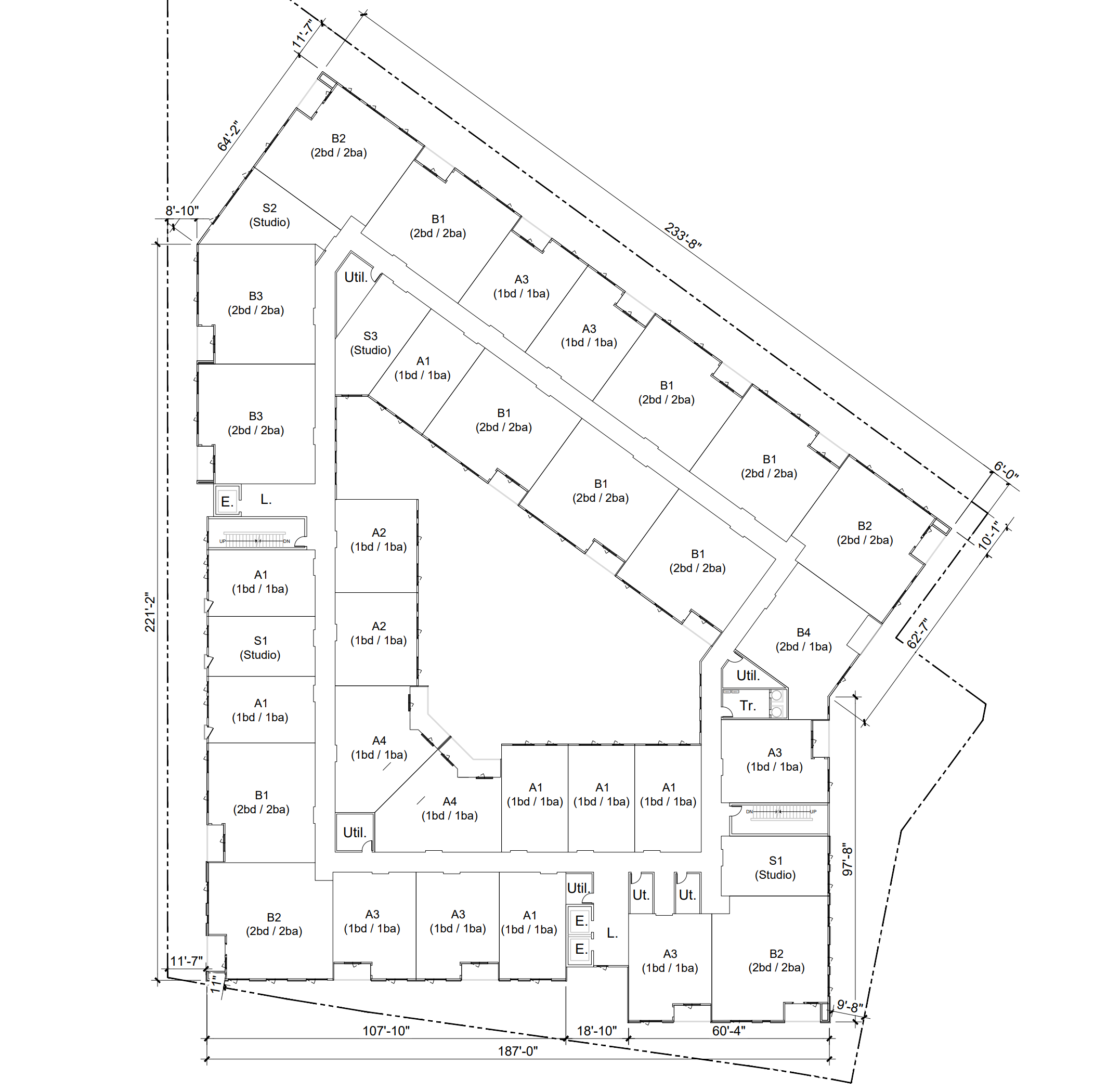
Kevin Burke's piece starts with a real proposal in Walnut Creek, California, and a simple observation: the building contains zero three-bedroom apartments, and it needs state density-bonus waivers to be financially viable at all. The reason, he argues, isn't the developer's taste — it's the code. Most of the apartments have a window on just one side, because the floor plan is organized around a long interior corridor, and the lower interior-facing rooms will struggle to get any daylight.
That single-aspect layout traces back to one rule. The requirement for two exit stairwells forces a central double-loaded corridor, which pins units to one exterior wall, killing cross-ventilation and the deep, multi-window layouts that family-sized units need. Burke stacks two more cost drivers on top: an elevator code mandating cars big enough for a stretcher (he traces it to a Glendale fire marshal), and parking minimums that hand large amounts of floor area to cars.
What the same height looks like in Copenhagen
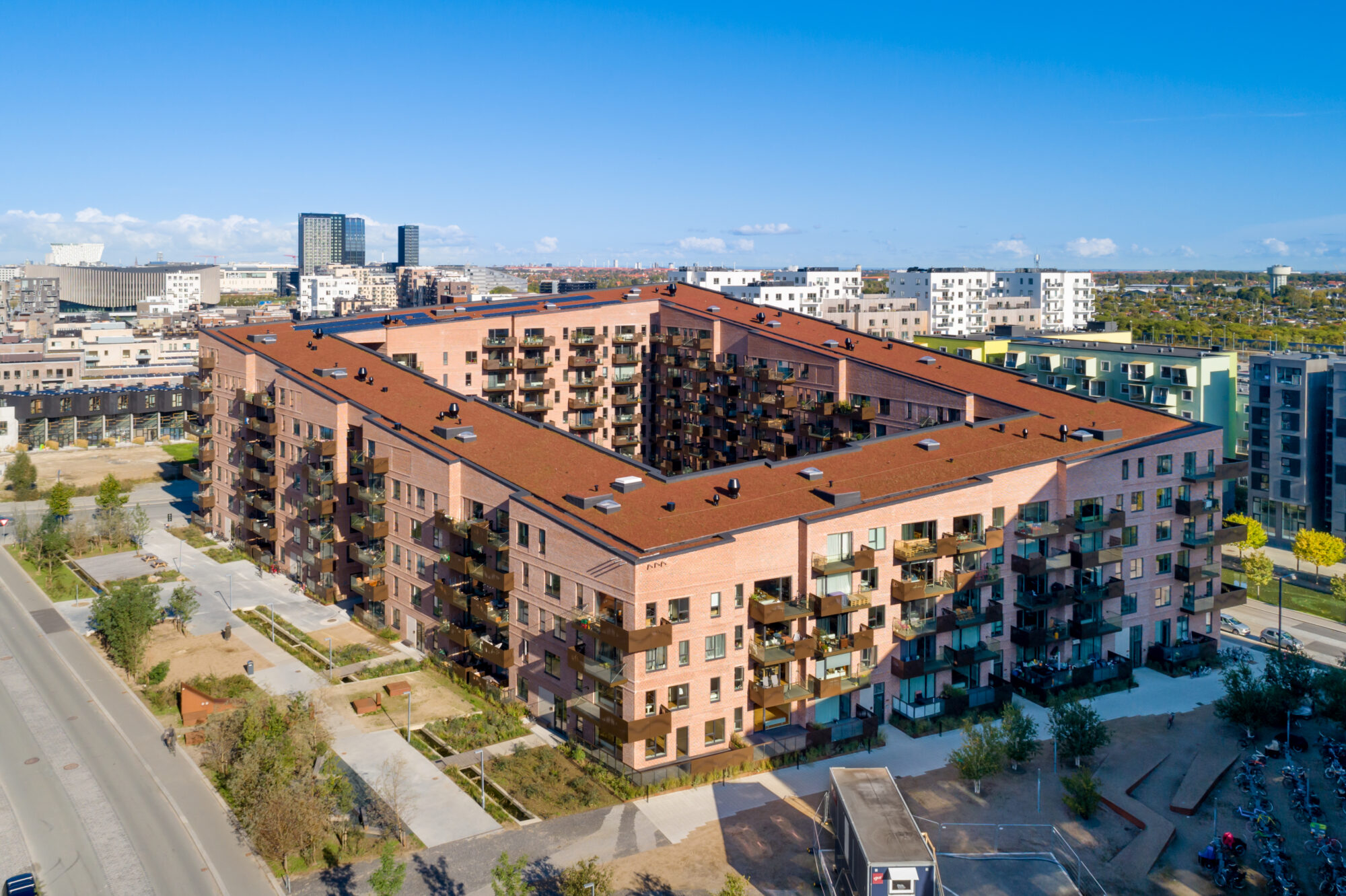
The contrast is a Copenhagen courtyard block: roughly 149 units per acre at comparable height, with apartments that have windows on multiple sides, balconies, abundant family-sized units, and a sunlit interior courtyard with a playground.
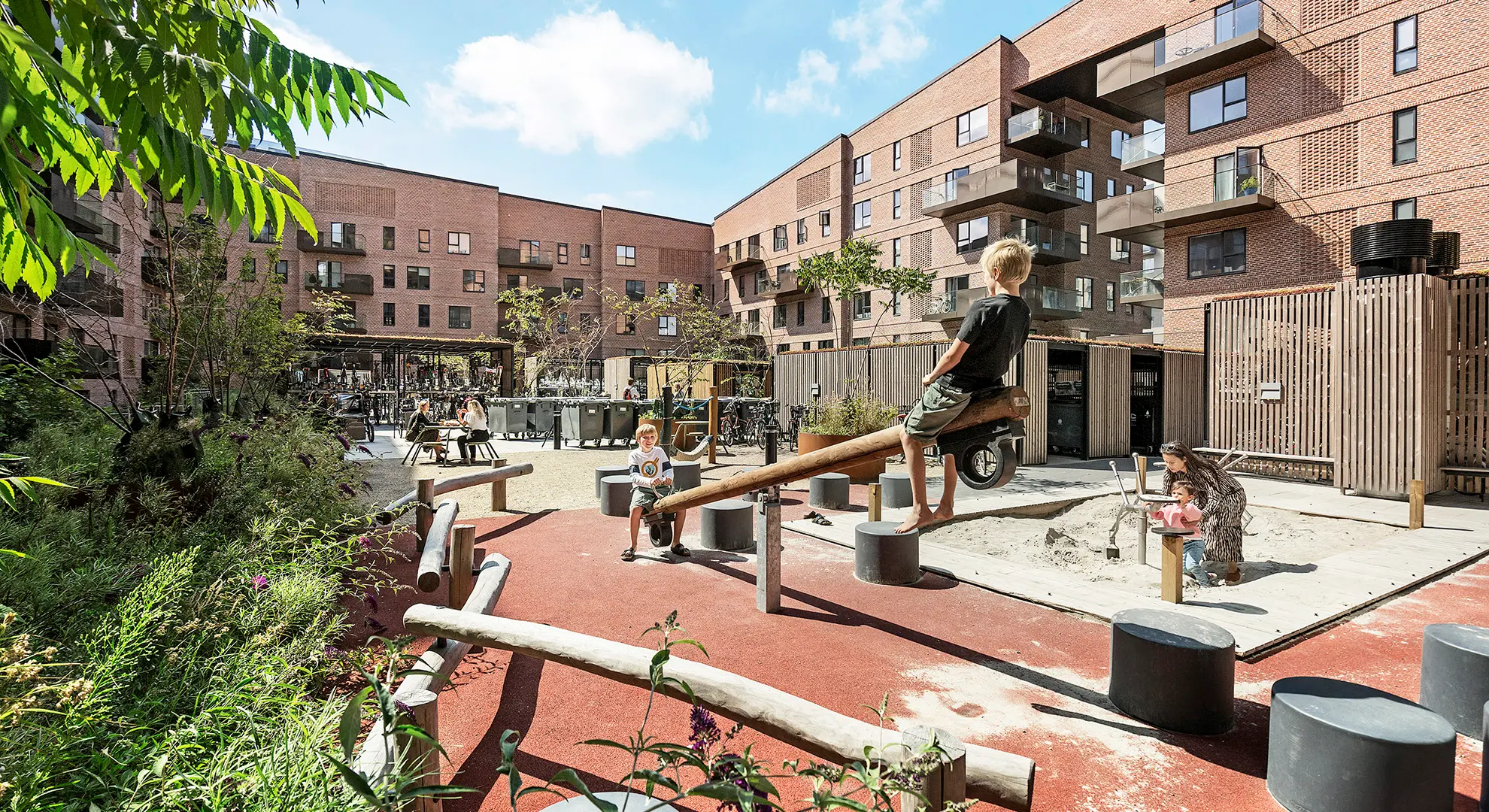
The single-stair core, legal in much of Europe, is what unlocks the rest: without the second mandated stairwell, units can wrap a courtyard and open to light and air on more than one side. Burke's point is structural, not aesthetic. The American building is dark and childless because its life-safety and parking rules quietly forbid the alternative.
The thread agreed on the codes, then fought about robotaxis
The building-code half landed cleanly. A commenter summarized the diagnosis as huge added costs from the two-exit-stairwell requirement, elevator laws, and parking laws, with the Copenhagen contrast as proof of the alternative. But Burke had folded in an aside that self-driving cars would make parking obsolete within years, and the thread seized on it. The author of a published nonfiction book pinned the genre:
"Definitely a tech entrepreneur's take. It's a juxtaposition of optimistic futurism (in 5-10 years, most people will just rely on robocars and robotaxis) and anti-regulatory sentiment." — a published nonfiction author reading the rhetorical mix
The self-driving claim drew the sharpest pushback because it undercut the argument it was meant to support:
"They already don't have those parking requirements in Copenhagen, and it sure as heck ain't because they've got cars parking themselves with one inch of clearance." — a commenter pointing out Copenhagen needed no robotaxis
Another put a decade of broken predictions on the record: ten years ago autonomous driving was 'coming by 2020' and going to make auto insurance irrelevant, and it didn't. The whole detour was not lost on the thread:
"Pretty funny that in an article that's 99% about apartments, the top comment here is about cars." — a high-karma commenter on the derailed thread
It's not a California problem, and it's not only the codes
Two voices complicated the clean European-vs-American framing. A commenter writing from a suburb of Iowa said the same unit sizes exist there at much cheaper rent, with the mandated big parking lots, big elevators, and dual staircases, so the codes alone don't fully explain Walnut Creek's prices. And another widened it past the US entirely:
"Nowhere can build 3 bedroom apartments, except penthouses. It's not only a national problem, but an international one — almost the entire west can't build these." — a high-karma commenter generalizing the shortage
The useful read sits between the two halves of the thread. Burke is right that the life-safety and parking codes mechanically produce dark, single-aspect, childless buildings, and the Copenhagen block proves a denser, brighter, family-friendly alternative is buildable. He weakened his own case by hanging part of it on a robotaxi future the thread had already watched fail to arrive once, when the working counterexample needs no self-driving cars at all, just a different stairwell rule.
Get breakdowns like this every day
The top Hacker News stories, unpacked — by email, Telegram, or RSS.
Neural cellular automata grow a full-res image from purely local rules
A SIGGRAPH 2026 paper breaks the long-standing ceiling on neural cellular automata: cells that only ever talk to their neighbors, now producing high-resolution, real-time output you can paint on.