Ubiquiti ships a $3,999 ZFS NAS with no license fees and no drive lock-in
The pitch is the part Synology fumbled: any drive you want, plain OpenZFS, no monthly bill. The thread's verdict was warmer than usual for a Ubiquiti launch, with one big asterisk: the CPU.
Ubiquiti's Enterprise NAS runs plain OpenZFS, 16 bays, 64GB ECC, dual 25GbE, and explicitly 'no firmware restrictions on drive models' — a line readers took as a direct dig at Synology's drive whitelist.
The reassurance that won the thread: if Ubiquiti ghosts the product, you pull the disks and `zpool import` them on any other box. The worry that wouldn't go away: an 8-core Arm chip that on the cheaper UNAS Pro 8 already can't keep its own 10GbE link fed.
A ZFS box whose best feature is the exit door
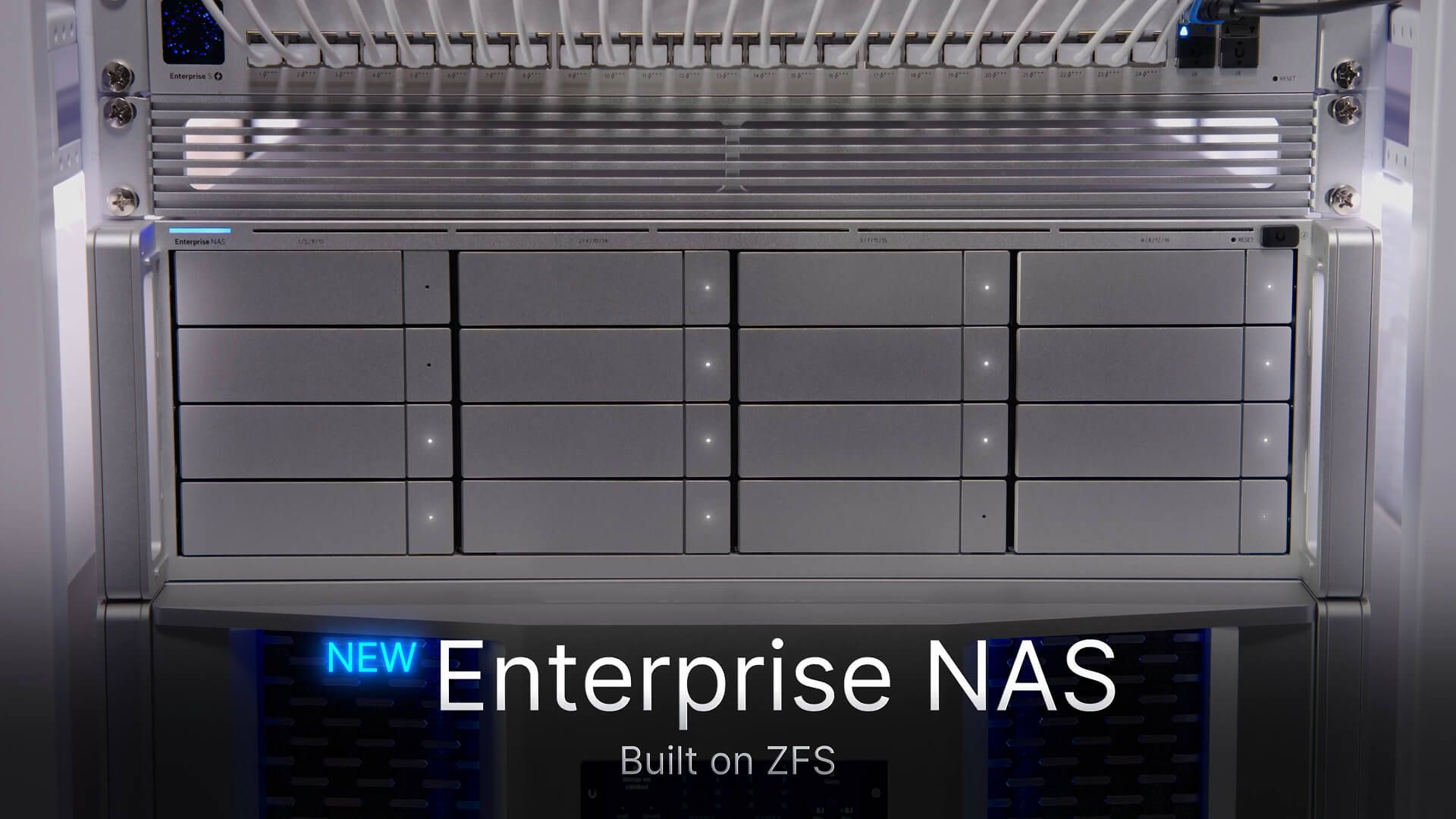
Ubiquiti's Enterprise NAS announcement is short on prose and long on a single promise: storage without the recurring tax. The spec sheet is a 16-bay rackmount built on ZFS, 8 Arm Neoverse N2 cores, 64GB ECC RAM, dual 25 Gigabit SFP28, dual NVMe L2ARC cache, redundant power supplies, native iSCSI, and expansion past a petabyte raw. Two marketing lines did the heavy lifting: "no licensing fees or feature unlocks," and no firmware restrictions on drive models. The store lists it at $3,999 (drives not included).
That second line landed as a pointed shot. Synology spent 2024 trying to restrict its NAS boxes to a whitelist of its own branded drives.
"This looks like a dig at Synology, who do this." — SideburnsOfDoom, a London engineer with 10k+ karma
Another reader noted the backlash forced Synology to walk it back almost immediately, which is why Ubiquiti is promising openness from day one.
Why "just pull the disks" is the actual selling point
Ubiquiti has a reputation for shipping a v1 product and then quietly abandoning it. The reason the thread forgave that risk this time is the filesystem itself.
"Nice that it's plain OpenZFS, no paid license layer… If they lose interest, you just pull the disks and zpool import on any box… That's a saner path than Synology, with their 'unauthorized' drive warnings." — a commenter who treats abandonment as the baseline risk
That escape hatch only works if the pool is truly standard. One reader had learned the hard way that not every "ZFS" box gives it to you:
"QNAP unforgivably uses a proprietary version of ZFS with their own extensions… It can only zfs send/receive to other QNAP devices… You can not take a zpool out of a QNAP system and access it on another system with ZFS. I discovered this painfully the hard way." — an owner who got locked into QNAP's fork
Against that, plain OpenZFS with no vendor extensions is the feature.
The asterisk nobody talked Ubiquiti out of: the CPU
The dual 25GbE ports look fast on paper. Whether the box can fill them is a different question, and the most specific warning came from someone who owns the cheaper model in the line.
"This is an issue with the Ubiquiti UNAS Pro 8… In theory it has 10gig networking. In practice the CPU physically cannot transfer bits fast enough, because it's a dinky underpowered ARM CPU that they clearly chose to hit that quite affordable price point." — an owner of Ubiquiti's 8-bay UNAS
A storage engineer poking at the spec sheet read the same limit into the new box: "8C+64GB: enough for essential block+file service, but not for dedup and other demanding ZFS features… Not NetApp/Pure Storage 'enterprise' grade though." The consensus that formed: spinning disks won't saturate 25GbE regardless of CPU, and the NVMe cache helps only certain workloads.
Who this is actually for
The homelab crowd did the math and balked. "$4000 is… a lot," wrote one, pricing out a used Supermicro chassis at roughly a quarter of that with more bays — an owner of two CSE-826 chassis waiting to upgrade. But others pointed out he isn't the customer.
"Think about the competitors — they're aiming at the Synology RackStations and similar, which are $3-5k without drives… still 1/10 of the price of getting started in enterprise gear from HPe, Dell, Pure." — a commenter sizing the segment against Synology and Dell
The sharpest read on the real buyer came from someone who deals with them: the 40-person marketing firm that already runs Unifi networking and pays a managed-service provider, who "will easily try to sell this as their storage solution since they can manage the infrastructure with one login."
Not everyone is sold on Ubiquiti at that scale. One reader pushed back hard on the no-recurring-cost framing:
"You enter the Enterprise space with them and you are paying monthly. Their very expensive Identity Enterprise monthly per user subscription… Infuriating company that just do not function at scale." — an SVP of workflow engineering at Pax8
For an SMB swapping a janky DIY NAS for one dashboard, that asterisk may not bite. The advice that closed the thread was blunt: it's nice, but don't bet the farm until there's a v2.
Get breakdowns like this every day
The top Hacker News stories, unpacked — by email, Telegram, or RSS.
Why a button used to look like a button: in defense of Windows 2000
The Start button literally said "Start" so a first-time user would guess it does something. The blog's argument: every clickable thing in Windows 2000 announced that it was clickable, and we quietly threw that away.