Quake now runs in your browser rendered with CSS, and someone noticed it's slower than a Pentium-133 from 1996
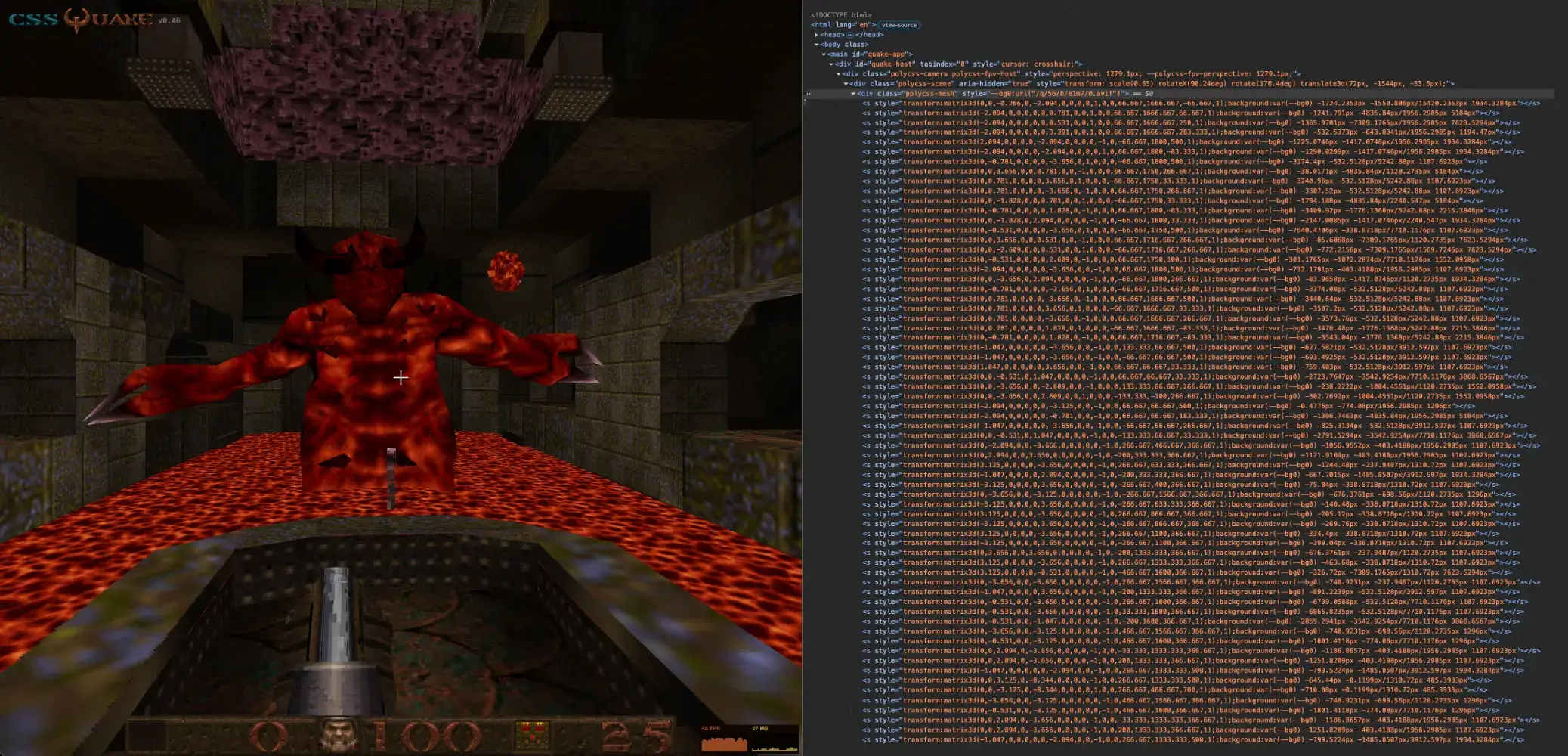
CSSQuake is a playable recreation of id's shooter drawn through CSS, secret doors and shootable buttons included. The catch the thread caught twice: it still needs JavaScript, and a former infrastructure engineer's M1 Pro runs it worse than his childhood Pentium ran the real thing.
It's not just a renderer: the engine logic is reimplemented, with behavioral quirks that differ from the original, like buttons you shoot instead of touch.
The deflation: despite the 'CSS' name, it needs JavaScript to run at all.
What it actually is
CSSQuake is a playable in-browser recreation of id Software's Quake, rendered through CSS and branded "Powered by PolyCSS." It offers single- and multiplayer modes, configurable maps and frag limits, standard FPS controls, and debug overlays for FPS, stats and dynamic lighting. It is more than a rendering stunt — the game logic is reimplemented too, with deliberate divergences from the original that one player went looking for:

"I guess this isn't only the renderer made to use CSS but also a full recreation of the engine and logic right?… some buttons need to be shot instead of touched to activate, some secret doors open by touching them instead of being shot" — a commenter who reverse-engineered the behavioral differences

The two punctures
The "pure CSS" premise didn't survive contact with the thread:
"It seems like this CSS Quake needs JS to run…" — a commenter puncturing the 'pure CSS' framing
And the performance comparison was almost too good:
"This is an awesome achievement, but I can't help but notice that Quake ran smoother on my Pentium-133 PC in the 90s than it runs on my Mac M1 Pro" — Jedberg, a former infrastructure engineer, on the performance cost
A stunt that's honest about being one
CSSQuake belongs to the proud lineage of "because I could" web hacks, and the thread treats it with the right mix of admiration and needling. The thirty-year performance regression isn't an indictment of the author — it's a perfect little illustration of how many abstraction layers now sit between a keypress and a pixel. A 133MHz Pentium ran a hand-tuned software renderer straight to the framebuffer; an M1 Pro runs a CSS layout engine impersonating a 3D rasterizer inside a browser inside an OS. The frame rate is the receipt for all of it, and that's exactly why the project is funny rather than impressive in the way its author probably hoped.
Get breakdowns like this every day
The top Hacker News stories, unpacked — by email, Telegram, or RSS.
Finnish libraries lend sewing machines, and the thread did the math on why it works there and stalls in Denver
A BBC piece marvels that Finnish libraries lend far more than books. The numbers commenters surfaced tell the real story: 55% of Finns visit a library monthly, while Denver's three sewing machines carry a 103-person hold list and a roughly 17-year wait.