Mistral OCR 4 charges $4 per 1,000 pages and a rival founder is skeptical
Mistral's new OCR model claims to beat GPT and Gemini on a 600-document human-preference test, winning 72% of the time. Google Vision does similar work for $1.50 per 1,000 pages, and the founder of a competing OCR tool says he's seen these claims fall apart before.
Mistral OCR 4 adds bounding boxes, block classification and per-word confidence scores across 170 languages, and reports a 72% win rate over rivals on 600+ documents. It costs $4 per 1,000 pages.
The founder of an open-source OCR competitor is wary: he points out Mistral leaned on its own internal benchmark while calling the public OmniDocBench and OlmOCRBench results 'limited' — and that earlier Mistral OCR versions tested far worse than promised. Commenters also flagged a truncated benchmark y-axis starting at 50.
What Mistral OCR 4 actually ships
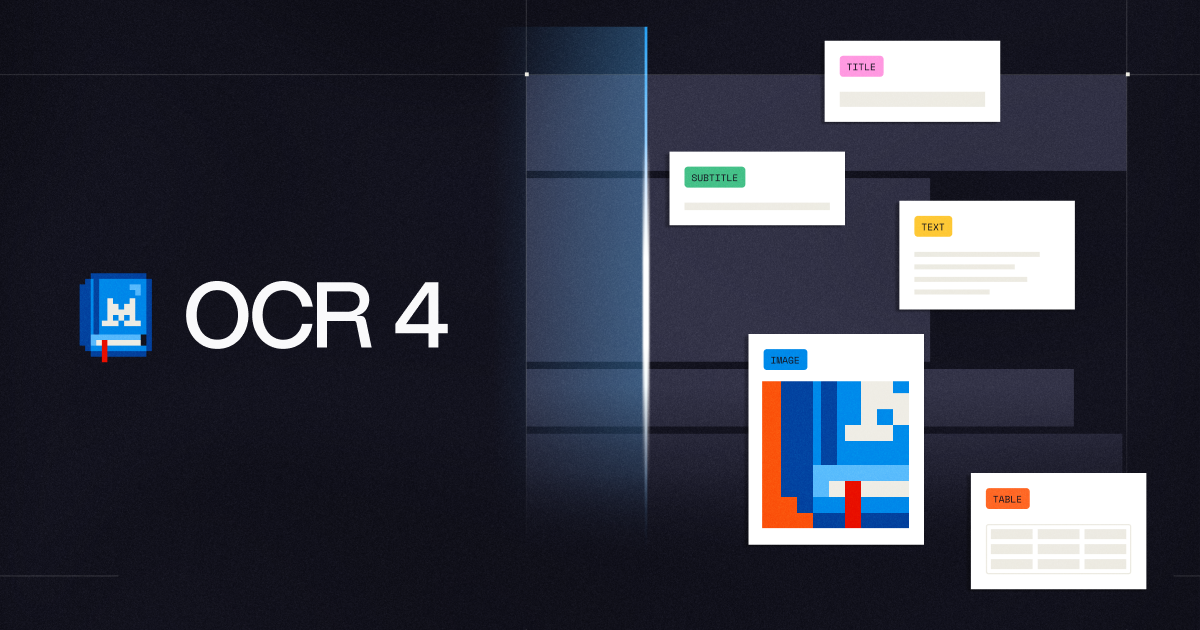
Mistral OCR 4 is a document-understanding model that returns extracted text plus structure: bounding boxes, block classification (titles, tables, equations, signatures), and per-page and per-word confidence scores. It covers 170 languages across 10 groups and runs in a single self-hostable container. Pricing is $4 per 1,000 pages via API, $2 via the batch API, and $5 through Document AI in Studio.
Mistral reports human annotators preferred OCR 4 over competitors with a 72% average win rate across 600+ documents in 12+ languages, plus 85.20 on OlmOCRBench and 93.07 on OmniDocBench. The model card adds an explicit out-of-scope warning: it is "not a decision-maker" — not for medical diagnosis, legal judgment, high-stakes financial decisions, or non-document inputs like raw audio or video.
Notably, the comparison charts pit OCR 4 against GPT and Gemini — but not Claude — a gap several readers caught immediately.
The benchmark a competing founder won't trust yet
The most pointed skepticism came from someone who sells the same thing. The founder of an OCR company flagged a pattern in how Mistral reports results:
"the previous versions were all '98% accurate based on internal benchmarks of 4 pdfs' and ended up falling short of almost everything else on the market… they just report that OlmOCRBench and OmniDocBench have 'known limitations' and that's why they report flagship numbers from their internal benchmark" — the founder of OmniAI, maintainer of the open-source zerox OCR tool
The pricing claim drew its own counter. An external comparison Mistral didn't make:
"Google vision OCR (which they failed to compare against), is $1.50 per 1k pages. Vs $4 from Mistral." — a commenter pricing the alternative
And the charts themselves became a running joke. Multiple readers called out a truncated y-axis on the benchmark bars:
"All AI labs really need to stop using truncated y-axes for benchmark bar charts..." — beklein, linking the offending chart
Where it actually impressed people
The field reports were more positive than the benchmark fight. One user had run the predecessor on the hard stuff:
"I was processing 55 year old paper files, most of them severely degraded… I also tried Abbyy Finereader but it didn't even come close" — a user who digitized degraded 55-year-old archives
Another tested it on chaotic real-world layouts:
"Mags are generally pretty whacky layouts and it does a reasonable job… The way it crops relevant pics and puts them into the doc is pretty nice." — a user who ran it on magazine scans
The failures were specific too: one tester found it silently converted U.S. double quotation marks to UK single quotes against the source; another found a Malayalam handwriting sample misdetected as Kannada, where a regional model (Sarvam) hit 99%. That last point fed the sharpest take in the thread — that Mistral originally labeled languages like Japanese and Hindi "minor languages" before relabeling them "specialized," which one reader read as exactly the argument for sovereign, locally-built models. For most document workloads OCR 4 looks genuinely strong; the open question is whether the headline 72% survives contact with an independent benchmark, given who's making the claim.
Get breakdowns like this every day
The top Hacker News stories, unpacked — by email, Telegram, or RSS.
HTTP gets a QUERY method: GET with a body, because firewalls strip GET bodies
For decades developers smuggled JSON into GET requests or abused POST for searches. The new HTTP QUERY method is, roughly, GET with an officially-supported body — safe, idempotent, and cacheable. The catch arrived fast: it's GET-plus-body all over again, with the same legacy-infrastructure problem.