Auto-download daily
Issue · June 24, 2026

Top of Hacker News

36 stories of the day: AI, technology, business and simply interesting discussions — recapped and unpacked.

Civilization VII наконец получила локальный мультиплеер, а игроки всё равно недовольны (store.steampowered.com)

Civilization VII — пошаговая стратегия, где вы ведёте народ от костра до космодрома: строите города, воюете, исследуете науки. Сегодняшний патч вернул hotseat, игру по очереди на одном ПК, и продолжил череду исправлений, которые медленно вытаскивают релиз из ямы.

Но отзывы остаются смешанными, и причина не в самой игре: пока Firaxis чинит баланс, она же продаёт новое платное дополнение за тридцать долларов. Купившие дорогое издание чувствуют себя обманутыми.

Not just a headline — the discussion unpacked

The top HN threads: facts from the discussions, both sides, insider voices. Email, Telegram, or RSS.

Апдейт вернул игроков в THE FINALS, а они снова жалуются на читеров (store.steampowered.com)

THE FINALS — бесплатный командный шутер от Embark Studios, где арены можно буквально сносить: стены, полы и целые здания рушатся прямо в перестрелках. Свежий апдейт 10.12 подкрутил контент и вернул в игру отливших было игроков.

Но вместо радостных отзывов всплыла старая боль: ветераны хором пишут про читеров, смурфов и поломанный баланс ближнего боя. Любят игру и злятся на неё же.

Распродажа к Pride вернула Rift of the NecroDancer в топ Steam и подняла бучу (store.steampowered.com)

Rift of the NecroDancer — ритм-игра студии Brace Yourself Games, авторов культовой Crypt of the NecroDancer. Враги катятся по дорожкам в такт музыке, и бить их нужно точно в долю. Распродажа к Pride Month вернула её в верхние строчки Steam.

Вместе с вниманием пришла и небольшая волна разозлённых тематикой отзывов. Но любопытно другое: для многих это первая ритм-игра, в которую они вообще втянулись.

Горо Мадзима стал пиратом на Гавайях, и фанаты Yakuza разделились (store.steampowered.com)

Like a Dragon: Pirate Yakuza in Hawaii — спин-офф японской серии Yakuza от студии RGG. На этот раз харизматичный безумец Горо Мадзима собирает команду, чинит корабль и уходит в море за сокровищем, совмещая уличные драки с морскими боями. На этой неделе игра без явного повода вернулась в верхние строчки Steam.

И отзывы тут же раскололись: одни зовут это «абсолютным кино» и обожают пиратский балаган, другие, прошедшие всю серию ради сюжета, считают историю самой пустой за годы.

Balatro снова затягивает Steam: покерный рогалик, от которого не оторваться (store.steampowered.com)

Balatro — рогалик-карточная игра, где вы собираете покерные комбинации, а особые карты-джокеры ломают правила и превращают скромную пару в счёт на миллионы. Одна партия легко перетекает в «ну ещё разок» до глубокой ночи. На этой неделе игра снова поднялась в чартах Steam.

Повода для всплеска не видно, но сигнал предельно ясен: спустя больше года отзывы остаются «крайне положительными», а игроки полушутя жалуются, что не могут остановиться.

GitHub Trending: Today — Trivy, Paperless-ngx, Kafka, prompts.chat, Media-Downloader (github.com)

In today's GitHub Trending: Trivy (Go scanner that flags CVEs, secrets and misconfigs across containers and clouds), Paperless-ngx (self-hosted OCR archive for scanned paper), prompts.chat (a 164k-star, self-hostable prompt library), and Apache Kafka.

The twist: the one with a live story is Trivy — the vulnerability scanner whose own supply chain was hijacked twice this year, seeding a self-spreading npm worm.

Meet Mike: how crypto turned a college kid into a 2 a.m. parlay gambler (stephendiehl.com)

Stephen Diehl's essay follows a composite kid, Mike, down a pipeline from a meme coin to leveraged options to a Kalshi account to a 2 a.m. sportsbook, poorer at every stop and sure he is investing. The line underneath: the price of Bitcoin measures only the price of Bitcoin.

The thread didn't fall in line. People who worked inside crypto analytics and Web3 confirmed the rot, but savers in Venezuela pushed back hard: a stablecoin is the only thing between them and a currency that halves overnight.

Doctorow: you cannot spy on only the kids, so age checks watch everyone (pluralistic.net)

Cory Doctorow's argument is mechanical, not moral: to verify a user is a child you must identify every user, so age verification is mass surveillance wearing a hall pass. He maps the escalation — checks push kids to VPNs, then governments move to ban VPNs.

The thread tried to engineer its way out with zero-knowledge attestations and device-level parent mode. But a commenter who says he built such systems for the US cut it short: when they say it's for the kids, it was never their idea.

A file format ships a WASM decoder inside every file, and HN argues archival sense (github.com)

F3 is a columnar data format — a Parquet rival — that carries the WASM binaries needed to decode it inside every file. One engineer who builds data connectors called the self-describing trick genius.

The pushback came from people who archive at scale: keeping petabytes for ten years, you don't want to depend on a WASM interpreter being fast in 2051, you want a dead-simple byte spec like Parquet's. And the README, several noted, never says which Parquet shortcomings F3 fixes.

The $200 plan that lets you burn $8,000 in tokens, and the bill coming due (blog.dshr.org)

David Rosenthal calls it the drug-dealer's algorithm: subsidize usage to build dependence, then move customers from flat subscriptions to metered token pricing. He cites OpenAI's 2025 numbers — $13.07B revenue against $34B in costs.

The thread's top objection: nobody knows the per-token margin, so the 40x/70x 'subsidy' could just be API prices that are wildly inflated. But the corporate anecdotes were brutal — Fortune 200 engineers watched the AI taps shut off the moment the bills landed.

"My job is to write loops": the coding shift Armin Ronacher resents but expects (lucumr.pocoo.org)

Ronacher splits the agent loop you supervise inside a session from the harness loop that runs outside it, deciding on its own whether to continue. His worry isn't speed: LLMs won't make illegal states unrepresentable, piling defensive checks on errors that can't happen.

The thread turned it into a labor question. Engineers describe two camps — agents-go-brrr versus the people drowning in their PRs — and a darker read: the Claude Code creator's job is to move tokens, like a brewery CEO's is to move kegs.

Anthropic locked away Mythos as too dangerous. A hobbyist benchmark says: maybe (swelljoe.com)

Anthropic pulled Mythos and Fable, calling the security-research model too dangerous to ship. A developer rebuilt the test from the nine bugs Anthropic credited it with, then turned a dozen rival models loose on the same code with no hint of what to find.

The headline isn't the frontier. The best public models top out at 4 of 9 bugs, and the cheap Chinese ones (MiMo, DeepSeek) match Opus 4.8 at a tenth the price. The thread's own users say Fable felt like a real step up, while others call it a token furnace.

Claude went down again, and a user recomputed its real 90-day uptime: 97.68% (status.claude.com)

Another Anthropic outage hit mid-session: 500s, then 529 Overloaded, then a status page one user compared to Christmas ornaments. A reader scraped the page's own incident data and recomputed the real figure: 97.68% uptime over 90 days, roughly 50 hours of degraded service.

The sharper thread isn't the downtime. It's developers asking how a shop that says it runs on agent loops fixes its own infra when the agent is the thing that's down.

The EU's digital euro isn't really about euros. It's about Visa and Mastercard (finance.yahoo.com)

An EU committee backed the digital euro after three years of bank resistance over lost deposits and revenue. The pitch is a central-bank money you could hold and spend, even offline, without a commercial bank in the middle.

The thread keeps correcting the framing: this isn't a euro problem, it's that nearly every European card transaction routes through Visa or Mastercard. The skeptic's read: it's 'government Revolut' that still won't match a credit card's chargeback.

California wants 3D printers to detect gun parts. Here's why that can't work (the3dprintingnerd.com)

California's AB 2047 would require 3D printers sold in the state to run state-certified detection that blocks firearm blueprints, with disabling it a crime, phased in 2027-2029.

Critics, including engineers in the thread, argue the core ask is technically impossible: a rifled barrel is a grooved cylinder, and so are industrial screws and optical mounts. Split, rotate, or scale a model and the filter is blind. The counter-case: anti-counterfeiting in inkjet printers already exists.

Baidu's Unlimited-OCR reads a 100-page PDF in one pass without exploding VRAM (github.com)

Baidu open-sourced Unlimited-OCR, which parses long documents in one pass instead of chopping them into pages and gluing the text back. The trick (R-SWA): keep the full document image always in view, but cap memory of the model's own output to a small sliding window so the KV cache stops growing.

It openly credits DeepSeek-OCR and PaddleOCR for the ideas. The thread's skeptics ask the obvious thing: how is this better than just feeding one page at a time?

🚀Tech ★ 447 · 💬 102 · Jun 24 · #AI#data#open source#Baidu#DeepSeek-OCR#PaddleOCR+1

Three giant vitamin D trials found almost nothing. The author still takes it (dynomight.net)

The post walks through the big randomized vitamin D trials, where supplementation barely moved all-cause mortality. By the author's own math, if the true hazard ratio is 0.96, a daily pill buys you about 0.48 years of life - roughly 8.6 minutes per pill.

The thread sharpened the real fault line: a doctor running annual vitamin D labs now sees more patients with too much than too little, after they took podcast advice and overdosed a fat-soluble hormone that lingers for months.

Google fired the engineer behind its 20k-star Workspace CLI (twitter.com)

Justin Poehnelt, a senior devrel engineer, published an open-source Google Workspace CLI under the company's own GitHub org, wearing Google's logo and brand colors. It hit 20k+ stars and #1 on HN. He says legal grilled him over the branding, and the deeper fear was what agents meant for Workspace.

A former Google Chrome engineer in the thread complicated the cheering: publishing under official Google orgs was routine, but shipping something that looks like an official product without sign-off is the kind of lapse that gets you walked out.

Anthropic's new terms can ask for your ID or your facial geometry (anthropic.com)

Anthropic's policy (published June 8, effective July 8) says it may ask users to verify age or identity, collecting a government ID image, a face photo or video, and facial-geometry templates that may count as 'biometric data.' Reaction ran to passports, Peter Thiel, and fleeing to open-weight models.

A high-karma commenter cut through it with receipts: ID verification quietly rolled out months ago. Another named the real bind - governments demanding both child-safety age-gates and accountability after an AI-encouraged shooting.

🌍Other ★ 187 · 💬 169 · Jun 24 · #AI#policy#privacy#Anthropic#Claude#Fable+1

Mistral OCR 4 charges $4 per 1,000 pages and a rival founder is skeptical (mistral.ai)

Mistral OCR 4 adds bounding boxes, block classification and per-word confidence scores across 170 languages, and reports a 72% win rate over rivals on 600+ documents. It costs $4 per 1,000 pages.

The founder of an open-source OCR competitor is wary: he points out Mistral leaned on its own internal benchmark while calling the public OmniDocBench and OlmOCRBench results 'limited' — and that earlier Mistral OCR versions tested far worse than promised. Commenters also flagged a truncated benchmark y-axis starting at 50.

HTTP gets a QUERY method: GET with a body, because firewalls strip GET bodies (kreya.app)

HTTP QUERY is a new method that behaves like GET but legally carries a request body. It's meant to be safe, idempotent and cacheable (as long as the cache key includes the body), solving the mess of giant query-string URLs and the unreliability of bodies on GET.

The skeptics' best point: a new verb doesn't fix old middleboxes any faster than standardizing GET-with-body would. The believers' rebuttal is concrete — engineers report WAFs and API gateways that already silently strip bodies off GET requests, breaking the hack in production.

Wikipedia's cofounder got himself community-banned, and ex-admins say the system works that way (en.wikipedia.org)

Sanger relaunched a project to broaden Wikipedia's permitted sources, then posted about the live proposal on X. That tripped the canvassing rule, the discussion turned into a ban vote, and a full block beat the narrower one.

A former Wikipedia admin in the thread on whether the encyclopedia is captured by 'feudal nerd-lords' who revert every outsider edit: the sign says you're welcome, the people say you're not.

A single radio system failed and every train in Germany stopped at once (apnews.com)

Deutsche Bahn's GSM-R digital radio failed nationwide, so every train was held at a platform. Stop signals and signalling kept working, which is how they parked the network without a single collision.

A security engineer in the thread put it in the sabotage bucket, citing cable cuts and night helicopter patrols since 2022. Others, knowing DB, bet on a botched software update.

When one AI vendor screens hiring for a whole industry, the same people get rejected everywhere (hai.stanford.edu)

A Stanford HAI study traced 4M applications across 150 employers, all screened by one vendor. By the EEOC four-fifths rule, Black and Asian applicants cleared the bar far less often; 40,000 applications would have advanced under equal treatment.

The deeper finding is the monoculture: applicants got rejected across the board at rates you'd never see if employers decided independently — a correlation absent from non-AI hiring data.

🚀Tech ★ 133 · 💬 142 · Jun 24 · #AI#data#policy#EEOC#pymetrics#Stanford HAI

He has drawn the same imaginary city for 60 years and lets a deck of cards decide what to paint (jerrysmap.com)

Jerry Gretzinger's map of a fictional world is over 4,000 8-by-10-inch panels and growing in a slow circle. A roughly 100-card deck dictates each session: which panels to paint, when to spawn new land, even when to edit the deck itself.

The detail that stuck with readers: he works one tile at a time and may go 15 years between seeing a region whole — so whole eras of his world get overwritten before he ever lays eyes on them.

🌍Other ★ 349 · 💬 48 · Jun 24 · #culture#data#Jerry Gretzinger#Jerry's Map

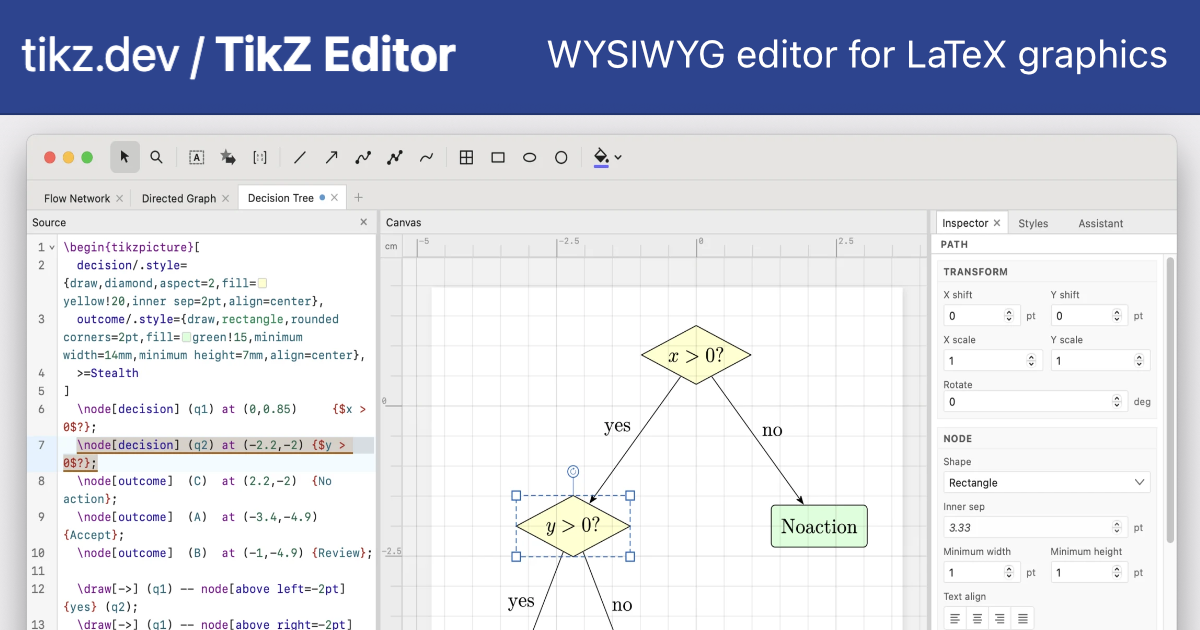
A researcher spent 700M tokens having an AI build the TikZ editor LaTeX users always wanted (tikz.dev)

TikZ Editor lets you draw figures visually and outputs TikZ/LaTeX code, open source and on the web. The most-praised use isn't drawing from scratch — it's editing old TikZ without turning the source into generated soup.

Maker DominikPeters says it took 700M tokens since February via a ChatGPT subscription. A LaTeX user in the thread flagged the catch: every node lands at absolute coordinates, which is rarely how good TikZ is written.

Anthropic ships a Slack bot that writes 65% of its own product team's code (anthropic.com)

Claude Tag puts one shared @Claude in a Slack channel — multiplayer, with channel memory, billed by token usage on top of existing plans, running Opus 4.8. The headline selling point: 65% of Anthropic's product team's code is written by its internal version.

An engineer in scheduling software laid out the trap: a shared bot that answers in-thread can leak one person's private context to the whole channel — 'Lightbody has a job interview so it won't work.'

An open swipe-typing model under 2.5M parameters, trained on a million volunteer swipes (swipe.futo.tech)

FUTO Swipe is an on-device swipe-typing model trained on 1M+ volunteer swipes (dataset MIT-licensed on HuggingFace), with a top-4 fail rate near 4% — built from an Encoder, a ContextLM, and a layout Decoder totaling under 2.5M parameters.

Longtime FUTO users in the thread say this update finally made them drop Gboard for good — but the web demo kept guessing 'help' and 'hell' for 'hello', and the keyboard app ships under FUTO's non-free license while the library is GPL.

🚀Tech ★ 318 · 💬 94 · Jun 24 · #AI#open source#privacy#FUTO#FUTO Swipe#Gboard+2

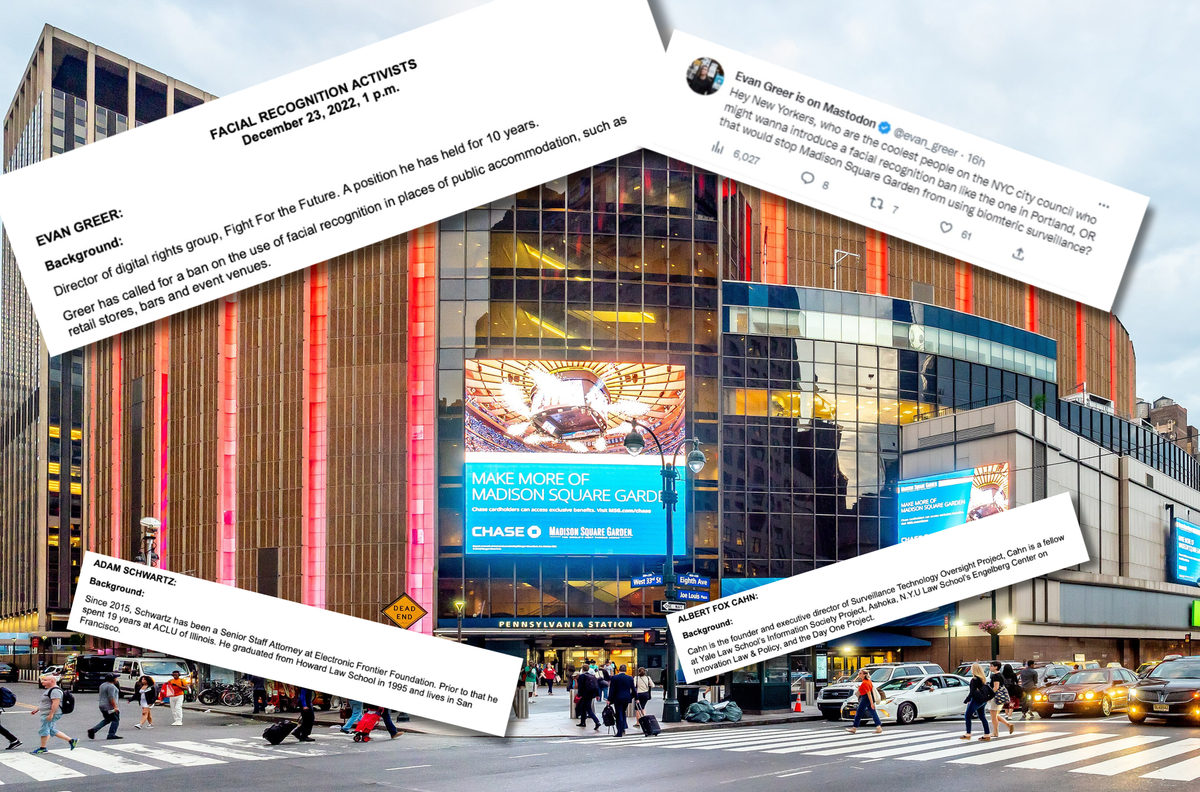
Madison Square Garden kept a file called 'Facial Recognition Activists.docx' (404media.co)

MSG, which has run facial recognition at its venues since 2018, compiled a dossier of activists who criticized that surveillance — collecting their tweets and comments — and it surfaced inside a 45GB cache hackers stole and posted. EFF privacy litigation director Adam Schwartz was named in it.

The thread's twist: MSG has already weaponized face-scanning to bar lawyers from firms merely litigating against it, and under NY law it can trespass anyone with no reason given — so the dossier is the legal system working as designed, not a glitch.

An extreme-heat conference was cancelled by an extreme-heat warning (lse.ac.uk)

The Grantham Institute's London conference on extreme-heat governance — co-hosted with the Zurich Climate Resilience Alliance, closing with a 'fire side chat' — was cancelled when the Met Office issued a red extreme heat warning. The cause wasn't irony but the venue: LSE's Shaw Library has no air conditioning.

The thread turned the joke into a number: Greece records about twice as many heat deaths per capita as Mississippi has gun deaths, and Europe's resistance to AC is the unscolded scandal underneath.

Oracle cut 21,000 jobs in a year while leaving 700 engineering roles open (bbc.com)

Oracle's annual report shows it shed about 21,000 roles in a year as it 'reshapes around AI' — roughly 15% of a ~141,000 headcount. But a commenter pinned the asterisk: this is one year of attrition disclosed in a filing, not a fresh layoff round, and Oracle still lists ~700 open engineering jobs.

Where the thread turned: a salesperson's account that Oracle has frozen development on profitable non-AI products to feed data-center spend it took on debt for OpenAI.

Swift Package Index joins Apple, and Swift developers aren't all cheering (swiftpackageindex.com)

Swift Package Index, the community-run directory of Swift packages, has been absorbed by Apple, with the team moving in-house.

The thread's worry isn't the paycheck but the roadmap: Apple flagged 'developer identity' as a future direction, and one Swift developer fears an official Apple brand will eventually decide which packages get listed at all.

A signup form 'validated' his email by mailing him spam about magnets (milek7.pl)

An engineer testing Pangram's signup found that the act of entering his email address triggered an unsolicited message from a churn of throwaway domains, its payload a base64 HTML blob of physics filler buried off-screen.

Then the company's founder turned up in the thread: 'I had no idea this was happening' — he traced it to a third-party validation vendor in his own stack.

Wizards of the Coast workers win a union — and a lecture on why US unions are weird (unitedwizardsofthecoast.com)

Workers at the maker of Magic: The Gathering and D&D won NLRB recognition for their union, UWOTC-CWA.

A Wizards employee in the thread, speaking for himself, said he'd survived years of tech layoffs without one; another reader argued the win is real but exposes how oddly narrow US labor law makes such unions compared to Europe's industry-wide bargaining.

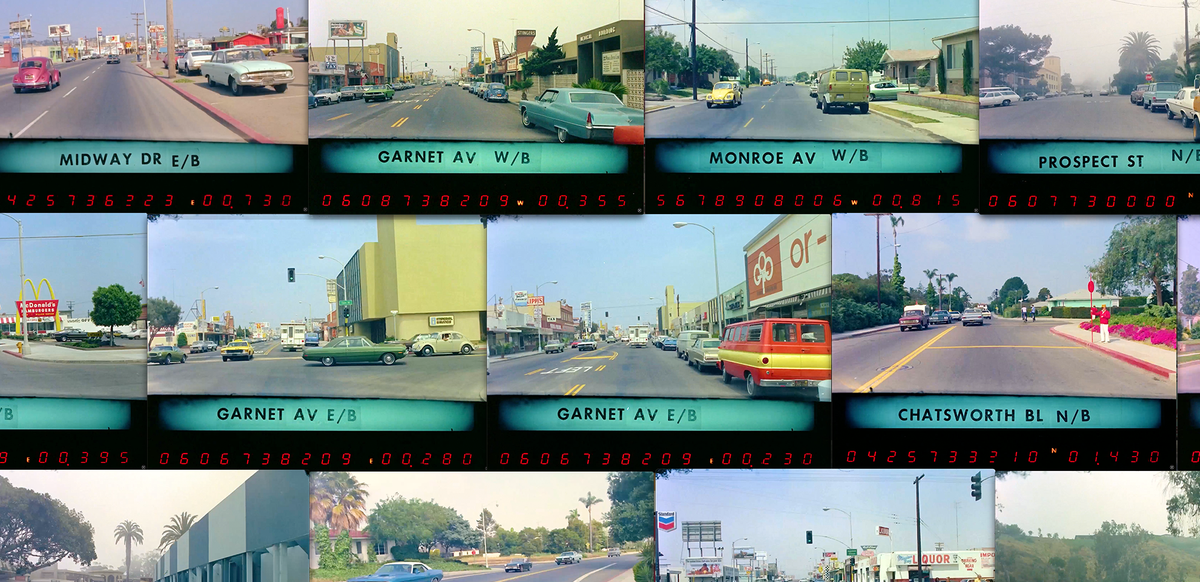
A 1973 road-survey film became San Diego's accidental Street View (beautifulpublicdata.com)

Jon Keegan pulled 35mm road-survey film of 1973 San Diego off the Internet Archive, color-corrected away the 'grey veil,' and stitched the frames into panoramas of a city its government never meant to make beautiful.

A reader who lives there confirmed the strangest detail: the Les Girls burlesque marquee in the footage is still standing, sign newly replaced this year — and now the subject of a podcast.

The man who invented the red squiggle under misspelled words has died (devblogs.microsoft.com)

Microsoft's Raymond Chen wrote a belated obituary for Tony Krueger, who made spell-check run quietly in the background and drew the red squiggle that flags a typo as you type, with green later added for grammar.

A reader spotted the catch: Chen cites Wikipedia as proof of who did the work, and Wikipedia's current source for that claim is a link straight back to Chen's article.