A £40 e-reader runs on an ESP32 and outprints the Kindle
It is small enough to magnet onto the back of a phone, ships with its USB port disabled, and the people who own one keep buying a second.
The Xteink X4 arrives with a 16GB microSD card, a MagSafe ring, and stock firmware locked to three fonts and a Chinese default menu. The reviewer flashed it anyway and got TeX-quality justification out of a microcontroller.
Then the thread turned into a confessional: owners who can't stop buying more, a custom-firmware author testing a build, and one screen that shattered in a backpack.
A microcontroller that thinks it's a Kindle
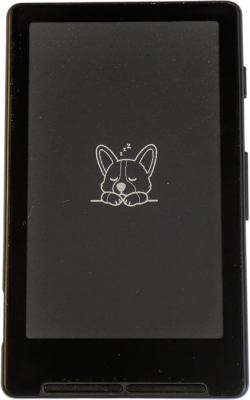
For £40, the X4 is, in the reviewer's words, "a better reading device than it has any right to be." The package adds a 16GB microSD card, a card reader, and a MagSafe adhesive ring. Stock firmware is thin: three fonts, EPUB support, basic formatting, and a menu that boots in Chinese. Page turns are instant, with no ghosting.
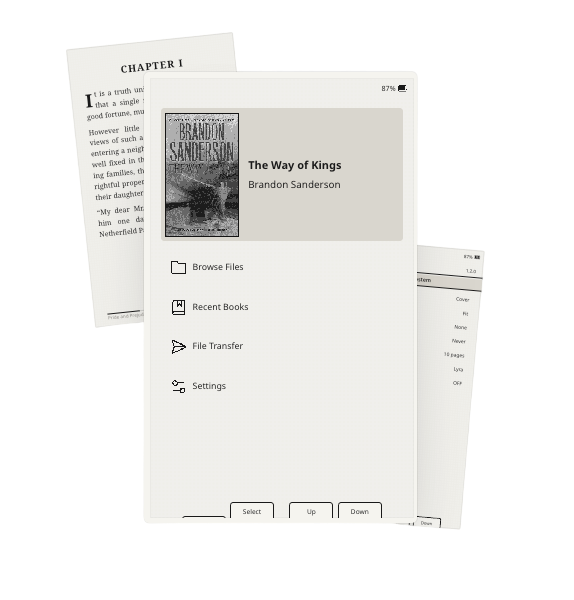
The interesting part is what you replace it with. The reviewer settled on Inx after trying Papyrix, gaining a tabbed interface, per-book settings, Wi-Fi Calibre sync, OPDS browsing, and reading stats. Custom builds go further, including a PalmOS-inspired TernOS and a writing-focused MicroSlate. One firmware, CrossPoint, applies the Knuth-Plass line-breaking algorithm to produce justified text at TeX quality on a device that costs less than a paperback boxset. Units shipped from AliExpress arrive with USB flashing disabled; CrossPoint sideloads from the SD card instead.
The thread is a support group for repeat buyers
The comments read less like reviews and more like an intervention. One owner liked the X4 enough that it pushed him to buy a second device he hadn't planned on.
"I liked it enough that I also got the X3 on sale so I can use it the way I originally intended to use the X4." — an owner who bought both sizes
The appeal is the openness the big readers withhold. A developer who put CrossPoint on his X4 framed it as a rebuke to locked-down hardware.
"The http server accessible over wifi makes transferring books extremely simple. (Shame on the Kindle for locking everything down.) This is proof-of-concept that a microcontroller is more than enough for something like an e-reader." — a developer running CrossPoint
Not everyone is sold on the typography. A software developer who studied the marketing shots came away suspicious of the layout engine.
"Screenshots never show text with any hyphenation… if you look at the screen, it looks terrible. There are even words jammed together ('would be most suitable forthe job')." — a developer who scrutinized the product photos
And one warning recurs: the thing breaks. A six-month owner had a screen die in transit, then praised the company for a discounted replacement.
"IT IS VERY FRAGILE! The eink screen on my first broke while in my backpack." — a six-month owner
What the X4 actually sells is not a screen but an SDK-shaped gap. The owners who love it most are the ones writing the firmware the manufacturer didn't ship, which is exactly why a £40 gadget keeps producing GitHub repos instead of returns.
Get breakdowns like this every day
The top Hacker News stories, unpacked — by email, Telegram, or RSS.
Zod's creator builds a Bun-like toolkit that keeps stock Node
Nub runs your TypeScript file 2.9x faster than tsx and dispatches package.json scripts 24x faster than pnpm run. The twist: there is no new runtime underneath, just plain node with Rust glue.