“Do I think the data center vote cost me the election? Yes I do”
In Utah, the State Senate President — one of the most powerful Republicans in the state — lost his primary after backing a data center near the Great Salt Lake. A county commissioner who voted the same way conceded with a one-line autopsy of his own race.
A proposed 9-gigawatt data center in Box Elder County — twice the size of Manhattan, drawing more power than all of Utah uses — is now a live electoral liability. Incumbents who advanced it are losing primaries and naming the project as the reason.
The thread split on what voters are actually angry about: one camp says it's jobs and economic resentment dressed up as environmentalism; Utah locals say water and power bills are the whole story in a drying desert.
When a data center becomes a campaign autopsy
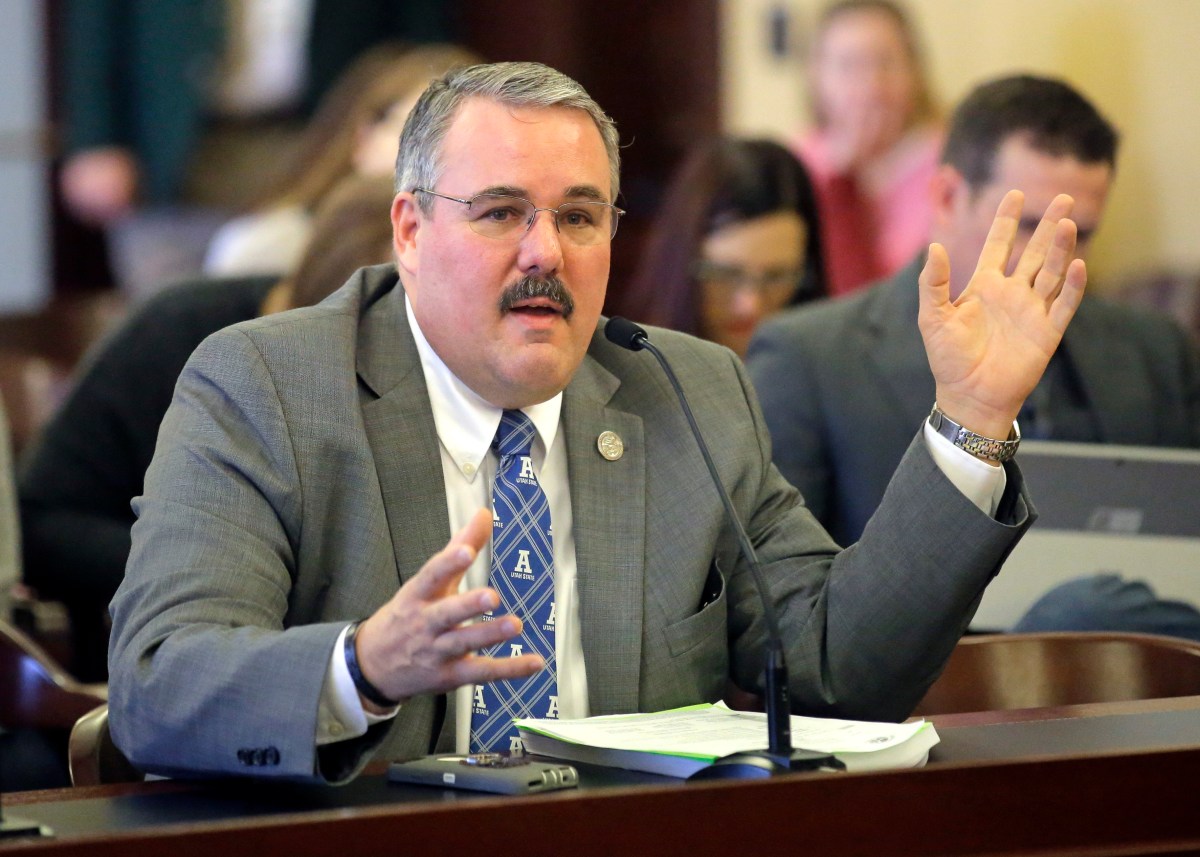
The Newsweek report that drove the discussion has a quote politicians rarely give on the record. As surfaced in the thread: Utah State Senate President J. Stuart Adams, “one of the most powerful Republicans in the state,” lost his primary after supporting a major data center near the Great Salt Lake. A former Box Elder County Commissioner, Lee Perry, was blunter after conceding his own race: “Do I think that the data center vote cost me the election? Yes I do.”
The project at the center of it, the proposed Stratos development in Hansel Valley, is not a normal build. Readers pulled the numbers: tens of thousands of acres, up to 9 gigawatts of power, “more electricity than the entire state of Utah currently uses.” A Utah resident added the local math: the site would be twice the size of Manhattan, in a state where 64.4% of land is federal and a fireworks ban was just enacted because conditions are so dry.
Jobs resentment, or water bills? The thread can't agree
One reading was that environmentalism is a socially acceptable cover for economic anger. A software developer in the thread insisted the real question is employment:
“no one I know gives a shit about the energy consumption or water usage. They absolutely want to know if these datacenters will bring jobs to their area.”
A YC-alumnus founder flatly disagreed: “the environmental impacts is the only thing people actually care about … noise, proximity to housing, water usage, energy prices going up in the area. this is the core issue. not 'will ai replace my job.'”
Locals broke the tie toward water. A longtime Utah resident explained that water rights are the one issue that crosses every political line in the state (“you will see propaganda to 'slow the flow'”), and noted the bitter optics of a governor who “publicly prays for rain, while using an incredible amount of water on his own alfalfa farms.”
The part that turns a NIMBY fight into a national one
What makes this more than a zoning story is the deal structure under it. As one commenter put it, nobody is even selling the upside locally: “politicians are bending over backwards to eliminate any possible benefit by giving these datacenters permanent tax breaks.” A 9-gigawatt machine that raises your power bill, drinks your water, and pays no tax — then leaves you a handful of construction jobs that end when the concrete cures — is a hard thing for any incumbent to defend. Two of them just found that out at the ballot box.
Get breakdowns like this every day
The top Hacker News stories, unpacked — by email, Telegram, or RSS.
The U.S. lets Anthropic ship Mythos again — to about 100 approved companies
Months after a surprise ban, Anthropic's Mythos returns from the regulatory freezer the same day OpenAI previews GPT-5.6. Not for the public: for a short list of “trusted” U.S. firms and agencies. One commenter sized up the caveat as “an asterisk the size of a Mac truck.”