CNN and CNBC quietly paid Kalshi while presenting its odds as news
On CNN, Harry Enten called a 43% Kalshi market on Trump taking Greenland a "very high chance." It had roughly $24,000 in real trades, and briefly spiked to 60% on that thin volume.
CNBC put a dedicated reporter on Kalshi in April 2026, who then cited its markets in 58 articles and disclosed the network's financial stake in none of at least 22 of them.
The defense on offer: the odds are a free proxy for public opinion, with no polling agency to pay.
An equity stake, per-conversion payments, and a Polymarket blackout
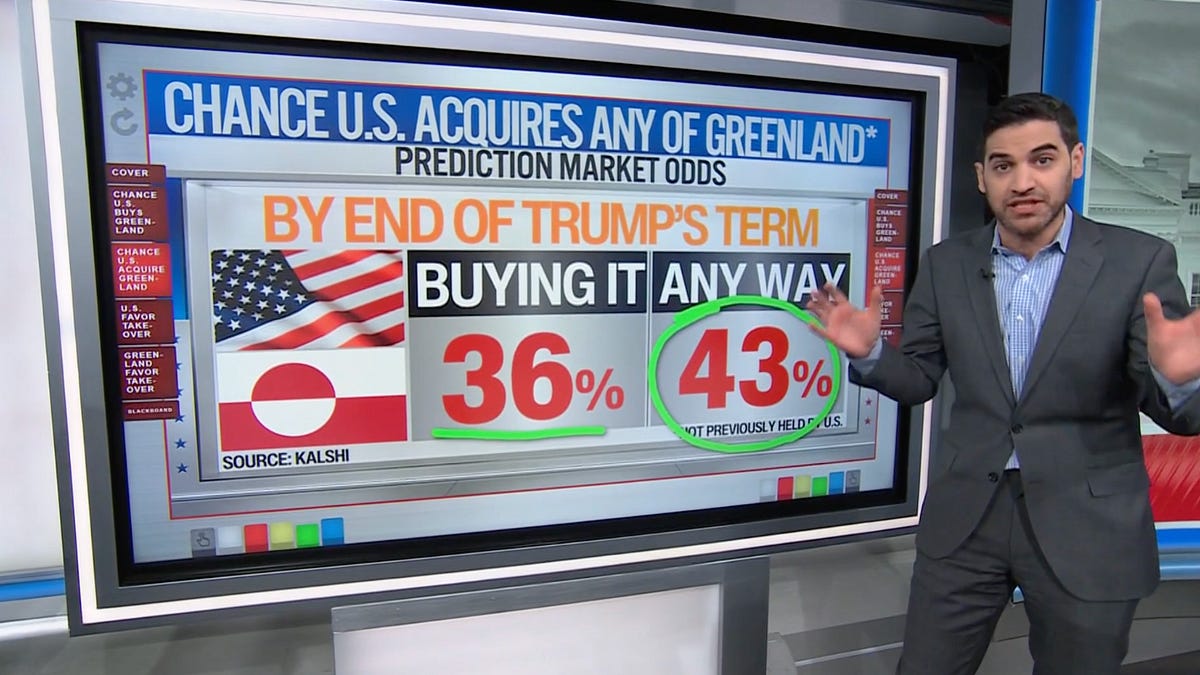
Public Notice reports that both CNN and CNBC promoted Kalshi's odds on air while holding undisclosed financial ties to the platform. CNBC's arrangement runs deep: a minority equity stake, payments for each viewer it converts into a Kalshi customer, and data fees on top. CNN took a different route, an exclusive deal that bars the network from citing Kalshi's rival Polymarket, and it has run at least 115 "The Odds" segments featuring Kalshi since December 2025.
Do the markets even measure what they claim? A February 2026 study of 292 million trades found Kalshi's political markets "compress toward 50%," systematically overvaluing longshots and, the piece argues, misleading the journalists who cite them.
Is it even gambling, though?
Some in the thread supplied the newsroom's actual incentive:
It's an interesting proxy for public opinion that requires zero investment from the news org. They don't have to pay a polling agency or wait for someone else to.
— a commenter naming the newsroom's incentive
Another pushed back on the framing that this is self-evidently a vice:
Is it obviously gambling? Would it be any different if a large financial institution sold prediction market securities?
— a commenter questioning the gambling label
A trader-minded reply defended prediction pricing on its mechanics, reaching for a futures example:
This was a temporary discrepancy that has gone away now that physical prices have fallen. This means the future traders were right… It was correct for futures to be priced substantially lower.
— a reader defending market pricing
And a blunter parallel closed the loop between Wall Street and the betting window:
Not defending Kalshi but stock market has been gambling lite for a while now. It is pretty wild how blatant it is now though.
— a commenter on the Wall Street parallel
When a paid data partner's thin market becomes a chyron on cable news, the disclosure gap stops being academic.
Get breakdowns like this every day
The top Hacker News stories, unpacked — by email, Telegram, or RSS.
A community forked Organic Maps over a hidden Kayak deal, and shipped CoMaps
CoMaps is a free, ad-free, offline navigation app for hiking, biking, and driving that just marked its first birthday.