Davit: a 17 MB native Mac container UI, and every commit says 'Co-Authored-By: Claude'
It manages Apple's new containers from a native SwiftUI window: 17 MB, signed and notarized, no Electron. Simon Willison pulled up the git history, 28 commits in three days, 5,015 lines of Swift, with an AI co-author on every single one.
The app talks to Apple's container daemon directly over XPC, the same path the CLI uses, and handles images, logs, live stats and in-container file browsing from one window.
The thread's flip wasn't about the tool. One tester wrote that seeing Claude in a project's GitHub contributors is now a signal the app will be good: native-feeling, tiny, no Electron.
What Davit actually is
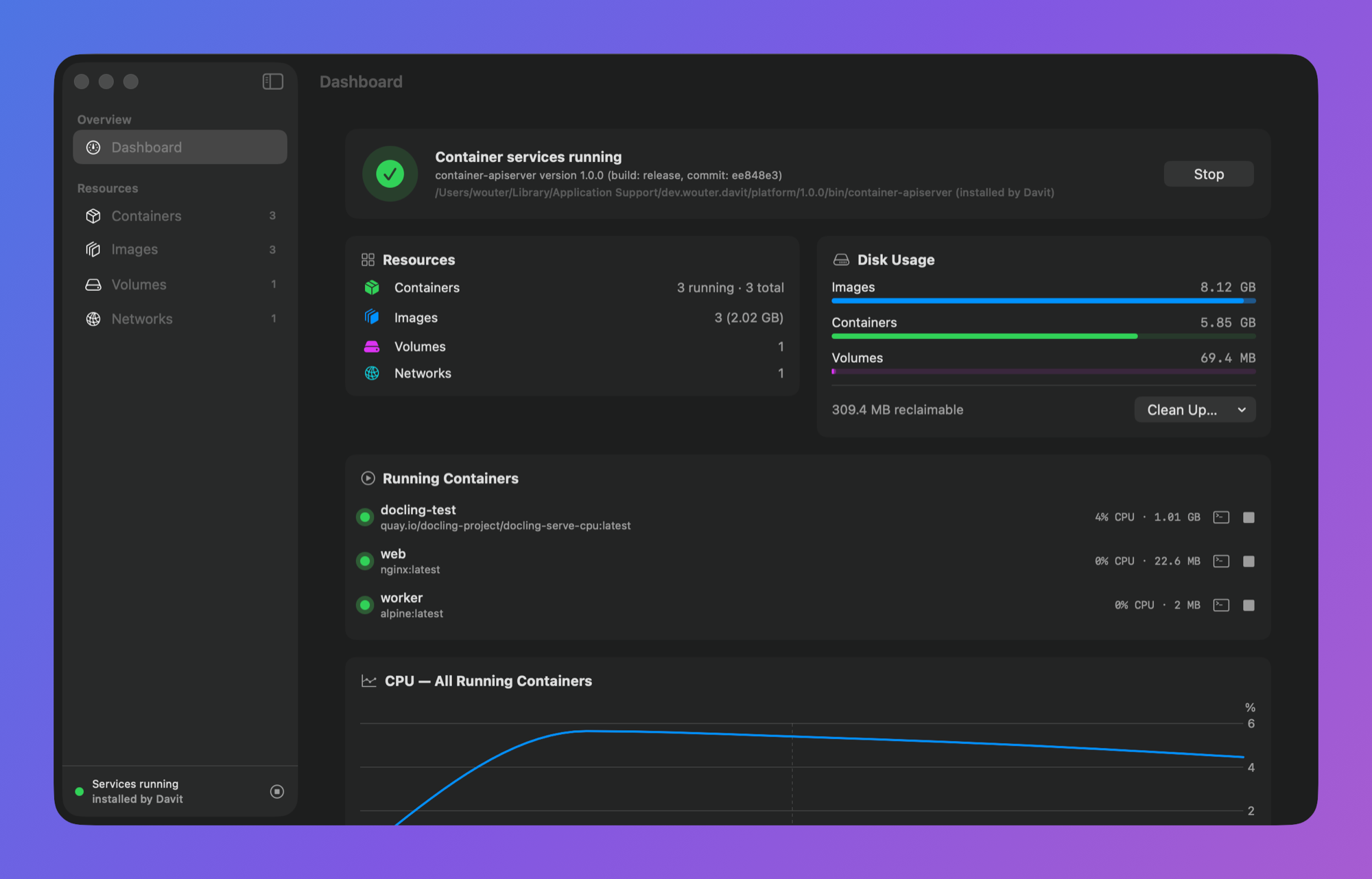
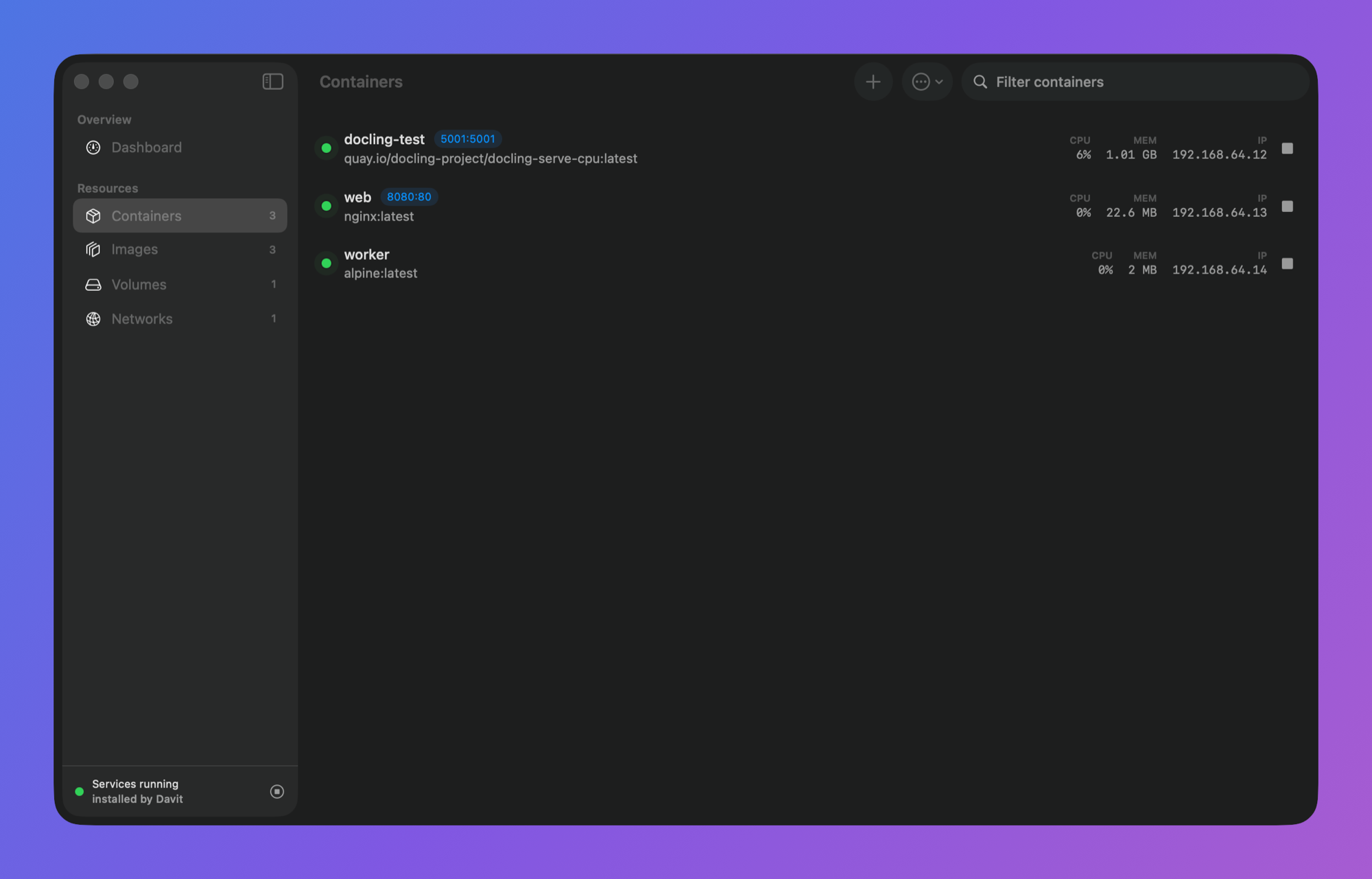
Apple shipped a native containerization framework for Apple silicon but no graphical front end. Davit fills that gap: a SwiftUI app that talks to Apple's container daemon directly over XPC, the same path the command line uses, with no web view or background agent in between. It is about 17 MB, MIT-licensed, Developer ID signed and notarized, installs from a direct download or brew install, and on first launch it pulls down Apple's container platform itself without asking for admin rights.
From one window it starts, stops and deletes containers while streaming live CPU, memory and IP; pulls images with progress and prunes them; signs into Docker Hub, ghcr.io or a private registry; and browses a running container's filesystem to upload, download or delete files.

The number the thread fixated on: an AI co-author on every commit
Simon Willison installed it and read the receipts:
"This looks like a really solid app. I like that it's 17 MB and uses the ContainerAPIClient library directly ... 28 commits in 3 days, 5,015 lines of Swift, every commit 'Co-Authored-By: Claude Fable 5'." — Simon Willison
His one gripe was onboarding: the create-image dialog suggests nginx:latest, which he called a poor first demo, and he wanted a getting-started guide with screenshots.
Then the observation that turned the thread:
"It's getting to the point that scrolling down on Github and seeing Claude as a contributor is a signal the app will be good (Native feeling, no Electron, etc)" — a tester who ran nginx:latest on it successfully
The 17 MB became its own subplot. A developer who unpacked the bundle found the tidy number hides a bigger binary:
"it zips to 17MB, but the binary looks to be 56MB ... That seems like a surprising amount of compression for a binary" — a developer who inspected the app bundle
The recurring question was why bother when OrbStack already exists.
"Docker desktop on mac does not work well (uses lots of resources) and my current alternative is OrbStack (very slick, uses far less resources, but freemium)." — the CTO of Linkurious
Davit's implicit answer: native, free, MIT, and 17 MB against OrbStack's freemium tier.
The real subject: building in the age of the AI co-author
One commenter caught the mood of the whole thread:
"My current power move in the age of AI: do nothing. I had an idea like this and thought I could vibe code it, but then I figured someone else would care more and do it first. I was right!" — a commenter who had considered building the same app
That is the shift worth naming. A 5,000-line native app, 28 commits over a long weekend, an AI on every commit, signed and notarized and small enough to embarrass Electron: good enough that the crowd now reads "Claude" in the contributor list as a mark in the app's favor, not against it. The onboarding is thin and the OrbStack question is unanswered, but the prior flipped. The question moved from whether an AI wrote it to whether it feels native and stays small.
Get breakdowns like this every day
The top Hacker News stories, unpacked — by email, Telegram, or RSS.
60 years, seven planned volumes: Knuth is still writing The Art of Computer Programming
For decades Knuth has mailed hexadecimal reward checks, $2.56 apiece, 'one hexadecimal dollar', to anyone who spots an error in his books. One computer scientist in the thread called getting one a career highlight.