Oregon's data-center power line took 20 years to approve, not a land grab
A power company invoking eminent domain to build a transmission line for a single Oregon data center sounds like a land grab. The line has actually been in planning, permitting, and litigation for nearly two decades — the data center is just the latest reason opponents found to fight it.
Aaron Walayat, a law professor who studies eminent domain, traces the doctrine to the Fifth Amendment: 'public use' plus 'just compensation' — the same tool that let Connecticut bulldoze homes for a Pfizer redevelopment in Kelo v. New London that never got built.
Commenters flagged that the circulating headline had it backwards: it's the power line being condemned, not the data center, and state courts have drawn a hard line here before, denying takings that serve mostly out-of-state or private buyers.
The Fifth Amendment clause that's landing data centers their power lines
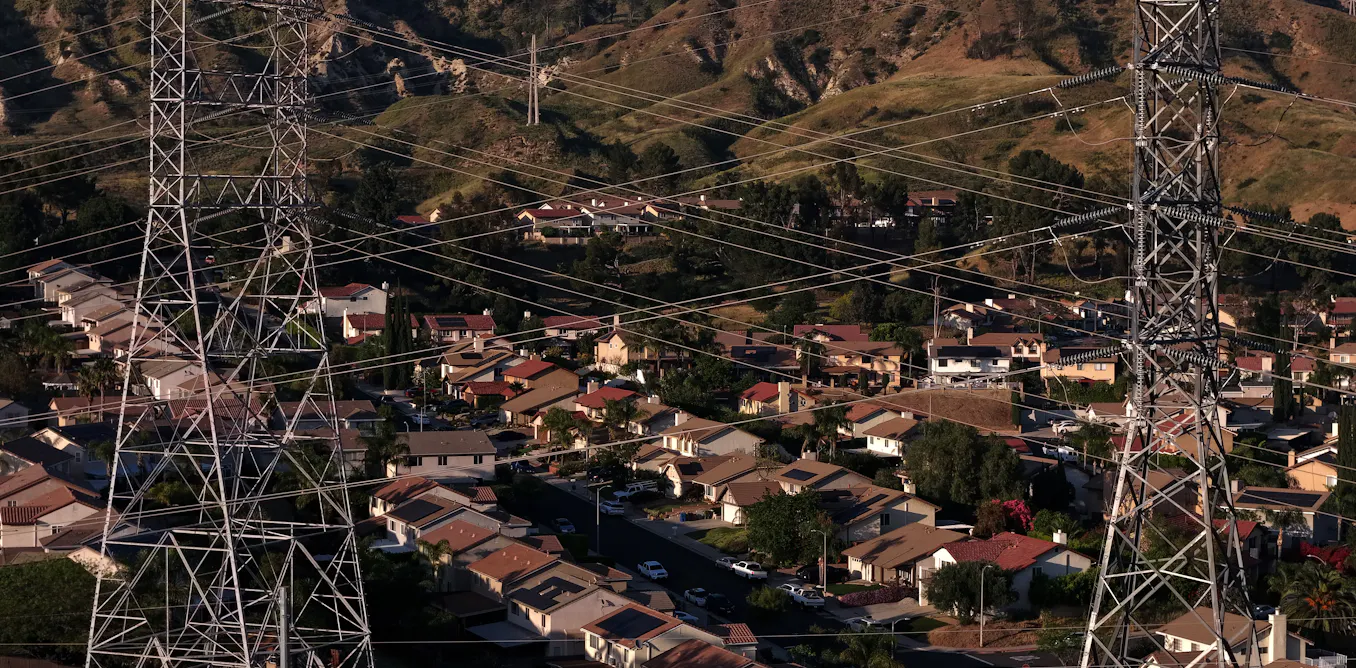
Aaron Walayat, an assistant professor of law at the University of Dayton who studies eminent domain, starts from the actual doctrine: the Fifth Amendment lets government take private land without the owner's consent if the taking serves "public use" and pays "just compensation." States routinely delegate that power to private utilities and other "common carriers," power companies chief among them, to build the lines, not the buildings, that the public needs.
The doctrine's most consequential test came in Kelo v. City of New London (2005), when the Supreme Court read "public use" broadly enough to cover economic development: Connecticut could clear an entire neighborhood of homes for a redevelopment tied to a new Pfizer facility nearby. The redevelopment never happened. Pfizer itself left New London a few years later. The backlash was large enough that 45 states passed eminent domain reform laws afterward, and state supreme courts in Michigan, Ohio, and Oklahoma now block takings for purely private economic development outright.
That history sets the real legal question for data centers: not whether eminent domain can be abused, which Kelo already answered, but where the line sits when a power line serves a genuine grid need and disproportionately benefits one large private customer. Walayat lays out how states have actually drawn it. Texas requires a condemned project to "serve the public" and bars ones built solely for "the builder's exclusive use." South Dakota and Vermont courts upheld utility takings where the resulting grid reliability served in-state customers broadly. Mississippi went the other way in 1984, rejecting a transmission-line taking because the power would have gone almost entirely to customers across the state line in Louisiana: no in-state public benefit, no taking.
The thread's correction: it's the power line being condemned, not the data center
The original headline that circulated, "power companies are using eminent domain to seize land for data centers," drew the sharpest pushback in the 141-comment thread, and it came from readers who'd actually read past it.
"Misleading title: they are using eminent domain to seize land for power lines to data centers... This is still quite debatable, but so much less so than the implied accusation." — a commenter with over 11,000 karma
HN moderator dang later confirmed the submission had already gone through one title swap, from the original, more inflammatory framing to the current, more accurate one, after the community flagged it.
The specific line under fire predates the AI boom by close to two decades
One reply went further and supplied the receipts.
"It's more misleading than that. The power line that 'may' 'primarily' serve a private data center has started construction after nearly 20 years of planning, permitting and lawsuits." — a commenter with nearly 18,000 karma who dug up the project's approval history
If the project has been grinding through permitting since roughly the mid-2000s, the data center didn't create this fight. It just gave existing opponents a sharper argument.
When does "misleading" become "lying," exactly?
Not every reader accepted even the corrected framing as fair.
"This is not a misleading title. It is a lying title. I'm usually a pretty big believer in Scott Alexander's Bounded Distrust concept for the media where they very rarely actually, technically lie. This title... crosses that line." — a commenter invoking Scott Alexander's "Bounded Distrust" framework
The bigger problem the thread surfaced: America can't build the power lines it needs anywhere
The most useful reversal reframed the whole story as smaller than the actual issue.
"We need ultra-high-voltage DC lines from the US wind belt to areas with real loads... nobody has been able to build lines west to California or east to Illinois, Indiana, Ohio, and Michigan, where the loads are. This is held up by land acquisition, not technology." — John Nagle
He pointed out China has built exactly this kind of long-haul, million-volt DC transmission between its cheap-power northwest and its populous southeast, the same grid problem the US wind belt has, data centers or not. A single Oregon dispute over one line to one data center is a symptom of a much older failure to build interstate transmission at all.
Get breakdowns like this every day
The top Hacker News stories, unpacked — by email, Telegram, or RSS.
An AI prompt found the WordPress bug exploit brokers pay $500,000 for
Security researcher Adam Kues spent about $25 in OpenAI usage and ten hours pointing an AI model at WordPress's raw source code — no changelog, no known CVE, nothing to work backward from. What came back was a complete, working exploit chain for a critical flaw in WordPress core.