A West African Coral Reef Sat Buried in a Report for 60 Years
In the 1960s, fishing surveyors off Benin hauled coral heads up in their nets and noted it in one paragraph of a report nobody read again. Sixty years later, a Beninese researcher borrowed a fishing pirogue, towed a sonar rig behind it, and found the reef still thriving in the dark water below.
Gérard Zinzindohoué spent years getting rejected for grants before National Geographic gave him $20,000 — most of it swallowed by sonar gear towed behind a jury-rigged fishing boat. What his team confirmed 175 feet down, 14 miles off Benin's coast, was eight species of coral and a shark habitat nobody had mapped since that single 1960s paragraph.
One HN reader had a blunter theory for why this reef made it while so many didn't: it sits along a coastline where almost nobody wears chemical sunscreen, which is documented to kill coral elsewhere.
A Reef That Fishing Nets Found in the 1960s and Everyone Forgot
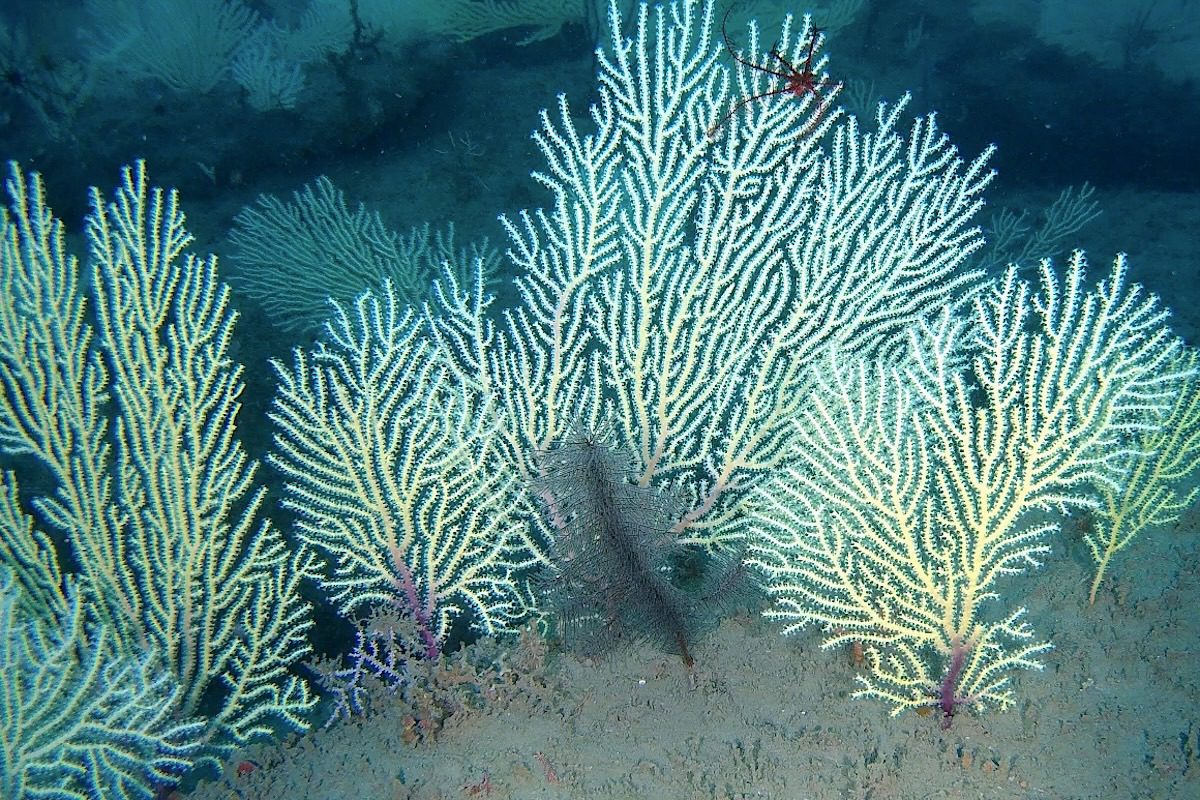
Coral reefs worldwide have spent decades dying off from bleaching and overfishing, and by the usual metrics a reef in the Gulf of Guinea should have been long gone too. Gérard Zinzindohoué, who leads a project called Coral Reefs Rediscovering & Exploration in Benin, didn't believe it. His only lead was a throwaway line: fishing surveyors working off Benin in the 1960s had pulled coral heads up in their nets, and their report went as far as sketching a potential 24-mile-long barrier reef offshore. Then the finding sat in a 130-page document that nobody followed up on for sixty years.
Zinzindohoué applied for funding for years and got turned down every time, until National Geographic approved an Explorers grant in January 2025. Sonar equipment alone ate 80 percent of it, leaving the rest to run a jury-rigged rig off local fishing pirogues, scanning the seafloor until the echoes lined up with the old survey. National Geographic's Exploration Technology Lab then supplied a high-resolution deep-sea camera to confirm what the sonar had found.
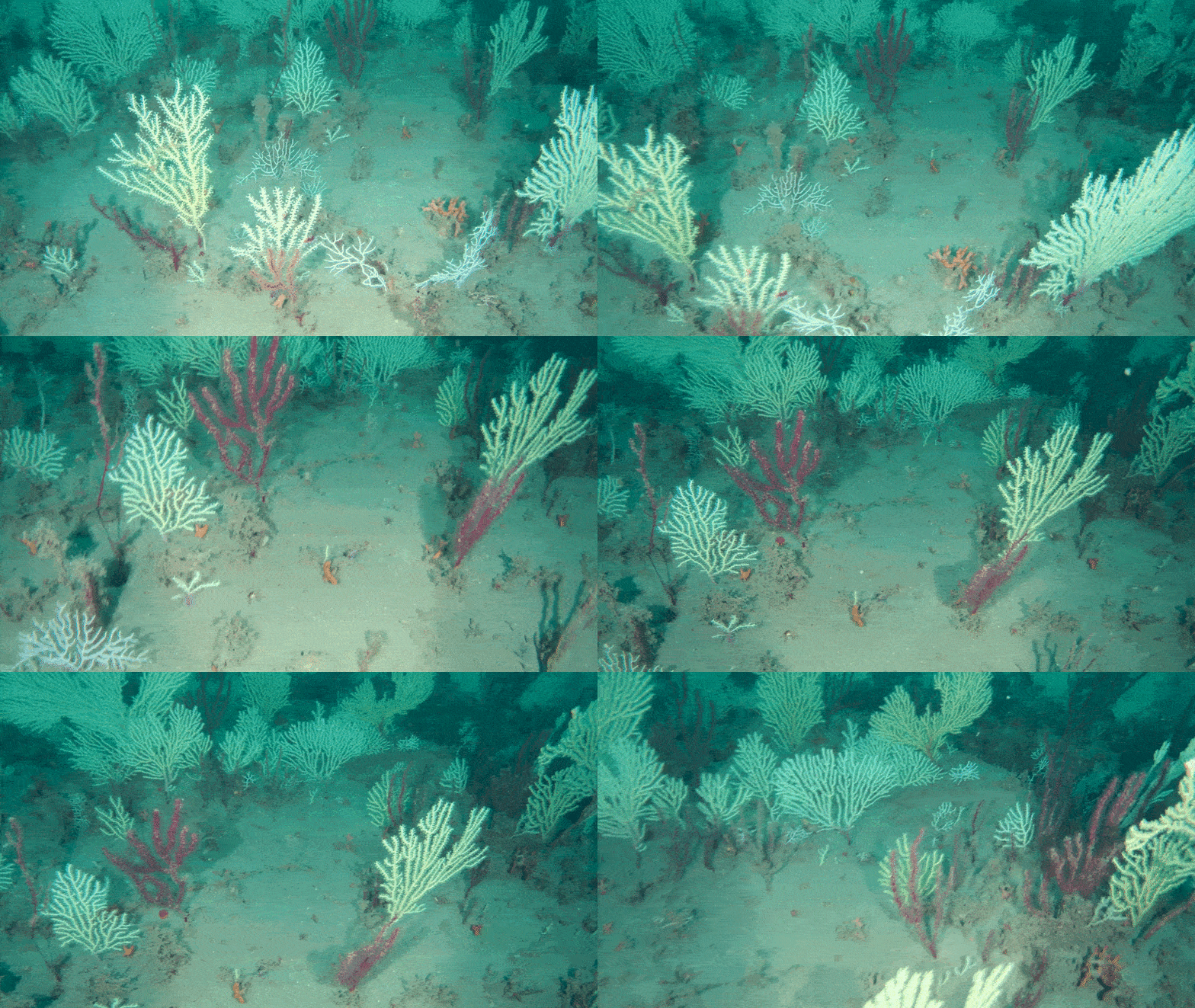
Past the point sunlight usually reaches, the cameras found a mesophotic coral ecosystem scattered patchily across a rocky bottom: six soft coral species and two black corals, plus eight fish species including golden African snappers, Monrovia doctorfish, blackbar soldierfish, West African goatfish and Guinean angelfish. Local fishers told the team the same waters hold sawback angel sharks, silky sharks, brown skates and marbled stingrays. Houangninan Midinoudewa, an oceanographic researcher at the Benin Marine Conservation Club who specializes in elasmobranchs, is now preparing an application to have the site designated an Important Shark and Ray Area with the International Union for Conservation of Nature, alongside a push for a marine protected area. The team also wants to carbon-date the coral to reconstruct the region's past climate.
The thread's alternate theory: nobody there wears sunscreen
The piece never explains why this particular patch of reef outlasted the regional collapse. A reader filled the gap with an explanation from a different field entirely.
"Chemical sunscreen famously kills coral. Some dermatologists have noted that sunscreen is little used in Africa… it's likely a significant contributing factor."
— a reader who linked out to dermatology research on regional sunscreen habits
Nobody in the thread tried to confirm or debunk it with reef chemistry data, so it stood as an untested but specific hypothesis, the kind the article itself never raised.
Benin isn't the only coastline getting a second look
A different voice pointed at a parallel case, half a world away, where a "dead" ecosystem also turned out to just be unattended.
"I read a fascinating story the other day about basically garbage dumping of leftover oyster/clam shells being used to re-seed a marine ecosystem off the Florida Keys."
— an HN veteran with 30,000-plus karma
A commenter also surfaced a fuller scientific write-up of the Benin find, with additional imagery beyond what the digest piece carried: worth checking for readers who want the underlying data.
What reads like an adventure story was mostly a grant application
Not every reaction was awe. One reply pushed back on how the piece frames the expedition itself.
"Reading all those easily solved frictions they encountered was sad."
— a commenter who describes himself as a self-styled "technofeudalist"
The years of rejected grant applications and the reliance on borrowed fishing boats read as adventure in the article, and as a symptom of how little basic marine science in West Africa gets funded, in the thread.
A climate story that asks what survives, not what's lost
One reply named the genre this story quietly breaks.
"Climate stories often end with 'thing are getting worse', this one also asks where ecosystems might persist if local conditions are managed well."
— a commenter building an AI-staffed newsroom project
If a one-paragraph mention in a 1960s fishing report could hide a functioning reef for sixty years, the 50-percent global decline figure that drives reef conservation funding is probably counting some reefs as dead that were simply never surveyed again.
Get breakdowns like this every day
The top Hacker News stories, unpacked — by email, Telegram, or RSS.
HN suspects an ACM essay on AI and coding was itself written by AI
The essay's real argument: the hard part of programming didn't shrink, it relocated — from recall ('how do I write this') to judgment ('does this actually make sense'). One programmer's response summed up the thread's mood: "How many times can we have the same discussion."