The Minneapolis Fed's new metric turns 65% homeownership into just 53%
The Minneapolis Fed built a fictional cul-de-sac of five houses and fourteen adults to test its new homeownership formula. Switch from counting houses to counting people, and the same neighborhood's ownership rate falls from 80% to 50%.
The youth number moves even harder than the headline figure: under the old rate, 37% of adults under 35 count as homeowners; run the same population through the new formula and it drops to 22%, because a grown kid back in a parent's owned house no longer counts.
On Hacker News, one of the highest-karma voices in the thread pulled the Fed's own five-house example apart line by line, arguing the new formula quietly punishes multigenerational households for a choice, not a failure.
A fictional cul-de-sac cuts homeownership from 80% to 50%
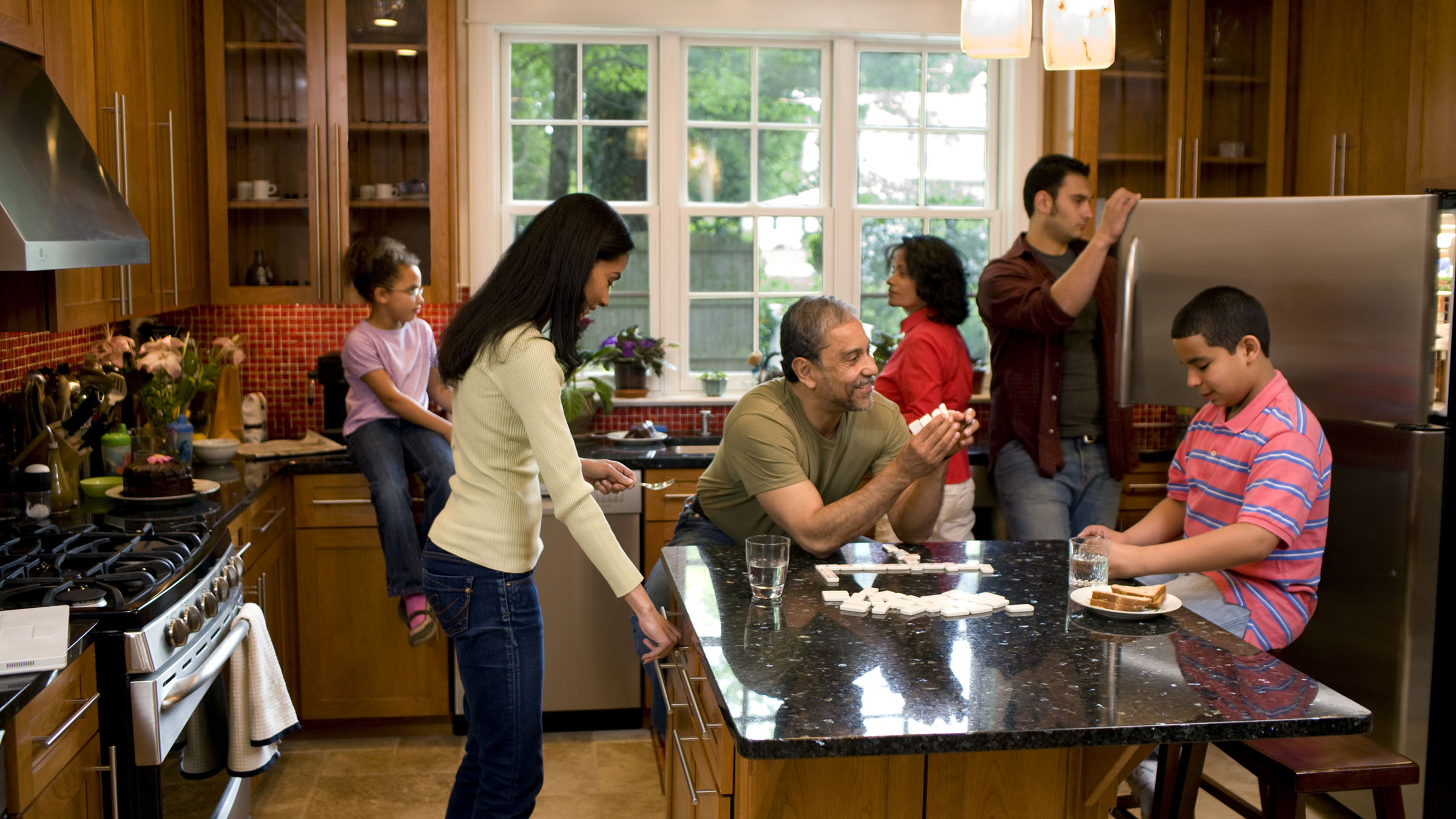
Erik Hembre, Ben Horowitz, and Maxine Xu, researchers at the Federal Reserve Bank of Minneapolis, made the case for retiring the homeownership number reporters quote every quarter. The traditional rate asks a simple question: of all occupied housing units, what share has an owner living in it? The U.S. answer right now is 65%. Their replacement, HPOP (homeowners as a share of the adult population), asks a different question: of all the adults in the country, how many actually own the home they live in? That answer is 53%.
The twelve-point gap is not a rounding error. The authors walk through it with a fictional cul-de-sac of five housing units and fourteen adults. A couple owns their home; the wife's parents live with them. A second couple owns their home; their college-graduate son lives with them. A man owns his home; a friend lives with him. A third couple, with two young kids, owns their home. Three roommates rent the fifth house from an owner who lives elsewhere. Count houses, and four of five have a resident owner: 80%. Count the fourteen adults who actually hold title to something, and it's seven: 50%.
What HPOP counts that the old rate never saw


Nationally, that reclassification sweeps in 13.9% of American adults who live in an owner-occupied home without owning any share of it: grown kids back in the spare room, aging parents moved in, roommates, unmarried partners left off the deed. HPOP also counts people the old rate simply skipped, since they occupy no "housing unit" to begin with: residents of dorms, nursing homes, and prisons. And it moves the age story further than the top-line drop suggests. Under the traditional rate, adults under 35 look like 37% homeowners; run the same population through HPOP, and it's 22%.
The thread: "this bakes in the assumption that adults live apart from kin"
The sharpest read in the 335-comment thread came from an HN member with over 125,000 karma who mapped the Fed's own five-household example line by line:
"This isn't 'putting people first,' it's baking in the cultural assumption that adults live separately from kin."
His point: three of the five households in the Fed's own illustration — parents living with a married daughter, a new graduate back with his parents, a couple raising two kids — read as intact families by any ordinary definition. HPOP still only lets one adult per household count.
"Who, precisely, cares about incentivising owner occupancy?"
Not everyone in the thread wanted to defend the old number either. A commenter with 35,000-plus karma turned the argument back on the premise itself:
"Genuine question: who, precisely, cares about "incentivising owner occupancy" as a policy goal? ... It seems bleedingly obvious that the latter is the number we should be maximizing, if either."
His case: the old owner-occupancy rate was never really the goal, just a rough stand-in for "how many people live somewhere they own." If that's the real target, HPOP is closer to it, not further away.
A metric even the Fed wouldn't dare publish
Further down, one reply argued the Fed hadn't gone nearly far enough: a homeowner with 3% down is, functionally, renting from the bank at interest until the mortgage clears. An HN member with over 13,000 karma agreed with the diagnosis, for a more cynical reason than the original poster offered:
"Unfortunately, the Minneapolis Fed would get a whole lotta push-back if they suggested any such metric. That risk bearing & interest-rent is a near-perfect way for the 0.01% to milk the "could afford a house" demographic."
The math also runs backward: it can penalize a choice, not just reveal one
An HN member with nearly 8,000 karma reworked the Fed's own example into a specific fraction:
"On the traditional metric that scenario would be 100% because roughly each family owns its home which is good. ... In other words the metric "punishes" living with family even if that's what you want to do."
Nobody in the thread flagged the mechanical wrinkle that follows from that math. Multigenerational households are growing for the same reason HPOP was built to spotlight: housing got too expensive for young adults to buy or rent alone. If that keeps up, the new headline number will keep sliding on two tracks at once — once because fewer young adults can buy, and again because the ones who move in with parents to cope no longer register as anyone's success story, even when the roof over their head hasn't changed.
Get breakdowns like this every day
The top Hacker News stories, unpacked — by email, Telegram, or RSS.
Qwen's New Image Model Ships Closed, With NSFW Tags Buried in Its HTML
Alibaba's Qwen team launched Qwen-Image-3.0 promising newspaper-quality layouts and precise multilingual text from a single 4.5k-token prompt. Within hours HN commenters found the model ships with no public weights, a first for the usually open Qwen line, and that the launch page's own HTML metadata lists more than 100 NSFW keywords.