Germany’s renewables milestone comes with an argument about the metric
A report says wind and solar overtook fossil fuels in Germany. The discussion immediately turned that celebratory sentence into a question about which period and which energy measure it describes.
The reported milestone is about electricity generation, not every use of energy. That boundary is the difference between a real achievement and an overextended claim.
HN did not dismiss the change; it pressed for annual versus monthly comparisons, absolute generation, storage, and the unresolved role of gas and nuclear.
A milestone with a precise scope
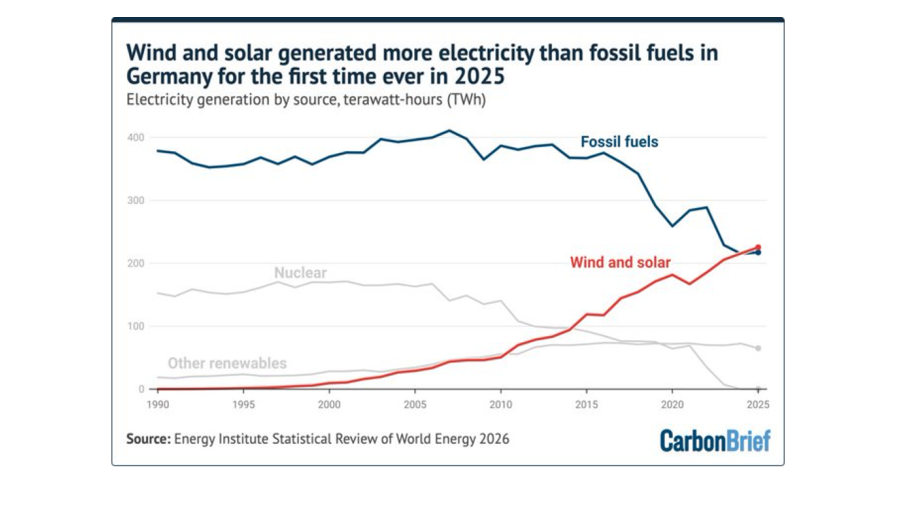
The report describes wind and solar passing fossil fuels in Germany’s electricity mix. It is a useful marker because generation mix is observable and policy-relevant.
The thread’s correction is not a rebuttal
Commenters pointed out that electricity is only one part of total energy use and that a headline can change meaning depending on whether it refers to a month, a year, a share, or absolute output. That is not pedantry: each version answers a different question about decarbonization.
What comes after the crossing
One practical thread of the discussion concerned storage: heat stored in materials such as sand or bricks can serve industrial processes directly instead of routing every surplus kilowatt through an electrical battery. The more durable story is therefore not one crossed line, but whether generation, storage, grids, and demand can be measured together.
Get breakdowns like this every day
The top Hacker News stories, unpacked — by email, Telegram, or RSS.
Dunning–Kruger may be a statistical artifact, not a licence for certainty
A popular account of the Dunning–Kruger effect is challenged as an artifact of the way people estimate and are grouped by performance.