Apple didn't announce a foldable at WWDC. It told developers to stop designing for fixed screens
A blogger reads the WWDC 2026 'design adaptable software' message, plus new iOS 27 framework terms like foldState and angleDegrees, as Apple quietly prepping its ecosystem for a ~$2,000 folding iPhone.
The tell isn't a product reveal — it's a platform directive to design for a range of screen sizes and aspect ratios, paired with leaked framework keys for fold angle and display count.
The thread's first reaction was that the title is a homograph pun and pure clickbait. Its second was a real argument: a phone plus an iPad mini already beats a foldable on cost and reliability.
And the most-discussed evidence — a window-resizing demo — looked to some like a blurry mess, not a polished preview.
Reading a hardware launch in a developer message
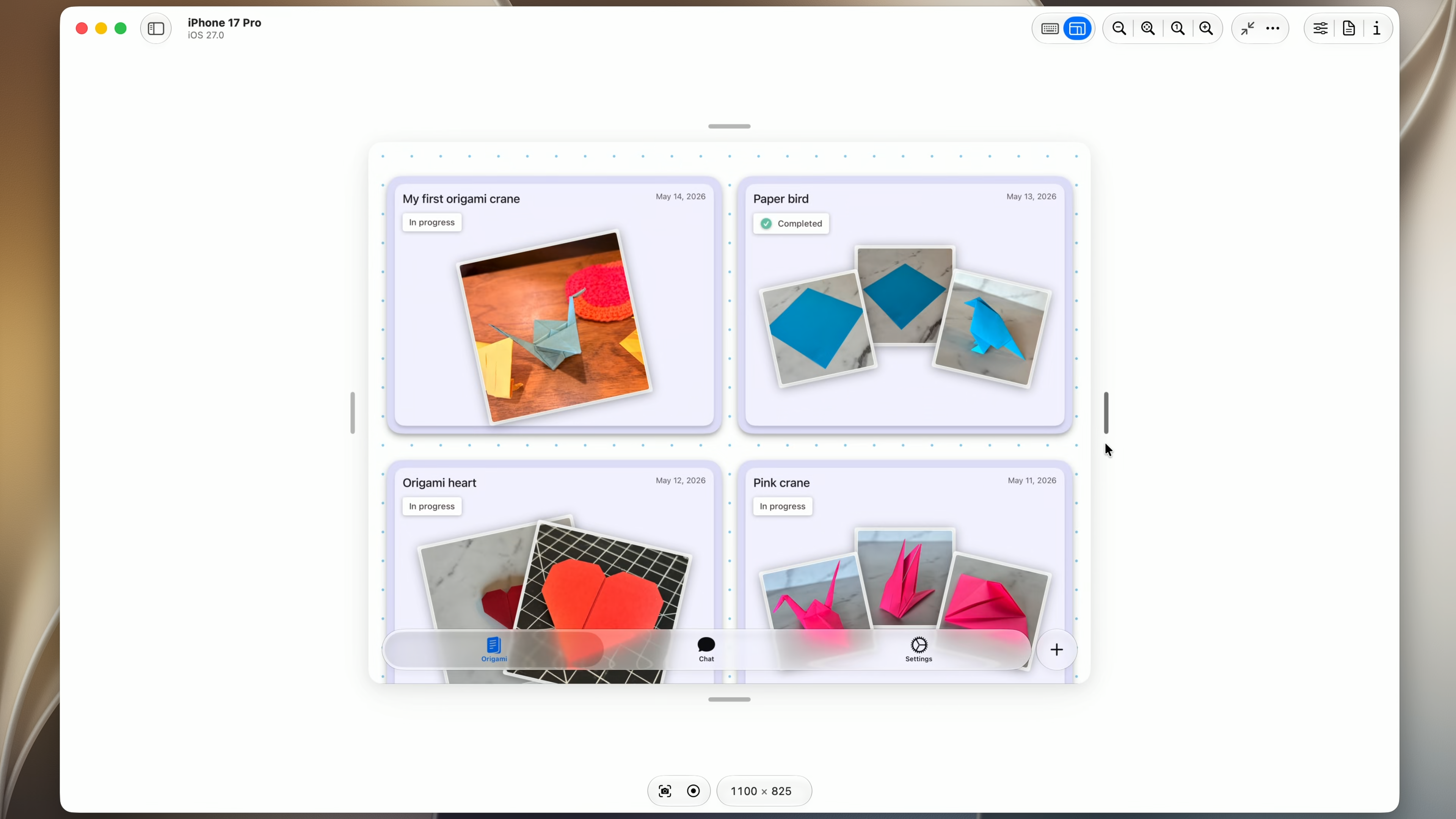
The Cupertino Lens post argues WWDC 2026 was Apple quietly preparing its developer base for a foldable before announcing the hardware. The core signal is a platform directive telling developers to stop designing for a specific device and instead "design software to be adaptable across a range of screen sizes and aspect ratios." As corroboration it cites developer Sam Gold's iOS 27 beta findings — new framework terms foldState and angleDegrees, plus a system key querying display count.
The device it points to: a book-style "iPhone Ultra" with a 7.7–7.8" inner display, a 5.3–5.5" cover screen, roughly 4:3 aspect ratio, starting near $2,000, to be announced in September alongside the iPhone 18 Pro, with Foxconn mass-production targeted for July. The post also frames incoming CEO John Ternus, starting September 1, presenting the foldable as his first headline act.
"Holy mother of clickbait titles"
The thread's first move was to defuse the headline as a pun ("folding" = the product, not the company).
"I remember so many Apple developers saying this [hardware-specific design] was why Apple was better than Android. The HN archives are full of such comments." — a commenter on Apple's reversed design philosophy
The real argument: do foldables even solve a problem?
A long sub-thread questioned the premise that anyone needs this device, while one product engineer was openly waiting for it.
"i've been waiting a few years for iphone fold … its both iphone mini (yay!!) and ipad mini … in one device presumably with a cpu powerful enough to run cyberpunk 2077." — Jake Teton-Landis, a product engineer at Notion
The skeptics framed the form factor as planned obsolescence or a sign of stagnation:
"When a mobile device manufacturer makes a foldable, I get the impression they're running out of ideas with the 'slate' form factor … I would want that R&D spend to go to more sustainable materials, longer lasting devices." — a commenter who works in finance and tech
"The purpose of a foldable is to reduce the lifespan of a device, and therefore sell more devices." — a commenter on the durability tradeoff
The evidence cuts both ways
The post's strongest exhibit — the resizing demo — didn't land cleanly for everyone:
"Is that blurry mess on the video seriously how resizing works on iOS or is it just a POC made by some dev?" — a developer questioning the demo quality
So the read of WWDC tea leaves is plausible but not airtight: the framework keys are real, the adaptable-design push is real, and the one visible artifact is a window-resize that looks rough in the first beta. A foldable is coming, probably. The headline that Apple is "folding" is just a better pun than it is a forecast.
Get breakdowns like this every day
The top Hacker News stories, unpacked — by email, Telegram, or RSS.
Ben Thompson titled it 'The iPhone's Last Stand' — and then spent the piece arguing Apple is fine
Stratechery frames a split: Microsoft's agents live in the cloud, Apple's live on the phone. The thread's most useful read pointed out the ominous headline lands somewhere distinctly pro-Apple.