AI wrote 8x more code and shipped only 30% more releases. Coding was never the bottleneck
Two Princeton researchers tear into the "AI replaced our engineers" story and find mostly corporate spin: of three famous AI-blamed layoffs, the real cause was money. The deeper point is an eight-to-one ratio — far more code written, barely more software shipped.
59% of hiring managers admit they play up AI when explaining freezes because it beats saying "finances." New York's AI-layoff disclosure box was ticked once in a year of thousands of filings.
The thread's most experienced engineers split on the conclusion: one cloud engineer insists the job will go to AI, the missing piece being deployment, not code. The rebuttal: those pet projects replaced no one who was ever hired.
The decide-execute-deliver sandwich
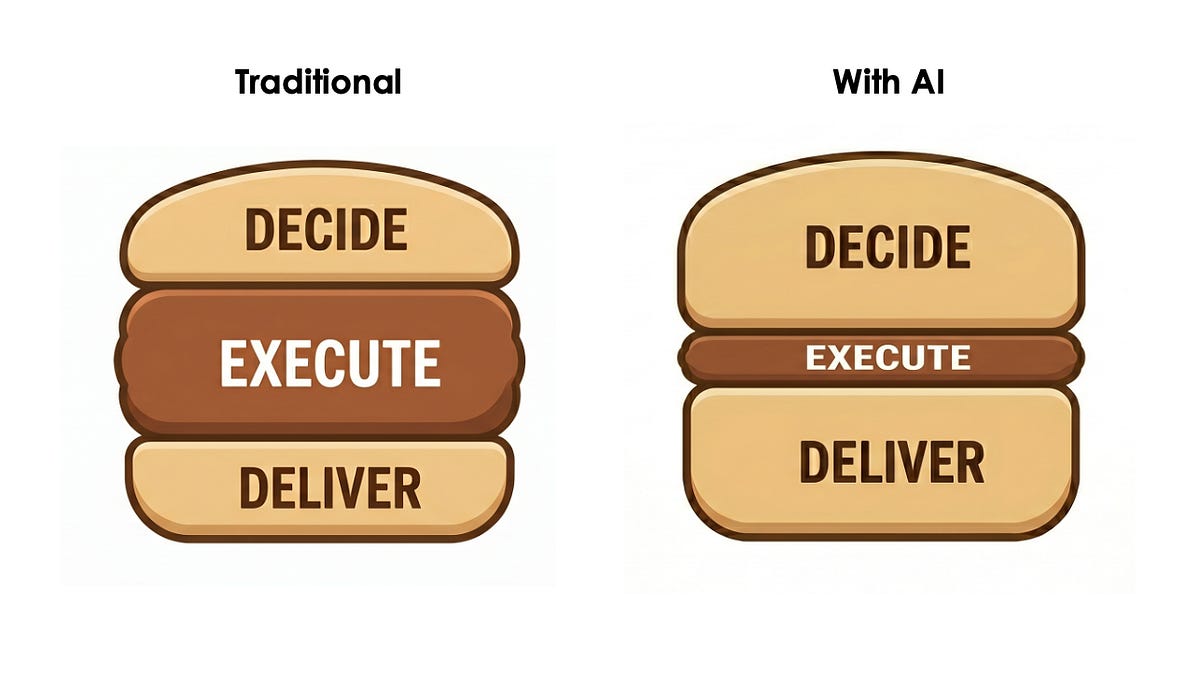
Arvind Narayanan and Sayash Kapoor, writing in *AI as Normal Technology*, argue the replacement narrative is mostly laundering. They examined three layoffs publicly pinned on AI — Block, Snap, Intuit — and found financial pressure underneath. Their supporting numbers are pointed: 59% of hiring managers admit they emphasize AI when explaining hiring freezes, and New York's 2025 WARN Act AI-disclosure checkbox was ticked by exactly one company in its first year, against thousands of layoff filings.
Their model splits engineering into three layers: decide (specify, plan), execute (write code), deliver (test, verify, take accountability). AI compressed the middle and left the bread. The killer statistic: one study found AI produced an eight-fold increase in lines of code written, but only 30% more releases.
They add a discipline split: responsible "agentic engineering" keeps a human accountable, while unsupervised "vibe coding" ships fast and breaks things: only 44% of agent-produced code survives into commits, and vibe-coded commits carry vulnerabilities nine times as often as human-only code.
The disconnect a veteran keeps seeing
The comment that resonated most named a gap between the discourse and the desk. An engineer with deep tenure put it flatly:
"The best ones are the ones keeping it the most at arm's length while the people who embrace it the most churn out epic amounts of utter slop."
The failure modes were specific, not vibes. A commenter mid-task caught GPT 5.5 sorting dates by plain string comparison; the article's authors would call that an execution-layer win wrapped around a decide-layer miss.
"It will replace engineers" — and the rebuttal that held
The strongest dissent came from inside ops. A cloud engineer argued the article undersells the threat by mislabeling it:
"It most certainly will replace software engineers. What's missing is, as the article suggests, the 'Delivery' bit. But that's not the realm of software engineers, that's the realm of DevOps/SRE/Cloud engineers."
His evidence: non-engineer friends now ship pet projects, stuck only on deployment. That's where the thread turned on him. An industrial-graphics engineer drew the line: "has already replaced several software engineers — I think this is incorrect, unless your friends employed software engineers, or would have employed software engineers." A second reply made it economic: "those projects never would have been made before… these are net-new projects that replace nothing that came before."
Another engineer drew the maintenance line the demos never cross: "The issue comes when you have 432 functionalities and have to add the 433 without interfering with the others."
The history rhymes
The authors' closing analogy did real work in the thread: FORTRAN, COBOL and SQL were each sold as the end of programmers, and each expanded the field instead. One reply supplied the modern version — Rails generators built a Twitter clone in three clicks fifteen years ago, "software engineers still continued to exist somehow." When software gets cheaper, people buy more of it. The bottleneck just moves to the two things AI can't yet own: deciding what to build, and being accountable when it breaks.
Get breakdowns like this every day
The top Hacker News stories, unpacked — by email, Telegram, or RSS.
30 billion Pokémon Go scans quietly trained navigation tech now headed for military drones
For years players wandered cities filming Pokéstops to catch monsters. Those 30 billion environmental scans became a 3D map of the real world — and that map is now being fused with a defense contractor's drone software for GPS-denied flight.