AirPods as a do-not-disturb sign: the data is thin, the experience isn't
Several people in the thread said they wear AirPods specifically so strangers won't approach them. One developer keeps them in at restaurants with nothing playing, just noise cancellation. The cited statistic that Americans speak 28% fewer words than in 2005 got the skeptical squint it deserved.
A newsletter argues AirPods quietly erode casual social contact, leaning on a University of Arizona finding that spoken words per person fell 28% from 2005 to 2019 and a Jabra survey linking heavy headphone use to loneliness.
The thread's most honest counter wasn't denial but reframing: for several women, headphones are a deliberate shield against being hit on in public. And every panic here, one user noted, was said about the Sony Walkman in the 1980s, called a 'masturbational fantasy' in print.
The earbud as a social force field
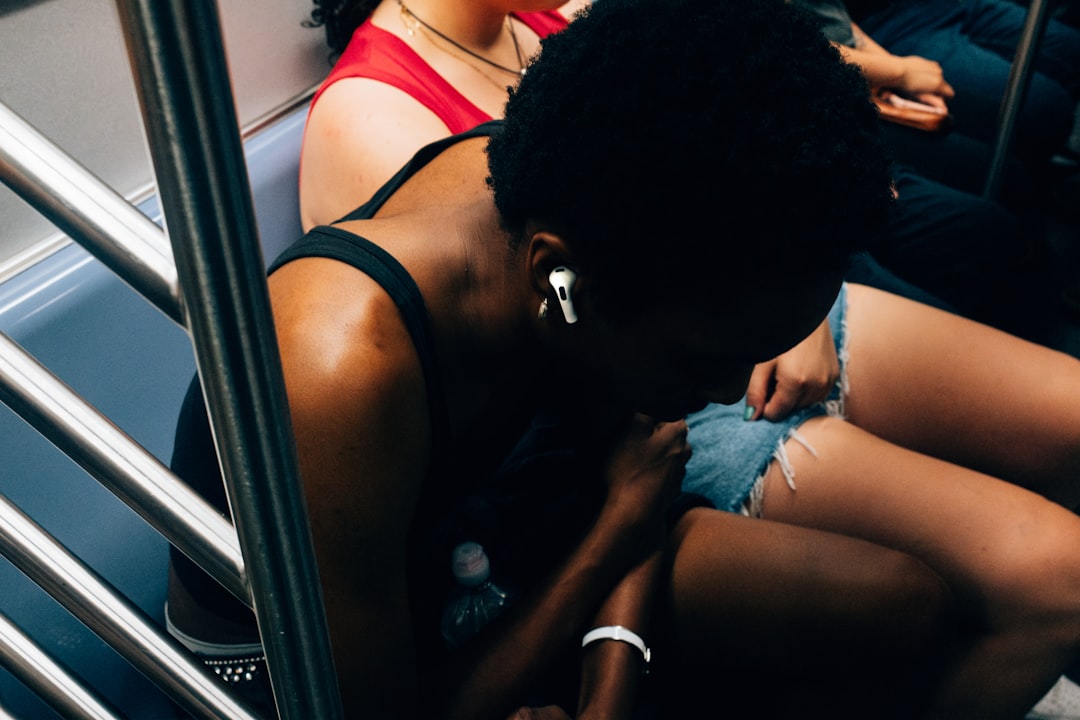
Markham Heid's "The AirPods Effect" argues that always-in earbuds are quietly taxing the small public interactions that make people feel connected. He marshals numbers: a University of Arizona study finding the average person's spoken-word count fell 28% between 2005 and 2019, a 2021 Jabra survey linking heavy headphone use to loneliness and fewer conversations with strangers, and research that listening through headphones makes a speaker feel "warmer and friendlier" than the same voice through a speaker. His worry is that the brief exchanges, the ones that add up to "I can talk to anybody, and I have a place in this world," are being crowded out.
Not avoidance, a chosen shield
The thread's most useful response didn't argue with the premise so much as invert the value judgment. For a lot of people, the do-not-disturb signal is the feature, not a sad side effect.
"I've talked to a few women about this, and they don't leave home without headphones because it gives them an excuse to ignore strangers hitting on them in public." — a commenter who uses AirPods for hearing assistance in loud rooms
For others the use is sensory regulation, not social retreat:
"I'm autistic and audio overstimulation is very real for me... I often have my AirPods in with nothing playing, just noise cancellation. I can still chat with my wife... but it keeps everything else down and manageable." — an engineer describing restaurant use with no audio playing
And a baseline check on the nostalgia: at least one voice noted they were never inclined to chat with strangers, AirPods or not, recalling being unsettled as a teenager by how chatty London cab drivers were. The earbuds didn't create that temperament; they fit it.
The numbers, and the 1980s rerun
The headline statistic drew exactly the scrutiny precise-sounding social numbers should:
"Is it just me or does anyone else turn skeptical when seeing these precise numbers given to something that seems essentially impossible to measure with this accuracy?" — a reader in the thread
On the survey itself, a machine-learning engineer flagged the obvious confound: the loneliness link is correlation, and it's at least as plausible that rising social anxiety drives people to put headphones in, not the reverse. The strongest deflation came from history. When the Sony Walkman arrived, critics read it the same way: cultural critic Allan Bloom called it a "nonstop... masturbational fantasy" in 1987, and others saw it as the rise of Reagan-Thatcher individualism. The seashells from Fahrenheit 451, one reader noted, were always coming.
A real effect wearing a shaky statistic
The honest read sits in the middle. The lived phenomenon is real, co-workers who have to tap an earbud and pause audio before they'll talk, people who genuinely can't hear a warning shouted at the gym, and several thread regulars said the self-isolation was obvious to them years ago. But the causal story the article wants, AirPods making us lonelier, runs ahead of evidence that's mostly correlational and partly unmeasurable. What changed isn't that people stopped wanting contact. It's that opting out of it got frictionless, and a chunk of the population was always going to take that option the moment it existed.
Get breakdowns like this every day
The top Hacker News stories, unpacked — by email, Telegram, or RSS.
A boy spent 147 minutes underwater, got 90 minutes of CPR, and lived
By the textbook he was gone. The medics were told not to start rewarming him until the hospital could do it properly — because in deep hypothermia the rule flips: you're not dead until you're warm and dead.