New Outlook needs 10 seconds and 10 processes for what Classic does instantly
Click the meeting reminder and you get a loading screen with the Outlook logo for five seconds before the dismiss button appears. Click the same notification in Outlook Classic and the email is just there.
Windows Latest timed the new Outlook against the old one on the same machine: opening an email from a notification takes about 10 seconds in the new app versus instant in Classic. Idle, the new client sits at 490-636 MB of RAM across 10 processes; Classic uses 117-148 MB in one.
Microsoft blamed WebView2, the Chromium engine the app runs on. The thread's sharpest objection: Outlook for Mac is also web-adjacent yet feels native and fast, and Fastmail's web client beats Classic. So the engine isn't the alibi.
A 10-second wait for a button that says "dismiss"
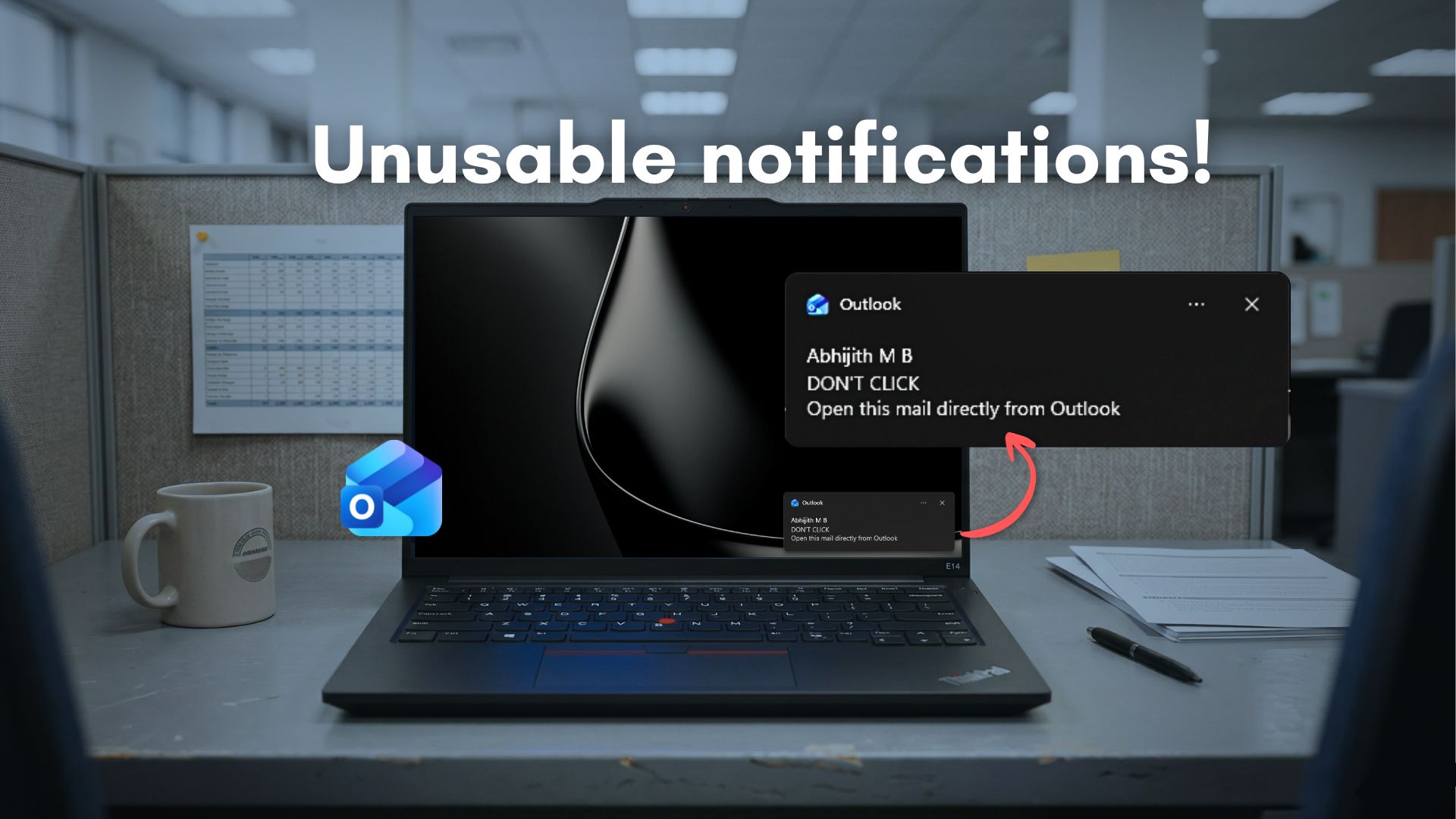
Windows Latest ran the same task on the same machine in both Outlooks Windows 11 now ships: click a notification, see the email. In Outlook Classic it appears instantly. In the new Outlook it takes about 10 seconds. The detail that turns annoyance into farce: manually opening the app and hunting for the message took 5 seconds, half the wait the notification imposes.
The numbers under the splash screen
The slowness isn't only the notification path. At idle, the new Outlook consumes between 490 MB and 636 MB of RAM and runs as 10 separate processes; Outlook Classic does the same job in 117-148 MB and a single process, at under 1% CPU versus the new app's ~4%. The new client is built on WebView2, Microsoft Edge's Chromium rendering runtime, which has to spin up browser processes, authenticate, and render through a web engine before showing a single line of mail. Microsoft acknowledged the slowness back in December 2025 and tested a "Delayed Message Timing" API to diagnose it, with no sign it reached notifications.
The meeting reminder is where it stings most:
"I see a freaking loading screen with the Outlook logo for 5 seconds before the window is updated with the meeting name along with a button to dismiss it. Yes that's everything in there. How does Microsoft think this is ok?" — a user describing the reminder flow
"Like all web apps, it's slow" is the wrong diagnosis
The easy read is that web tech is inherently slow. In the thread the rebuttal was immediate and specific:
"No, that's a very uninformed take... 1. Microsoft's other native apps have gotten unusably slow lately, too. 2. There's definitely plenty of fast web apps. This is just Microsoft's poor strategic decision" — an engineer who notes Microsoft's native apps slowed down too
Two concrete counterexamples backed that up. Fastmail's web client is as fast as or faster than Classic, per a user who runs both. And Outlook's own Mac build, also not a classic Win32 app, lands the opposite way:
"Outlook for Mac is surprisingly good, though. Every interaction feels (and is) native. Kudos to the team." — a Mac user crediting the Office-for-Mac team
If the same company ships a fast native-feeling Outlook on one platform and a 10-second one on another, the runtime is an excuse, not a cause. The fallout is already visible: one user moved to Thunderbird and isn't going back, missing only the Copilot button. Another found the new Outlook silently fails to do IMAP at all despite claiming to.
When the only competitor is the previous version
The sharpest framing in the thread was four words: decisions of a company with no competition. The new Outlook isn't fighting Gmail for the corporate inbox; it's the default Microsoft pushes regardless. A native rewrite is plainly within reach for a firm this size, but the web-portability argument keeps winning internally. The Teams team once published a before/after video meant to showcase a faster rebuild that still clocked in around 9 seconds. The pattern isn't a bug in one product. It's what happens when the thing you have to beat is just last year's build of yourself.
Get breakdowns like this every day
The top Hacker News stories, unpacked — by email, Telegram, or RSS.
In 43 of 50 US metros, two minimum-wage earners can't make rent without overtime
Realtor.com ran the math on its own clients' rule. A household with two people both earning the local minimum wage, keeping rent under 30% of income, comes up short in all but five of the country's 50 largest metros.