Thomann sues Fender to keep the Stratocaster shape free
Europe's largest music retailer didn't wait to be sued. After Fender won a Düsseldorf default judgment over the S-style body, Thomann walked into court to attack the claim itself.
Fender's Düsseldorf win came on a procedural default against a Chinese company, not a ruling that anyone owns the Stratocaster outline. Thomann, maker of the Harley Benton brand, is suing to get the shape declared free for the dozens of luthiers who built on it since 1954.
Then the thread reframes the fight: under US law the design went public domain decades ago, and the deeper problem is that Fender sat on its trademark while Gibson locked down the Les Paul body in the 1980s.
A retailer files suit instead of waiting for the cease-and-desist
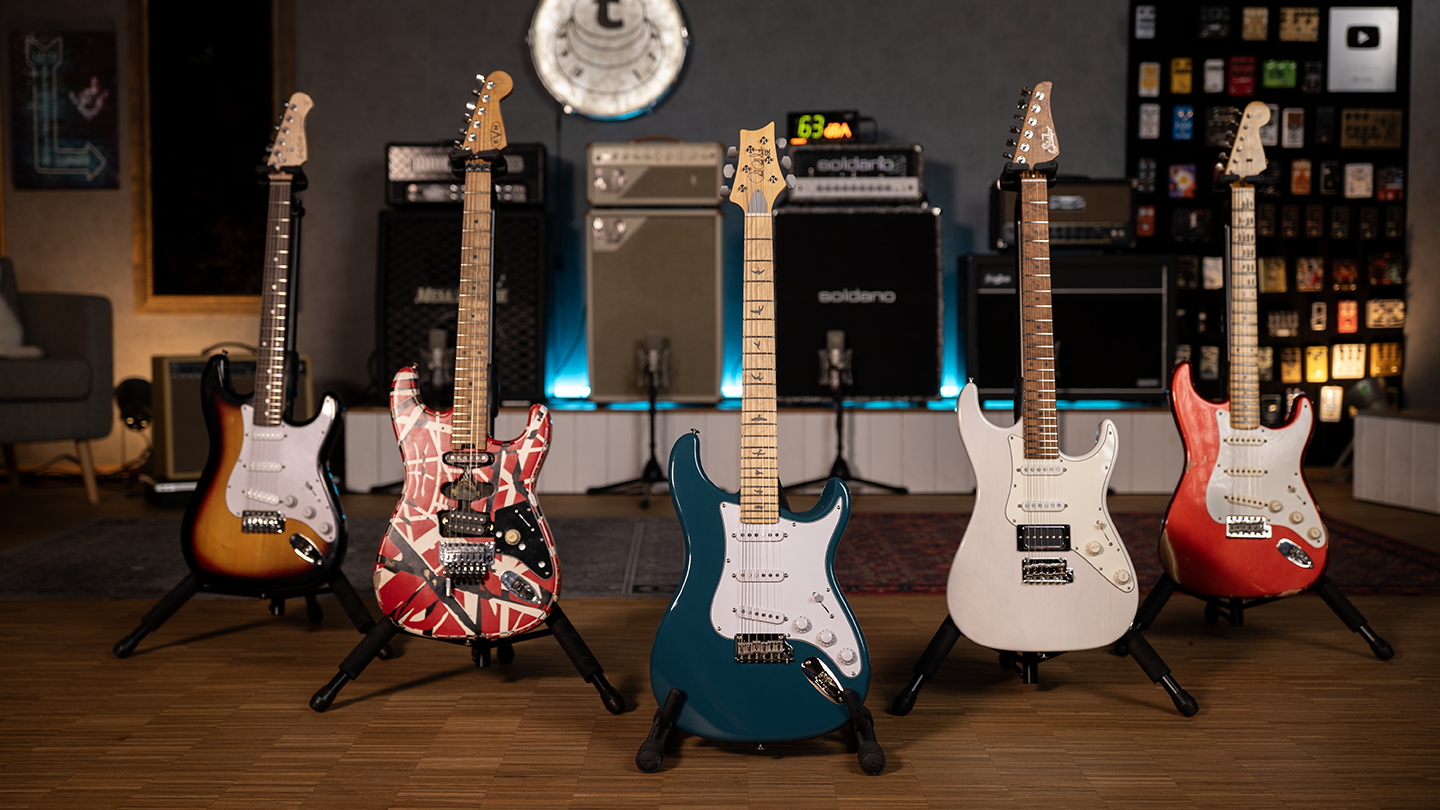
Fender has been mailing cease-and-desist demands to manufacturers, distributors and dealers selling "S-style" guitars, and it secured a default judgment at the Düsseldorf Regional Court against a Chinese company. Thomann's point in its post is that the German win turned on a missed procedural deadline, not on any court deciding that Fender owns the Stratocaster outline. Fender is now leaning on copyright over the body shape to push the claim across Europe.
Thomann, founded the same year the Stratocaster launched in 1954, argues the form is functional engineering: the upper-horn balance point, the cutaways for upper-fret access, the contours filed down for comfort. Luthiers have adapted it for 70 years, and in the US the body has long sat in the public domain, which is what made the whole "Superstrat" category possible. CEO Hans Thomann frames the suit as cover for smaller makers who can't fund litigation, naming Tyler, Tom Anderson, Suhr, LSL, Maybach and PRS as builders in the line of fire. Harley Benton, Thomann's own brand, is squarely exposed.
Why the lawyers think Fender already lost the shape
The legal core, as the thread tells it, is a transatlantic gap. One commenter who literally wrote the Mac firewall for this kind of edge case lays out the doctrine.
"In the US, copyright cannot cover a 'functional part'… any rights left in the form of the Stratocaster expired long ago." — John Nagle (Animats), longtime systems engineer
The timing of Fender's own filings is the second knife. A commenter tracing the trademark history points to the moment the door closed.
"By the time they tried to trademark in 2008/2009, their bodies were considered generic in the US. Gibson… applied for trademark… back in the late 80s." — a commenter reconstructing the IP timeline
Then there is the read on motive. Someone who claims to have parsed the post-acquisition data argues the suit is really about a single competitor's sales.
"the weird German lawsuit was always about the fact that… Thomann (and others) sell the PRS Silver Sky, which… likely outsells equivalent Fender models by some margin." — a commenter citing the reverb.com data Fender now owns
Not everyone wants the alarm. A guitarist who owns Fender gear and refuses to dump it pushes back on the doom.
"We'll go back to the way things used to be where Fender body shapes weren't ripped off so often and it will be fine." — a Fender owner tired of the outrage
The quieter detail under all of it: Fender was bought by private equity (Servco Pacific Capital), which is why a 70-year-old name is suddenly monetizing its silhouette. The fight isn't over whether the Strat is iconic. It's over whether an icon can be fenced off after everyone else already used it to build an industry.
Get breakdowns like this every day
The top Hacker News stories, unpacked — by email, Telegram, or RSS.
AI labs are buying Kant by the seat at $350k base
The Economist says philosophy departments are "haemorrhaging" staff to AI firms writing model constitutions. The thread's reaction: name the rate, then ask what the job actually is.