15th-century Kyoto grew straight cedar out of cedar to dodge a land shortage
Faced with too few seedlings and too little land, Kyoto foresters started pruning a base cedar into an open palm of perfectly vertical shoots, harvesting the poles and leaving the platform tree to send up more. The result, daisugi, claims wood 140% as flexible and 200% as strong as standard cedar.
Daisugi, written 'platform cedar', works like giant bonsai: one parent tree keeps throwing up dead-straight Kitayama cedar shoots that get cut for rafters without felling the trunk. It spread in 15th-century Kyoto because sukiya-zukuri architecture was in fashion and raw timber was not available.
The thread's correction: a coppicing technique Europe has run for 2,000 years, here repackaged with a coat of orientalism, while the article itself buried the mechanism the X thread it scraped explained better.
A tree farmed like a hand of vertical poles
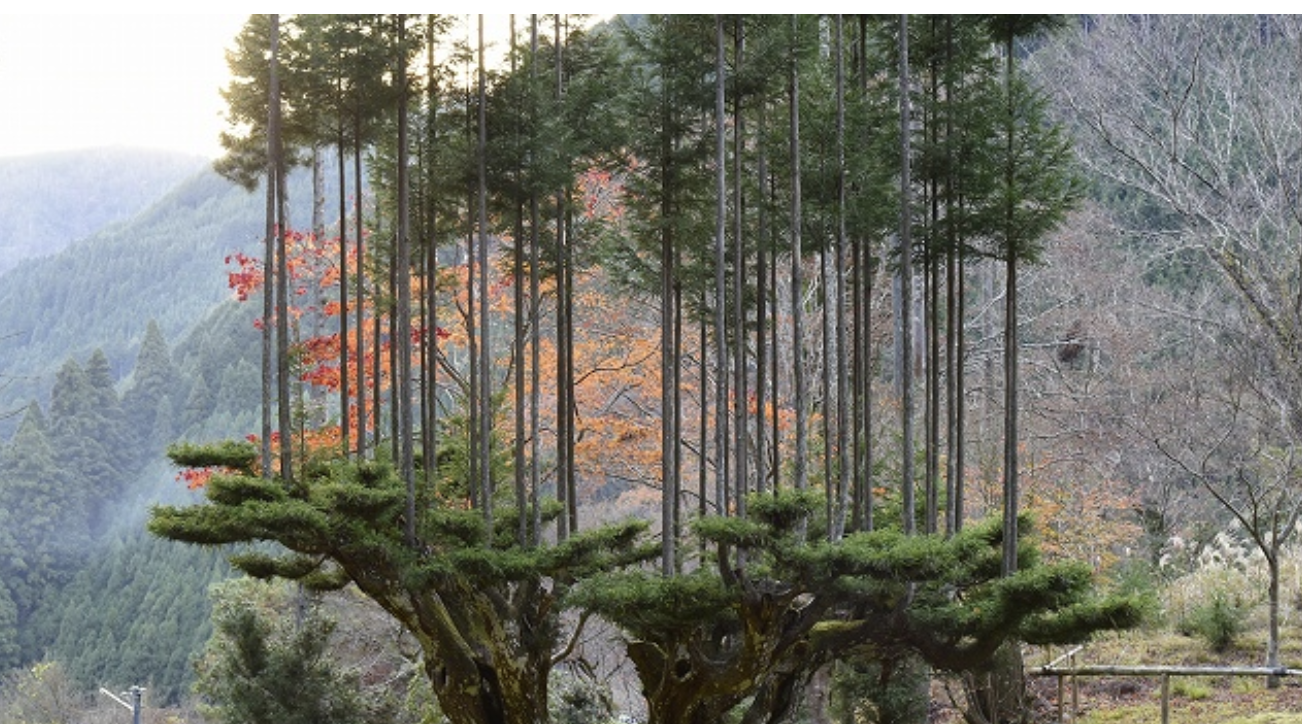
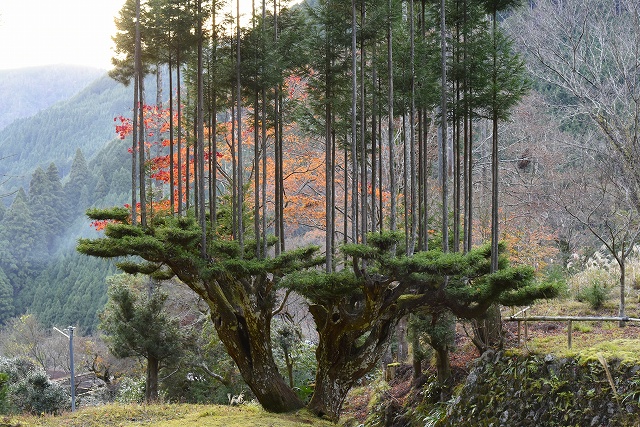
The Open Culture piece describes daisugi (台杉, "platform cedar") as a tree resembling an open palm with multiple trees growing out of it, perfectly vertical. It took hold in 15th-century Kyoto for a blunt reason: "Japan already faced a shortage of seedlings, as well as land on which to properly cultivate the trees in the first place," while the straight, stylized sukiya-zukuri architecture was high fashion and the raw materials to build it were not there. The fix was to treat one base tree like giant bonsai, pruning it so it sends up shoots that grow dead straight, then harvesting those poles — taruki — without killing the parent. The tea master Sen-no-rikyu is credited with demanding perfection in Kitayama cedar in the 16th century, which sharpened the method.
The property that gets quoted everywhere: the lumber is "140% as flexible as standard cedar and 200% as dense/strong," which the article calls perfect for rafters and typhoon-resistant.
The thread fills the gap the article left
Readers who clicked through wanted the part the post skipped — how pruning yields straight, denser wood — and a programmer-musician said the article never delivers it, asking outright why the technique produces those numbers. Someone supplied the missing mechanics:
"the tree is first pruned to create a wide and sturdy base; once that's stable, subsequent shoots from the branches are pruned to grow vertically. The technique relies on this particular variety of cedar … It has some advantages in space-saving and efficiency but it's also very labor-intensive." — a commenter who reconstructed the steps the article omitted
The novelty framing took the hardest hit. One reader filed it under techniques the rest of the world already had names for:
"Isn't this just Pollarding and/or Coppicing, which have been practiced for at least 2000 years in Europe … with a healthy dose of orientalism added on top?" — a commenter pressing on the European parallel
And the source itself drew a verdict from a startup co-founder who'd traced where the post came from:
"Interesting technique, horrible article. Manages to convey significantly less information than the X thread it mined for ad revenue." — the co-founder of Kolena
He linked the original wrathofgnon X thread the blog had drawn from. The recurring afterthought — could a platform tree carry full-grown stems through a storm? — lands on the same constraint the explainer named: the method is labor-intensive. That is the quiet answer to the headline's wonder. Daisugi was not a clever forestry win that the world somehow missed; it was an expensive workaround a land-starved city accepted only because the alternative was no timber for the houses it wanted.
Get breakdowns like this every day
The top Hacker News stories, unpacked — by email, Telegram, or RSS.
Why Medium ate the Polish Ś, and a Cold War keyboard hack is to blame
A Pole typing on Medium found one letter refused to appear: Ś. Every other diacritic worked. The reason ran back through Windows internals to a workaround Poles invented when the US wouldn't sell them computers.