5,000 restaurant menus from 1880-1920, and the ham sandwich cost 25 cents
The Pudding scrolled through 5,000 menus the New York Public Library has spent years hand-labeling. The prices are in cents, the soup is real green turtle, and the celery gets its own vase.
A data-story walks through five thousand American menus from 1880 to 1920, digitized from the NYPL's Buttolph Collection and labeled dish-by-dish by volunteers at menus.nypl.org.
Readers noticed what changed and what didn't: oysters and clams lead the page, 'green turtle soup' turned out to be literal turtle meat, and celery sat as a delicacy because before refrigeration it barely survived the trip to the city.
A menu of history, priced in cents
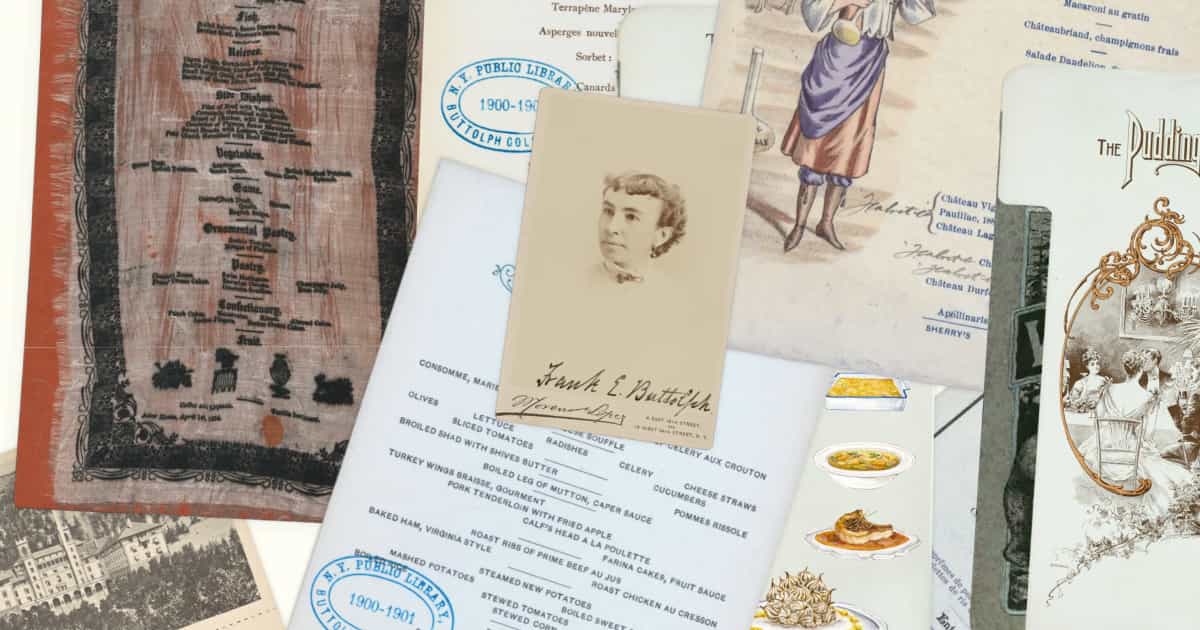
The Pudding's piece, titled A History of Menus is a Menu of History, scrolls through roughly 5,000 American restaurant menus from 1880 to 1920. The source is the New York Public Library's Buttolph Collection — and the reason it's usable as data at all is the unglamorous part: every dish and price was transcribed and checked by hand by volunteers at menus.nypl.org. The story uses that labeled corpus to trace what diners ordered across four decades, item by item.
The first jolt is the pricing. Everything is denominated in cents, not dollars, which trips up a modern eye scanning for the decimal point. The structure of the menus, though, is eerily familiar: categories, courses, and a layout that would not look out of place today.
What sat at the top of the page
The thread turned into a close reading of what these menus reveal about everyday life a century ago. The first surprise was sticker shock in reverse.
"I see everything is CENTS! I was like what on earth who is paying $250 for a ham sandwich???" — a reader who misread the currency
What sat at the top of these menus also reads as foreign now.
"Interesting that many of them lead with clams or oysters … to have them listed so frequently and prominently is completely foreign to me." — daemonologist, a reader cataloguing the patterns
Two dishes drew the sharpest curiosity, and the answers were literal. One reader who'd researched the question explained why a humble vegetable was treated as luxury:
"Celery was at one time difficult to cultivate, growing only in select marshlands. In the absence of refrigeration it was also difficult to transport to city diners, so was considered a delicacy." — pcrh, who had looked into celery's menu history
That status came with its own tableware — purpose-made celery vases to display the stalks. And the recurring "green turtle soup" was not a color or a style:
"I assumed this was a reference to a flavor or style…but nope, it's just green turtle meat." — xbryanx, who works with science and technology in a museum
A museum worker and a forensic researcher both went hunting for the underlying archive rather than the visualization — a tell that the labeled dataset, not the scroll, is the real artifact here. The piece is a window dressing on a years-long volunteer transcription effort; the menus survive as data only because thousands of people typed them in, one celery line at a time.
Get breakdowns like this every day
The top Hacker News stories, unpacked — by email, Telegram, or RSS.
15th-century Kyoto grew straight cedar out of cedar to dodge a land shortage
Faced with too few seedlings and too little land, Kyoto foresters started pruning a base cedar into an open palm of perfectly vertical shoots, harvesting the poles and leaving the platform tree to send up more. The result, daisugi, claims wood 140% as flexible and 200% as strong as standard cedar.